


Summary and Key Points: Dassault’s Rafale F5 is framed as a “super Rafale,” pairing upgraded sensors, networking, electronic warfare, and weapons integration to keep a fourth-generation design relevant.
-But the argument here is that modern air combat is shifting toward stealth-first survivability, machine-speed targeting cycles, and human-machine teaming—areas where fifth-generation platforms act as battle managers rather than just shooters.
-As sixth-generation efforts accelerate, upgraded legacy airframes may remain useful for permissive operations or as supporting “weapons trucks,” yet they risk being outclassed in dense A2/AD environments.
The central claim: incremental modernization can’t substitute for the survivability logic of stealth and autonomy.
Rafale F5 Versus F-35: The Unkind Truth About Upgraded 4th-Gen Fighters
Air combat is barrelling towards a future defined by sensor fusion, deep stealth, autonomous wingmen, and continent-spanning algorithmic kill-chains.
Into this gathering storm steps the Dassault Rafale F5 – a “super Rafale” pitched as a fourth-generation fighter on steroids, and sold as a pragmatic alternative to the now-dominant fifth-generation fighters of the United States, Russia, and China. That pitch may appeal to governments averse to cost, complexity, or dependence on US platforms like the F-35. But the strategic truth is unkind: air forces that bet on souped-up legacy designs in a world that is sprinting towards sixth-generation air combat are choosing nostalgia over survivability, and accepting risks their adversaries likely won’t share.
A Better Rafale, But Still a Rafale
The F5-class Rafale is, in narrow technical terms, the finest Rafale ever built. A new suite of advanced sensors, improved networking, enhanced electronic warfare, and a sharper weapons loadout make it everything Dassault promises: sleeker, more lethal, and more digitally integrated than any prior variant.
Still, it is a design built around aerodynamic visibility, signature compromises, and the performance envelope of a pre-stealth era. The F5 can dodge, deceive, and dance—but it cannot disappear. Beyond-visual-range fights are now won not by pilot virtuosity but by who sees first, decides fastest, and delivers the cleanest firing solution from a position of near-invisibility. That is not the world this airframe was built for, no matter how aggressively its avionics are modernized.
The Fifth-Generation Benchmark Is Not Standing Still
There was a moment—fleeting but real—when upgraded fourth-generation fighters could still operate at the margins of a fifth-generation battlespace.
That window is now closing. The F-35 is deep into maturity as a joint sensor platform rather than merely a strike fighter. The F-22, aging but still unmatched in air-to-air combat, now serves as the quarterback of integrated kill-webs.
These platforms do not simply shoot; they shape the battlespace.
They connect satellites, ground radars, electronic warfare arrays, and autonomous systems into a single tactical picture. A fourth-generation airframe, however optimized, does not bring that gravitational pull. It plugs into networks; it does not anchor them. In the coming decade, that distinction will matter more than thrust-to-weight ratios or turn rates ever did.
The Sixth-Generation Breakpoint
And just over the horizon, the gap widens again. The United States is pushing its Next Generation Air Dominance family of programs toward a crewed sixth-generation fighter, widely expected to result in the F-47, built to dominate contested airspace through adaptive stealth, AI-enabled decision loops, and tight integration with autonomous collaborative aircraft.

NGAD Artist Photo. Image Credit: Creative Commons.
China, meanwhile, is flight-testing not one but two sixth-generation prototypes, usually referred to in open-source analysis as the Chengdu J-36 and the Shenyang J-50 or J-XDS. Both embody the same logic: leapfrog incremental upgrades and instead field aircraft designed to live inside the enemy’s targeting cycle by default.
These jets will not merely evade detection; they will scramble adversary sensor logic. Their loyal-wingman drones will extend reach, complicate enemy defense, and impose attrition asymmetrically. Any air force entering that environment with an aircraft like the Rafale F5 is bringing a fourth-generation knife to a fifth-generation gunfight.
The Costs of Betting on Yesterday
This is where the Rafale F5 becomes a strategic problem rather than merely a technological curiosity. It tempts governments to believe that incrementalism can substitute for transformation—that you can keep the old fleet structure, graft on new features, and call it modernization.
For cash-strapped democracies or countries with trepidations about overdependence on U.S. defense suppliers, the pitch feels comforting. It promises relevance without reinvention.
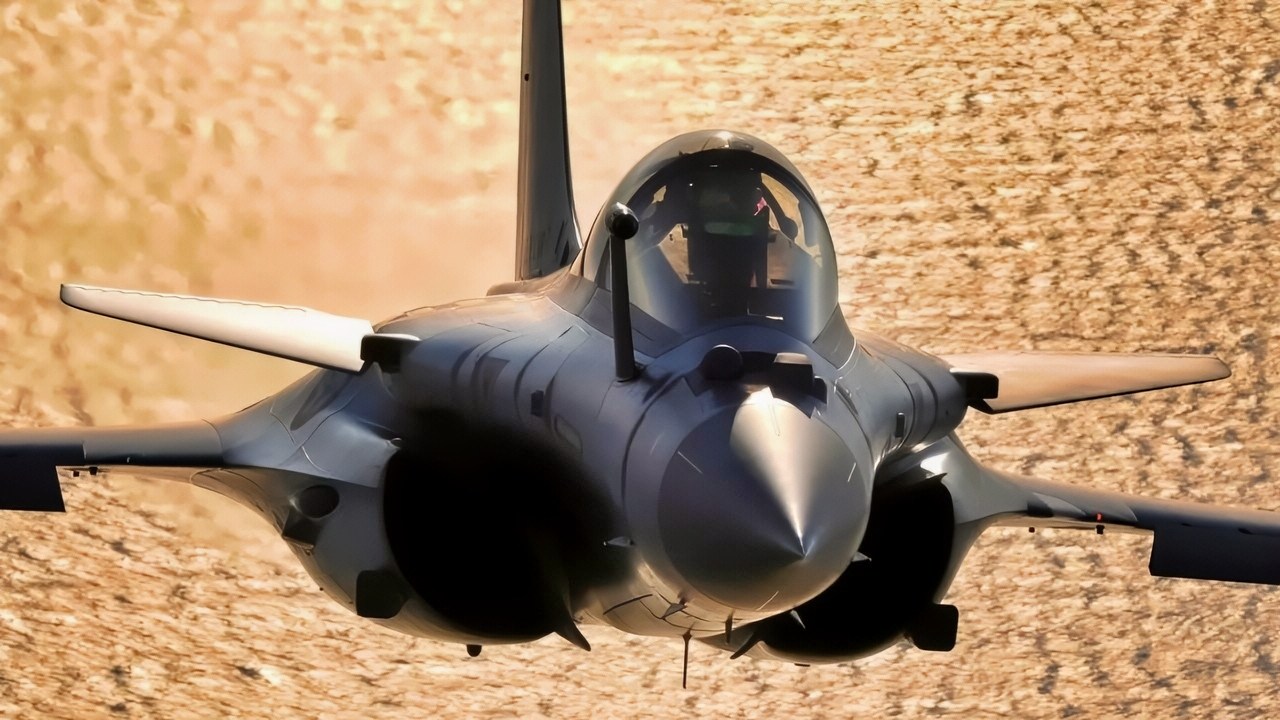
Dassault Rafale Fighter. Image Credit: Rafale.
But wars are not won by the aircraft you wish existed; they are won by the aircraft that survive first contact with the enemy in an advanced A2/AD battlespace.
If adversaries exploit stealth, electronic attack, distributed fires, and autonomous systems while you rely on an upgraded legacy fleet, the cost of procurement savings will be paid in aircraft, pilots, and strategic leverage.
Where the F5 Actually Fits
This does not mean the Rafale F5 concept is useless.
Far from it. For nations operating in permissive or semi-permissive environments—Mediterranean patrols, counterterrorism campaigns, regional policing missions—it is more than adequate.
Even in higher-end scenarios, it can play valuable roles as a strike platform, a standoff weapons truck, or an electronic-attack complement to fifth-generation fighters.
The problem lies in pretending that adequacy in supporting roles translates into parity with adversary fleets built for the next paradigm of air dominance. The F5 is a niche player in a world that increasingly rewards systems designed for multispectral stealth, AI-driven warfare, and distributed human-machine teaming.
The Strategic Choice Ahead
Ultimately, this “Super Rafale” forces governments to confront a hard choice about the future of air combat power.
Do they invest in a platform whose performance ceiling is defined by the physics and visibility of fourth-generation design, or do they absorb the cost of joining the sixth-generation transition early enough to matter?

F-15EX Eagle II. Image Credit: Creative Commons.
A stopgap can be useful. A stopgap mistaken for a solution becomes a liability. The problem with the Rafale F5 is not what it is—it’s what it encourages political leaders to believe they can avoid: the brutal, expensive, and unavoidable leap into a world where air dominance is decided by networks, stealth, autonomy, and the ability to fight and win inside the machine-speed tempo of twenty-first-century war.
A Fighter for Yesterday’s Tomorrow
The Rafal F5 is impressive, but it is fantastic in the way a masterfully restored classic car is amazing—elegant, formidable in its own way, and fundamentally out of step with the next evolutionary stage of air warfare.
Nations can buy it, fly it, and squeeze value from it. What they cannot do is pretend that a fourth-generation airframe, no matter how superpowered, will thrive in a battlespace soon to be defined by sixth-generation predators.
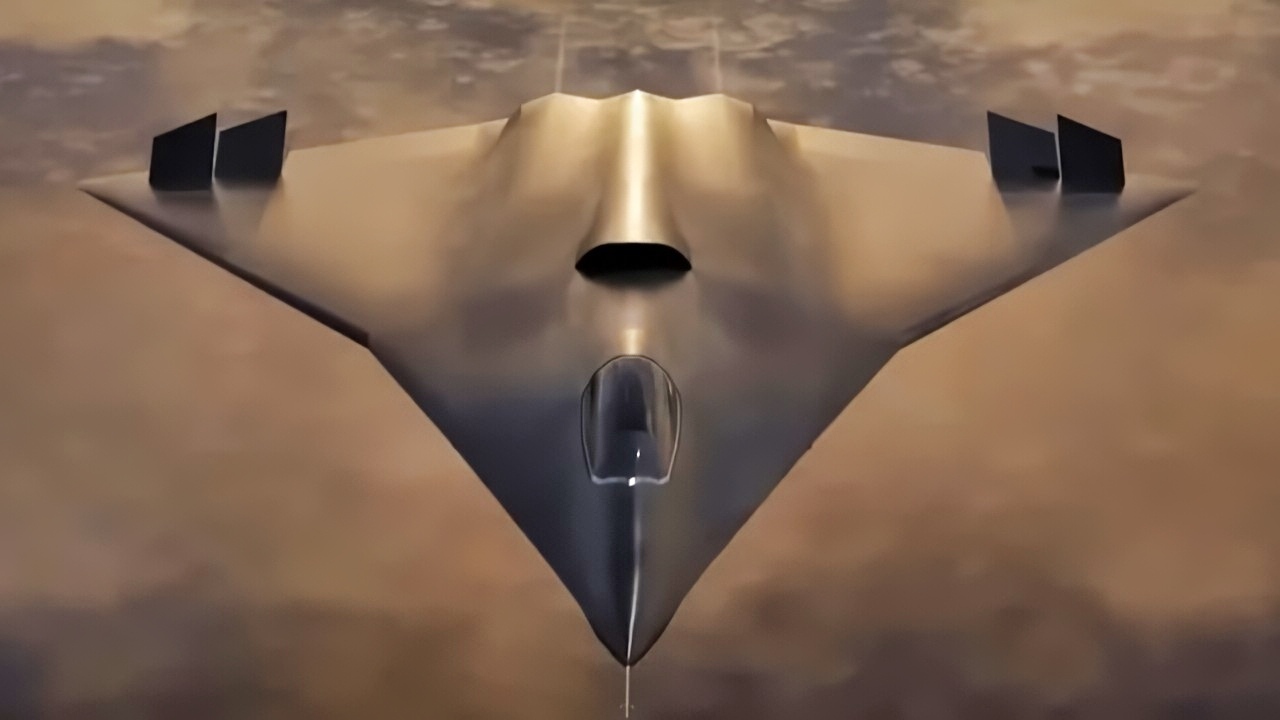
J-36 Fighter YouTube Screenshot/Artist Rendering.
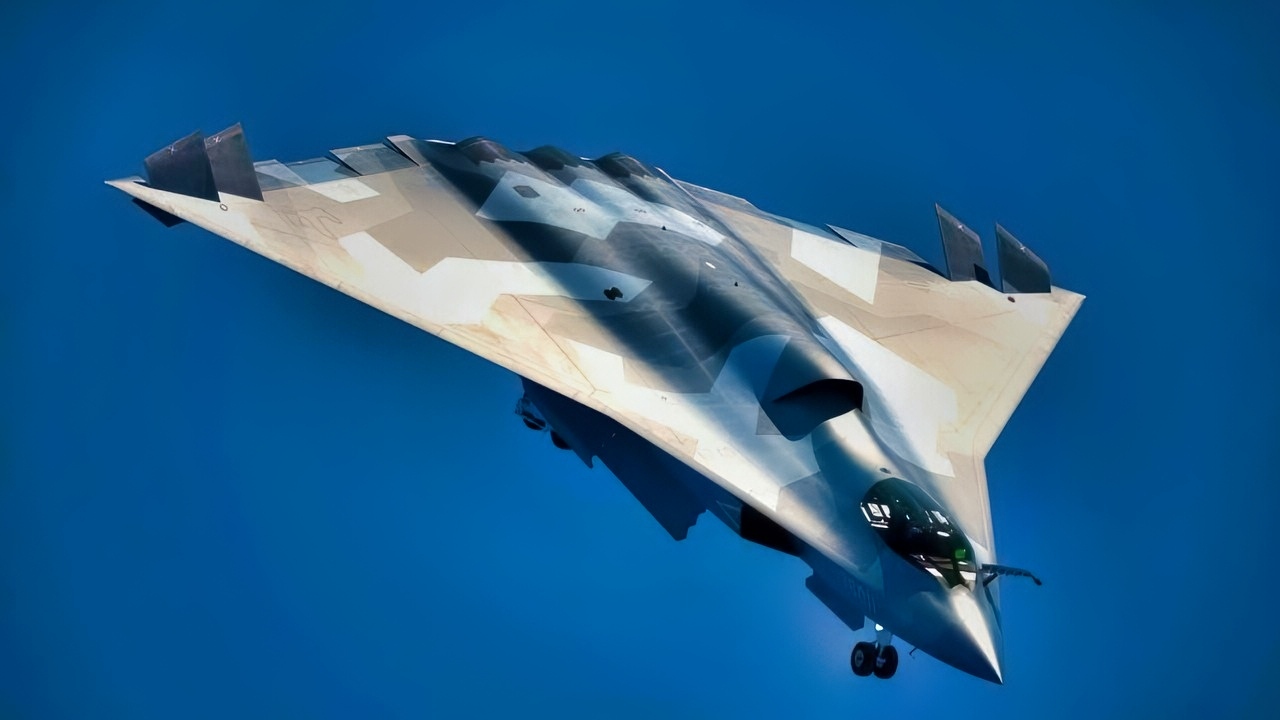
J-36 Fighter Artist Rendition from X Screenshot
Air forces that genuinely want to survive the next fight must build for the world of tomorrow, not the world of yesterday’s tomorrow.
About the Author: Dr. Andrew Latham
Andrew Latham is a non-resident fellow at Defense Priorities and a professor of international relations and political theory at Macalester College in Saint Paul, MN. You can follow him on X: @aakatham.


Some guy
December 8, 2025 at 8:42 pm
One thing missing in the conversation is maintenance complexity.
The f35 requires 300 techs and days turnaround. What is seen with Ukraine’s example, if the infrastructure is stressed, a fighter sitting for a week for the equivalent of an oil change is not a useful fighter. It’s an expensive glass cannon.
J Y
February 16, 2026 at 5:51 pm
Your point is not true at all! Just look at the F-22 case, in which more maintenance is required, but in critical times like short time superiority missions, victories are over everything. So can you tell me that F-22 is an expensive glass cannon?
Izno
June 5, 2026 at 2:11 am
Yes, BTW, in air-to-air, F-22 pilots see the Rafale as on par with their ‘horses’ : as soon you switch your radar “on”, you get detected and Rafale has far better IRST, which in fact is a QWIP, than F-35, F-22 has none at all…
The only area F-35 is stealthier than Rafale is from the front and Rafale has active stealth systems and much lower infrared signature…
Now, everybody has FLIR, neither F-22 nor F-35 are still stealth…
F-22/35 stealth is obsolete
Murthy B
December 9, 2025 at 2:51 am
Layman’s view: A Gen4+ robust, high availability, potent, effective Rafael is still lot better and practical than the Gen5 exceptionally potent, Complex, difficult to maintain, low availability, White Elephant to fly F35++!!! Especially when the white elephant comes with myriad strings which supercede sovereignty and make it highly unreliable in crunch situations!!!
J Y
February 16, 2026 at 6:00 pm
First, your logic doesn’t add up at all when you said here that “potent, effective Rafael” because this article tells you that all these types of hypes won’t work in the next tech air warfare. Secondly, when you said sovereignty, you seemed to forget the 1962 Indo-China war where Chinese beat so hard that India had to call USA for help — and this was a direct humiliation and irony of its so-called non-alignment polity and mentality. Good luck to your sovereignty when you are loser!
Emilio
December 9, 2025 at 3:19 am
Yeah the stealth planes also can’t hide over Europe, with all the mobile towers and TV stations. These are used as passive radar …
Howard
December 9, 2025 at 5:19 am
Maybe manned fighters are yesterday, it’s drones and missiles that dominate in today’s wars against sophisticated defence. No flying objects an be invisible and costly fighters make little economic sense.
Roger
December 9, 2025 at 6:12 am
This is nothing but American propaganda to try to convince others to buy the woefully awful F 35, as for the Rafale it will be around for a long time. The Rafale is a much better platform than the F 35, even with AI the F 35 will never be invisible to modern radar systems contrary to what is stated here,no stealth jet will ever be invisible to radar.The Rafale with its systems doted AI as it is today Wil have a better chance of being undetected by radar with its radar avoidance systems.
J Y
February 16, 2026 at 6:17 pm
Either you are a Russian imposter or an Indian idiot. In the recent Pakistan-India air war, at least one Rafale was shot down by Pakistan China-made missile from a Chinese J-10C or even JF-17. Yes, no stealth aircraft is invisible, but this doesn’t prove that if you’re a short-sighted, you still can shoot a gun at a distance that required a normal eye-sight. At last but not least, if the stealth is not that important, why is India today using all of its might and strength to develop AMCA — a 5th gen jet that is comparable to F-35 and F-22?
Zak Mirza
December 9, 2025 at 10:34 am
Sir, definitely enjoyed your article but you conveniently left out the recent rafale encounter encounter with J10C and 3 to 4 rafales were shot down. Any comments? Rafales are not cheap at over $100M per.
J Y
February 16, 2026 at 6:06 pm
I can answer this question for the professor because I used to be a Chinese military aviation expert, knowing China’s relevant stuff a lot.
At least, one Rafale was shot down by Pakistani China-made fighters (J-10Cs and/or JF-17s). And the main reason why the down Rafale didn’t respond quick enough was that it didn’t have the Chinese missile’s relevant data (like human’s finger print) and thus couldn’t employ its EW efficiently.
Emil
December 9, 2025 at 10:36 am
Latham, paid ny Lockheed, is at it again. Talking smack about everything that isn’t the F-35.
It used to be the gripen. Now the Rafale is the new target.
2000 words of nonsense, as usual.
And stop using AI to wrote your articles. It’s cheap and lazy.
Zain
December 9, 2025 at 9:24 pm
The Rafael has miserably failed against the Chinese / Pakistan JF 17’s and the J C – 20. Instead of using complicated jargon ( like the one the above article is full of)….just read the scoreline ( 5-0 in favor of Pakistan) and come to a logical conclusion. In short the over hyped Rafel costing in excess of 100 million USD Has miserably failed against the immeasurably cheaper JC 20 and JF 17. The world is not just watching……..it is laughing it’s head off!!!!!!
Hari
December 10, 2025 at 6:30 am
Rafale is not 5th gen. But sold as 5th gen and it’s an expensive piece of hardware. Functionally, there are other fighters that betters Rafale. It is only a matter of time to reveal wasted investments.
William
December 10, 2025 at 9:42 am
The Rafale is not a stealthy aircraft for sure but it doesn’t mean it can’t work in duo with another stealthy aircraft. Dassault has been working on the Neuron stealth drone to accompany the Rafale. War is always a matter of scale and economics and maybe Dassault is really into something with their vision of combining the best of both worlds with their ‘cheap’ multirole Rafale combined with their stealthy drone like the Neuron.
Fritz
December 11, 2025 at 7:05 am
The Rafale f5 does not exist yet and most of its developmemt is classified. Currently the 4.2 and 4.3 versions are coming online. These are indeed heavily souped up versions of the f3. The F5 will be something different entirely and no one has seen it or know what it will be capable of. The blind trust in complete stealth assumes no development in stationary radar tech. Dutch new Thales radar already spots and tracks any stealth plane or missile known of today, and cam do so far enough away to intercept. One should assume the Chinese and Russians are not far behind.
Rahman
February 16, 2026 at 12:25 pm
It funny that pakistanis saying again and again that rafale was shot down. India order a upgrade for 35 rafales they already been using. They brought 36 rafales and now they are upgrading 35 of them. And Dassault confirmed one aircraft fall down due to technical issues. I don’t know how they blindly believe pakistani medias.
J Y
February 16, 2026 at 6:19 pm
Very good article! And this will be a wake-up call for a lot of Indians!
Izno
June 5, 2026 at 2:33 am
Strangely, F-35 failed all the comparative tests against Rafale and Remember the nEUROn drone which is stealthier than anything US and uses baked in radar absorbent materials that don’t need 3 days recoating between each mission!
US Air Force has cut 45% of its F-35 orders and now has 267 F-15EX on order…
Maybe USAF should consider purchasing Rafale:
F-35 is a FIASCO and EVERYBODY knows it! The program is already 16 years late on schedule and it won’t do what it was supposed to as soon as 2016 even by 2040… The cost of use is astronomical, and you need a $600 millions white-room hangar that will be at the receiving end of 600 Shaheds and 100 Iskanders within the 1st hour of a war…
F-22 and F-35 are so supeer-duper weapons that Iran is kicking the US military’s b*tt in the Gulf, US Navy can’t re-open the strait of Hormuz while Donald Jeffrey Trumpstein has so much hubris he reject efficient Ukrainian interceptor drones…
Now, thanks to passive radars in lower S-band as well as IRST, the F-22 and F-35 stealths are USELESS, on the other hand, new French and Ukrainian glide bombs range 200km…
Airbases get pounded but Rafale as well as Grippen can operate from roads, they have far better sensor fusion, they’re fully NATO-compatible while F-35 needs proprietary networking, moreover, F-35 is US and WE CAN’T RELY ON THE USA ANYMORE!
You’ve sent all your allies under the bus, even sided with Russia against Ukraine at the UN…
BTW, Serbia didn’t just shot down a single F117, they did hit a 2nd one and they shot down a B-2 !!!
Syria did hit a F35, Iran too…
Europe is done with the US Military Industrial Complex, find yourself other lackeys!