


Key Points and Summary – The U.S. Navy’s next-generation F/A-XX stealth fighter program has been effectively put “on ice,” with its budget slashed as the Pentagon goes “all in” on the Air Force’s competing F-47 (NGAD) program.
-Citing concerns that the defense industry can’t handle two massive 6th-generation projects at once, the move creates a major crisis for the Navy.
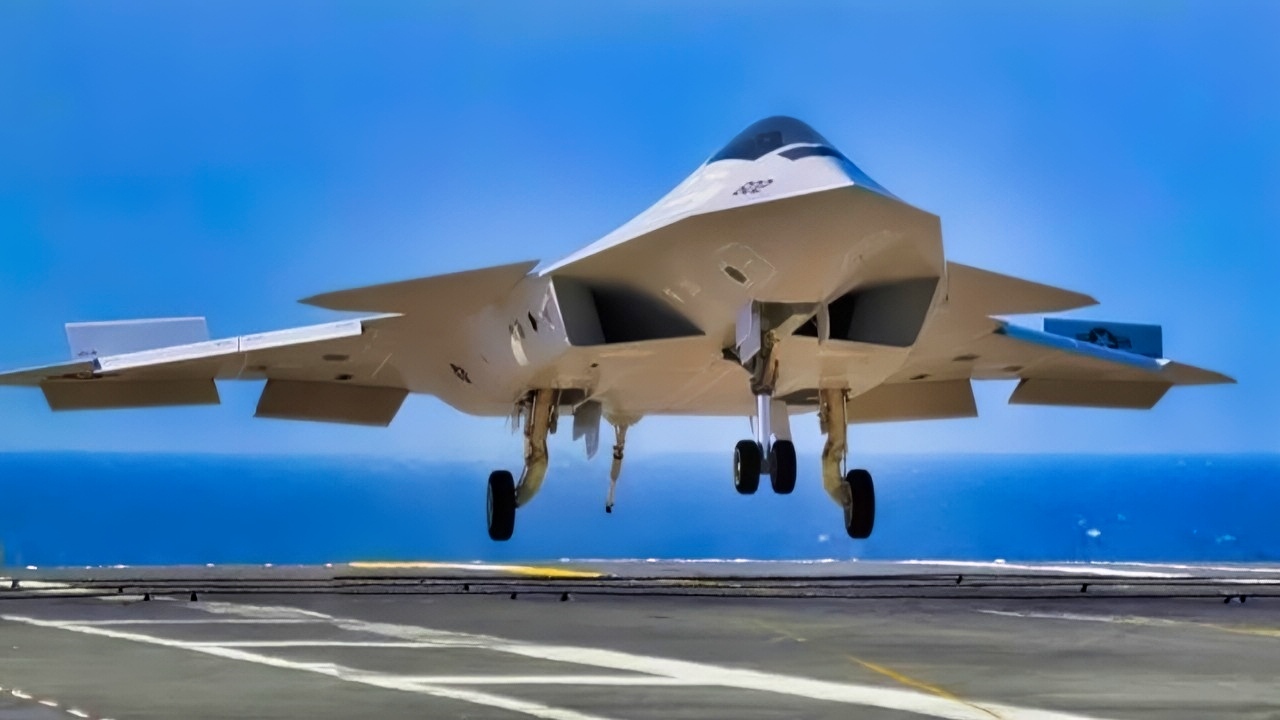
F/A-XX Fighter. Image Credit: Creative Commons.
-With no clear replacement for its aging F/A-18 Super Hornets, the decision leaves the future of America’s carrier air wings, and their ability to maintain air superiority against peer competitors, in serious jeopardy.
The Navy’s F/A-XX 6th-Gen Fighter Crisis?
When Boeing was awarded the contract by the US Air Force to build the F-47 Next Generation Air Dominance (NGAD) 6th-generation fighter this past March, it was kind of a big deal. First and foremost, it was significant for the United States of America as a whole and the USAF in particular, because, if all goes according to plan, the F-47 will be the world’s first operational 6th-generation fighter.
It’s also kind of a big step forward for Boeing, as the NGAD will be Boeing’s first truly original production-phase fighter plane since the 1932 vintage P-26 Peashooter.
Though Boeing currently produces the F-15EX Eagle II and the F/A-18E/F Block III Super Hornet, both of these airframes are legacy carryovers from Boeing’s 1997 merger with McDonnell Douglas.
Speaking of the Block III version of the Super Hornet (first delivered to the US Navy on or about September 27, 2021), it may be staying in service with the US Navy for quite some time. This is because the USN’s own would-be entry into the 6th Generation fighter race, the F/A-XX, is facing a highly uncertain future.
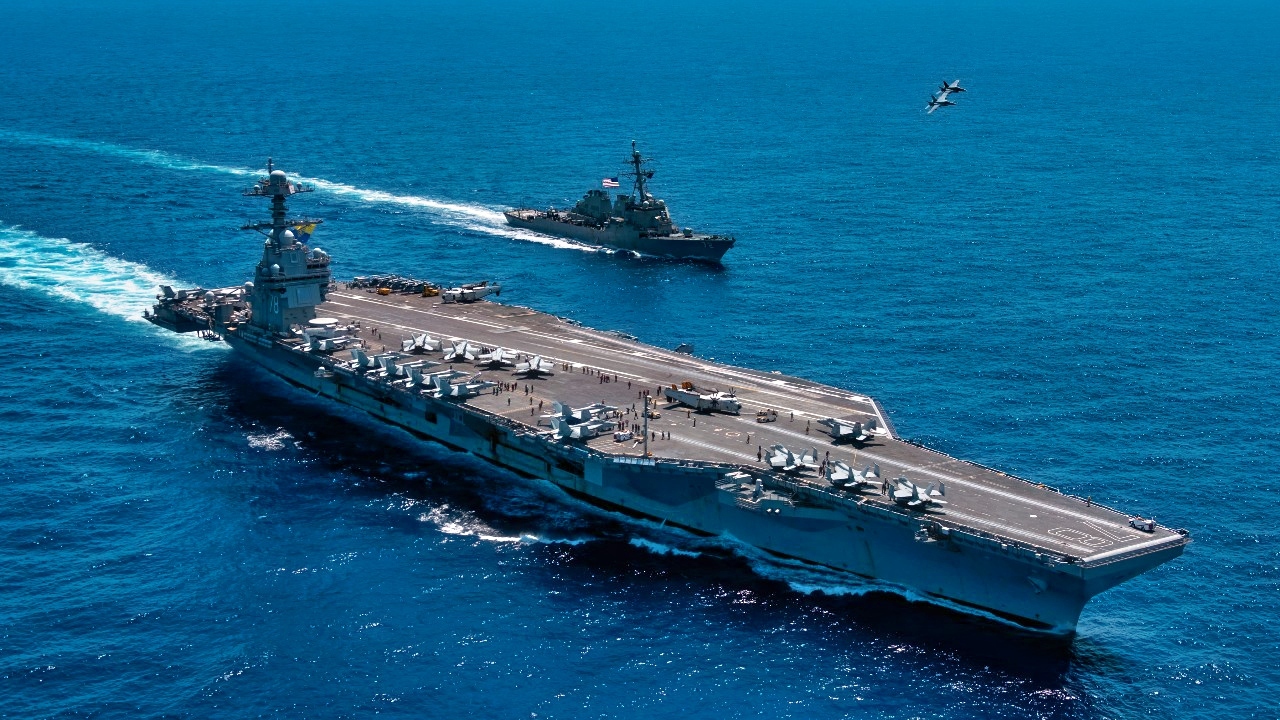
An F/A-18F Super Hornet, attached to the “Blacklions” of Strike Fighter Squadron (VFA) 213 and a F/A-18E Super Hornet, attached to the “Golden Warriors” of Strike Fighter Squadron (VFA) 87 fly over the world’s largest aircraft carrier, USS Gerald R. Ford (CVN 78), the Arleigh Burke-class guided-missile destroyer USS Mahan (DDG 72), April 11, 2025. The Gerald R. Ford Carrier Strike Group is underway in the Atlantic Ocean completing integrated naval warfighting training. Composite Training Unit Exercise (COMPTUEX) is the Joint Force’s most complex integrated training event and prepares naval task forces for sustained high-end Joint and combined combat. Integrated naval training provides America’s civilian leaders and commanders highly-capable forces that deter adversaries, underpin American security and economic prosperity, and reassure Allies and partners. (U.S. Navy photo by Mass Communication Specialist 2nd Class Maxwell Orlosky
Dire Straits for the F/A-XX Program
Simply put, the USAF F-47 program’s gain is proving thus far to be the USN F/A-XX’s loss in the never-ending interservice turf wars to win Pentagon funding dollars.
Though the F/A-XX budget hasn’t been completely frozen, it’s been given short shrift with a bare bones sustainment budget, somewhat analogous to throwing a bone to a starving stray dog.
In a June 27, 2025 TWZ article by Joseph Trevithick titled “Pentagon ‘All In’ On Air Force’s F-47, Puts Navy’s F/A-XX On Ice,” Mr. Trevithick quotes an anonymous Pentagon official who states that “We are maintaining a request of $74 million for the F/A-XX program in this budget to complete the design of that aircraft. We did make a strategic decision to go all in on F-47 … due to our belief that the industrial base can only handle going fast on one program at this time, and the presidential priority to go all in on F-47, and get that program right.”
Almost as an afterthought, this unnamed Pentagon official added that as funding the completion of the design work will allow for “maintaining the option for F/A-XX in the future.”
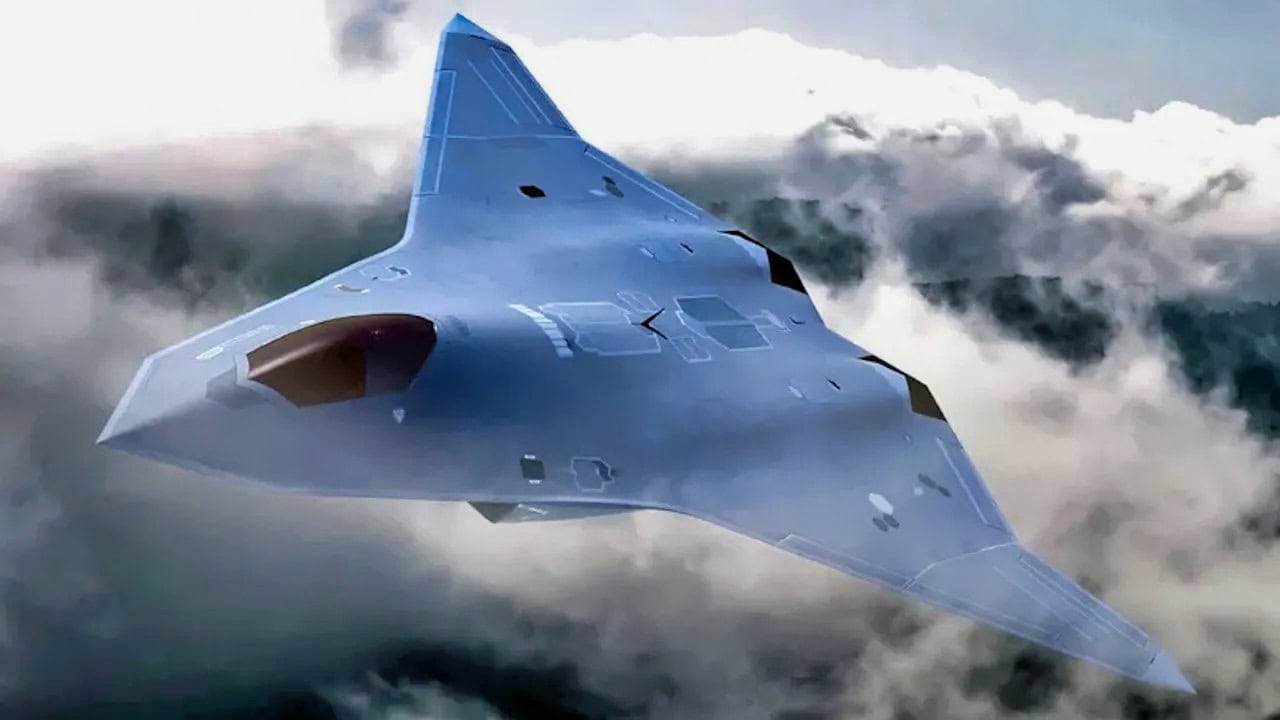
F/A-XX Fighter Mockup. Image Credit: Creative Commons.
Is the Block III Super Hornet Special a Viable Interim Alternative?
Well, the F/A-18E/F can’t realistically be considered a true, full substitute for the F/A-XX, as it’s still a 4.5-generation fighter as opposed to a true 5th-generation stealth fighter, let alone a 6th-generation warbird. That said, the Block III Super Hornet *has* been made stealthier and more survivable with additional treatments that reduce its radar cross section.
As noted by Jen Tebo, Boeing’s vice president of F/A-18 and EA-18G projects, had this to say: “If you think about where the capabilities are going in the future, it’s certainly around the airframe, certainly around the survivability piece, stealth technology piece. But the meat and potatoes in the future are really going to be around the networking and the mission systems, and this sets up the Super Hornet to be the risk-reducer and the bridge to get to Next Gen Air Dominance.”

NGAD. Image Credit: Creative Commons
Reading between the lines, one cannot help but wonder if that was a not-so-subtle appeal on Ms. Tebo’s part to keep the F/A-XX program alive.
After all, though her company already has the USAF NGAD contract, the Boeing bigwigs certainly won’t want to rest on their laurels and would instead keep their Navy contracts viable by logically progressing from the F/A-18 to the F/A-XX.
What Other Improvements Does the Block III F/A-18 Bring to the Table?
In addition to the aforementioned radar cross-section improvements, the Block III version has a quartet of significant upgrades over the earlier iterations of the Super Hornet:
-Advanced cockpit system that combines original displays into a glass touchscreen.
-Conformal fuel tanks for greater fuel-carrying and tanking capacity.

(Jan 31, 2009) An F/A-18 Super Hornet assigned to the “Tomcatters” of Strike Fighter Squadron (VFA) 31 launches from the flight deck of USS Theodore Roosevelt (CVN 71). The Nimitz-class aircraft carrier and embarked Carrier Air Wing (CVW) 8 are operating in the 5th Fleet area of responsibility and are focused on reassuring regional partners of the United States’ commitment to security, which promotes stability and global prosperity (U.S. Navy photo by Mass Communication Specialist 3rd Class Jonathan Snyder/Released)
-Significantly increased service life (to the tune of 10,000 flight hours)
-Advanced networking infrastructure to aid the pilot in decision-making
Rear Adm. John Lemmon, Program Executive Officer for Tactical Aircraft Programs, confidently asserts that “The Super Hornet remains a predominant aircraft in the carrier air wing and will continue to provide significant combat capability into the 2040s.”
An Additional (Non-Boeing) Alternative
Meanwhile, it shouldn’t be forgotten that the Navy does have a 5th Generation stealth fighter that can presumably hold the line until the F/A-XX program in (hopefully) fully funded, although granted, this product comes courtesy of one of Boeing’s biggest competitors: the F-35 Lightning II, built by Lockheed Martin’s legendary Skunk Work’s division.

A pilot from the 34th Fighter Squadron conducts pre-flight preparations in the cockpit of an F-35A Lighting II on the tarmac at Santa Maria Airport, Calif., during Bamboo Eagle 24-3. During Bamboo Eagle, the 388th Fighter Wing is functioning as a force element at a “spoke location,” providing fifth-generation airpower to a larger force operating in the eastern Pacific region. The spoke locations are smaller than an airbase, a cluster of tents, a small footprint of equipment and personnel. (U.S. Air Force photo by Micah Garbarino)
According to the World Directory of Modern Military Aircraft (WDMMA), the US Navy has 30 airframes of the F-35C variant in addition to 421 Super Hornets.
About the Author: Christian D. Orr, Defense Expert
Christian D. Orr is a Senior Defense Editor. He is a former Air Force Security Forces officer, Federal law enforcement officer, and private military contractor (with assignments worked in Iraq, the United Arab Emirates, Kosovo, Japan, Germany, and the Pentagon). Chris holds a B.A. in International Relations from the University of Southern California (USC) and an M.A. in Intelligence Studies (concentration in Terrorism Studies) from American Military University (AMU).
Fighter Jet Fails
Russia’s Su-57 Felon Stealth Fighter Is a Waste of Rubles


Mike Brown
August 2, 2025 at 8:01 pm
It’s all temporary. First, the futuristic F-47 may never reach full development. The sums they plan to invest are scary. After Trump, it’s likely America that will be in dire straits, not the F-/18.
Second, the next administration may fund a succesor to the Super Hornet, or not. It more depends on if the pentagon will see a future in carriers (or not). If they’ll be phased out, no next generation hornet will be developed.
Third: the F-35 is not a substitute for the Super Hornet. The F-35 is incapable of the heavy bomb load and long range.
Fourth: it’s possible that neither Russia nor China will be able to develop a good 6th generation airframe, with full capabilities AND manufacture it. The Su-57 comes in mind. There had been lot of talk 15 years ago, but with 5 prototypes…it’s not the threat the Pentagon feared.
Dean Sipple
August 4, 2025 at 6:13 pm
Keeping politics out of the picture why out of all the USA companies, Boeing has suffered a lot of quality issues. Another point should be dare I say joint operations fighters that work the way they are supposed to work. Air Force, Navy, Marines, Army.
With the cost, minor adjustments to a airframe could accommodate all the needs of each branch.