

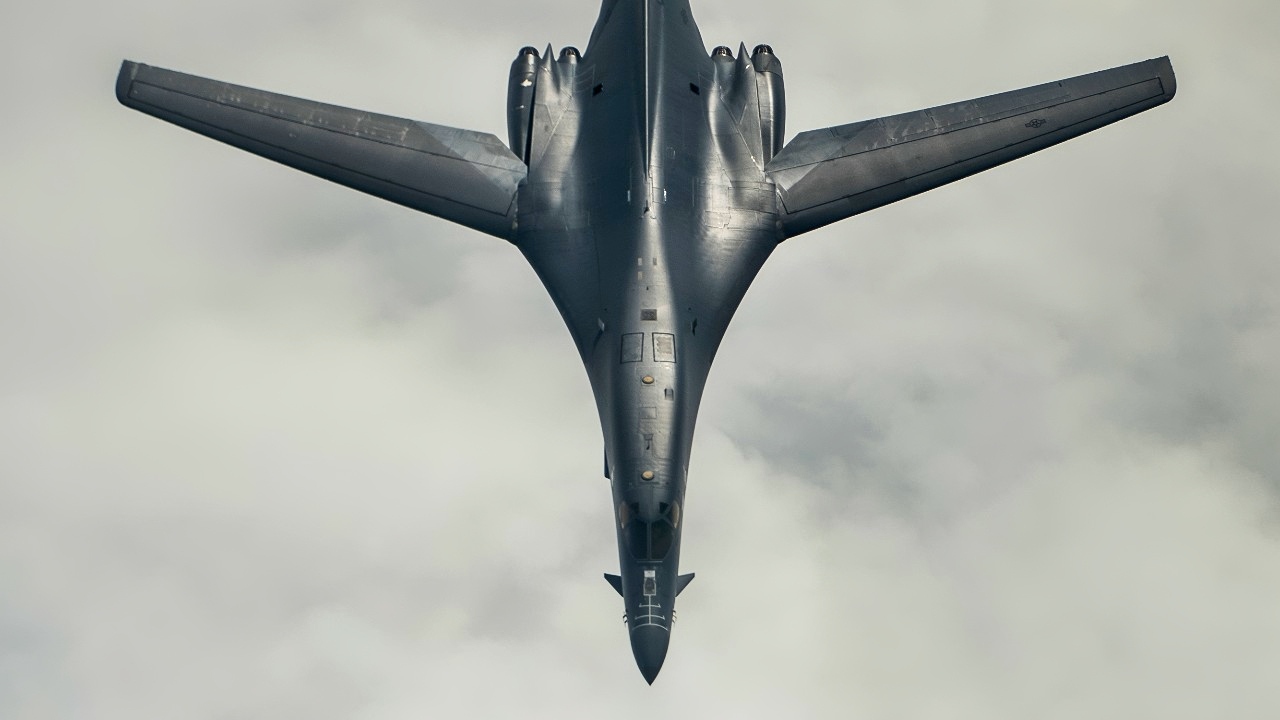
Key Points and Summary on B-1B Lancer Upgrades – The U.S. Air Force is significantly upgrading its aging B-1B Lancer fleet, transforming the venerable bomber into a formidable “missile truck.”
-The core of the upgrade is the new Load Adaptable Modular (LAM) pylon, which will allow the B-1B to carry a vastly increased payload of advanced weapons on its external hardpoints, including the AGM-158 JASSM and potentially hypersonic missiles.
-This move, which could boost the B-1’s weapon capacity by 50%, is a crucial stopgap measure to counter threats from China and Russia amid delays in the next-generation B-21 Raider program.
The B-1B Bomber Is Getting A Significant Upgrade
The US Air Force currently has 44 B-1B Lancer bombers in active service. This number has been maintained due to Congressional mandates. The fleet was initially comprised of 100 aircraft, but the number has been reduced through retirements and crashes.
The B-1B bomber is being phased out and is being replaced by the B-21 Raider stealth bomber.
However, those 45 bombers still in service are getting an upgrade that will increase their payload.
The Air Force is equipping its B-1B Lancer bombers with new external pylons, specifically the Load Adaptable Modular (LAM) pylons, to enhance their weapons carriage capabilities.
This upgrade allows the B-1B to carry a wider variety of munitions, including larger weapons and hypersonic missiles, potentially transforming it into a hypersonic weapons testbed. But could this lead to an increased load for a hypersonic missile truck?
“The B-1 LAM pylon is going to be used to allow us to carry a variety of different weapons and different weapons configurations on the external pylons of the B-1,” said Lt. Col. Scott Pontzer, 419th Flight Test Squadron Commander.
“That will enable weapon delivery and testing in a variety of different configurations and to include new different weapon release profiles.”
The Load Adaptable Modular (LAM) Pylons:
The Load Adaptable Modular (LAM) pylon is a new, modular weapons pylon developed by Boeing for the B-1B Lancer bomber. It’s designed to be adaptable, allowing for the seamless integration and testing of a wide range of existing and emerging weapons, including hypersonic missiles.
The LAM pylon streamlines weapons tests because its modular attachment points can be repositioned, reducing the need for unique pylons and making it possible to test weapons for which an appropriate pylon may not exist. Designers and testers liken it to a “Lego” pylon.
The LAM pylons offer greater flexibility in terms of weapon types and configurations.
The new pylons will significantly increase the B-1B’s payload capacity and allow it to carry a wider range of weapons, including hypersonic missiles.
USAF Hedging Potential Delays For The B-21 Raider:
This move by the Air Force is a smart move as its usefulness is twofold. First, if the B-21 Raider, which is currently in low-rate initial production (LRIP) and undergoing flight testing, is delayed, then the LAM has breathed new life into the B-1B. And it can continue to give the Air Force 44 viable bombers.
However, the LAM can extend the B-1B’s life span even further. With a B-1B potentially armed with 36 hypersonic missiles, it would be an incredibly standoff weapons platform.
The AF’s budget request, as reported by TWZ, noted, “Maximum carriage of existing standoff munitions on the B-1B provides near-term increased volume of fires from standoff ranges and serves to mitigate transition risk of the Air Force bomber fleet prior to the emergence of the B-21 as a combat bomber.”
“The Hypersonic Integration Program successfully demonstrated the B-1’s ability to execute a captive carry of a 5,000-pound class store and the release of a proven weapon shape from a Load Adaptable Modular (LAM) pylon,” the budget documents added.
Increased Payload For the Bomber:
The B-1B, with its new pylons, is being eyed as a platform for hypersonic weapons testing. The initial plans for the B-1 bomber included six pylons with hardpoints to carry nuclear cruise missiles externally.
However, after the collapse of the Soviet Union and the end of the Cold War, the hardpoint pylons were no longer used due to the nuclear treaties (SALT II). However, the bombers do now use one of those stations to carry a Sniper Advanced Targeting Pod (ATP).
The pylons are expected to allow the B-1B to carry a significant number of weapons, potentially including 24 internally and 12 externally. The B-1B could also carry 144 Small Diameter Bombs (SDBs), with 48 externally and the rest internally.
Placing the Hypersonic Attack Cruise Missile on the B-1B, with a potential of carrying 36 missiles as a standoff delivery platform, will certainly get the attention of China and Russia, who have been developing hypersonics.
And suppose further airstrikes against Iran are called for in the future. In that case, the ‘BONE’ will be a superb platform to launch airstrikes that could once again be used against the Islamist Republic’s nuclear facilities, which were just recently destroyed.
About the Author:
Steve Balestrieri is a National Security Columnist. He served as a US Army Special Forces NCO and Warrant Officer. In addition to writing on defense, he covers the NFL for PatsFans.com and is a member of the Pro Football Writers of America (PFWA). His work was regularly featured in many military publications.
Military Matters
Russia’s Su-57 Felon Stealth Fighter Is a Waste of Rubles


