

Washington has spent decades telling European governments what they should do for their own defense. However, domestic politics continues to dominate military decisions across the continent.
In the United Kingdom, for instance, Prime Minister Keir Starmer suffered another political blow when his defense secretary resigned, warning that the government’s spending plan would “make the country less safe.” Predictably, the Trump administration joined in. Undersecretary of Defense (War) Elbridge Colby wrote Starmer, declaring that “There is again a great need for more British military strength in this critical time. We urge the UK to meet that need with urgency, scale, and determination.” Meaning spend what we desire, not what you believe is expedient.

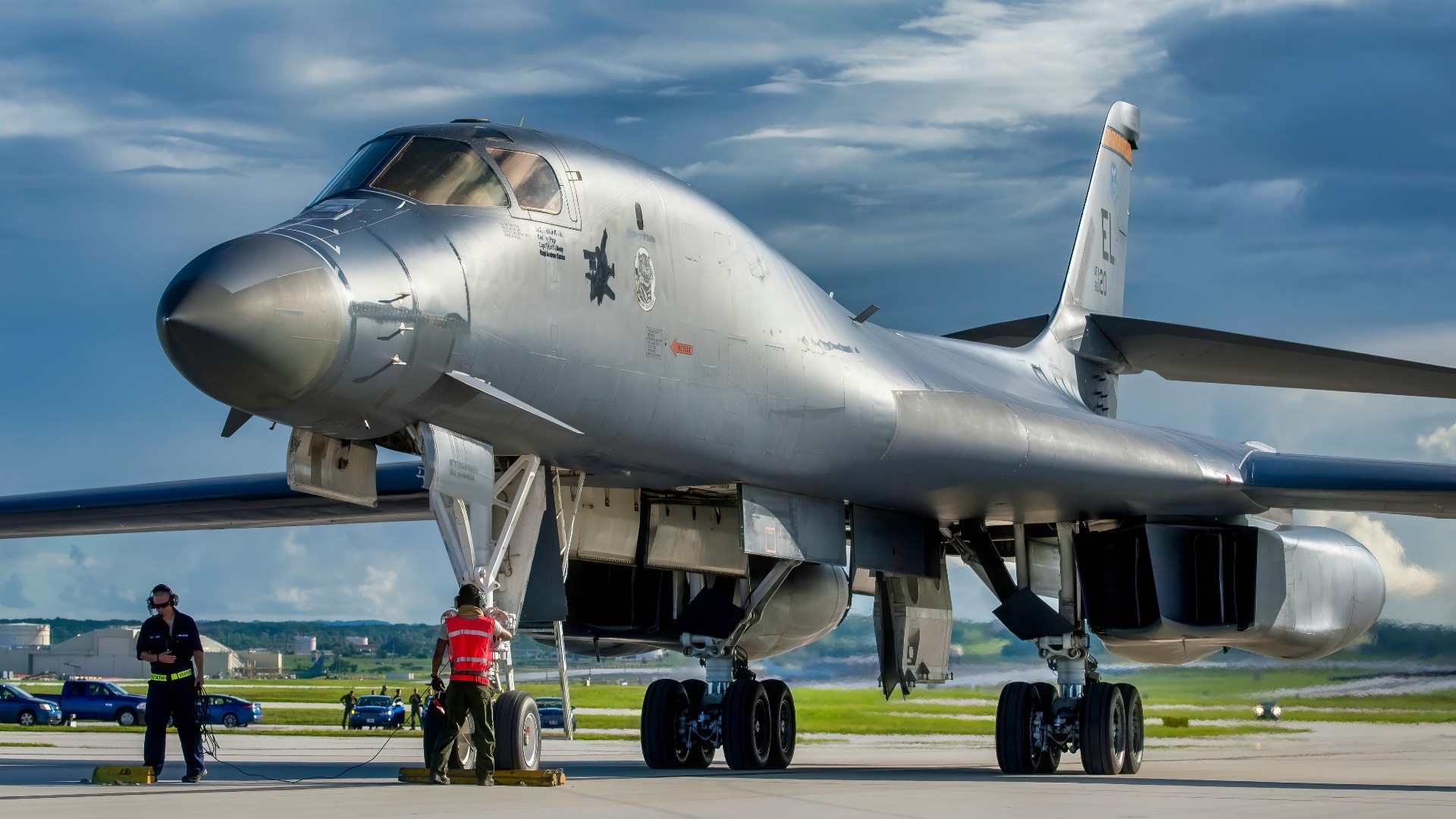
B-1B Lancer. Image Credit: Creative Commons.
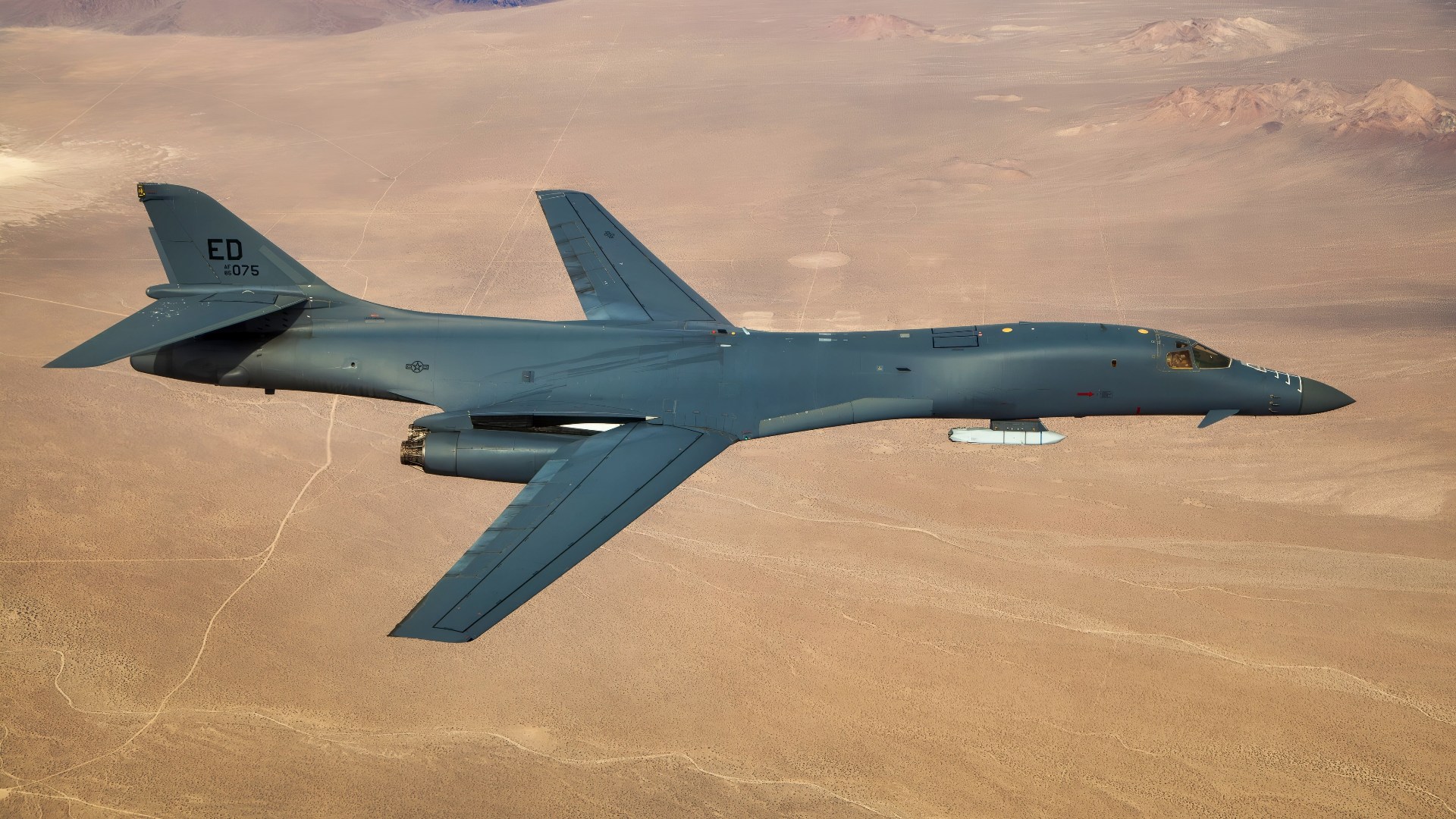
A B-1B Lancer with a Joint Air-to-Surface Standoff Missile (JASSM) flies in the skies above Edwards Air Force Base, California, Nov. 20. The flight was a demonstration of the B-1B’s external weapons carriage capabilities. (Air Force photo by Ethan Wagner)
However, outside pressure is rarely sufficient to override domestic political considerations.
For instance, the administration is even more hostile toward Spanish Prime Minister Pedro Sanchez, who rejected the new NATO spending standard. Trump responded by threatening to—predictably—hike US tariffs. Nevertheless, Sanchez won domestic support, resisting foreign pressure. After all, does anyone in Spain believe the Russian hordes, which still have not conquered Donbas, let alone Ukraine, will soon show up at the gates of Barcelona, Madrid, Valencia, and Seville?
Washington should change its approach. Instead of instructing allied states on how to defend themselves, the US should explain its plans and then let its friends and partners act accordingly.
American frustration with free, or at least cheap, riding is longstanding. A cavalcade of US officials before Trump sought to spur greater military spending in Europe. Perhaps most famous was Defense Secretary Robert Gates, who ended his time in Washington warning that “Future U.S. political leaders—those for whom the Cold War was not the formative experience that it was for me—may not consider the return on America’s investment in NATO worth the cost.” Trump’s rhetoric has been even more frequent and florid.
However, contrary to US officials’ assumptions, the long refusal of other NATO members to spend more on the military was Washington’s, not Europe’s, fault. Americans were paying too much because they chose to. It was US policymakers who insisted on defending Europe despite that continent’s decision to prioritize its generous welfare state.
Washington could and indeed should decide how much to spend based on US interests, not on European actions. That assessment should be based on continental capabilities, not outlays. There is no cause for Americans to pay to defend others who fail to defend themselves. First, Europe is no more important to people here than it is there. If the latter aren’t willing to put their lives and wealth on the line, then Americans should not. Second, providing an inviolable subsidy ensures that its beneficiaries will take advantage of American generosity. The resulting defense gap inevitably multiplied as European actions increasingly strained resources. The more Washington tolerated cheap riding by allies, the more friendly nations lagged in their efforts. Still, Europeans cannot be faulted for taking advantage of successive US administrations, which preferred to preserve American domination despite the extraordinary cost to the American people of such an approach.
The US is the most secure great power ever, with vast oceans to the east and west and just two neighbors, both weak and pacific, to the north and south. In contrast, China and Russia both border more than a dozen other nations with which they have fought numerous wars over the last century and more. Beijing must also guard its maritime boundary, which includes Taiwan, the Philippines, and Japan, the latter of which has long been a deadly enemy.
America’s defense is easy in contrast. The only reason for Washington to spend anything approaching the administration’s requested $1.5 trillion for the Department of Defense/War is to be “running the world,” as the president last year claimed to be doing.
Washington should stage a calculated retreat from this role. The administration appears to be disengaging, but unfortunately only in a limited, haphazard, and arbitrary fashion. For instance, the president announced that he intended to withdraw some troops from Germany, a welcome decision in principle, but not as an arbitrary fit of pique, directed at Chancellor Frederick Merz for criticizing Trump’s bungling in Iran. The administration will leave America’s defense obligations unchanged.
Better is the decision to reduce air and naval deployments in Europe, but even here, the policy change is painfully slow. Moreover, Washington should calibrate commitments and capabilities. If the administration is going to devote less firepower to defending the continent, it should first reduce its commitment to do so. The worst outcome would be to promise the impossible, to protect Europe with insufficient forces, essentially drawing lines that it is not prepared to enforce.
The fundamental problem appears to be that this president, even more than his predecessors, wants to set allied as well as US policy. After nearly six years in office, he has made only minimal reductions in Washington’s role in Europe while leaving America’s Asian deployments unchanged and greatly increasing the nation’s entanglement in the Mideast. Despite his persistent criticism of allied policy, he has sought to use the US security guarantee to extract wealth from allies by forcing their acquiescence to punitive and destructive tariffs. This approach appears to have worked in both Europe and Asia. Indeed, officials in the former have admitted to surrendering on trade to preserve Washington’s willingness to defend Europe.
Alas, this is no bargain for America. Washington should not hire out US military personnel for mercantile purposes. The better security policy would be to keep Americans out of other nations’ wars absent compelling justifications, since most conflict would otherwise pass this nation and hemisphere by. For instance, the Trump administration has rightly transferred the overwhelming responsibility for supporting Ukraine over to Europe. Continuing to risk war with a major conventional power that matches America’s nuclear arsenal and believes existential interests to be at stake would be foolish, even reckless.
Europe is not the only problem area. Agreeing to fight Israel’s war against Iran demonstrates how even the best laid military plans of the globe’s superpower can go awry. South Korea possesses 50 times the GDP and twice the population of North Korea, yet Washington continues to deploy nearly 30,000 troops in the South. Japan has long possessed the means to create an effective deterrent to Chinese aggression, but it failed to do so because the US promised to do so.
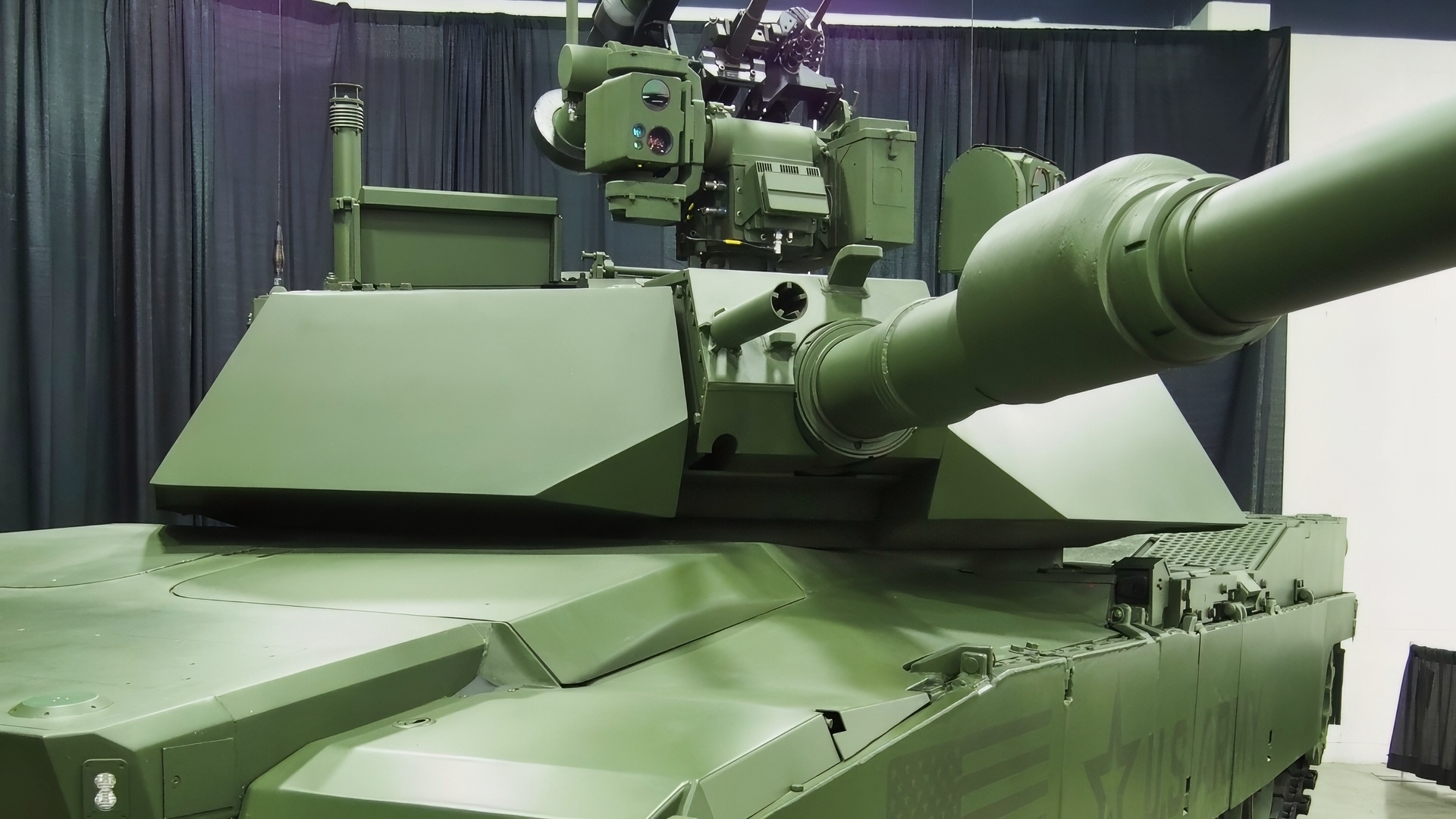
M1E3 Abrams. National Security Journal Photo.
Of course, Washington takes satisfaction in rising allied military outlays worldwide. However, this has occurred out of necessity, not generosity. America’s defense dependents increasingly fear aggression by their neighbors and abandonment by the US. Security realities have proved to be a much more powerful accelerant for defense than pious lectures.
Most people, including Americans, bridle at other governments telling them what to do, even when the advice seems well-directed. On defense, Washington should allow reality to do the talking. Rather than telling Europe how much to spend on its defense, the Trump administration should begin a phased military disengagement from the continent. And then allow the Europeans to respond as they wish.
About the Author: Doug Bandow
Doug Bandow is a Senior Fellow at the Cato Institute. A former Special Assistant to President Ronald Reagan, he is the author of Foreign Follies: America’s New Global Empire.


winnie-the-pooh
June 16, 2026 at 9:53 am
Britain, the S-I-C-K (very ill) man of Europe, is trying to fight Russia, a country it sees as a destitute beggar nation.
Truth is, for several years now, in Britain, the top name for newborn male babies is Mohamed. Heh, heh.
Europe, including Britain, faces no outside danger. So, no need to spend huge sums of money on defense.
The real danger is one that is residing inside Europe, or living & growing within Europe intself.
NATO is an organization that has outlived its usefulness, at least in Europe.
The threats facing Europe are the changing faces in Europe, the immigrant faces and their opposing faces, or remigrants.
And the rising nazists.
ZCKS
June 16, 2026 at 12:24 pm
We should have stopped spending on the defense of Europe after the USSR fell.
If they are not willing to defend themselves then they are not worth helping.
TNT
June 16, 2026 at 7:42 pm
After they refused us use of our own bases during the Iran crisis, we should have pulled all our troops out iof Europe and let them fend for themselves.