


Key Points and Summary – Air-independent propulsion (AIP) submarines keep “sinking” U.S. aircraft carriers in exercises, and the reason is simple: they are brutally quiet, cheap, and deadly in coastal waters.
-This piece explains how AIP systems like Sweden’s Stirling-powered Gotland class can stay submerged for weeks, evade layered defenses, and repeatedly infiltrate carrier strike groups—as they did against USS Ronald Reagan.

(Feb. 25, 2019) The aircraft carrier USS John C. Stennis (CVN 74) transits the South China Sea at sunset, Feb. 25, 2019. The John C. Stennis Carrier Strike Group is deployed to the U.S. 7th Fleet area of operations in support of security and stability in the Indo-Pacific region. (U.S. Navy photo by Mass Communication Specialist 1st Class Ryan D. McLearnon/Released)
-It walks through AIP technology, cost comparisons with U.S. nuclear boats, Sweden’s next-gen A26, and China’s Yuan-class subs, and asks whether the U.S. Navy—facing shrinking attack sub numbers—can afford to ignore this threat and opportunity much longer.
AIP Submarines Are “Sinking” Aircraft Carriers Too Often
Recently, AIP (Air-Independent Propulsion) submarines have been getting a lot of media attention, and deservedly so, with stories of AIP subs “sinking” aircraft carriers in large-scale naval exercises.
AIP submarines “sink” aircraft carriers in drills primarily due to their extreme stealth, quiet operation, and extended underwater endurance in specific environments, which allows them to bypass the carrier strike group’s layered defenses undetected
And many smaller navies that operate primarily around coastal waters are turning to cheaper AIP submarines, because the disadvantages of the AIP boats disappear when operating close to shore.
The trade-off in range and endurance is more problematic for the U.S. Navy, which operates across the breadth of the Atlantic, Pacific, and Indian Oceans.
Differences Between Nuclear And Diesel Electric Boats
USNI pointed out a few years ago that “the big difference between a nuclear-powered submarine and a conventional diesel-electric boat is underwater range and performance. Size, noise, layout, weapons, sensors, and so forth are simply the consequences of the type of propulsion adopted.”

PHILIPPINE SEA(Feb. 22, 2016) USS John C. Stennis (CVN 74) sails through the Philippine Sea. Providing a ready force supporting security and stability in the Indo-Asia-Pacific region, Stennis is operating as part of the Great Green Fleet on a regularly scheduled 7th Fleet deployment. (U.S. Navy photo by Mass Communication Specialist Seaman Cole C. Pielop/Released) .
While the nukes’ reactors are continuously operating, the diesel boats run on battery power under the surface unless they operate in what sailors call “snorkeling”, where the sub operates close to the surface, where a snorkel allows the diesel boat to run its diesel engines and recharge its batteries.
And many people want to know why the US Navy doesn’t build AIP submarines. AIP submarines are much cheaper and quieter when operating at low speeds.
What Is an AIP Submarine?
AIP (Air-Independent Propulsion) submarines are non-nuclear submarines that can operate underwater for extended periods without surfacing or using a snorkel to recharge their batteries, unlike traditional diesel-electric submarines. It uses an extra power plant that doesn’t require atmospheric oxygen, significantly enhancing its submerged endurance and stealth capabilities.
AIP boats are advantageous because they can remain submerged for weeks at a time, greatly extending their stealth and operational flexibility compared to conventional diesel-electric submarines.
They are also quieter than nuclear submarines, have lower initial and sustainment costs, and are particularly well-suited for shallow, coastal, or confined waterways.
By reducing the need to snorkel for air to charge batteries, AIP submarines are exposed to detection far less frequently.
Some AIP systems, especially fuel cells, are also extremely quiet, making them stealthier than nuclear submarines, which can produce detectable noise from reactor-cooling pumps.
Sweden produced the first AIP submarine, the Gotland class, which is very well known and respected.
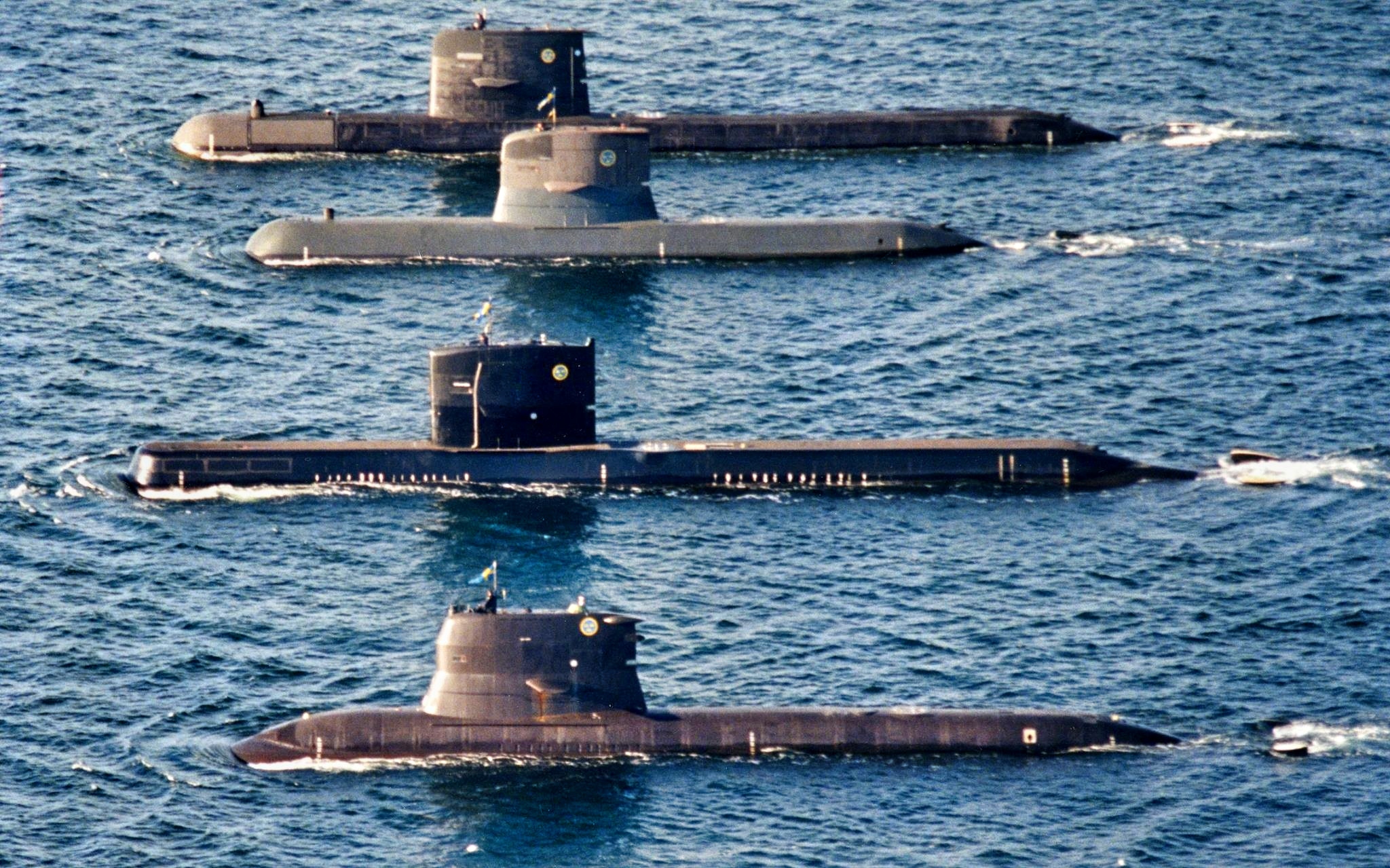
Gotland-Class Submarines. Image Credit: Creative Commons.
These small but incredibly lethal Air Independent Propulsion (AIP) submarines proved their worth more than once, when, during an exercise with NATO, the submarine “sank” a US supercarrier.
The US Navy has used aircraft carriers for power projection for over 80 years. With aircraft on board, they can sweep an enemy from the sea or bomb his troops and facilities on land.
But as fearsome and capable as carriers are, they are also the biggest target for our adversaries. That’s why the carrier groups have so many support ships surrounding the carriers in a protective cocoon.
Sinking The USS Ronald Reagan
However, in 2004, Sweden demonstrated during an exercise that a diesel-electric submarine equipped with air-independent propulsion (AIP) systems could sink one of America’s aircraft carriers.
The Swedish submarine HSwMS Gotland, equipped with AIP, “sank” the USS Ronald Reagan during the exercise, showcasing the stealth and endurance of these submarines.
And it wasn’t just once. During continuing exercises, the small Swedish sub could dart in and out of Reagan’s carrier group every time. And the excellent crew won every encounter. This was a huge wake-up call for the Navy’s carriers.
Sweden’s Gotland-class Submarines
The Gotland-class boats are small, crewed by only 32 officers and sailors. They are just 200 feet long and displace only 1,380 tons. Sweden possesses three Gotland-class diesel-electric attack submarines. These submarines can travel up to 20 knots when submerged.
These Gotland-class subs were the first to feature a Stirling engine air-independent propulsion (AIP) system. Their weapons systems can fire torpedoes using four 533mm and two 400mm torpedo tubes. The Gotland was commissioned in 1996, and her sister boats, Uppland and Halland, joined the fleet in 1997.
The subs were designed to emphasize holistic stealth for operations in Swedish waters. The submarines are built to conduct antisurface and antisubmarine warfare, forward surveillance, special operations, and minelaying. The subs are very maneuverable due to the X-rudder system.
The Stirling Engine
The innovative Stirling engines can burn either oxygen stored in liquid oxygen tanks or standard diesel fuel. The subs are virtually silent and vibration-free, permitting weeks of undetectable underwater endurance. This capability to operate for long periods underwater was once reserved only for nuclear-powered submarines. The Gotland-class missions are limited primarily by the quantity of liquid oxygen stored on board.
AIP allows a piston to move in a cylinder by rapidly heating and cooling the gas inside. The engine cools down with cold seawater and heats up with liquid oxygen and diesel fuel. This efficient cold and heat system is unique to Gotland-class boats. It creates a quiet and fuel-efficient power plant.
The submarines also have two standard diesel engines that are typically used only for long-distance surface transits or while snorkeling. The submarines’ hydrodynamic hull minimizes noise and active sonar response, making it more difficult for enemy ships to locate.
The subs’ capabilities proved so innovative that the U.S. Navy coordinated to lease the Gotland after the “Reagan sinking” between 2005 and 2007. During that time, the HSwMS Gotland and her crew were based in San Diego, California, and operated as an opposing force in U.S. antisubmarine warfare training.
In 2018, the Gotland-class submarines were modernized by extending the bow by six feet. They included improvements to the sensor suite, an optronics mast, and upgrades to combat and data-management systems. The outstanding Stirling engines were upgraded, and the boat was modified to work in warmer waters.
Small But Lethal: Aircrft Carriers in Trouble?
Gotland-class submarines displace 1,580 tons surfaced and measure 203 feet with a 20-foot beam. Crew size ranges from 25 to 32 personnel. The armament consists of four 21-inch bow tubes for heavyweight Type 62 torpedoes and two 15.7-inch tubes for lighter-weight Type 45 or Type 47 torpedoes.
The smaller 15.7-inch tubes can be loaded with two torpedoes per tube. A total of 12 heavyweight and six lightweight torpedoes can be carried. Up to 48 mines can be transported using an external belt.
Sweden’s A26 submarine project is being billed as the world’s first 5th-generation submarine. And it could end up becoming the world’s best non-nuclear boat due to its outstanding design.
Sweden is planning on adding the two A26s with two next generation AIP submarines to work alongside their three upgraded A19 Gotland AIP boats. The A26s and A19s will share common combat systems and sensors, but the A26 boats will boast improved endurance and offer a larger bow portal for Special Operations combat divers and unmanned drone vehicles.
AIP Boats Are Much Cheaper
A typical Virginia-class attack submarine costs US taxpayers about $2.8 billion. And that is without the usual delays and cost overruns that are commonplace with the US shipbuilding industry.
Mid-life refueling of the nuclear reactors for a Los Angeles-class submarine typically costs about $200 million. However, the Virginia-class submarines do not require midlife refueling, as their nuclear reactors are designed to last the entire operational life of the boat, estimated at 33 years.
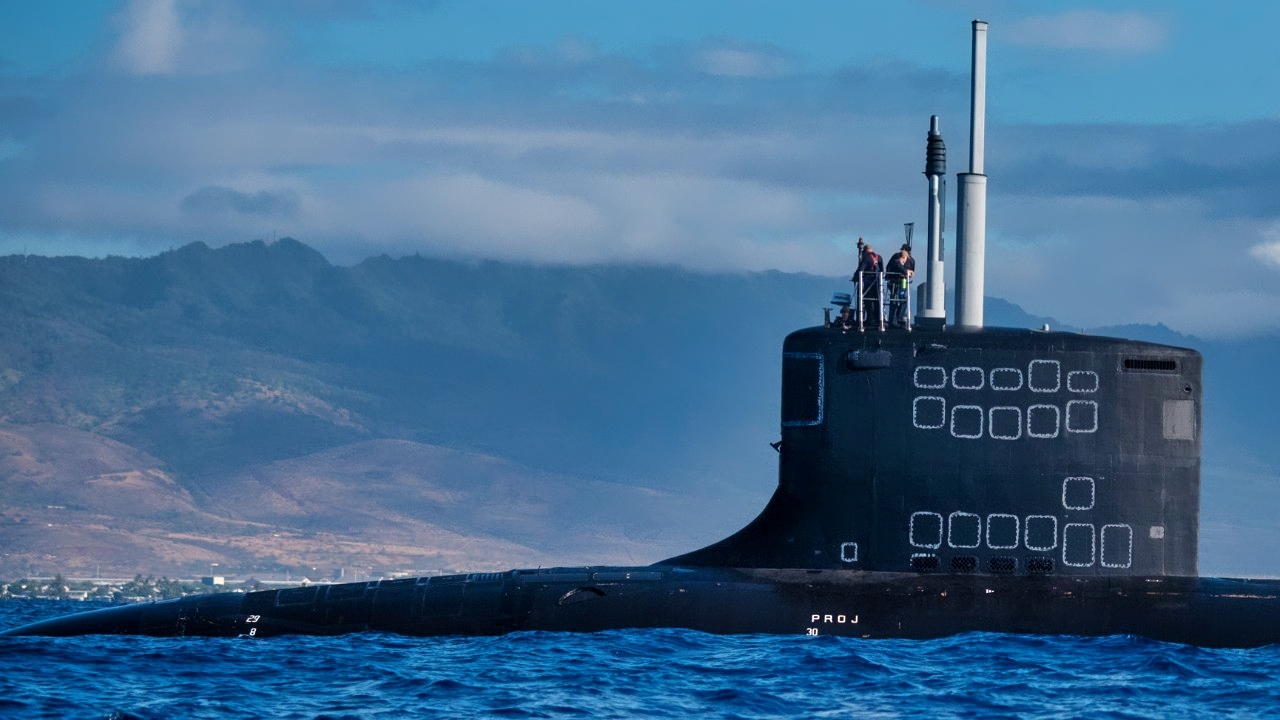
180709-N-KC128-1131 PEARL HARBOR (July 9, 2018) – Multi-national Special Operations Forces (SOF) participate in a submarine insertion exercise with the fast-attack submarine USS Hawaii (SSN 776) and combat rubber raiding craft off the coast of Oahu, Hawaii during Rim of the Pacific (RIMPAC) exercise, July 9. Twenty-five nations, 46 ships and five submarines, about 200 aircraft, and 25,000 personnel are participating in RIMPAC from June 27 to Aug. 2 in and around the Hawaiian Islands and Southern California. The world’s largest international maritime exercise, RIMPAC provides a unique training opportunity while fostering and sustaining cooperative relationships among participants critical to ensuring the safety of sea lanes and security of the world’s oceans. RIMPAC 2018 is the 26th exercise in the series that began in 1971.` (U.S. Navy photo by Mass Communication Specialist 1st Class Daniel Hinton)
This is a significant advantage over older classes of nuclear submarines that required an expensive and time-consuming refueling and overhaul process.
However, an AIP submarine, which is typically much smaller, with crews costing less than half of a nuclear sub, costs between $200 million to $600 million, which is substantially cheaper.
With the Navy struggling to maintain combat power in numbers, the submarine force is slated to shrink from 55 to 43 by 2030. The advantage of an AIP submarine like the Japanese Soryu, which has an extended range, could become much more attractive, especially for our forward-deployed Navy elements in the Pacific.
China Also Has AIP Submarines
The Swedes aren’t the only ones with AIP submarines. China has built a Yuan-class submarine that operates with an AIP engine. China has built 20 submarines, which carry torpedoes and anti-ship missiles.

Yuan-Class Submarine AIP. Image Credit: Creative Commons.
While the exercises involved AIP boats “sinking” aircraft carriers during an exercise environment, with some deliberately imposed constraints, real combat situations will be markedly different.
However, these submarines will be another worthy adversary if the US and China ever come to conventional war.
But the good news is that Sweden is now a member of NATO, and the Russians will have to worry about their ships and submarines falling prey to the Gotland submarines.
About the Author: Steve Balestrieri
Steve Balestrieri is a National Security Columnist. He served as a US Army Special Forces NCO and Warrant Officer. In addition to writing on defense, he covers the NFL for PatsFans.com and is a member of the Pro Football Writers of America (PFWA). His work was regularly featured in many military publications.


George
December 9, 2025 at 8:07 am
Von Clausewitz instructs us that war is an extension of politics. Maybe try better politics, it’s cheaper.
JDDrouin
December 9, 2025 at 10:23 am
Incorrect … the three letters that sum up “The Biggest Threat to U.S. Navy Aircraft Carriers” are F.R.O., aka “Flag Rank Officer(s)”, aka “buffoons and clowns”.
Doyle
December 9, 2025 at 11:18 am
I’m just guessing here but maybe carriers do not belong in coastal waters….
Bill
December 9, 2025 at 2:21 pm
I’m hoping in the years since these drills occurred that we made some adjustments. Dereliction of duty if we didn’t.
Allan
December 9, 2025 at 4:28 pm
I think the 3 letters causing the most damage are DEI.
But the whole premise of the article is a bit off. 21 years ago, in what the author admits was under “deliberately imposed constraints”, the Swedish sub “sank” the Reagan. Talk about clickbait.
KJ
December 9, 2025 at 6:05 pm
This is really old news. The Gotland exercise with the Reagan was over 20 years ago. And it occurred on the training ranges off San Diego. In a scripted event where the Reagan was in an area no Admiral will ever put his Strike Group in a real conflict.
And how did the Gotland end up in San Diego? Transported on a Float-on/float Off ship. AIP powered SSKs may be ultra quiet, but they have neither the range nor the speed to chase down and sink a warship. They are excellent at ambushing ships in choke points. In 1991 USS Chicago, at the end of a 6 month deployment in Guam was getting ready to head home (to San Diego). Instead the Gulf War kicked off and the Navy realized they needed more Tomahawk shooters quickly. So Chicago left Gaum and sprinted all the way to the Gulf and took station in her launch box. This tacked on an additional 3 months to her deployment (a 9 month deployment is extraordinarily rare for a submarine). There is no way a SSK could have performed such a feet in time to be of any tactical or strategic relevance. That is what nuclear power buys you. The ability to get to a trouble spot today and then remain there for months. And while AIP SSKs may be generally quieter than modern SSNs, the difference is not enough to be of any real advantage.
Lepke
December 10, 2025 at 6:06 pm
21 years ago AIP subs were effective, maybe changed some now.