


The Essex-class aircraft carrier was undoubtedly the most important warship class the United States has ever built. No, the Essex-class was neither the biggest nor the most technologically advanced.
Yet, it was the most important warship the US Navy ever possessed because it was the perfect apotheosis of industrial capacity, naval doctrine, and wartime necessity. Indeed, more than any other weapon in history, the Essex-class carriers symbolized America’s ability to turn industrial power into overwhelming military dominance.
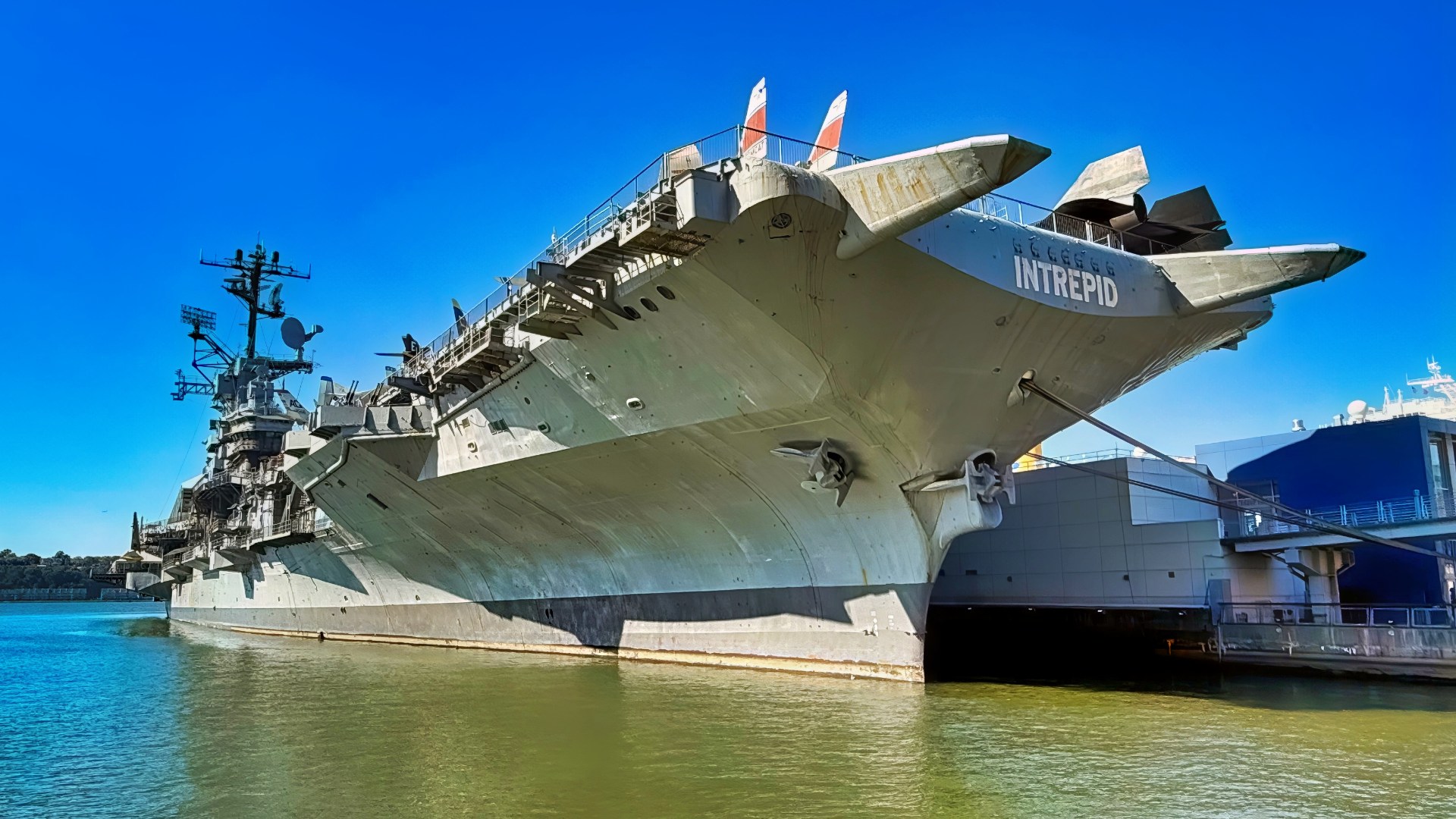
Essex-Class National Security Journal Photo. Taken at Dock of USS Intrepid in NYC Harbor.
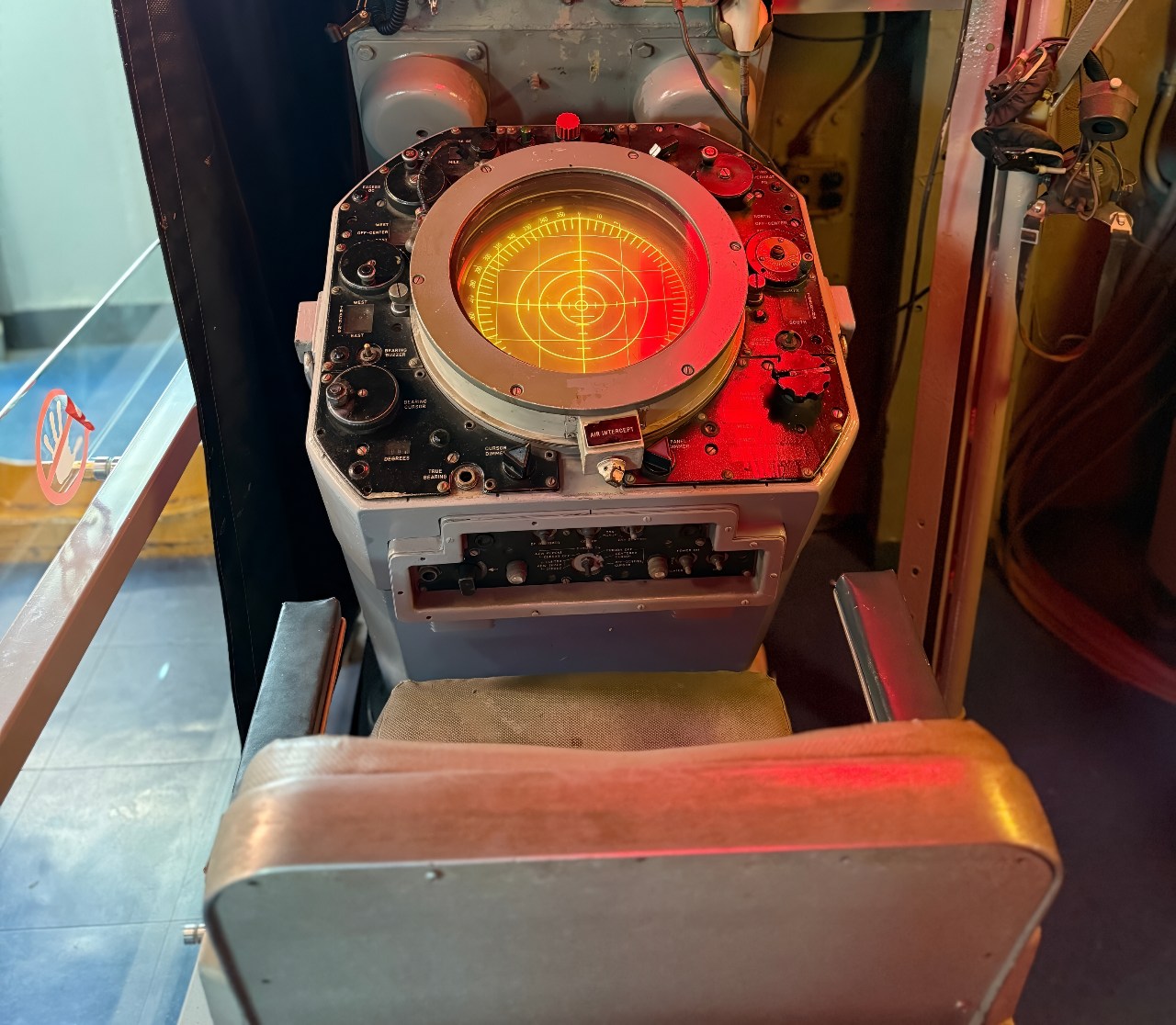
Essex-Class USS Intrepid Radar Station Photo. Image Credit: National Security Journal.
Before World War II, the US Navy still thought that the battleship was the king of naval warfare. Aircraft carriers existed. They were, however, secondary. But Japan’s surprise attack on Pearl Harbor changed that dynamic overnight.
The Navy switched to prioritizing the aircraft carrier after Pearl Harbor, not because it wanted to. Instead, the Navy had no choice but to embrace the aircraft carrier because the Japanese had destroyed so many US battleships that the Pacific Fleet had only the carrier.
Because the Navy had to respond immediately to the Japanese surprise attacks, it had to use the fleet’s available assets in the Pacific.
That was the aircraft carrier.
America’s Ultimate Answer to Imperial Japan
The Essex-class emerged as America’s answer to the need for carriers in the Pacific Theater of WWII. The Navy completed 24 ships of this class out of 32 planned ships. These were the most numerous capital ship class ever built by the United States. The Essex-class was not a tiny escort carrier. These ships were full-sized fleet carriers capable of carrying around 90-100 aircraft, operating at roughly 33 knots, and surviving enormous punishment.
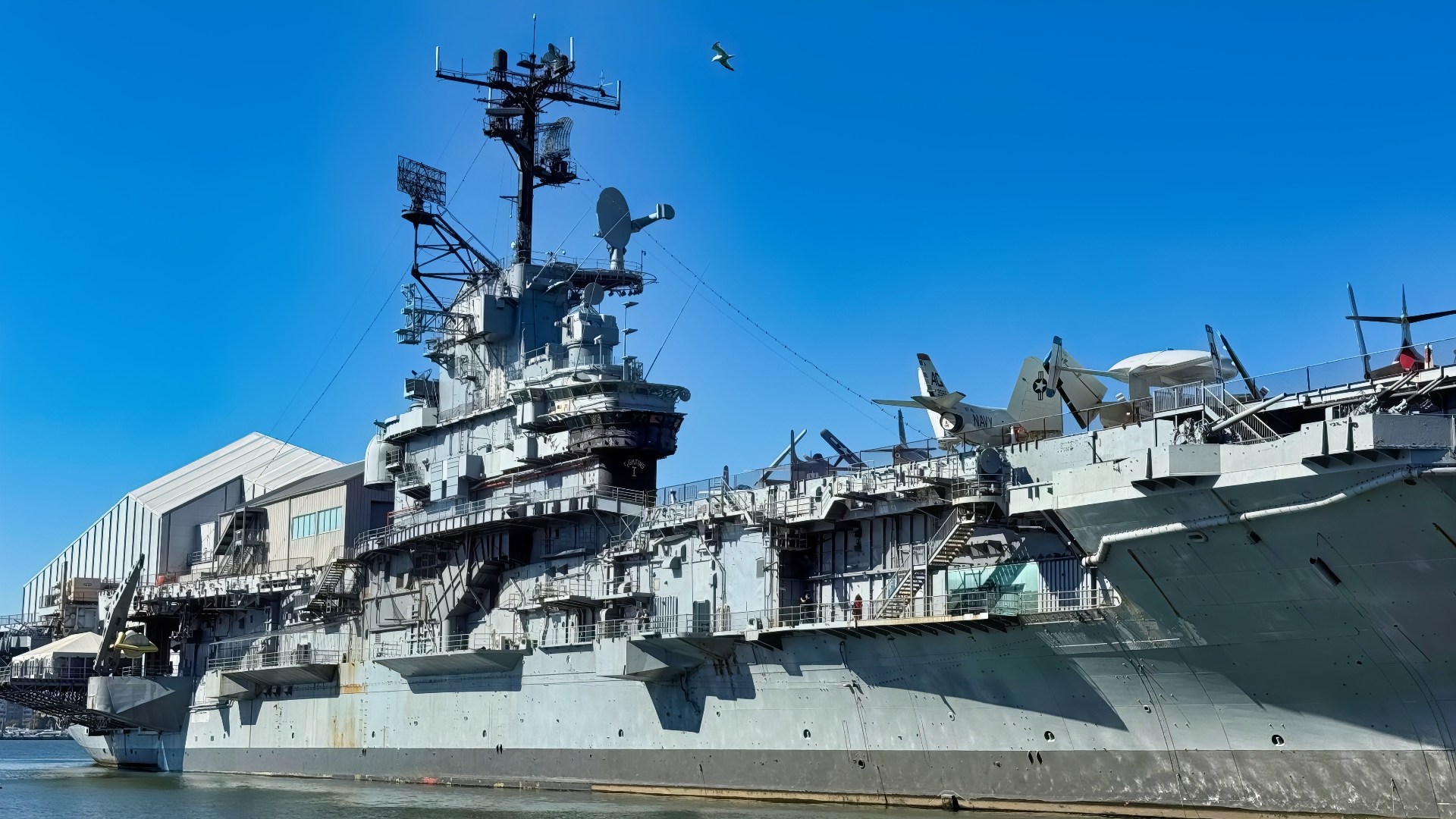
Essex USS Intrepid Carrier. Image Credit: National Security Journal.
By 1943, the Essex-class became the backbone of the fast carrier task forces that were smashing the Empire of Japan. Essex-class carriers fought in battles over the Gilbert Islands, the Marshall Islands, the Marianas Islands, the Philippine Sea, the Leyte Gulf, Okinawa, and they participated in strikes on the Japanese home islands.
By the latter half of the war, the Navy’s surface warfare fleet was essentially the Essex-class navy.
The Real Miracle was America’s Industrial Base
The reason behind the Essex-class being so ubiquitous in America’s fleet was due to the speed at which America’s well-oiled defense industrial base in the 1940s churned these large, complex (for their day) systems out. The lead ship, USS Essex (CV-9), was laid down in 1941 and commissioned in 1943. Multiple shipyards across the country were simultaneously producing carriers, too.
Those shipyards, by the way, included Newport News, Philadelphia, Brooklyn/New York Navy Yard, Norfolk, and Fore River. That was a distributed industrial model existing in the United States at a time when it mattered most. Today’s naval shipyard model is the opposite. As opposed to multiple, distributed yards churning out aircraft carriers like sausages, the current US shipyard dealing with aircraft carriers is down to a single, hyper-specialized yard.
In WWII, the US had broad industrial depth, skilled labor pools, steel production, machine tooling, and modular manufacturing ecosystems capable of producing important systems for the Navy.
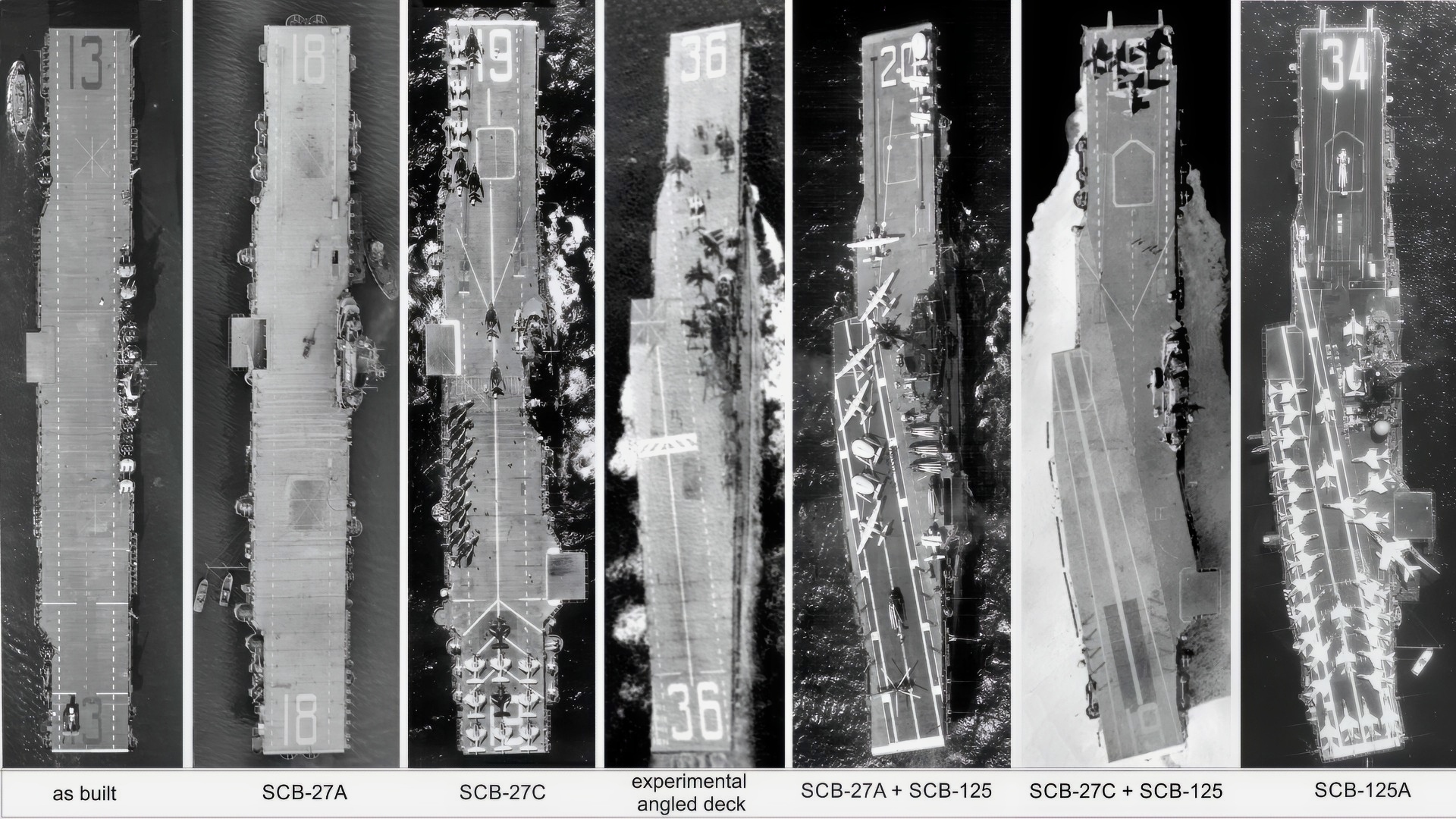
The Mighty Essex-Class Aircraft Carrier. Image Credit: Creative Commons.
After decades of deindustrialization and a deep commitment to producing single, expensive, exquisite platforms, modern American yards struggle to make repairs on US aircraft carriers at reliable rates and cannot expand shipbuilding capacity to meet increased demands the way that the yards that produced the iconic Essex-class carriers could do more than 80 years ago.
Why the Essex-Class was So Effective
The Essex-class aircraft carrier was so effective because it struck the perfect balance for what an aircraft carrier should be. It was large, but not too large. So, the Essex-class could carry massive airwings but was still compact enough to mass-produce. The Essex-class was fast. Running at 33 knots, the Essex-class could keep up with fast task forces. Essex-class carriers were survivable, too. No Essex-class ship was sunk by enemy action. Many of these boats sustained horrific damage. But none were ever sunk by enemy fire.
Thus, the Essex-class carriers were highly adaptable.
Rather than discommodating these carriers after the war, the Navy modernized them to ensure they had angled flight decks, steam catapults, enclosed hurricane bows, and compatibility with jet aircraft. That allowed units of the Essex-class to serve in the Korean War (and throughout the Cold War) and in Vietnam. In fact, the USS Lexington remained operational as a training carrier until 1991!
The Essex-Class Has a Warning for Today’s Navy
America’s rich history of the Essex-class carrier is a painful reminder that the country once possessed a wartime industrial ecosystem capable of replacing losses faster than enemies could inflict them. That ecosystem largely no longer exists. And in a prolonged conflict with a nation like China, that matters.
The Essex-class still matters because it represented a time when America possessed scalable naval power, industrial resilience, operational flexibility, and strategic endurance. Modern supercarriers, such as the Gerald R. Ford, are vastly more capable individually. But these ships are exponentially more expensive, more maintenance-intensive, harder to replace, and dependent on a shrinking industrial base.

The world’s largest aircraft carrier, USS Gerald R. Ford (CVN 78), sails in the Atlantic Ocean, July 4, 2025. Gerald R. Ford, a first-in-class aircraft carrier and deployed flagship of Carrier Strike Group Twelve, incorporates modern technology, innovative shipbuilding designs, and best practices from legacy aircraft
carriers to increase the U.S. Navy’s capacity to underpin American security and economic prosperity, deter adversaries, and project power on a global scale through sustained operations at sea. (U.S. Navy photo by Mass Communication Specialist 2nd Class Tajh Payne)
We’re a long way from the heady days when the Essex-class ruled the waves. That’s unfortunate for the United States. Because the current defense industrial base simply cannot meet current military needs, let alone new ones. Meanwhile, America’s chief rival–China–is an industrial juggernaut that has no problems with maintaining a robust defense industrial base. If another world war erupts, the United States will not have the latent industrial capacity it had during the previous one. That honor will instead go to China.
About the Author: Brandon J. Weichert
Brandon J. Weichert is a Senior National Security Editor. Recently, Weichert became the editor of the “NatSec Guy” section at Emerald. TV. He was previously the senior national security editor at The National Interest. Weichert hosts The National Security Hour on iHeartRadio, where he discusses national security policy every Wednesday at 8 p.m. Eastern. He hosts a companion show on Rumble entitled “National Security Talk.” Weichert consults regularly with various government institutions and private organizations on geopolitical issues. His writings have appeared in numerous publications, among them Popular Mechanics, National Review, MSN, and The American Spectator. His books include Winning Space: How America Remains a Superpower, Biohacked: China’s Race to Control Life, and The Shadow War: Iran’s Quest for Supremacy. Weichert’s newest book, A Disaster of Our Own Making: How the West Lost Ukraine, is available for purchase at any bookstore. Follow him via Twitter/X @WeTheBrandon.


