

Ukraine Is Stretching Russian Defenses, But Will It Matter?: Ukraine’s long-range strike campaign has proven wildly successful so far, striking all of Russia’s 11 biggest refineries at least once and forcing a major global petroleum product exporter to begin importing fuel to mitigate the crisis. Ukraine is also forcing Russia to confront a strategic problem that didn’t exist before the war: how to defend the world’s largest country against attacks that can now reach deep into its interior.
Ukrainian drones and missiles continue to strike targets from St. Petersburg and Moscow to Siberia, forcing Russia to constantly readjust its air defense posture as industrial and logistical sites come into focus for Ukrainian forces. Following months of strikes on refineries and energy infrastructure, Russia is now struggling to prevent Ukrainian strikes on commercial warehouse operations and the inevitable economic fallout those attacks will cause.
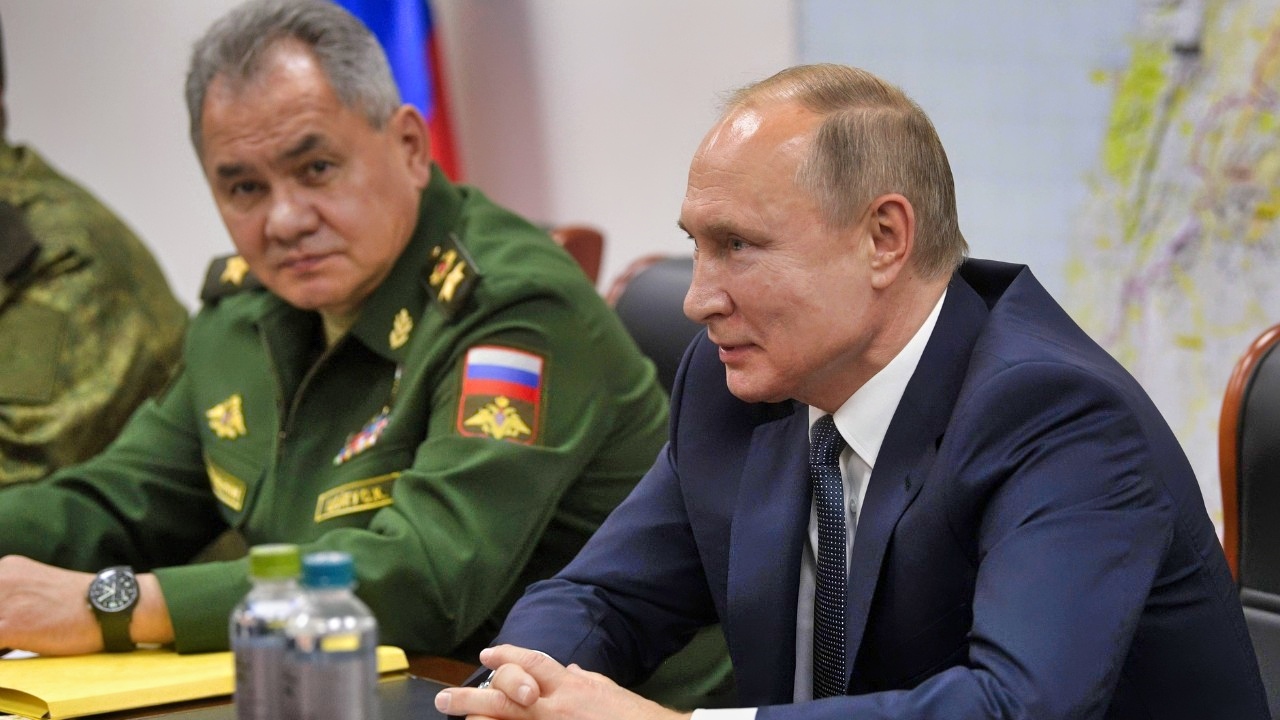
Vladimir Putin in Syria. Image Credit: Creative Commons.
Russia still possesses one of the world’s largest integrated air defense networks, and there is little evidence that it is running out of systems. But there is a major challenge that Moscow must confront, and that appears to be one of geography.
Every battery deployed to protect Moscow or a major refinery, for example, is one that cannot defend another part of a country spanning more than 17 million square kilometers. But even as Russia fights this problem, there’s still a chance that Ukraine’s long-range strike campaign won’t work – and we could know by winter.
Russia Is Fighting Its Own Geography
Russia’s vast territory has long been one of the country’s strategic advantages, but it is also a major military challenge.
Unlike Ukraine, whose air defenses are concentrated around a comparatively small number of major cities and infrastructure sites, Russia must defend everything from military bases and nuclear facilities to oil refineries and logistics hubs across a landmass spanning 11 time zones.
Before the war, Russia’s air defense network was designed primarily to protect military and government assets, not to provide comprehensive coverage across the country. It certainly wasn’t intended to protect civilian commercial infrastructure, such as Wildberries warehouses, either.
According to assessments by the International Institute for Strategic Studies, Russia operated 14 dedicated air defense divisions equipped with systems including the S-300 and S-400 before the war. Those systems are still among the most capable in the world, but even sophisticated batteries can protect only a limited area and rely on a network of supporting radars and interceptor missiles—both of which are finite resources, just like the batteries themselves.
But as Ukraine’s reach has grown, so too has the number of sites that Moscow must protect. Instead of concentrating defenses near the front lines or around traditional strategic targets, Russia is now looking to defend everything from oil infrastructure to logistics networks spread across an enormous landmass.
Even with Russia’s extensive network of air defense systems, such coverage is extremely difficult to achieve.
But Can Ukraine Win the Race Against Winter?
Ukraine’s long-range strike campaign is undoubtedly causing new problems for Moscow. Even the Kremlin has been forced to admit that “certain problems” are now impacting its oil industry, largely because the effects are impossible for regular Russian citizens to ignore.

Tu-160M Bombers from Russia. Image Credit: Creative Commons.
Every successful strike forces Russia to devote more resources to defending its territory while expanding the list of military and industrial targets requiring protection across the country.
But strategic pressure like this takes time to influence political decision-making, especially as Russian President Vladimir Putin weighs his options in the near and short term.
And Ukraine may not have the luxury of being able to wait and see what kind of impact this sustained pressure has on the Kremlin’s thinking because Russia’s ballistic missile campaign can produce consequences far faster.
Ukraine’s air defenses are now under considerable strain, with President Volodymyr Zelenskyy revealing this week that Kyiv has received only one-third as many interceptor missiles so far this year as it received during the same period in 2025. And as Russia accelerates missile production and receives additional deliveries from North Korea, as we learned this week, that problem is compounded. And while it is an obvious problem now, it worsens as winter approaches.
Is This How It Ends?
Ukraine may be succeeding in stretching Russia’s air defense network across an enormous landmass, but Russia does not need to defend every target in the short term if Ukraine is forced to concede to repeated, unbearable barrages that ultimately knock out its power grid or energy infrastructure in the run-up to the winter months.
If that’s what Moscow is planning, it could be precisely what ends the war – and Zelenskyy himself is hinting at that possibility as he continues to call for an in-person meeting with the Russian president to end the war.
If Putin believes that the ballistic missile threat to Ukrainian infrastructure is enough to force Ukraine to back down, or indeed to distract Ukrainian forces as he attempts to fully take control of the Donbas ahead of the next round of discussions, then this dynamic could be what ends the war.
About Author: Jack Buckby
Jack Buckby is a British researcher and analyst specializing in defense and national security, based in New York. His work focuses on military capability, procurement, and strategic competition, producing and editing analysis for policy and defense audiences. He brings extensive editorial experience, with a career output spanning over 1,000 articles at 19FortyFive and National Security Journal, and has previously authored books and papers on extremism and deradicalization.


