

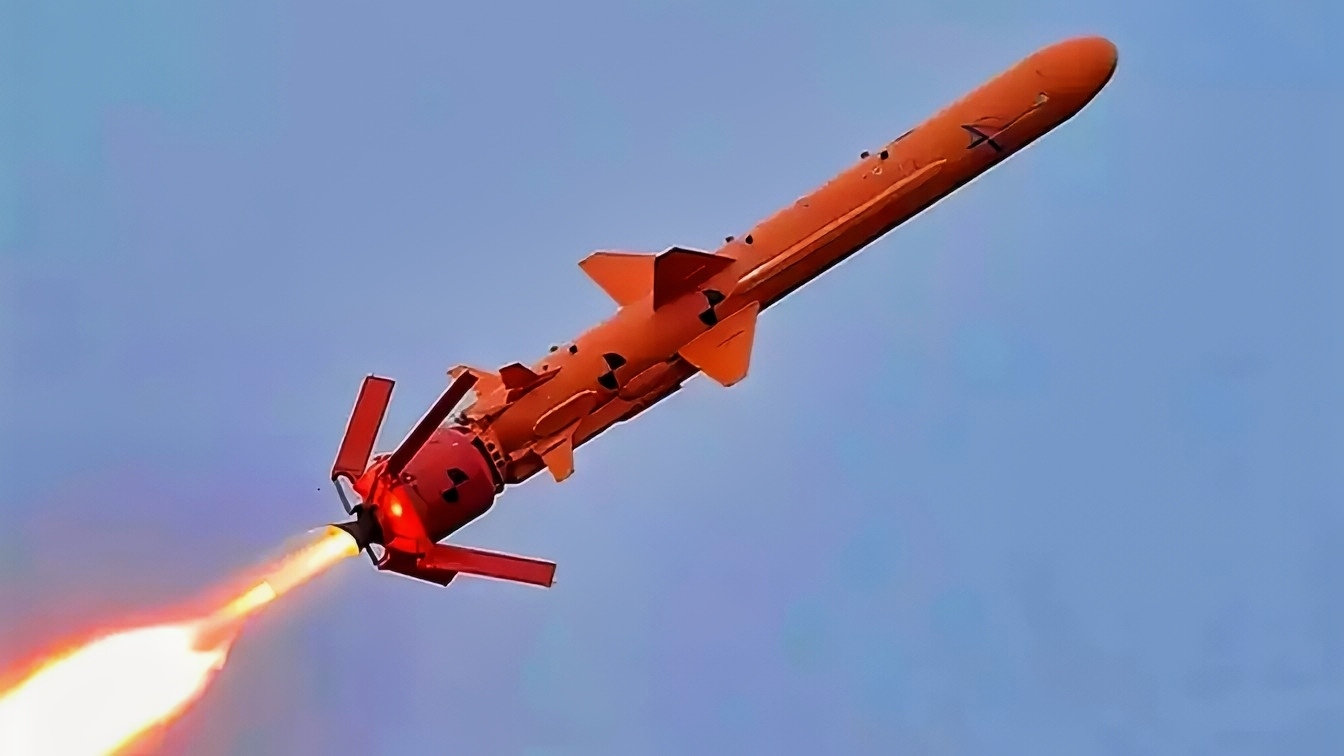
Ukraine Struck Iran-Linked Shipping in the Caspian Sea. Tehran Is Threatening a Response: Ukraine’s long-range campaign has reached the Caspian Sea, opening a new dispute with Iran over vessels Kyiv says were supporting military trade with Russia. Current reporting on the confrontation says Tehran summoned Ukraine’s senior diplomat after accusing Kyiv of attacking an Iranian commercial ship.
Iran’s Foreign Ministry said the vessel was struck early on July 25, causing an explosion that killed one sailor and injured another. Its official statement called the attack an act of aggression and warned that Iran would defend its security and national interests. Tehran did not publicly identify the vessel, its cargo or its precise location.
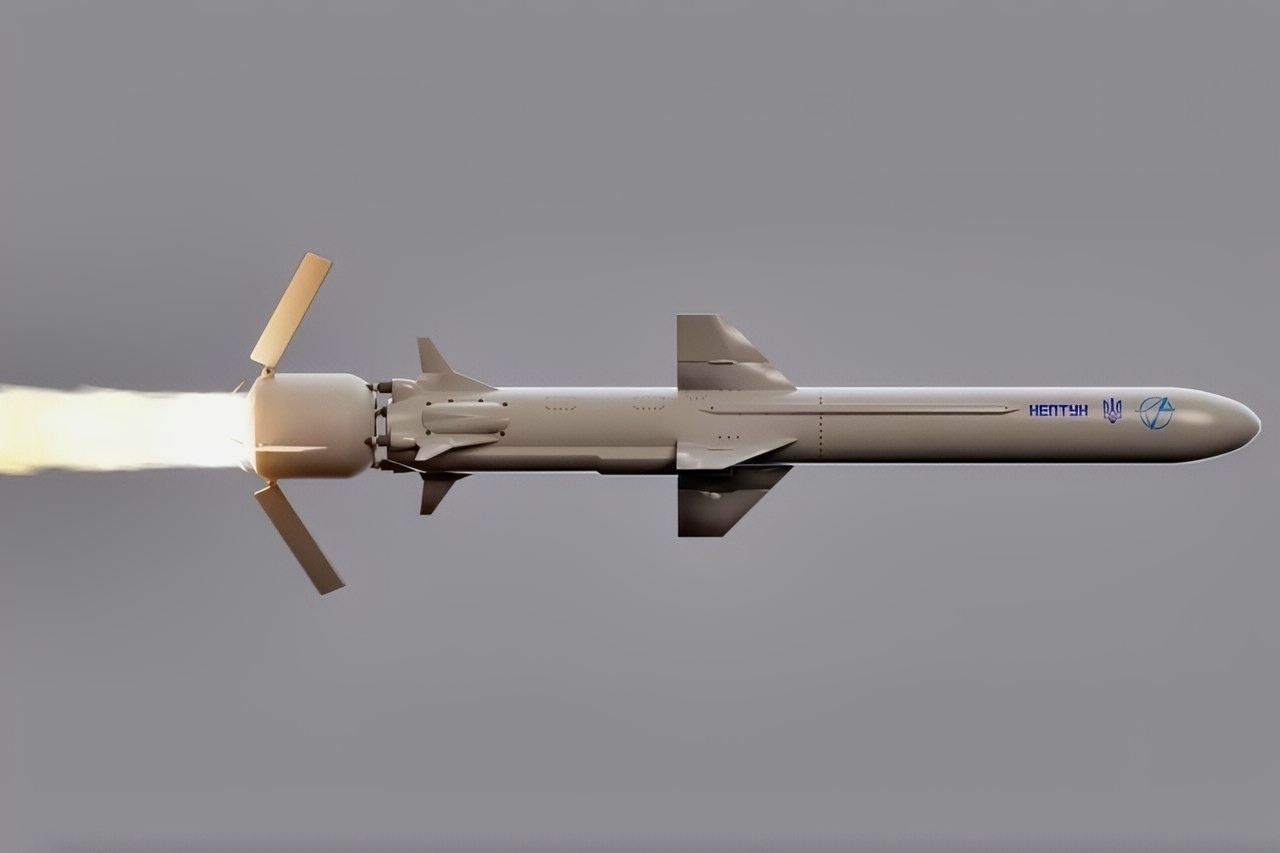
Neptune Missile. Image Credit: Government of Ukraine.
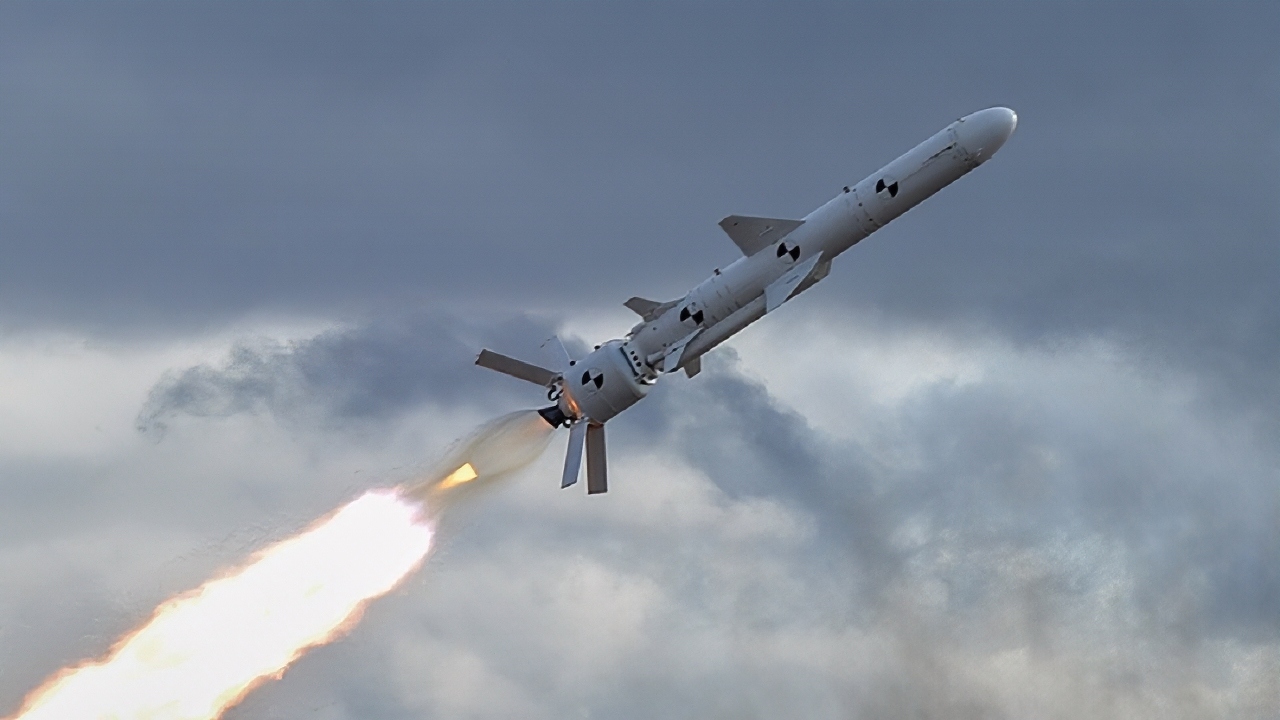
Neptune Missile. Image Credit: Creative Commons.
President Volodymyr Zelensky said Ukrainian forces had achieved results against a Russian warship and vessels used to transport military cargo involving Iran. Reuters reported that Kyiv also accused Russia of sharing satellite observations of American and Gulf military sites with Tehran.
Ukraine’s Security Service separately identified the cargo vessels Port Olya 2 and Begey and said drones also targeted a Russian Molniya missile craft and the Filanovsky offshore oil platform.
The available Ukrainian account has not been matched by a complete independent damage assessment.
Ukraine Is Targeting the Russia-Iran Supply Route
The Caspian Sea has provided Moscow and Tehran with a direct maritime corridor outside Western naval reach. A review of Caspian shipping activity documented vessels switching off tracking signals near Iranian and Russian ports during the expansion of military trade after 2022.
Iranian-designed Shahed drones entered Russian service through this wider relationship and became an important part of Moscow’s long-range strike campaign. Other evidence has linked Iranian ammunition and military equipment to Russian forces.
Russia now manufactures large numbers of modified Shahed aircraft domestically, creating new tensions inside the original drone partnership. The Caspian route still matters for components, ammunition, industrial equipment and cargo moving in both directions.
Iran’s Response Could Expand the Ukraine War
Iran says it has not intervened in Russia’s invasion, a position challenged by the drones, training and military supplies documented since 2022. Tehran can still argue that a commercial vessel retained civilian protection unless Ukraine establishes that the ship was carrying military cargo or directly supporting Russian operations.
Kyiv’s decision increases the chance of Iranian retaliation against Ukrainian interests. Tehran has missiles, drones, cyber capabilities and partners across the Middle East, although it has not announced a specific response. The wider Iran-Russia relationship has already become more important and more complicated during the current Middle East war.
Ukraine also brings valuable operational knowledge to countries facing Iranian drones. Its forces have developed interceptors, electronic warfare systems and mass-production methods under sustained attack. That experience helps explain why Ukraine’s drone expertise has acquired value beyond Europe.
The Caspian Sea Is Becoming an Active Military Theater
Ukraine had already shown that it could reach Russian oil and naval targets in the Caspian region. The latest operation moves the campaign directly onto the maritime link between Moscow and Tehran and follows wider Ukrainian attacks on Russian shipping in the Black Sea and Sea of Azov.
That expansion raises questions for Azerbaijan, Kazakhstan and Turkmenistan, which also border the Caspian and depend on it for trade and energy production. Repeated military strikes could produce new security restrictions, insurance costs and political pressure on shipping across the enclosed sea.
What Happens Now? More Information Needed
Several critical facts remain unresolved. Iran has not named the vessel it says was struck. Ukraine has not released complete footage or a technical damage report. Independent evidence has not confirmed the cargo aboard Port Olya 2 or Begey during the attack. Tehran’s next official action will determine whether the incident remains a diplomatic confrontation or develops into direct Iranian retaliation against Ukraine.
About the Author: Harry J. Kazianis
Harry J. Kazianis (@Grecianformula) was the former Senior Director of National Security Affairs at the Center for the National Interest (CFTNI), a foreign policy think tank founded by Richard Nixon based in Washington, DC. Harry has over a decade of experience in think tanks and national security publishing. His ideas have been published in the NY Times, The Washington Post, The Wall Street Journal, CNN, and many other outlets worldwide. He has held positions at CSIS, the Heritage Foundation, the University of Nottingham, and several other institutions related to national security research and studies. He is the former Executive Editor of the National Interest and the Diplomat. He holds a Master’s degree focusing on international affairs from Harvard University.


Hujjathullah M.H.B. Sahib
July 26, 2026 at 3:00 pm
Annoyingly, these negative developments are risking to transform the U.S.-Iran hostilities into an inter-theater kinetics. Can trade dealings and political alliance be also read as military links and strategic ties ? The need of the times if not also the day and hour is to rein in these multi-national escalators tendencies on every side and keep it intra-theater if not entirely avoidable. Let us hope, atypically for the West, beyond the 13th night, proves to be a lucky peacebreak !
Hujjathullah M.H.B. Sahib
July 26, 2026 at 3:03 pm
Annoyingly, these negative developments are risking to transform the U.S.-Iran hostilities into an inter-theater kinetics. Can trade dealings and political alliance be also read as military links and strategic ties ? The need of the times if not also the day and hour is to rein in these multi-national escalatory tendencies on every side and keep it intra-theater if not entirely avoidable. Let us hope, atypically for the West, beyond the 13th night, proves to be a lucky peacebreak !