


Key Points and Summary – China and other rivals have spent two decades building the perfect trap for big ships: dense salvos of ballistic, cruise, and hypersonic missiles launched from land, sea, air, and drones.
-That threat pushes U.S. carriers farther from the fight, just as the Navy struggles with thin inventories, maintenance backlogs, retirements, and Ford-class delays.
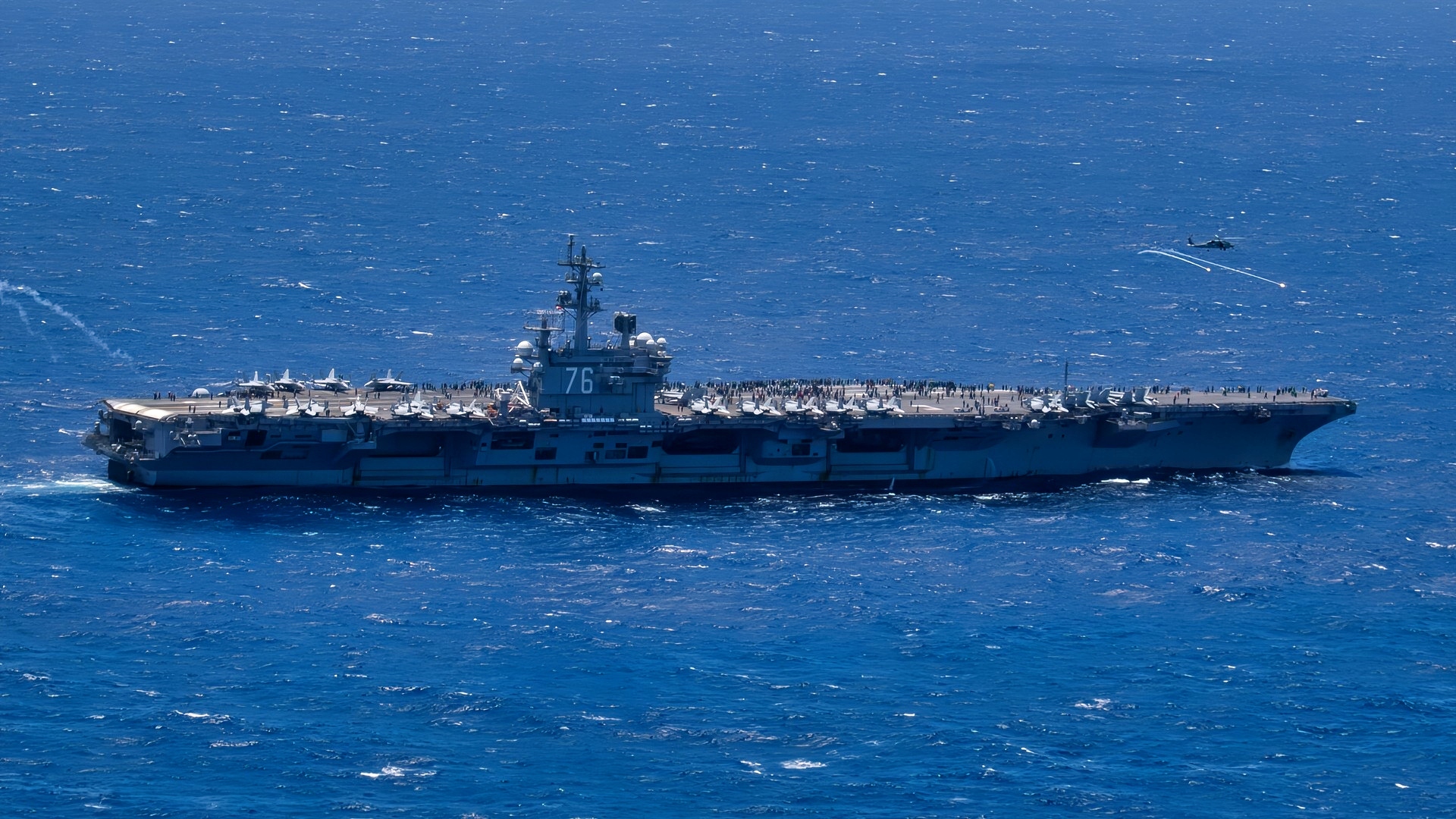
(July 3, 2024) An MH-60R Sea Hawk helicopter, attached to the Saberhawks of Helicopter Maritime Strike Squadron (HSM) 77, launches flares near the U.S. Navy’s only forward-deployed aircraft carrier, USS Ronald Reagan (CVN 76) during air combat-skills practice in the Pacific Ocean, July 3. HSM 77’s missions include surface warfare, anti-submarine warfare and a variety of support roles for Ronald Reagan and Carrier Strike Group 5. Ronald Reagan, the flagship of Carrier Strike Group 5, provides a combat-ready force that protects and defends the United States, and supports alliances, partnerships and collective maritime interests in the Indo-Pacific region. (U.S. Navy photo by Mass Communication Specialist 2nd Class Charlotte Dudenhoeffer)
-The answer isn’t to walk away from aircraft carriers—it’s to change how we use them.
-Make the air wing a long-range archer instead of a knife-fighter, surge munitions and tanking, and buy back striking power under the waves with more Virginia-class boats and SSGN-like capacity. Carriers still matter—just not the way we kept pretending they would.
Aircraft Carriers: The Threat We Built Into The Future
The nightmare didn’t arrive with a single test shot. It accumulated—one missile brigade, one shipyard expansion, one “routine” exercise at a time—until the Western Pacific turned into a layered, standoff engagement zone.
China fielded anti-ship ballistic missiles designed to menace large moving targets at long range. It paired them with land-based cruise missiles, ship-launched volleys, air-launched weapons, and swarms of increasingly capable drones. Russia and other actors followed their own versions of that playbook. The goal isn’t finesse; it’s math: saturate defenses until the last intercept fails.
That changes the carrier’s basic risk calculus. In the 1990s, you could bring the big deck “inside the stadium,” cycle jets hard, and dare defenses to catch up. In the 2020s, if you park a supercarrier in that same pocket for long, you’re inviting a physics experiment at your expense.
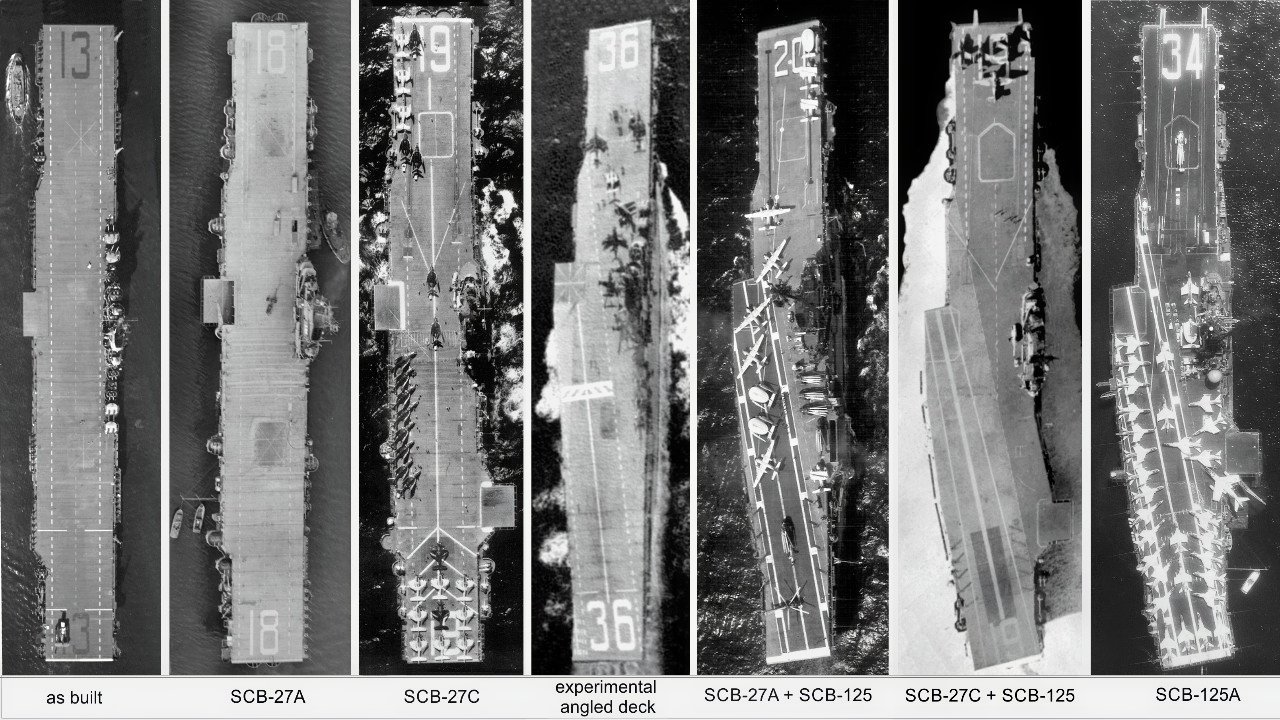
Essex-Class. Image Credit: Creative Commons.
Fleet air defense remains formidable, but cost-exchange ratios are bending the wrong way when the other side can throw a hundred cheap arrows at your handful of exquisite shields.
Range Is The Tyrant
If the seas near an adversary’s coast bristle with missiles, the carrier has to stand off. That means the air wing must reach farther on every sortie.
The problem is we let aircraft carrier range atrophy. We retired long-legged strike platforms and replaced them with multirole jets designed in an era that prized precision and persistence over sheer distance. Tankers can stretch legs, but tankers themselves become high-value targets; every pound of fuel wrestled aboard at sea is a logistical gamble.
The fix is not complicated to describe, but it is expensive and dull: push the carrier’s striking radius out with more organic tanking, longer-range air-to-surface and air-to-air weapons, and unmanned teammates that carry sensors and extra missiles. Treat the flight deck as a long-range archery range, not a knife-fighting ring. That’s doctrine, not nostalgia.
We Don’t Have Enough Aircraft Carriers—And We Don’t Have Them Enough
There’s another, quieter crisis: inventory and availability.
We talk about the number of aircraft carriers we own, not the number we can sail at speed with a healthy air wing, escorts, and the logistics to sustain them.
Nuclear aircraft carriers require deep, periodic maintenance and mid-life refuelings measured in years, not weeks. When something major breaks—an elevator, a propulsion nuance—the schedule ripples across the fleet.

Kaga Japan Mini Aircraft Carrier. Image Credit: Creative Commons.
Retirements loom. And the new class meant to refresh the bench has stumbled through delays and learning curves that were predictable because they always happen with new tech at this scale.
The result is a force that can fulfill day-to-day presence missions but has less surge elasticity than we admit.
We are one collision, one yard bottleneck, one budget fight away from empty calendar squares.
The Ford-Class Aircraft Carrier Lesson: Promise Is Not Presence
The new supercarrier brings innovations meant to boost long-term sortie generation and reduce crew stress. In time, those payoffs may be real. But “in time” is not “now,” and the ocean does not pause while we debug.
The larger lesson is about program pacing. We bundled multiple first-of-kind systems into a single platform and then acted surprised when the integration monster ate the schedule. The fix isn’t to abandon ambition; it’s to stage it. Freeze the baseline, deliver hulls, and spiral in advances without holding the ship hostage to the last 5% of novelty.
Presence wins peacetime. Predictability wins shipyards. We need more of both.
Buy Back Strike From Under The Waves
If the surface is hot, you go deep. The most reliable way to replace near-shore carrier striking power is more submarines armed with large magazines of long-range missiles. The United States used to have that in spades with converted cruise-missile submarines, each capable of a night’s work all by itself. Those boats are leaving service. Replacing that punch falls to attack submarines with new payload modules—the naval equivalent of adding an extra quiver to each archer.
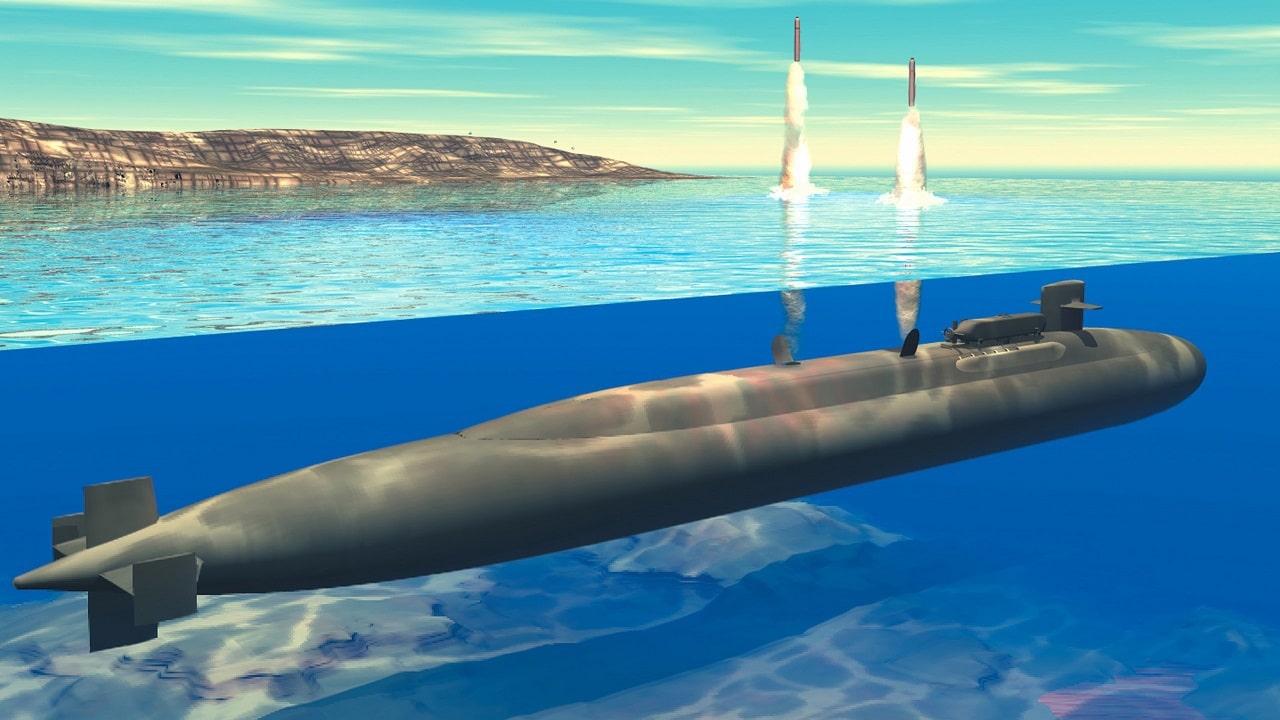
Ohio-class SSGN. Image Credit: Creative Commons.
Submarines are not magic. They are expensive, crew-intensive, and their own industrial base is straining. But when you need a survivable salvo generator inside a threat ring, nothing else does the job as reliably. If you can’t grow subs fast enough to fill the gap, then you need “SSGN-like” capacity somewhere else—uncrewed or lightly crewed missile ships that exist to shoot. Make them simple. Make them many. Make them cheap enough to risk.
Make The Aircraft Carrier A Quarterback, Not A Brawler
The air wing’s value in the missile age is not just bombs on target; it’s eyes and brains. A modern strike fighter is a flying sensor fusion machine. Let it find and fix. Let it pass tracks across the force. Let it cue long-range shots from ships, subs, and bombers without flying into the teeth of the densest defenses. That’s not a retreat from carrier relevance; it’s carrier evolution.
To play that role well, the carrier needs aviation fuel, spare parts, and weapons stocks scaled to long-range operations—especially the unglamorous bits like tanker support. It needs the deck cycles and procedures of a team that can launch large packages without wasting minutes in choreography. And it needs escorts and logistics ships that can feed it at a distance, because the magazine you left port with will not last through the first week of a real war.
Fix The Shipyard Clock Or Fix Nothing
Everything above collapses if we can’t get ships in and out of yard periods on honest timelines. The most strategic money in the Navy budget right now may not be on a flight deck; it may be in drydock concrete, welding schools, and maintenance software. Public yards need capacity and modernization. Private yards need predictable work and the confidence to hire against it. And the Navy needs ruthless discipline about what gets installed during availabilities. If a change adds months for marginal benefit, punt it. Fleet time is the most precious commodity we own. Spend it like it matters.

The world’s largest aircraft carrier, USS Gerald R. Ford (CVN 78), conducts flight operations in the North Sea, Aug. 23, 2025. Gerald R. Ford, a first-in-class aircraft carrier and deployed flagship of Carrier Strike Group Twelve, is on a scheduled deployment in the U.S. 6th Fleet area of operations to support the warfighting effectiveness, lethality, and readiness of U.S. Naval Forces Europe-Africa, and defend U.S., Allied and partner interests in the region. (U.S. Navy photo by Mass Communication Specialist 2nd Class Maxwell Orlosky)
Munitions, Not PowerPoints
Wargames have a way of discovering the same shortage: we run out of the right missiles right when things get interesting. If you expect to fight from outside an adversary’s missile envelope, you need deep stocks of long-range, survivable weapons that can be built and rebuilt at tempo.
That’s a national project, not a Navy-only problem. It lives in industrial parks, not press releases. Buy more now. Pay to surge. Build redundancy into single-point-of-failure suppliers. Bleeding-edge weapons are great; enough “good-enough” weapons on time will win your bad Tuesday.
Distribution Isn’t A Fad—It’s How You Stay Alive
When the other side can hit any big cluster it can see, stop clustering. Disperse aviation across more concrete. Pre-position fuel bladders and weapons lockers at places you can actually use under fire.
Practice the ugly parts—nighttime runway repairs, rapid rearming at improvised sites, dirty tanking—until they’re boring. Do the same at sea: more small logistics nodes, more deception, more decoys. If you’re going to put a carrier closer than you’d like, make the rest of the formation harder to find and harder to kill.

The world’s largest aircraft carrier, USS Gerald R. Ford (CVN 78), sails in the Atlantic Ocean, July 4, 2025. Gerald R. Ford, a first-in-class aircraft carrier and deployed flagship of Carrier Strike Group Twelve, incorporates modern technology, innovative shipbuilding designs, and best practices from legacy aircraft
carriers to increase the U.S. Navy’s capacity to underpin American security and economic prosperity, deter adversaries, and project power on a global scale through sustained operations at sea. (U.S. Navy photo by Mass Communication Specialist 2nd Class Tajh Payne)
Allies Are A Capability, Not A Courtesy
No carrier fights alone—and no navy should plan to. Partners bring airfields, escorts, submarines, and the kind of political legitimacy that matters when things get complicated. The Western Pacific is ringed with democracies that would rather not live under missile blackmail.
They are buying their own long-range weapons, sensors, and submarines. Knit those into a picture that makes any salvos against the carrier strike group collide with multiple radars, multiple shooters, and overlapping doctrines. Interoperability is not a press conference—it’s shared comms, shared tactics, and shared munitions you can actually fire from each other’s launchers.
What Not To Do
Don’t pretend a single silver bullet will “solve” the carrier problem. A new jet won’t. A single breakthrough interceptor won’t. Even the next generation of deck gear won’t. The threat is a system; the answer is a system. Don’t define success as hugging the coastline like it’s 1991.
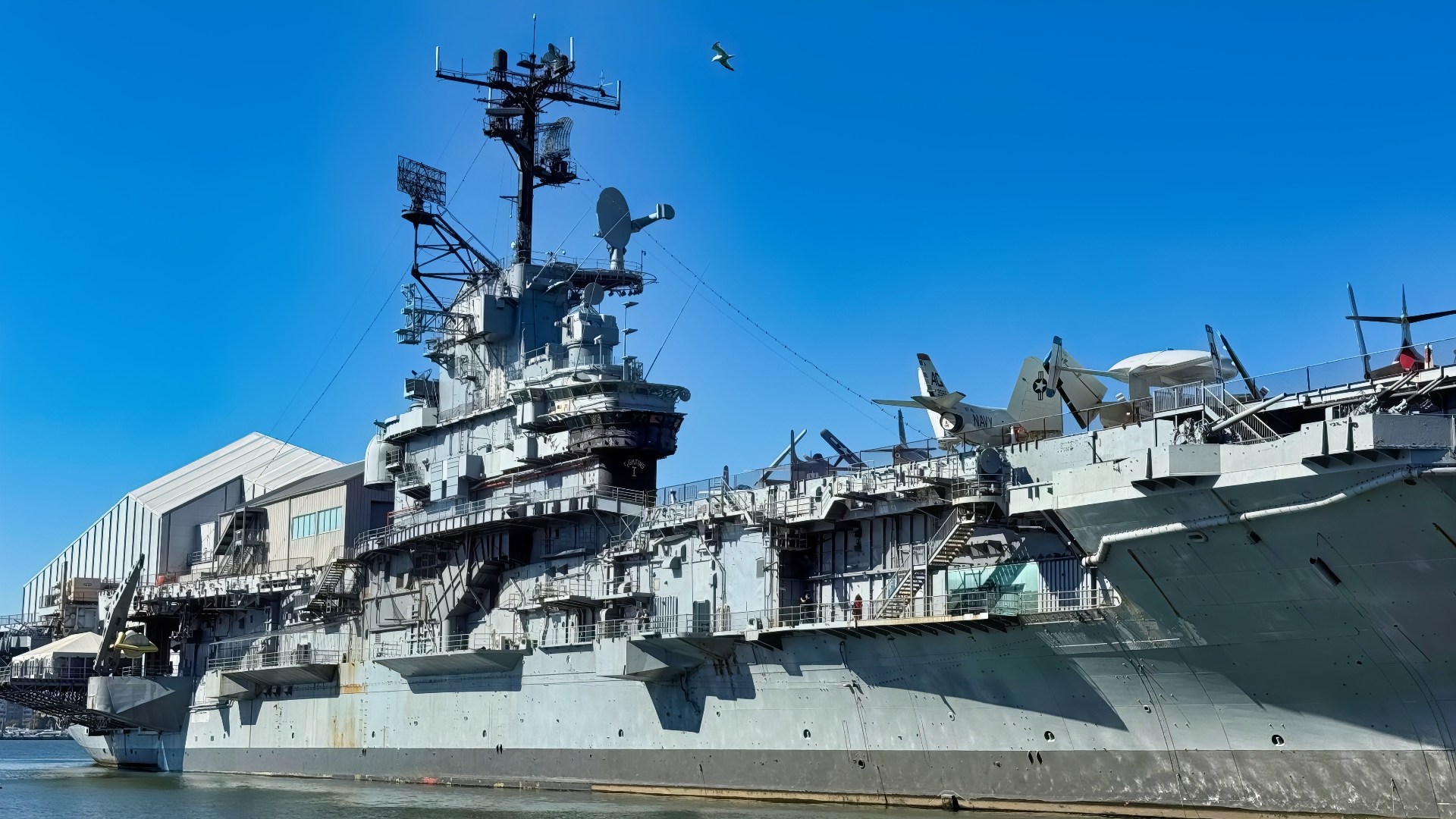
Essex USS Intrepid Carrier. Image Credit: National Security Journal.
Measure success as the ability to generate precise, repeatable effects from beyond the reach of saturation attacks—day after day, long enough to matter.
And don’t rob the undersea force to fund more posters of giant ships. If the budget forces choices, choose the platforms that get you inside the problem with the least drama. In the 2030s, that’s steel you can’t see and missiles you can’t outrun.
A Realistic Way Forward
Here’s a recipe that respects both the threat and the taxpayer. First, lock in a candid carrier employment concept: long-range first, risk-managed closing only when adversary magazines are degraded. Second, pull the hardest levers that actually change outcomes: munitions stocks, tanker capacity, electronic warfare, and a disciplined shipyard plan. Third, buy back near-shore punch with submarines and SSGN-like capacity—even if it means fewer shiny talking points in the short term. Fourth, flood the zone with boring resilience: dispersal kits, repair kits, decoys, and logistics nodes that keep the machine moving when the first missiles hit something that matters.
Finally, tell Congress and the public the truth. Aircraft carriers still have a future. It just won’t look like the past. If we cling to the old picture—close the coast, cycle the deck, dare the enemy to miss—we’re setting up a very expensive lesson. If we adapt—pull range, spread risk, and let undersea platforms shoulder more of the early burden—the big decks can do what they were always meant to do: concentrate power at a time and place of our choosing.
The Bottom Line
The U.S. Navy’s carrier dilemma isn’t a single bad decision; it’s a stack of honest miscalculations colliding with an adversary that spent thirty years building exactly the weapons that make us nervous. We don’t fix that by wringing our hands or burning down the carrier fleet.
We fix it by changing how we fight and where we invest: fewer knife fights, more archery; fewer promises, more presence; fewer perfect gadgets, more missiles and maintenance.
If we do that, the nightmare recedes. If we don’t, the ocean will keep teaching the same lesson until we learn it the hard way.
About the Author: Harry J. Kazianis
Harry J. Kazianis (@Grecianformula) is Editor-In-Chief and President of National Security Journal. He was the former Senior Director of National Security Affairs at the Center for the National Interest (CFTNI), a foreign policy think tank founded by Richard Nixon based in Washington, DC. Harry has over a decade of experience in think tanks and national security publishing. His ideas have been published in the NY Times, The Washington Post, The Wall Street Journal, CNN, and many other outlets worldwide. He has held positions at CSIS, the Heritage Foundation, the University of Nottingham, and several other institutions related to national security research and studies. He is the former Executive Editor of the National Interest and the Diplomat. He holds a Master’s degree focusing on international affairs from Harvard University.
More Military
The Mach 3 SR-71 Blackbird Spy Plane ‘Broke All the Rules’ Thanks to Titanium
SR-72: The Air Force’s New Hypersonic Bomber?
Russia’s Admiral Kuznetsov Aircraft Carrier Is Now ‘Non-Operational’
New Army M1E3 Tank vs. Russia’s T-14 Armata: Who Wins Summed Up in 2 Words


