


Key Points and Summary – America’s four Ohio-class SSGNs—each packing up to 154 Tomahawks and room for 66 SEALs—are the Navy’s lowest-risk, highest-leverage strike asset.
-After Operation Midnight Hammer, they proved again how presidents can punish without exposing troops.

SOUDA BAY, Greece (Sept. 7, 2019) The Ohio-class cruise missile submarine USS Florida (SSGN 728) arrives in Souda Bay, Greece, for a scheduled port visit, Sept. 7, 2019. NSA Souda Bay is an operational ashore base that enables U.S., allied, and partner nation forces to be where they are needed and when they are needed to ensure security and stability in Europe, Africa, and Southwest Asia. (Photo by Joel Diller/Released)

Ohio-Class Submarine U.S. Navy.
-Yet USS Ohio and USS Florida are queued for retirement, cutting half of the Submarine Force’s vertical-launch capacity before Virginia Block V’s payload modules arrive.
-With hypersonics and UUV concepts not fielded until the 2030s, extending the Ohios bridges a dangerous gap—from Red Sea contingencies to Taiwan.
-Internal Navy signals suggest a rethink; the 2026 defense strategy should lock in service-life extensions until replacements are ready.
Don’t Retire the Tomahawk Kings: Why Ohio-Class SSGN Submarines Matter
The U.S. Navy cannot live without its Ohio-class guided missile submarines (SSGNs). There are indications these boats could be retired in the coming years as President Donald Trump’s national security team fashions its new defense strategy for 2026 and beyond. Trump knows by now that the Tomahawk cruise missiles the Ohios carry in abundance can break the enemy’s will to fight before even risking U.S. boots on the ground.
Indeed, the American way of war is usually meant to avoid casualties. One way a president can be assured that no one is in harm’s way is to launch Tomahawks. Thirty Tomahawks were used in June for Operation Midnight Hammer—the successful attacks on Iran’s nuclear infrastructure. The USS Georgia (SSGN-729) Ohio-class sub fired more than 24 Tomahawks at Iranian targets.
The performance was so good that Trump has considered granting Ukraine land-launched Tomahawks to use against Russia, although that deal has not been finalized and is being re-evaluated.
The Ohio-class and Its Tomahawks Can Answer the Call
The Ohio-class SSGNs with their 154 Tomahawks are needed for modern warfare. The boats should be fully funded and remain part of the Navy’s silent service for years to come. These assets help the U.S. avoid human losses while still sending the message that the United States is serious about the brushfire wars that could pop up repeatedly into the 2030s.
An Important Piece of Special Operations Missions
Another reason presidents like the Ohio-class is the SSGNs’ ability to infiltrate and exfiltrate up to 66 U.S. Navy SEALs for hostage rescue missions and reconnaissance and surveillance duties. SEALs can also prepare landing zones for U.S. Marine Corps amphibious operations, blow up enemy ships while they are in port, and board adversarial ships that are up to no good.
Again, the Americans want to avoid casualties, and the SEALs are not immune to personnel losses. But the Ohio-class excels at special operations warfare. They are key to SEALs being able to do their irreplaceable jobs.
The Subs May Be Going Away
Nevertheless, the four Ohio-class SSGNs are on the chopping block and may be retired as soon as next year. They are indeed aging, after more than four decades in service.
These are the oldest submarines that carry out patrols. The Ohio-class may not be as swift and silent as the Navy would like. The USS Ohio (SSGN-726) and USS Florida (SSGN-728) are the first two boats set to be decommissioned.
The four SSGNs were converted from nuclear-armed submarines to guided-missile vessels after the 1994 Nuclear Posture Review. The conversion process lasted from 2002 until 2007, as the subs’ Trident nuclear missiles were traded for the Tomahawks.
Important Bridge to the Virginia-class Block V
“These four submarines currently make up nearly half of the vertical launch payload capacity of the Submarine Force,” according to Naval News. “As such, the Navy will see a sharp decline in available payload capacity immediately after the first two boats are retired.

The Ohio-class ballistic-missile submarine USS Maine (SSBN 741) begins a dive into the Strait of Juan de Fuca off the Washington Coast, March 18, 2025, during routine operations. Special units within the Coast Guard are tasked with the protection of U.S. Naval submarines while surfaced and transiting U.S. territorial waters to and from their patrol stations. (U.S. Coast Guard photo by Petty Officer 1st Class Steve Strohmaier)
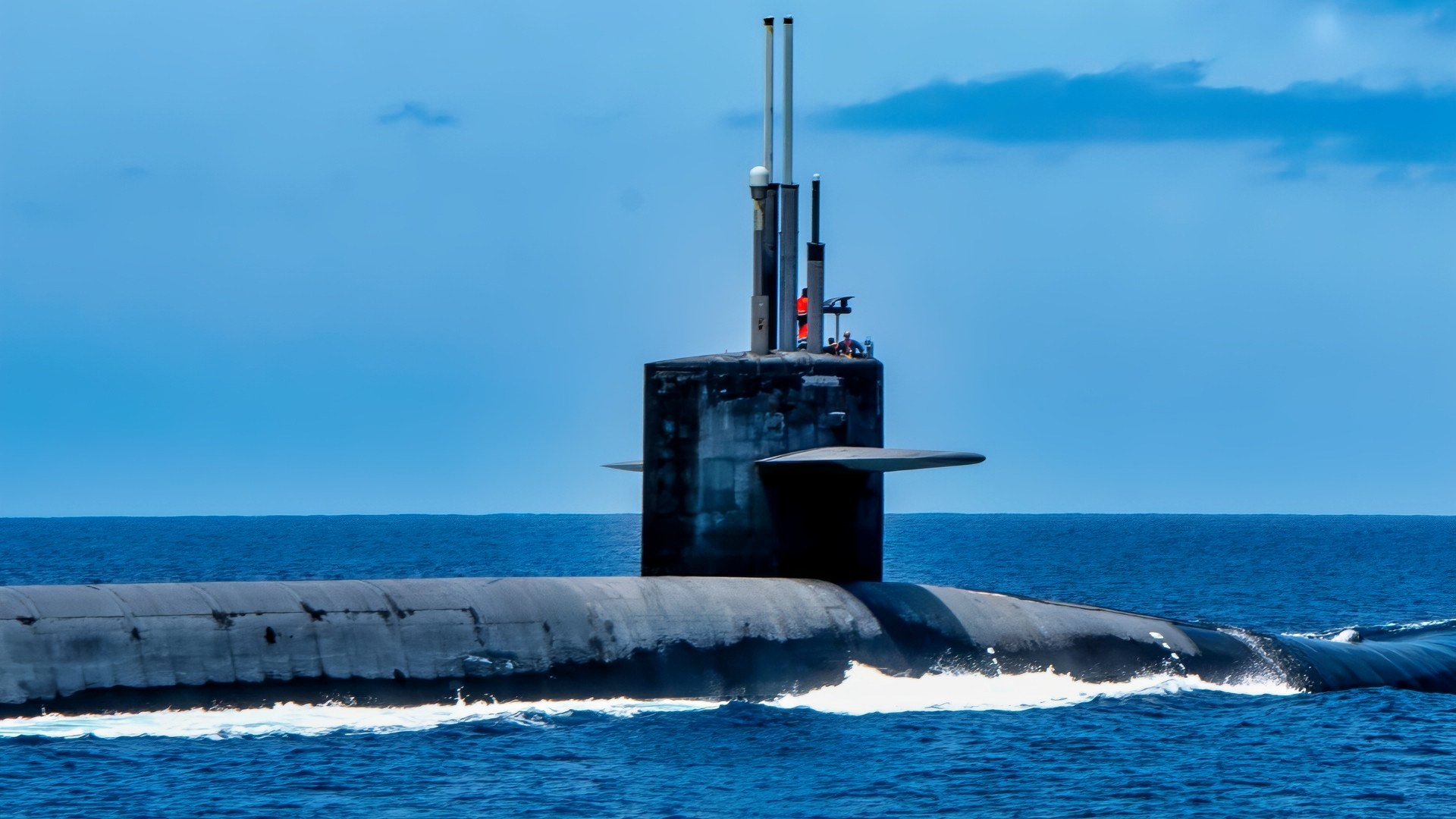
(July 29, 2025) – A U.S. Air Force A10C Thunderbolt II flies over the Ohio-class ballistic missile submarine USS Kentucky (SSBN 737) in the Pacific Ocean, July 29, 2025. The armed airborne escort exercise is designed to increase and demonstrate the Joint Force’s capability to protect strategic assets like Kentucky. Submarine Group (SUBGRU) 9, exercises administrative and operational control authority for assigned submarine commands and units in the Pacific Northwest providing oversight for shipboard training, personnel, supply and material readiness of submarines and their crews. SUBGRU-9 is also responsible for nuclear submarines undergoing conversion or overhaul at Puget Sound Naval Shipyard in Bremerton, Washington. (U.S. Navy Photo by Lt. Zachary Anderson)
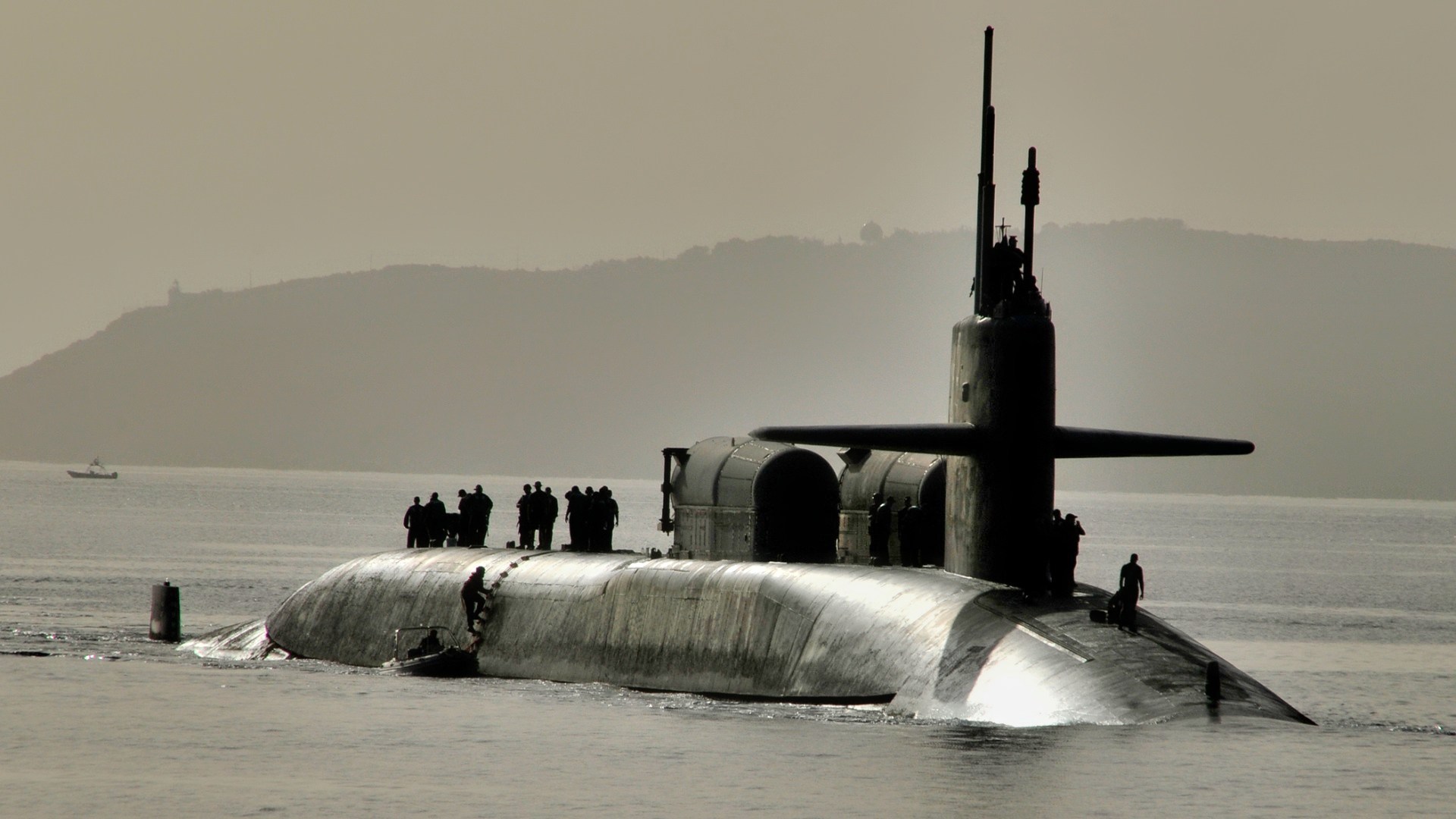
The guided missile submarine USS Florida (SSGN 728) arrives in Souda Bay, Greece, May 21, 2013, for a scheduled port visit. The Florida was underway in the U.S. 6th Fleet area of responsibility conducting maritime security operations and theater security cooperation efforts. (U.S. Navy photo by Paul Farley/Released)
The Navy, anticipating the retirements of these vessel, has initiated the procurement of Block V Virginia-class submarines. These boats receive the 84-foot-long ‘Virginia Payload Module’ that holds four large diameter vertical launch tubes.”
Why the Ohio-class SSGNs Are Still Needed
Rather than being retired, the Ohio-class SSGNs should be kept in service until the Block VI Virginia-class submarines are capable of firing hypersonic missiles and launching underwater combat drones, as is planned. This should happen in the 2030s.
The Navy is listening to proponents of the Ohio-class and may be reconsidering retiring the first two in 2026 as planned.
As National Security Journal’s Jack Buckby reported in September, “According to defense officials, both USS Ohio (SSGN-726) and USS Florida (SSGN-728) were previously listed for deactivation in budget documents released over the summer, but the boats were absent from a subsequent internal inactivation memo that circulated in mid-September.”
Operations Midnight Hammer 2.0
That’s encouraging news. There will be more missions like Operation Midnight Hammer in the future. A tenuous cease-fire is so far holding between Israel and Hamas, but Ohio-class subs could still patrol the Mediterranean, ready for contingencies in the Middle East.
Plus, the Iranian-backed Houthis are down but not out. They made the Red Sea and Gulf of Aden dangerous to allied commercial shipping again earlier this year, and two Navy Carrier Strike Groups were deployed to the region. Ohio-class SSGNs could supplement operations against the Houthis if they start firing missiles and drones at commercial or Navy ships.
The Ohio-class SSGNs are valuable and need more years in service. If I were advising Department of Defense Undersecretary of Policy Elbridge Colby, who is drafting the new National Defense Strategy, I would recommend the Ohio-class boats be given an extended service life.
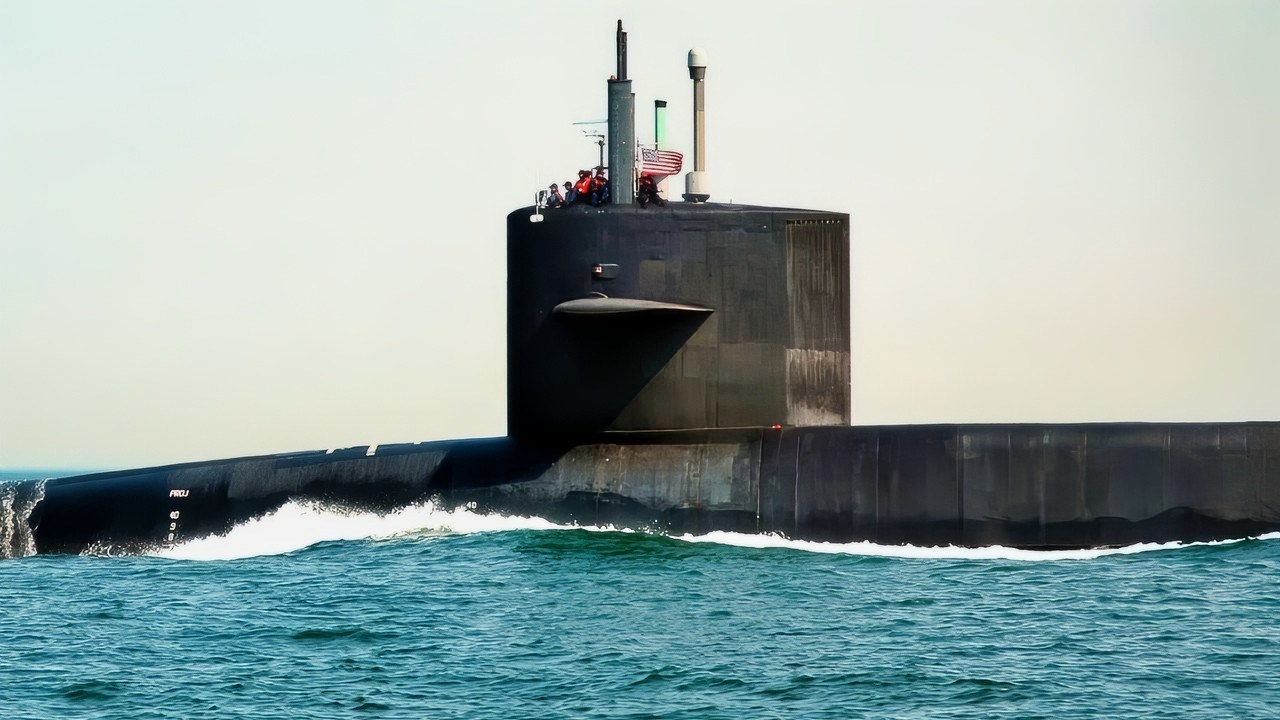
(March 31, 2006) – The guided missile submarine USS Florida (SSGN 728) conducts sea trials off the coast of Virginia. Florida will be delivered to the Fleet in April, and a Return To Service ceremony is scheduled for May 25 in Mayport, Fla. As the second of four SSBN submarines to be converted to SSGN, this nuclear-powered submarine will have the capability to: launch up to 154 Tomahawk cruise missiles; conduct sustained special warfare operations with up to 102 Special Operations Forces (SOF) personnel for short durations or 66 SOF personnel for sustained operations; and provide approximately 70 percent operational availability forward deployed in support of combatant mission requirements. U.S. Navy photo by Chief Journalist (SW/AW) Dave Fliesen.
They could be useful in East Asia if the Chinese ever attack Taiwan. Colby is a China hawk, and he may realize that the Navy needs all the firepower it can get in the Indo-Pacific.
The Ohio-class subs are presidential assets that have proved their worth with their use of the Tomahawk. The SSGNs also keep the SEALs happy by securing multiple types of deployments when a president must use special operations forces.
We’ll keep an eye open for mentions of the Ohio-class submarines in the upcoming National Defense Strategy. They remain capable of answering emergencies until new naval weapons such as sea drones and hypersonic weapons are ready for use on the Virginia-class Block VI.
About the Author: Brent M. Eastwood
Author of now over 3,000 articles on defense issues, Brent M. Eastwood, PhD is the author of Don’t Turn Your Back On the World: a Conservative Foreign Policy and Humans, Machines, and Data: Future Trends in Warfare plus two other books. Brent was the founder and CEO of a tech firm that predicted world events using artificial intelligence. He served as a legislative fellow for US Senator Tim Scott and advised the senator on defense and foreign policy issues. He has taught at American University, George Washington University, and George Mason University. Brent is a former US Army Infantry officer. He can be followed on X @BMEastwood.
More Military
Russia’s Mach 2 Su-30SM Fighter Has A Message for Any Air Force on Earth
The Mach 2.2 B-1A Bomber Has A Message for the U.S. Air Force
The Mach 2.35 ‘Super’ Eurofighter Typhoon Fighter Has a Message for Any Air Force On Earth
Canada’s CF-18 Hornet Fighter Crisis
Forget NGAD or the J-20: A 7th Generation Fighter Could Hit Mach 5


