


The Pentagon plans to procure 10,000 low-cost cruise missiles and 12,000 hypersonic missiles between 2027 and 2029 — a wartime-style scaling effort driven by lessons from Operation Epic Fury, where U.S. stand-off weapon stockpiles drained faster than the industrial base could refill them. The new Low-Cost Containerized Munitions program will fire from shipping-container launchers modeled on the Navy’s Mk 70. Anduril’s Barracuda-500M, Leidos’s AGM-190A derivative, CoAspire’s RAACM, and Zone 5’s Rusty Dagger are all in the lineup. Castelion will industrialize hypersonic production with its Blackbeard missile, targeting 500 per year initially and 12,000 over five years.
The U.S. Military Is Going All in On Hypersonic and Cruise Missiles
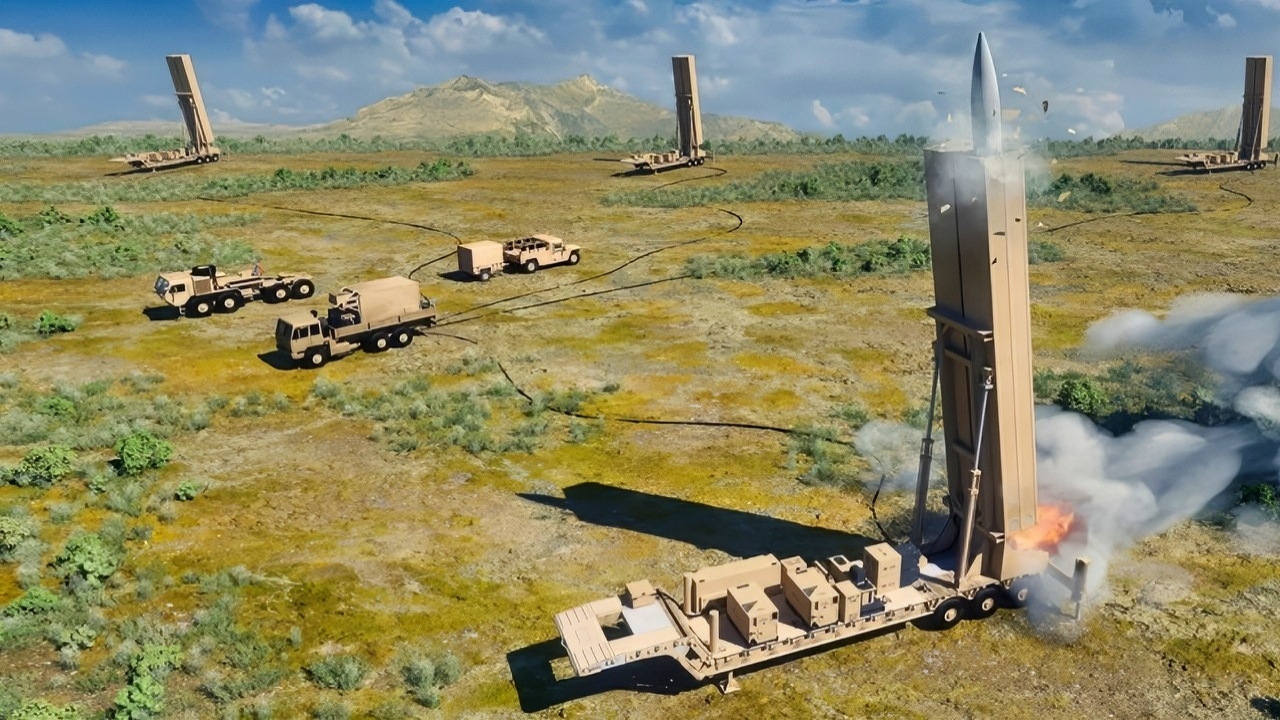
Dark Eagle Hypersonic Missiles. Image Credit: Creative Commons.
The Pentagon is launching a massive push to field low-cost strike weapons.
The stated goal: to procure 10,000 low-cost cruise missiles and 12,000 “cheap” hypersonic missiles between 2027 and 2029.
The initiative reflects a major strategic shift away from small inventories of exquisite weapons, toward mass-produced, cheap strike assets.
Explicitly tied to future Pacific conflict scenarios, the procurement push incorporates lessons learned from the mass expenditure of stand-off weapons during Epic Fury, reflecting the belief that future wars may require industrial-scale missile production.
The LCCM Program
Part of the program is the LCCM, or Low-Cost Containerized Missile, which aims to rapidly scale US cruise missile inventories through framework agreements with Anduril, CoAspire, Leidos, and Zone 5.
Using commercial-style production methods, the Pentagon hopes to field missiles that can be launched from shipping-container-style systems, with land- or sea-based deployments possible.
The strategic advantage of this system lies in concealment, mobility, and ambiguity in targeting.
For example, the Navy Mk 70 launcher already demonstrates the concept. In the future, containerized launchers can blur the line between civilian infrastructure and military strike systems.
Why Now
As Operation Epic Fury demonstrated, US missile inventories are insufficient for large-scale war.

A U.S. Air Force B-1B Lancer assigned to the 28th Bomb Wing takes off in support of a U.S. Air Force Weapons School Integration at Nellis Air Force Base, Nevada, Nov. 18, 2025. The Weapons School trains students to be tactical experts in their combat specialty while also mastering battlespace dominance and integration of joint assets. (U.S. Air Force photo by Airman 1st Class Heather Amador)

Four B-1B Lancers assigned to the 9th Expeditionary Bomb Squadron, deployed from Dyess Air Force Base, Texas, arrive Feb. 6, 2017, at Andersen AFB, Guam. The 9th EBS is taking over U.S. Pacific Command’s continuous bomber presence operations from the 34th EBS, assigned to Ellsworth AFB, S.D. The B-1B’s speed and superior handling characteristics allow it to seamlessly integrate in mixed force packages. While deployed at Guam the B-1Bs will continue conducting flight operations where international law permit. (U.S. Air Force photo/Tech. Sgt. Richard P. Ebensberger)
High-end wars consume munitions rapidly. The lessons are everywhere, from Ukraine to the Middle East.
And amid rising competition in the Pacific, where prospective conflicts could require tens of thousands of strike weapons, the US is under pressure to stockpile a cheaper variety of munitions. The problem with existing missiles is that they are expensive and glacially slow to produce, often with years-long lead times.
Now, the Pentagon is shifting its priorities toward quantity and scalability, instead of just high-end, sophisticated munitions—a reflection of concerns that the US could run out of missiles faster than they can be replaced.
The Companies Involved
The Pentagon will collaborate with a variety of companies to execute its procurement effort. Anduril, for example, fields the Barracuda-500M, a surface-launched and air-launched missile that can be produced at a rate of 1,000 per year.
Leidos is developing a weapon derived from the AGM-190A Small Cruise Missile, offering greater fuel and range, a modular airframe for easier upgrades and integration, and plans to field 3,000 missiles.
CoAspire, meanwhile, has the RAACM/RAACM-ER, which was originally tied to the ERAM program for Ukraine. And Zone 5 has the Rusty Dagger, which has been tested on F-16s. Many of these missiles already existed in prototype form before this new procurement push.
The Hypersonic Side
The Pentagon is also working with Castelion to procure the Blackbeard hypersonic weapon.
Specifically, the Pentagon hopes to procure a minimum of 500 per year initially, up to 12,000 over five years.
Traditionally, hypersonic weapons are extremely expensive. But the Pentagon hopes Castelion can field a lower-cost hypersonic through mass production.
The end result could be ground-launched variants fielded with the Army, and air-launched variants launched from Navy F/A-18s.
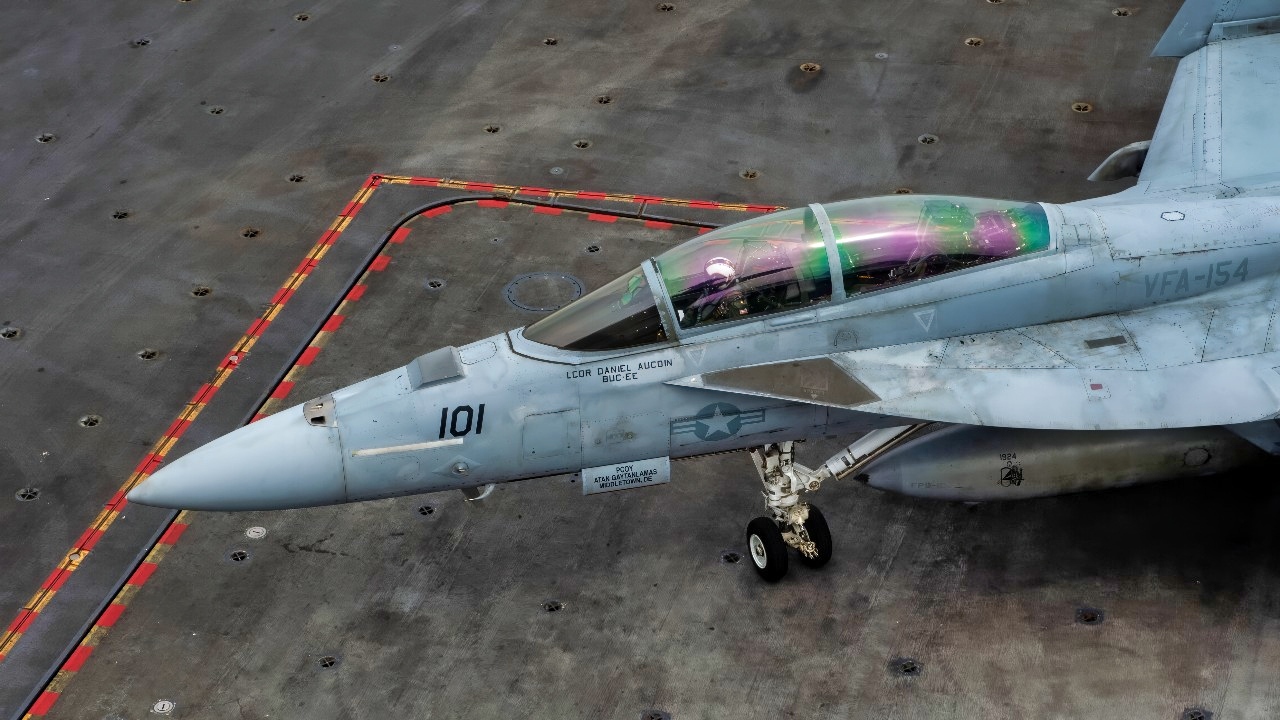
(July 24, 2025) – A U.S. Navy F/A-18F Super Hornet, assigned to the “Black Knights” of Strike Fighter Squadron (VFA) 154, transits the flight deck of Nimitz-class aircraft carrier USS Theodore Roosevelt (CVN 71), July 24, 2025. Theodore Roosevelt, flagship of Carrier Strike Group (CSG) 9, is underway conducting exercises to bolster strike group readiness and capability in the U.S. 3rd Fleet area of operations. (U.S. Navy photo by Mass Communication Specialist Seaman Maddix Almeyda)
The important takeaway here is that the Pentagon is seeking to industrialize hypersonic weapons rather than treating them as boutique assets.
The Strategic Shift
The Pentagon’s procurement effort reflects drone warfare trends, where cheap systems are deployed at scale to achieve affordable mass.
Saturation attacks have proven effective, overwhelming defenses through volume. But producing mass can strain industrial bases, especially traditional prime contractors calibrated for higher-end, slower production, such as Lockheed, Raytheon, and Boeing.
Instead, the Pentagon is prioritizing newer tech firms like Anduril, which tend to iterate faster and have shorter procurement cycles.
And by bringing in fast-produced, low-cost weapons, the Pentagon can assemble a high-low mix of “low” missiles to complement more sophisticated “high” missiles like the Tomahawk, JASSM, and LRASM.
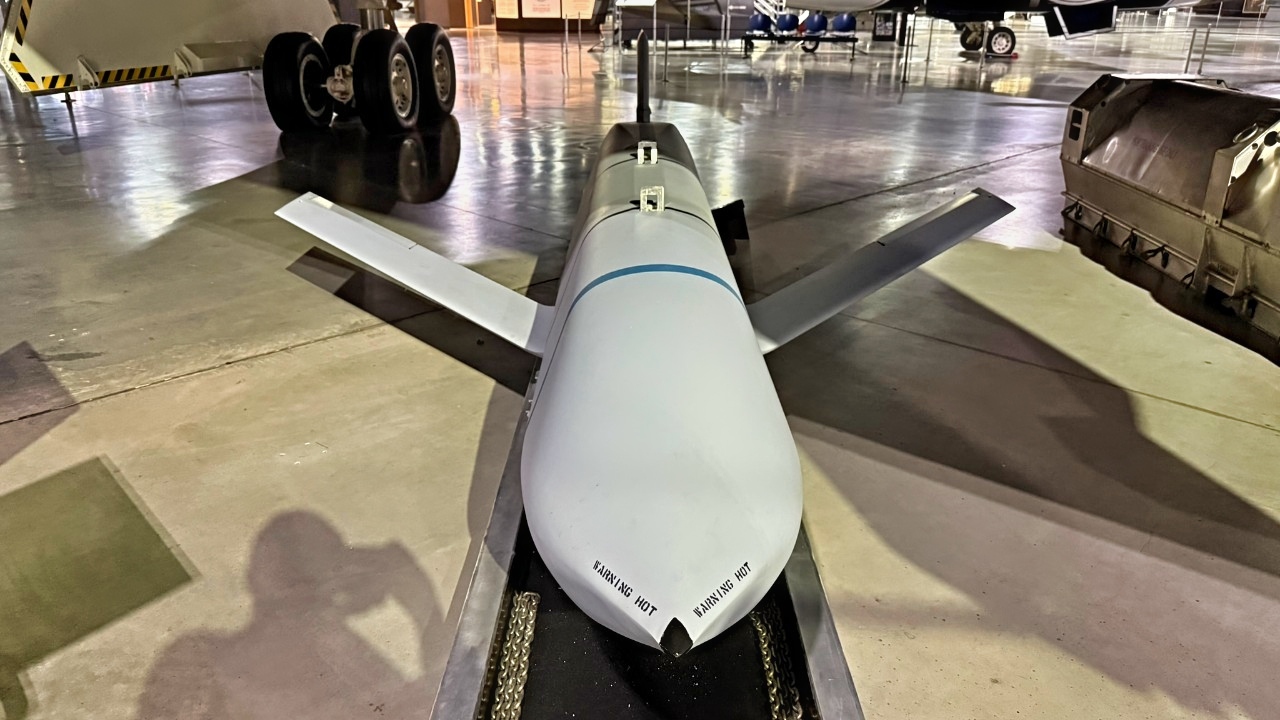
JASSM Missile National Security Journal Original Photo. All Rights Reserved.
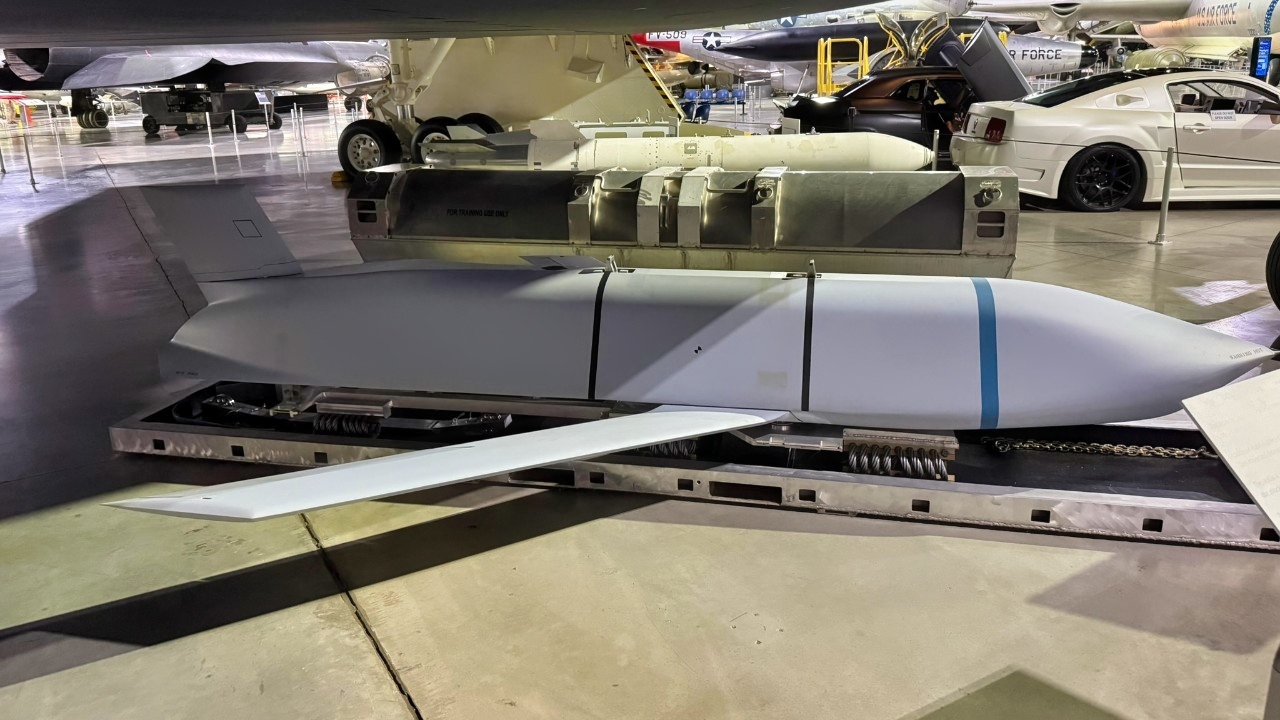
JASSM ‘Stealth’ Cruise Missile. Image Taken by National Security Journal at the U.S. Air Force Museum on 7/19/2025.
Importantly, the Pentagon is beginning to see missile warfare as an industrial rather than a technological competition.
The program signals that the Pentagon is preparing for prolonged high-intensity conflict.
Accordingly, the main concern appears to be the existing procurement system, which is too slow for modern warfare.
Future wars may well favor scalable production ecosystems—not just advanced platforms that take years to field.
Indeed, America appears to be trending toward a missile strategy that is focused on mass production and affordability.
MORE – The Great Oil Crisis of 2026 Is Coming
MORE – A Tiny French Submarine ‘Sank’ 2 Navy Aircraft Carriers
About the Author: Harrison Kass
Harrison Kass is a writer and attorney focused on national security, technology, and political culture. His work has appeared in City Journal, The Hill, Quillette, The Spectator, and The Cipher Brief. He holds a JD from the University of Oregon and a master’s in Global & Joint Program Studies from NYU. More at harrisonkass.com.


