

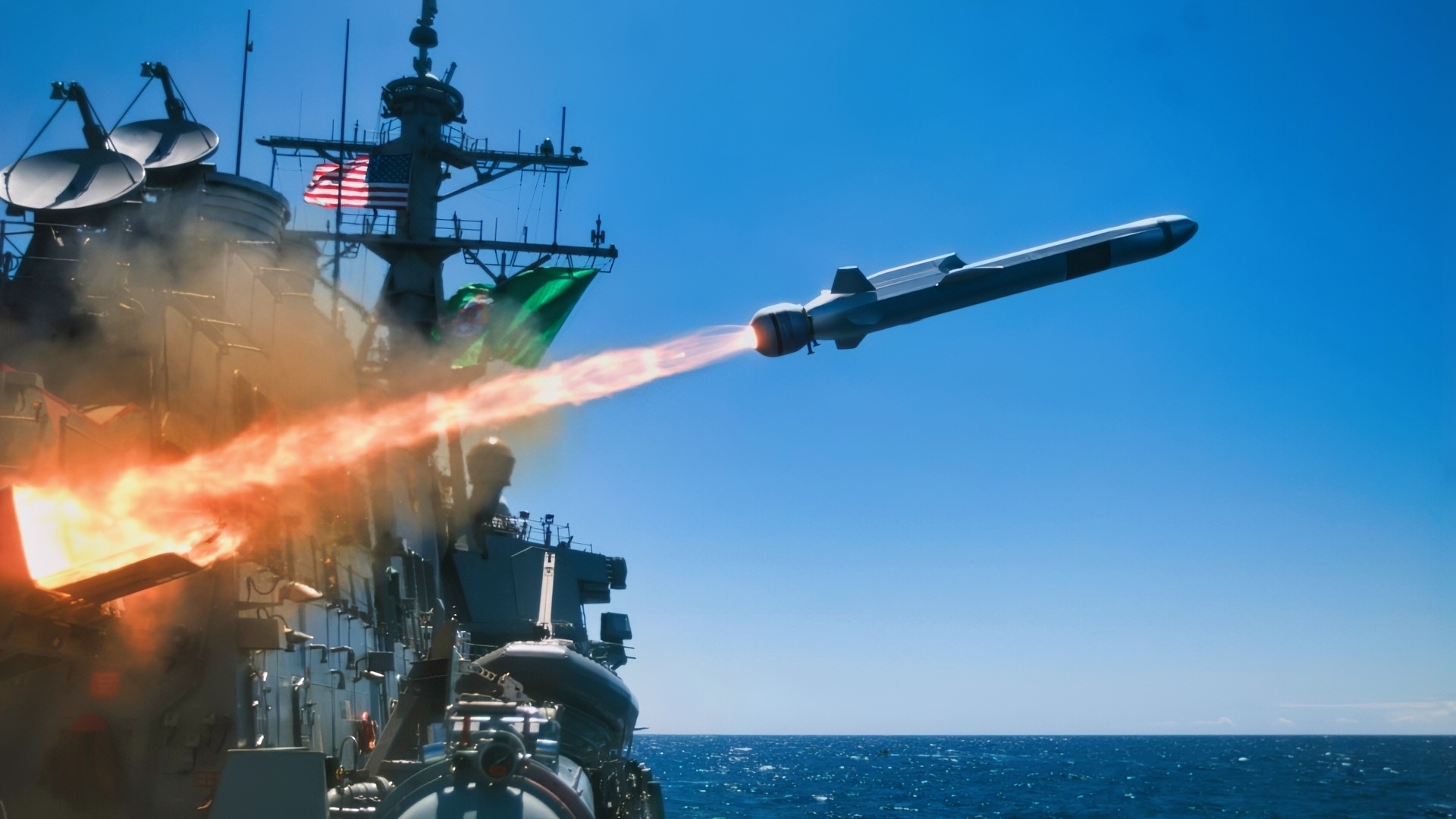
More than ten days into the renewed fighting between the United States and the Islamic Republic of Iran, the Strait of Hormuz (SoH), one of the world’s most important oil transit chokepoints, is a point of contention between the two warring sides.
According to a recent BBC report, Iran’s leadership faces a set of difficult strategic choices that could shape the future of both the conflict and the country’s long-term geopolitical position, including whether Iran aims to restore regional influence or prioritize economic stability.

HIMARS Rocket. Image Credit: Creative Commons.
Option One: A Negotiated Settlement
The first option Iran faces is to negotiate a settlement largely consistent with American objectives. Such an agreement would require Iran to stop attacking commercial shipping transiting through the SoH, while guaranteeing freedom of navigation via the waterway.
It would further require Tehran to reduce (or limit) its stockpile of highly enriched uranium (HEU) and permit expanded inspections by the International Atomic Energy Agency (IAEA).
In exchange, Iranian negotiators would call for ending the US naval counter-blockade impacting Iranian ports, relief from economic sanctions, and assurances against additional American military strikes.
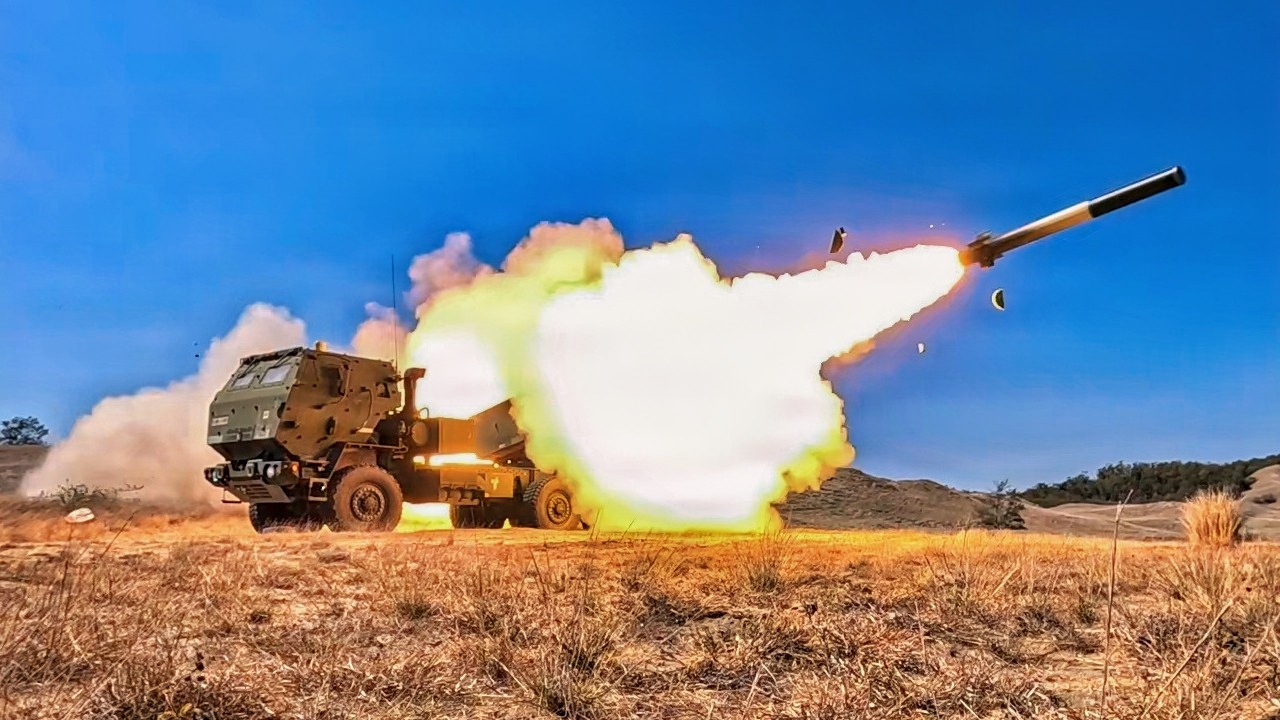
U.S. Soldiers assigned to 2-11 Long Range Fires Battalion, 25th Infantry Division Artillery, fire a High Mobility Artillery Rocket System during a counter-landing live-fire exercise as part of Exercise Balikatan 2026 at La Paz Sand Dunes, Laoag City, Philippines, May 4, 2026. Balikatan is a longstanding annual exercise between the Armed Forces of the Philippines and U.S. military that represents the strength of our alliance, improves our capable combined force, and demonstrates our commitment to regional peace and prosperity. (U.S. Army photo by Sgt. Duke Edwards)
Undoubtedly, this rational approach would immediately reduce economic and military pressure on Iran.
Yet, it is politically untenable because much of the legitimacy that the Islamic Republic has in the eyes of its people–and many throughout the world–rests in its status as the head of the resistance movement against the United States and Israel.
Given how duplicitous the Americans and Israelis are perceived to have behaved toward Iran in previous iterations of negotiations, too, the Iranians would not want to risk their political lives by being seen as too compromising with the US.
Option Two: Escalating the War
The other option the Iranian leaders could embrace would be escalation in the war.
Iran could increase attacks against US military installations throughout the Middle East while expanding operations against commercial shipping and critical energy infrastructure in Gulf Arab states.
Such a strategy would seek to raise global energy prices and increase economic pressure on Washington and its regional allies in hopes of forcing political concessions, highlighting the evolving regional and global responses that influence Iran’s options.
That will naturally evoke more military responses from whatever remains of the US military presence in the region (and from beyond visual range).
A successful Iranian strike that, for example, causes massive numbers of casualties or does significant damage to Gulf energy infrastructure could have the opposite intended effect for Iran in that it leads to increased escalation from both the US military and, possibly, some of the Gulf Arab states.
So, that puts Iran in a significantly complicated position; Tehran probably doesn’t fear Arab reprisals. But it doesn’t want to see a Gulf Arab country (or countries) galvanized behind a reinvigorated US military.
Option Three: Controlled Instability
Iran’s other option involves controlled instability.
In this scenario (which seems to be Tehran’s preference), Tehran maintains enough pressure on shipping traffic and global energy markets to preserve its bargaining leverage while avoiding actions likely to trigger another major military campaign by the United States–while the Gulf Arab states, sensing that Iran wants to calibrate its pressure, increases their own backchannel pressure on Washington to desist in the war (since ending the war quickly would benefit the economies of the Gulf Arab states).
This approach, too, creates its own unique set of challenges.
After all, years of sanctions, wartime damage, and inflation have all contributed to a declining economic situation in the Islamic Republic.
Before the war began, indeed, one of the unacknowledged triggers of it involved mass protests of Iranians who were upset by the chronically bad economic situation in the country.
While the Islamic Republic has fared much better than almost any Western analyst believed it would, the conflict is not a bed of roses for the regime.
Iran’s Fragmented Leadership Complicates Strategy
To survive the war, Iran’s regime decentralized as per its Mosaic defense doctrine. It was how the Iranian regime survived for as long as it has despite the sustained military campaign the US and Israelis subjected it to.
With the assassination of the Ayatollah Ali Khamenei, though, there has been such a decentralization of power that you now have in Iran various competing factions within the military, the Iranian Revolutionary Guards Corps, the business community, and the diplomatic wing of the regime.
Iran does not truly speak with one voice any longer. No single leader has absolute command over the armed forces anymore.
That complicates the Islamic Republic’s ability to exploit the many weaknesses in American strategy. And if the Iranians persist in their calibrated instability strategy, it might break the will of the US before the regime collapses under its own internal contradictions.
Still, a sustained SoH blockade strategy might also inevitably exacerbate the economic weaknesses within Iran.
The Long-Term Limits of the Strait of Hormuz Strategy
Iran’s influence over global markets only lasts so long as the world truly depends upon the SoH. But the longer, and more forcefully, the Iranians choke off the SoH, the greater the chance that the world’s powers and corporations devise permanent workarounds.
Of course, that won’t happen in the near-term.
But, over time, the shift will occur–leaving Tehran without much strategic leverage once more.
The Internal Political Question
Today, there are far more powerful stakeholders in the Islamic Republic than there were before the war. Yes, the IRGC always had an outsized role.
But everyone–even the IRGC–essentially deferred to Ayatollah Khamenei. Those days are gone. His son, Mojtaba, has not yet found his voice as supreme leader.
As a result, the Iranians are being led by competing factions standing, in many cases, at cross-purposes with each other, adding layers of internal complexity to Iran’s strategic environment.
That’s not even mentioning the Iranian man on the street. While there has been an unexpected rally around the flag scenario unfolding since the start of the Iran War, some Iranian citizens have expressed disappointment that a June Memorandum of Understanding (MoU), intended to halt military operations and reopen the SoH–while providing 60 days of negotiations–collapsed after just 18 days.
Those experiences illustrate a far more complex–dangerous–environment the Islamic Republic faces in the medium-to-long-term.
So, the Iranian strategy (one of the three the BBC identified) really depends upon which faction within Iran’s political system proves most influential.
About the Author: Brandon J. Weichert
Brandon J. Weichert is the Senior National Security Editor. He also manages The Weichert Brief on Substack. Weichert also hosts “National Security Talk” on Rumble. He is the author of four bestselling national security books, the most recent of which is A Disaster of Our Own Making: How the West Lost Ukraine (Encounter Books). Follow him via Twitter/X @WeTheBrandon.


