

Key Points and Summary – Britain’s Dreadnought-class SSBNs will replace the Vanguard fleet and keep the UK’s continuous at-sea deterrent credible into the 2050s.
-Marked by a recent Barrow milestone attended by King Charles III, the program blends proven Trident II D5 missiles with major tech upgrades: PWR3 reactors for safer, lower-maintenance power, new X-rudders for acoustic stealth, and fly-by-wire-style Active Vehicle Control Management.

Vanguard-Class Submarine From Royal Navy. Image Credit: Royal Navy.
-Each 153-meter, 17,200-ton boat carries 12 SLBM tubes plus Spearfish torpedoes, emphasizing survivability and reliability.
-Amid rising global tensions, Dreadnought delivers a quieter, longer-lived deterrent architecture—sustaining UK jobs and ensuring round-the-clock strategic credibility.
Why Britain’s New Dreadnought-Class Submarine Matters
Britain’s Royal Navy marked two milestones earlier this week when King Charles III attended ceremonies at the BAE Systems submarine yard in Barrow-in-Furness.
The British monarch joined celebrations for the commissioning of the sixth Astute-class nuclear-powered attack submarine (SSN), and the initiation of construction of the fourth Dreadnought-class ballistic missile submarine (SSBN).
The events, held on September 22, represent a significant milestone for the Royal Navy, which has slowly seen its fleet of submarines gradually disappear in recent decades.
The sixth Astute-class submarine is set to replace the aging Trafalgar and Swiftsure-class submarines, while the Dreadnought-class submarine is intended to modernize and sustain Britain’s nuclear deterrent.
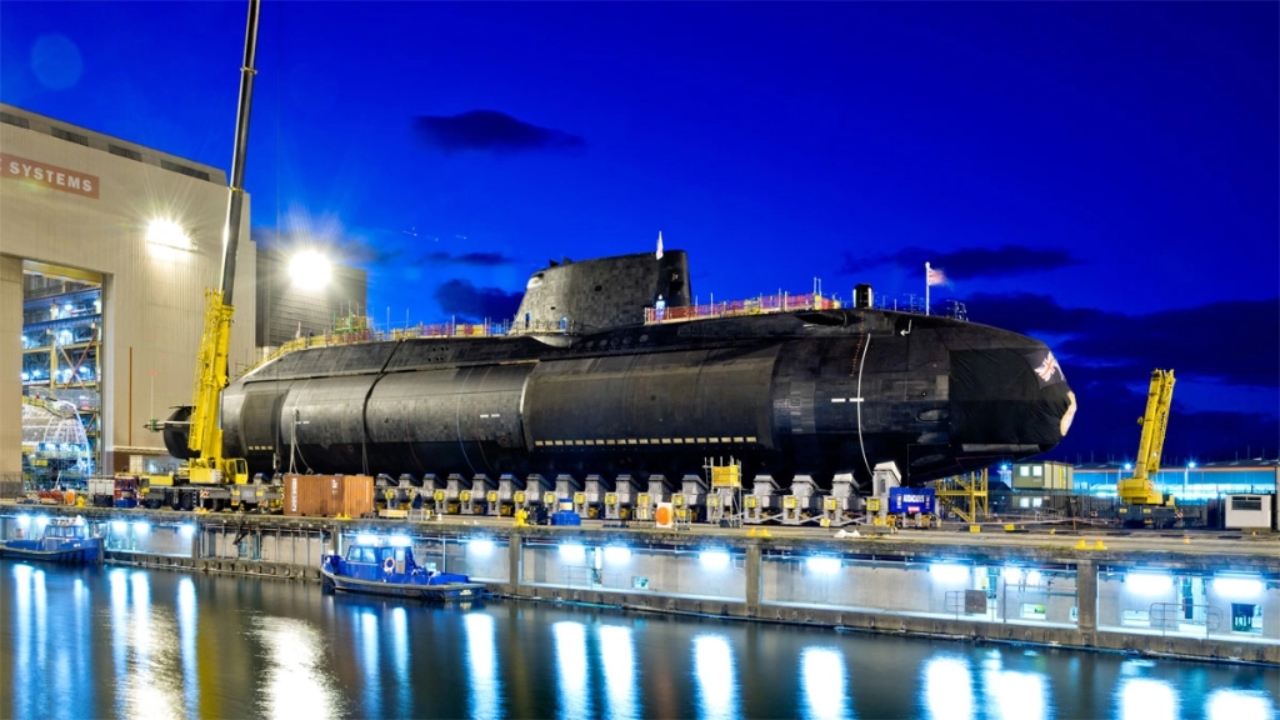
Astute-Class Submarine. Image Credit: Creative Commons/BAE Systems.
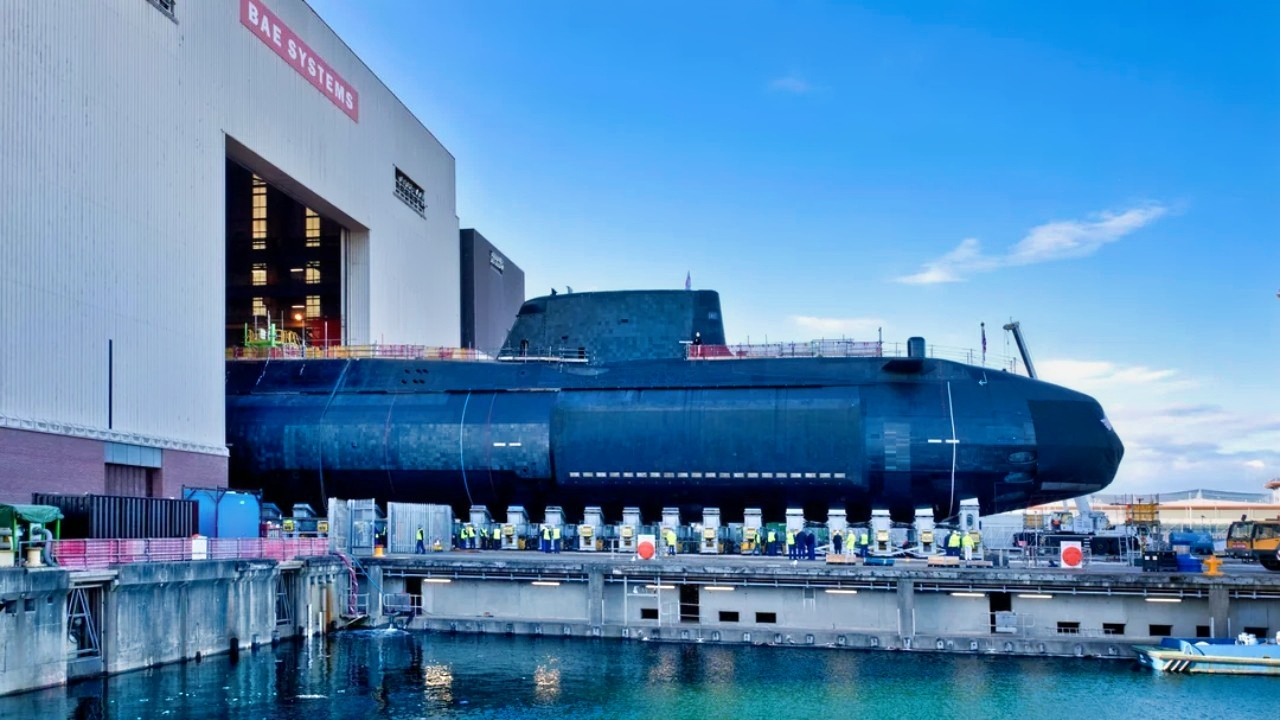
Astute-Class Submarine Royal Navy. Image Credit: Creative Commons.
The ceremony was also attended by British Defence Secretary John Healey, who marked the start of construction on the Dreadnought-class submarine that is expected to enter service in the 2030s.
“Submarine building is a vital UK industry, sustaining thousands of jobs and apprenticeships up and down the country, all while continuing to keep the country safe around the clock,” Healey said at the event.
“Barrow is an outstanding example of security and growth working hand-in-hand – adding a new attack submarine to the Royal Navy’s fleet, building the next generation of nuclear-armed submarines, and simultaneously supporting thousands of skilled local jobs and apprenticeships.”
The cutting of steel was also described by Chief of Defence Nuclear, Madelaine McTernan, as a “significant milestone marking positive progress in this extraordinary programme,” adding that delivering the submarines is a “truly national endeavour with a vast UK supply chain.”
The Dreadnought-class submarine is the final to be built and will join a fleet of four, designed to replace Vanguard-class submarines that currently form the UK’s nuclear deterrent.
The idea of a successor to Vanguard-class submarines emerged around 2010, and was initially formalized as the “Successor submarine programme.” In July 2016, Parliament formally approved the renewal of the United Kingdom’s strategic deterrent, and the first boat was officially designated HMS Dreadnought in October 2016.
Construction began shortly thereafter: steel cutting for the boat was carried out in October 2016 at the same submarine shipyard attended by King Charles this month in Barrow-in-Furness.
The program is being overseen by the UK Ministry of Defence and the Submarine Delivery Agency, with BAE Systems managing the submarine construction and Rolls-Royce overseeing nuclear reactor design and support. The program will be complete once the fourth Dreadnought submarine is ready for deployment.
The Dreadnought project approaches completion after years of controversy over politics and finances.
Debates have long swirled throughout British politics over the project’s cost, strategic need, and technical risk. However, it is deliberately designed to ensure that the United Kingdom has a credible and effective at-sea deterrent through the 2050s and beyond.
Inside the Tech Replacing Vanguard-Class SSBN
The core mission of the new Dreadnought-class submarines is to ensure that the UK retains a credible, survivable retaliatory capability in the event of a nuclear first strike. To achieve that, the submarines have an impressive technology profile and make use of a number of new design innovations.
Each Dreadnought is roughly 153 meters long, and displaces around 17,200 tonnes when submerged.
The submarine is powered by the new Pressurised Water Reactor 3 (PWR3) designed by Rolls-Royce, which is intended to be safer than previous designs, last longer, and require less maintenance compared to PWR2 reactors used in the Astute and Vanguard classes.
The Dreadnoughts will be the first Royal Navy submarines to adopt X-rudders at their front stern to reduce noise, particularly at higher speeds. Motion control will also use a “fly-by-wire” style automated system called Active Vehicle Control Management (AVCM), replacing some traditional hydraulic and mechanical control systems.
Armament will include twelve missile tubes arranged as three compartments of four – known as “quad packs” – carrying Trident II D5 submarine-launched ballistic missiles, alongside four 533mm torpedo tubes for Spearfish heavyweight torpedoes.
The Dreadnoughts’ enhancements matter because deterrence depends on survivability.
A submarine that is quieter, more reliable, and that lasts longer is harder to detect, track, or target. The upgrade to PWR2 and use of X-rudders improve acoustic stealth, while the automated control systems reduce mechanical noise and increase consistency in maneuvering under stress.
Compared to the Vanguard class, the Dreadnoughts incorporate updated reactor tech, more advanced control systems, and improved hull/rudder design for reduced detectability. Also, the Dreadnought class aims for a longer service life of between 35 and 40 years.
The Bottomline on Dreadnought-Class
The Dreadnought-class program is a combination of a proven strategic deterrent architecture that includes Trident missiles and a continuous at-sea posture, incorporating modern advances in automation, reactor design, and noise reduction.
It will ensure that the UK’s nuclear backbone remains credible for decades to come, and will do so at a time of heightening global tensions.
By replacing the aging Vanguard-class fleet with the more advanced Dreadnoughts, Britain is also reaffirming its role as one of the world’s foremost maritime nuclear powers.
About the Author:
Jack Buckby is a British author, counter-extremism researcher, and journalist based in New York who writes frequently for National Security Journal. Reporting on the U.K., Europe, and the U.S., he works to analyze and understand left-wing and right-wing radicalization, and reports on Western governments’ approaches to the pressing issues of today. His books and research papers explore these themes and propose pragmatic solutions to our increasingly polarized society. His latest book is The Truth Teller: RFK Jr. and the Case for a Post-Partisan Presidency.
More Military
Stop Saying America Is ‘Losing’ the 6th-Generation ‘NGAD’ Fighter Race
The U.S. Navy’s Arleigh Burke Flight III Destroyer Is No Battleship (But Better)


