

Key Points and Summary – AUKUS is facing a Washington review that could reshape—rather than cancel—Australia’s plan to acquire at least eight Virginia-class submarines from the 2030s.
-Secretary of State Marco Rubio has privately reassured Canberra, even as the Trump administration’s “America First” approach prompts tighter tech-transfer rules and new cost-sharing demands.

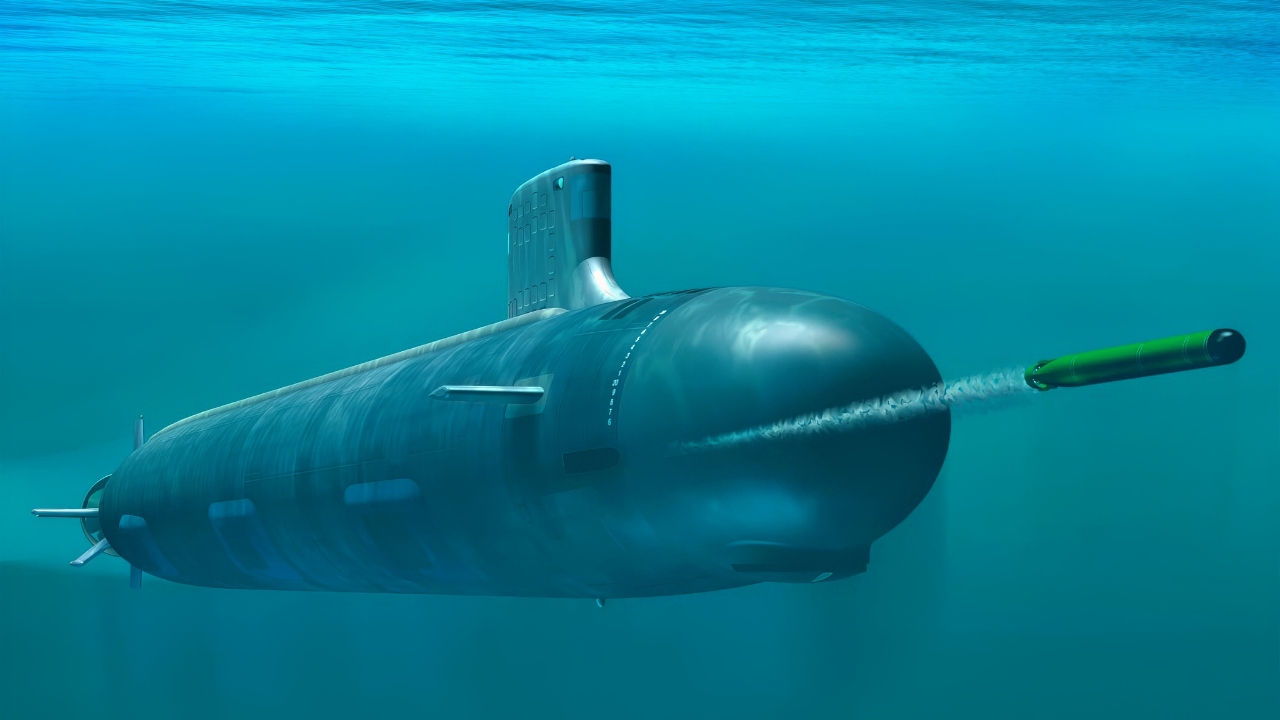
SSN-AUKUS. Image Credit: Creative Commons.
-Australia has already paid over US$1 billion and pledged US$8 billion for a Perth maintenance hub, but U.S. yard capacity, labor shortages, and supply-chain delays complicate delivery promises.
-Expect Aukus to survive, yet on tougher terms: higher Australian outlays and phased timelines to align with U.S. production realities and allied undersea deterrence goals.
Rubio Reassures Australia as AUKUS Submarines in Doubt
The landmark AUKUS submarine deal now faces a major review by Washington.
The three-way pact, unveiled between Australia, the United States, and Britain back in 2021, vows to deliver Australia a minimum of eight nuclear-powered Virginia-class submarines from the 2030s onwards.
Rubio Sweet-Talks Australia on AUKUS
US Secretary of State Marco Rubio has sought to assure partners that the deal is unlikely to be abandoned.
Still, many are warning that the Trump administration’s “America First” motto could leave its future uncertain.
Valued at around US$240 billion, the deal would transform Australia’s undersea warfare capabilities and bolster deterrence against China’s expanding naval presence in the Indo-Pacific.
Albanese Vows $8BN Investment in AUKUS Hub
Yet in June, Washington launched a review of AUKUS, with officials insisting it must be squared with President Trump’s protectionist agenda.
That raised alarm in Canberra, where Prime Minister Anthony Albanese has already committed billions to submarine infrastructure, including a new defence hub near Perth to which he has pledged the equivalent of $8 billion US dollars.
Rubio has quietly assured Australian Deputy Prime Minister Richard Marles that AUKUS was not in danger of collapse, according to the Washington Post.
Troy Lee-Brown, a research fellow at the University of Western Australia’s Defence and Security Institute, told the South China Morning Post that this points to a pivot towards tighter safeguards on technology transfers and fresh cost-sharing demands, rather than total cancellation.
“The broader strategic logic of reinforcing allied undersea capability remains compelling enough to outweigh protectionist impulses,” Troy Lee-Brown detailed.
US Bottlenecks Could Complicate Timeline
Still, the devil lies in the details.
Australia has already paid more than US$1 billion in instalments toward the submarine programme, at a time when the US faces serious production bottlenecks of its own.
Ageing shipyards, labor shortages, and supply chain delays have left the Navy scrambling to meet existing demand. Naturally, this complicates any pledge to divert Virginia-class boats to Canberra.
For Albanese, the political stakes are huge. His government has invested heavily in convincing Washington that Canberra is all-in on AUKUS, with the Perth hub designed to serve both Australian and allied vessels.
Such public promises could make it harder for American critics to accuse Australia of free-riding, especially at a time of rising tensions with Beijing.
But Trump’s rather transactional approach means that no deal is ever truly final.
The AUKUS scheme appears to be on track to survive, but Australia may be expected to invest further billions before it is fully operational.
About the Author: Georgia Gilholy
Georgia Gilholy is a journalist based in the United Kingdom who has been published in Newsweek, The Times of Israel, and the Spectator. Gilholy writes about international politics, culture, and education. You can follow her on X: @llggeorgia.
More Military
The F-35A Stealth Fighter Is Also a Stealth Bomber
Mach 2.65 F-111 ‘Aardvark’ Strike Fighter Has a Message for the U.S. Military
Russia’s MiG-29 Fulcrum Fighter Has a Message for NATO
The X-40A Space Plane Has a Message for the U.S. Military
The Mach 6.7 X-15 Space Plane Has a Message for the U.S. Air Force


