


Summary and Key Points: Lockheed’s S-3 Viking — nicknamed “the Hoover” for its vacuum-like whine — spent 35 years as the U.S. Navy’s carrier-based submarine hunter, yet never sank a single sub. It hardly mattered.
-The versatile jet flew anti-submarine, surveillance, attack, and refueling missions, even destroying an Iraqi missile site in the 1991 Gulf War, and carried nuclear weapons in its bomb bay.
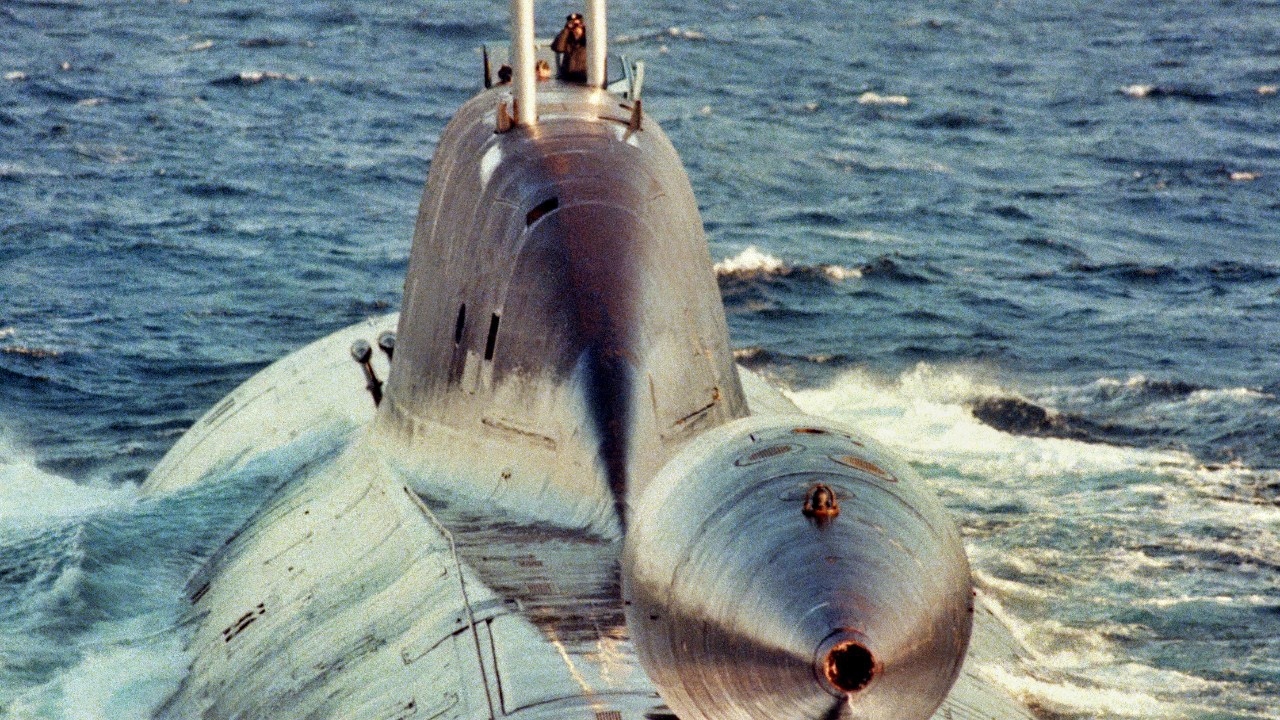
An aerial stern-on view of the Russian Northern Fleet AKULA class nuclear-powered attack submarine underway on the surface. Image Credit: Creative Commons.

Akula-Class Submarine from Russian Navy. Image Credit: Creative Commons.
-In 2003, it became “Navy One,” flying President George W. Bush onto a carrier. The Navy retired it in 2016.
The S-3 Viking Thankfully Never Went to War
The S-3 Viking was a four-person crew, twin-engine turbofan-powered jet aircraft designed and produced by the American Lockheed Corporation. Because of its characteristic whoosh sound, it was nicknamed the “The Hoover” after the vacuum cleaner brand.
The US Navy developed the S-3 to procure a successor anti-submarine warfare (ASW) aircraft to the Grumman S-2 Tracker, which was the first purpose-built, single airframe anti-submarine warfare (ASW) aircraft to enter service with the US Navy.
The Navy intended the Viking to be a carrier-based, subsonic, all-weather, long-range, multi-mission aircraft.
A Historic Platform for the US Navy
With the mention of the word “Viking,” the image of Ragnar Lothbrok comes to mind sailing on the long ‘dragon boat’ the Drakkar. But the S-3 Viking scarcely resembles the long, sleek boats; she’s short and stubby. And a little fat-looking.
The aircraft can seat four crew members (three officers and one enlisted). The pilot and co-pilot/tactical coordinator (COTAC) sit in the front of the cockpit, while the tactical coordinator (TACCO) and sensor operator (SENSO) occupy the back. The sensor operator is the only enlisted member.
A unique feature of the S-3 Viking was that all four seats would eject if the pilot or co-pilot pulled the ejection handle.
However, if either of the back seat crew pulled their ejection handle, only the back seaters would eject. Thus, the pilot and co-pilot had to pull their own ejection seat handles.

Russian Akula-Class Submarine X Screenshot Image.

Akula-Class. Image Credit: Creative Commons.
The aircraft has two hardpoints under the wings used to carry fuel tanks, general-purpose and cluster bombs, missiles, rockets, and storage pods.
It also has four internal bomb bay stations that can carry general-purpose bombs, aerial torpedoes, and special stores (B57 and B61 nuclear weapons). Fifty-nine sonobuoys and a dedicated Search and Rescue (SAR) chute are also carried.
The Viking was fitted with the ALE-39 countermeasure system and can carry up to 90 rounds of chaff, flares, and expendable jammers (or a combination of all) in three dispensers. A retractable Magnetic Anomaly Detector (MAD) Boom is in the tail.
Two General Electric TF34-GE-2 turbofan engines power the S-3 with 9,275 lb static thrust each that could push the Viking to 449 mph. But she wasn’t meant for speed.
S-3 Viking History
The Viking’s history began on February 20, 1974, when the 41st Anti-Submarine Squadron, VS-41, the Shamrocks, was declared operational at NAS North Island, California. The S-3A’s first operational cruise took place in 1975 with the VS-21 “Fighting Redtails” aboard the USS John F. Kennedy.
After working through some initial issues with spare parts and computer malfunctions caused by the jarring takeoff, the Viking became a valuable ASW and surface surveillance asset. The Navy constantly sought upgrades; shortly afterward, the S-3B came along.
The S-3B saw extensive service during the 1991 Gulf War, performing attack, tanker, and ELINT missions and launching ADM-141 TALD decoys.
One S-3B, launched from the aircraft carrier USS Theodore Roosevelt (CVN-71), destroyed an Iraqi Silkworm anti-ship missile site, having fired AGM-84 SLAM missiles at it.
The Navy commonly deployed the Vikings to hunt for Scud missile launchers. They also identified and targeted numerous Iraqi naval vessels and even destroyed anti-aircraft gun emplacements and coastal radars.
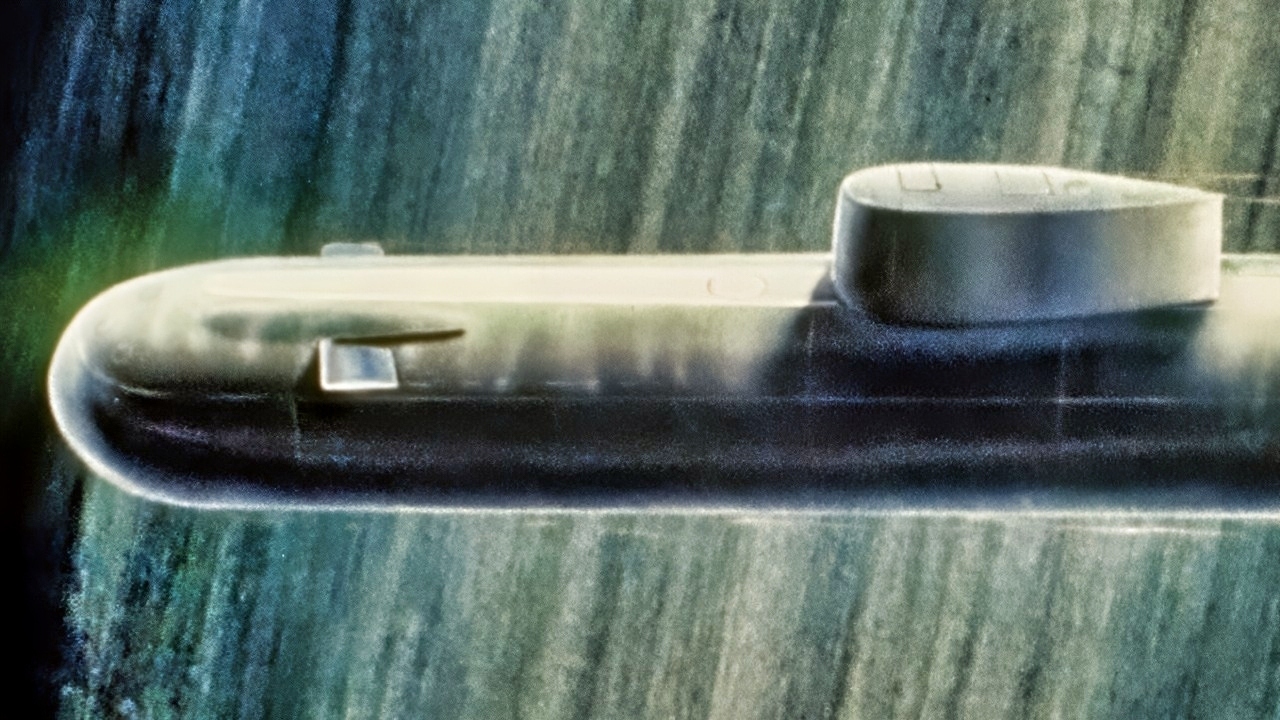
Mike-Class K-278 Submarine. Image Credit: Creative Commons.
S-3 Vikings were also deployed in the wars in Yugoslavia and Operation Enduring Freedom in Afghanistan. There, the Vikings were used as tankers, refueling the numerous sorties that flew as close air support for the ground operations.
S-3 Viking Becomes “Navy One”
However, on May 1, 2003, the S-3 made history when President George W. Bush was in the co-pilot seat, and he became the first sitting chief executive to trap on board an aircraft carrier, USS Abraham Lincoln. As is customary, during the time President Bush was aboard the aircraft, it was known as “Navy One.”
The S-3 Viking Has Ascended to Valhalla
During its 35 years of service with the US Navy, the Lockheed S-3 Viking never sank a submarine.
Despite this, it was a very successful aircraft. The Hoover was able to carry out a variety of missions for the US Navy, including anti-submarine warfare, anti-surface warfare, carrier onboard delivery, electronic surveillance, airborne tanking, and over-the-horizon targeting.
The Navy retired the S-3 fleet in 2016; it served its country well. While it wasn’t the prettiest aircraft or even a Drakkar, Floki (the boat builder) would approve.
About the Author: Steve Balestrieri
Steve Balestrieri is a National Security Columnist. He served as a US Army Special Forces NCO and Warrant Officer. In addition to writing on defense, he covers the NFL for PatsFans.com and is a member of the Pro Football Writers of America (PFWA). His work was regularly featured in many military publications.


