

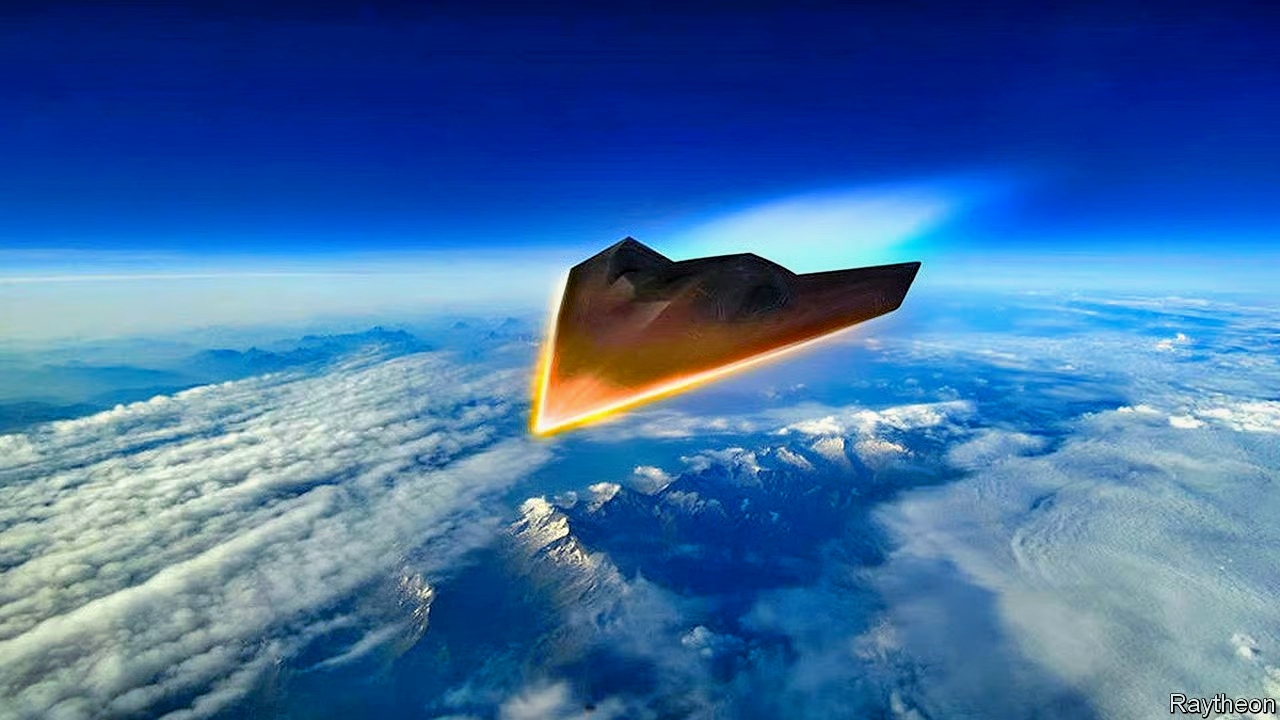
Turns out the United States Air Force’s AGM-183A Air-Launched Rapid Response Weapon (ARRW) isn’t dead after all. Supposedly, the Air Force abandoned the AGM-183A after it repeatedly failed tests and shifted its resources toward developing the Hypersonic Attack Cruise Missile (HACM).
In the wake of the Trump administration’s request for a staggering $1.5 trillion defense budget, though, it looks like the ARRW has again made its way back into the Fiscal Year 2026/2027 budget–only as a larger, longer-range hypersonic strike weapon.
What ARRW Actually Is
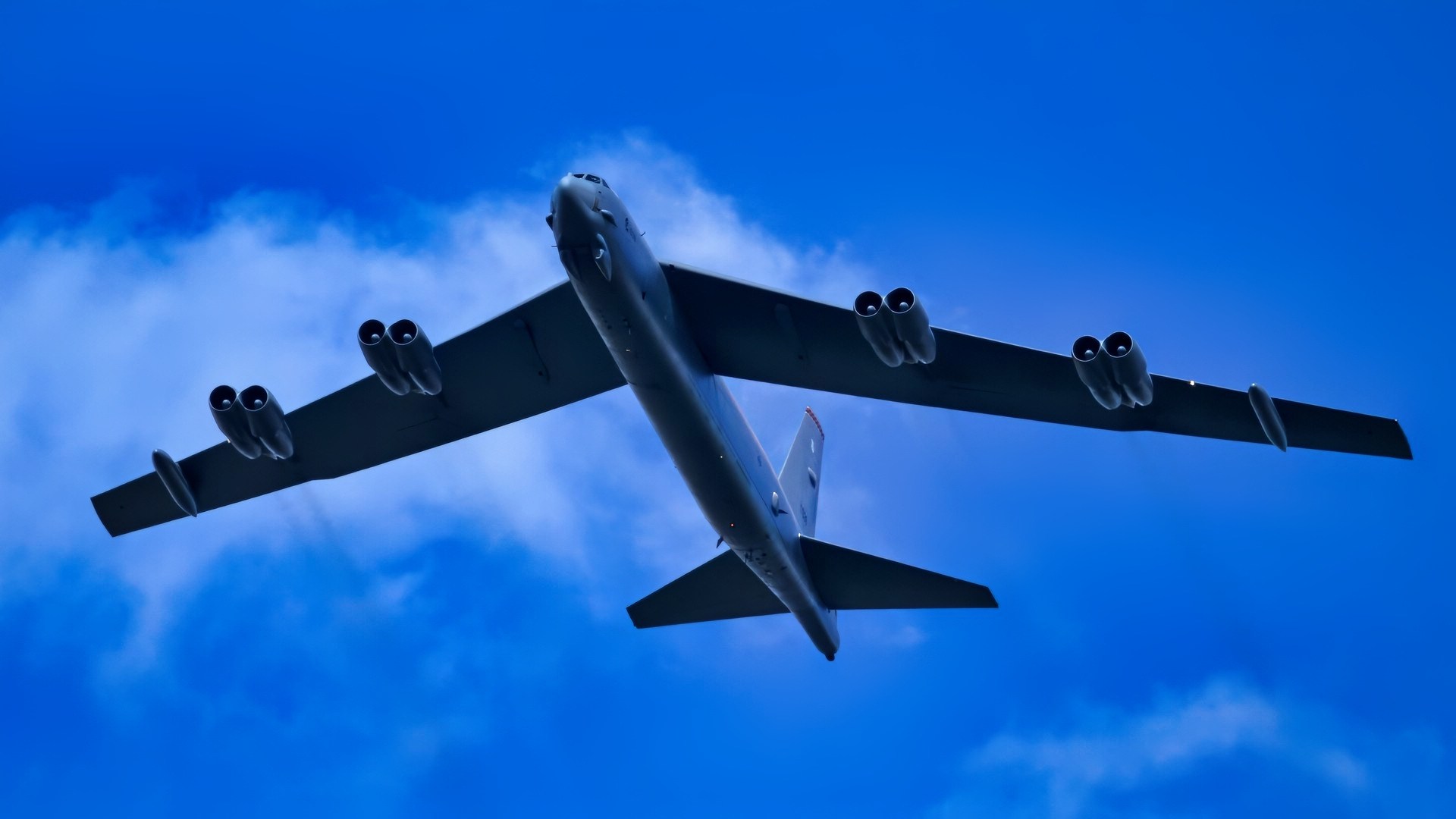
Boeing B-52H Stratofortress. Image Credit: Creative Commons.

Capt. Karla Arango, 20th Bomb Squadron pilot, communicates to crew inside a B-52 Stratofortress during Global Thunder 2019 at Barksdale Air Force Base, La., Nov. 3, 2018. Global Thunder is an annual U.S. Strategic Command (USSTRATCOM) exercise designed to provide training opportunities to test and validate command, control and operational procedures. The training is based on a notional scenario developed to drive execution of USSTRATCOM and component forces’ ability to support the geographic combatant commands, deter adversaries and, if necessary, employ forces as directed by the President of the United States. (U.S. Air Force photo by Senior Airman Philip Bryant)
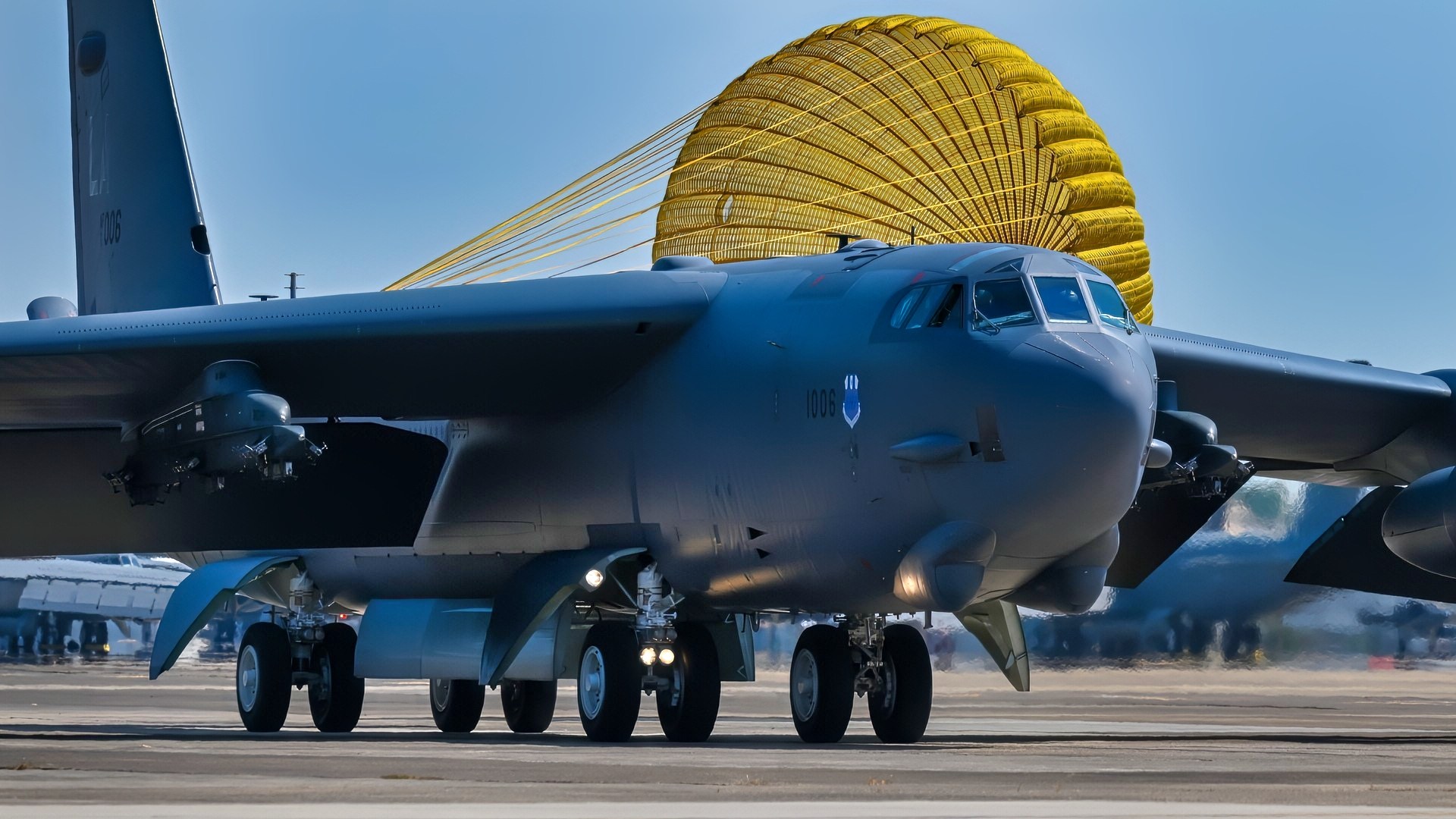
A B-52 Stratofortress from the 2nd Bomb Wing returns home to Barksdale Air Force Base following a Bomber Task Force mission at Andersen Air Force Base, Guam, Aug. 20, 2023. BTF missions demonstrate the credibility of the United States forces to address a global security environment that is more diverse and uncertain than at any other time in history. (U.S. Air Force photo by Airman 1st Class Seth Watson)
Lockheed Martin developed AGM-183A ARRW as an air-launched, boost-glide hypersonic weapon.
A bomber launches it; a rocket booster accelerates it; then a hypersonic glide vehicle separates and maneuvers toward the target at speeds greater than Mach 5. DefenseScoop, a defense-related online publication, reports that the AGM-183A is harder to track and, therefore, intercept because of the inclusion of hypersonic capabilities.
ARRW’s problem was not conceptual. Instead, the issue with the AGM-183A was its implementation. The program suffered major test failures in 2021, late 2022, and in March 2023. Air Force acquisition officials told Congress they did not plan to purchase the ARRW system after the prototyping phase. In fact, the FY2025 budget request included no ARRW procurement or funding allocated for the project’s research and development.
Why the Pentagon Suddenly Changed Course
But then Air Force Chief of Staff Gen. David Allvin told Congress last June that he envisioned a two-track approach to the Air Force’s otherwise abysmal development of hypersonic weapons. Per Gen. Allvin’s vision, ARRW would be the larger, strategic, long-range weapon, and the aforementioned HACM would be an air-launched hypersonic option for the Air Force.
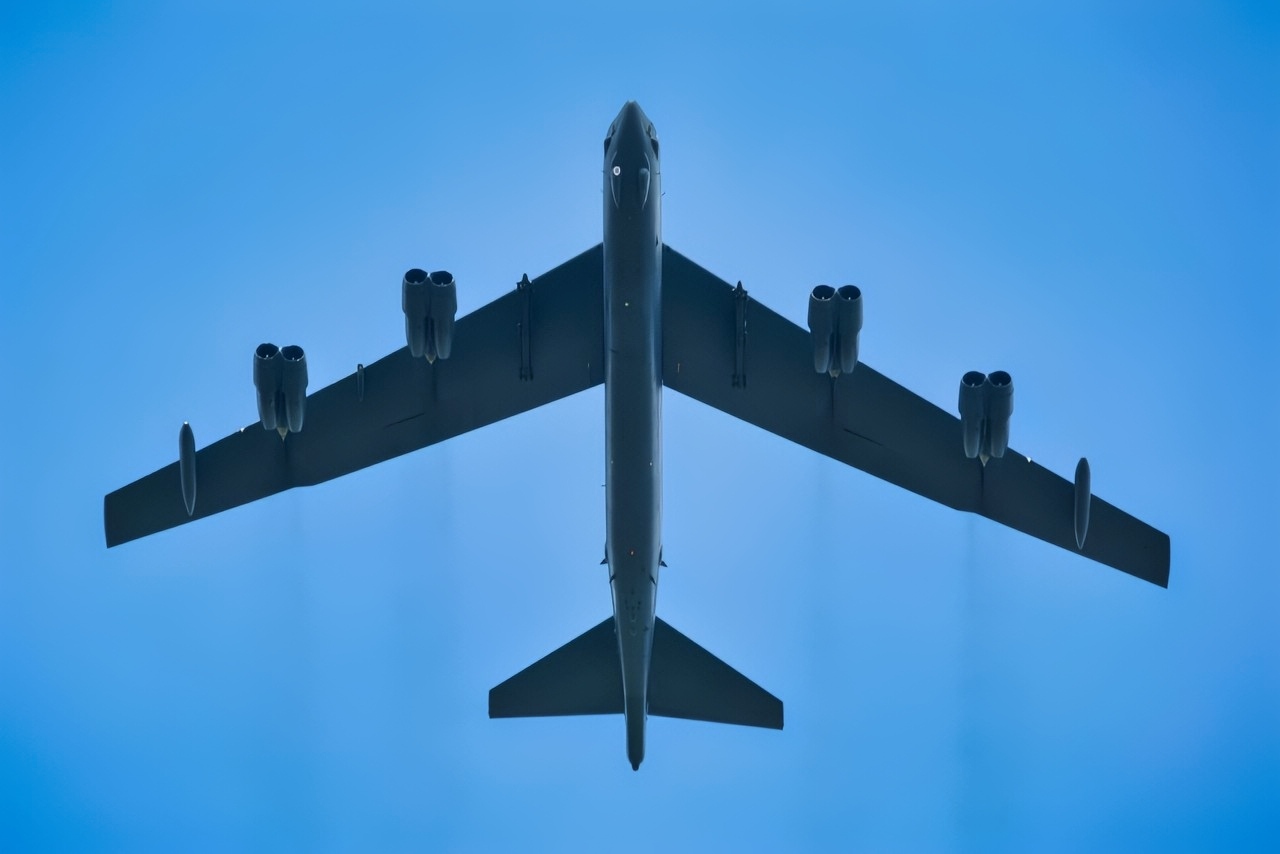
Military service members, veterans, and citizens of Guam gathered for the Memorial Day Commemoration at the Guam Veterans Cemetery. The Ceremony consisted of a fly over from a B-52H Stratofortress, a musical performance from the Guam Territorial Band & Cantate, guest speaking from the honorable Eddie Baza Calvo, a Fallen Soldier Gravesite Tribute, and the playing of Taps. (U.S. Marine Corps photo by Lance Cpl. Jacob Snouffer/Released)
Shortly thereafter, the Air Force included a $387.1 million request in the FY2026 budget to begin purchasing Lockheed’s ARRW, moving it from a troubled prototype to procurement and production.
Per The Aviationist, a respected aerospace online publication, the Air Force has an additional request for $345.7 million in the FY2027 budget for ARRW Increment 2, with planned ARRW spending through FY2030 totaling around $1.7 billion. The Air Force wants to develop an Air-Launched Ballistic Missile derived from ARRW technology.
Another major detail in the procurement request is that the ARRW has apparently evolved beyond being just a B-52-launched system. Indeed, the budget documents suggest that the B-1B Lancer can also fire the weapon by using external pylons to carry large hypersonic-scale weapons, such as the ARRW.
America’s Hypersonic Crisis
There’s a deeper, more troubling story behind the ARRW. Currently, the Pentagon is in a deep, strategic panic mode over whether the United States can still penetrate heavily defended airspace against powers like China, Russia, or even Iran after the lessons of the 2026 Iran War. The AGM-183A ARRW became the symbol of that crisis.
ARRW’s development goes back to the late 2010s. Back then, Russia unveiled systems such as the Kinzhal and Avangard that shocked Washington. China then fielded its mighty DF-17 hypersonic glide vehicle shortly after Russia unveiled its hypersonic weapons. Suddenly, the United States fell behind in a weapons category in which the Pentagon had just assumed it was leading the world.

DF-17 Missile from China. Image Credit: PLA.

DF-17 Missile from China. Image Credit: Creative Commons.
How ARRW Was Supposed to Work
Lockheed Martin received the ARRW contract in 2018, directly as a result of these shocking developments. Thanks to its aforementioned boost-glide function, the AGM-183A ARRW could reach higher speeds, have longer ranges, carry larger payloads, and be harder to intercept in its terminal phase. Despite these positive features, the ARRW was more difficult to integrate onto aircraft due to its size and weight.
The idea behind ARRW was to have the Air Force launch the weapon from outside enemy air defenses. Once launched from outside contested airspace, the ARRW would accelerate to hypersonic velocity and then glide unpredictably to the target, hitting that target before defenses could react to the weapon’s presence in their airspace.
The Real Reason ARRW Failed
But ARRW’s problems stemmed from the fact that, in its panic over losing the edge in the race for hypersonic weapons dominance, the United States tried to operationalize the experimental weapon before building sufficient testing infrastructure. Because hypersonic testing is extraordinarily difficult, some Pentagon officials quietly concluded that ARRW became a victim of strategic urgency colliding with engineering reality.
Essentially, the Air Force wanted the weapon operational too quickly.
Meanwhile, in China, years were spent meticulously building vastly more hypersonic test infrastructure over the last ten years than the United States ever did. So, when Beijing was ready to field its hypersonic weapon, it had already been judiciously tested and prepared for major combat in a responsible manner that the Americans simply did not embrace with ARRW.
After ARRW stumbled, many assumed that the US Air Force would simply move to the HACM. But HACM and ARRW are fundamentally different weapons. Thus, the Air Force realized it wanted both. That realization accelerated after operational lessons from the Middle East.
The Iran War Changed Everything
Several defense analysts now believe the 2026 Iran War exposed major weaknesses in America’s conventional strike inventory. The US has burned through massive amounts of Tomahawk Land-Attack Cruise Missiles (TLAMs), JASSMs, air defense interceptors, and other precision-guided munitions. At the same time, Iranian dispersal tactics and hardened facilities complicated US targeting efforts in the war, thereby draining those key US military stockpiles even more.
Because of that experience, the Pentagon needs faster strike timelines, greater survivability, weapons capable of penetrating dense area defenses, and systems that are difficult for them to intercept. That’s why the ARRW is back on the table.
Of course, the question remains: is the ARRW system more effective than it previously failed to demonstrate? Is the Pentagon moving forward with this costly system because it has advanced beyond its previous failures, or because, in their desperation, they have no other system available to serve as a long-range hypersonic weapon? If it’s the latter, then we’re in store for yet another boondoggle that underperforms and costs us too much.
About the Author: Brandon J. Weichert
Brandon J. Weichert is the Senior National Security Editor at 19FortyFive.com. Recently, Weichert became the editor of the “NatSec Guy” section at Emerald. TV. He was previously the senior national security editor at The National Interest. Weichert hosts The National Security Hour on iHeartRadio, where he discusses national security policy every Wednesday at 8 p.m. Eastern. He hosts a companion show on Rumble entitled “National Security Talk.” Weichert consults regularly with various government institutions and private organizations on geopolitical issues. His writings have appeared in numerous publications, among them Popular Mechanics, National Review, MSN, and The American Spectator. And his books include Winning Space: How America Remains a Superpower, Biohacked: China’s Race to Control Life, and The Shadow War: Iran’s Quest for Supremacy. Weichert’s newest book, A Disaster of Our Own Making: How the West Lost Ukraine, is available for purchase at any bookstore. Follow him via Twitter/X @WeTheBrandon.


