
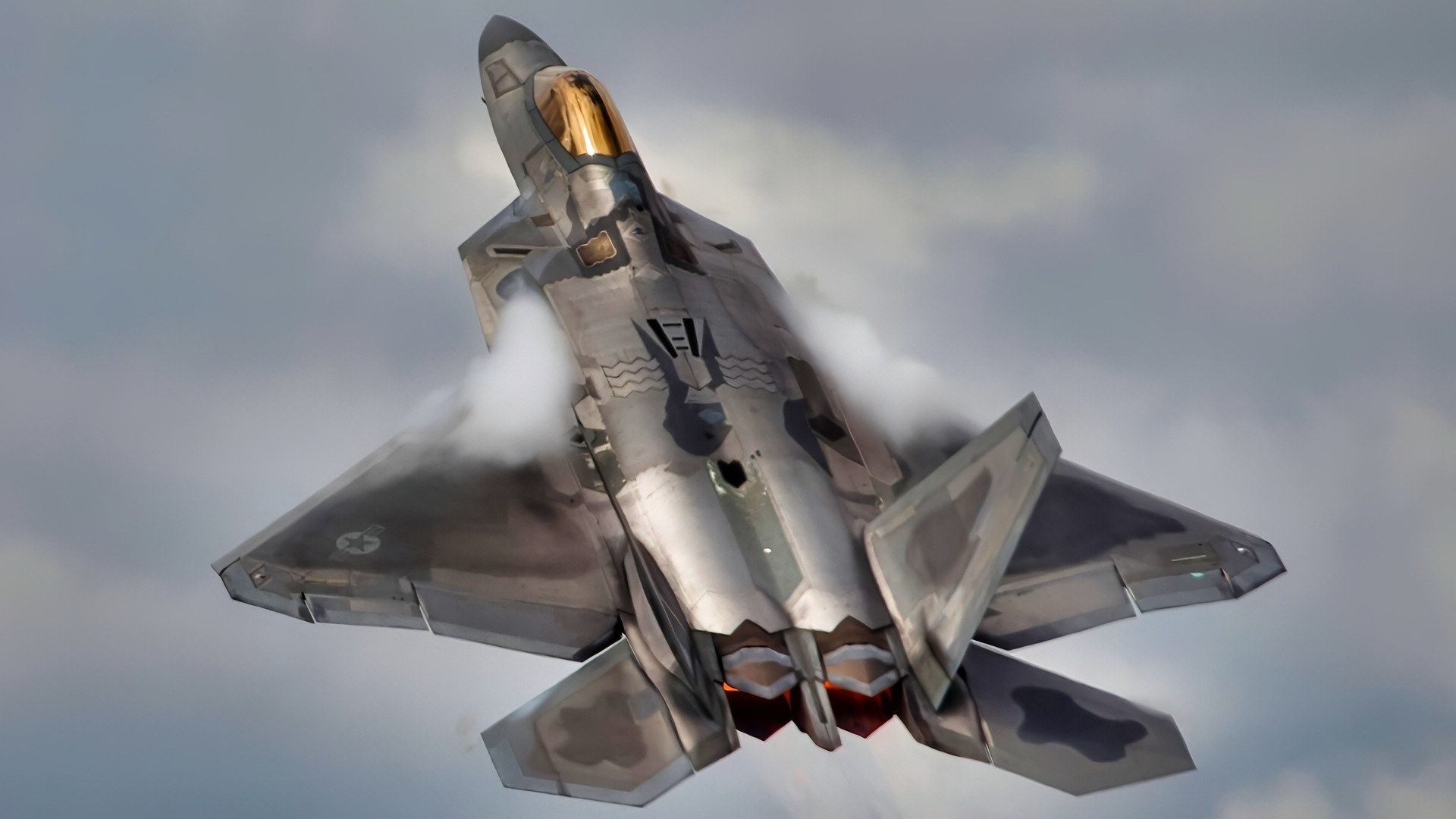
The U.S. Air Force’s decision to deploy F-22 Raptor stealth fighters to the Philippines for Exercise Cope Thunder 26-1 has been described in different ways by analysts, with some suggesting it was more symbolic than anything. But that assessment may miss the point.
The deployment – conducted from April 6 to April 17, 2026, with flight operations centered on Basa Air Base – was never about proving the F-22 could win a war with China on its own. It was a matter of positioning airpower inside the most contested region in the Indo-Pacific and testing how that force might actually fight in a real conflict.

A U.S. Air Force F-22 Raptor assigned to Joint Base Langley-Eustis, Virginia, takes off during Checkered Flag 23-1 at Tyndall Air Force Base, Florida, Nov. 4, 2022. Checkered Flag is a large-force aerial exercise which fosters readiness and interoperability through the incorporation of 4th and 5th-generation aircraft during air-to-air combat training. The 23-1 iteration of the exercise was held Oct. 31 – Nov. 10, 2022. (U.S. Air Force photo by Tech. Sgt. Betty R. Chevalier)
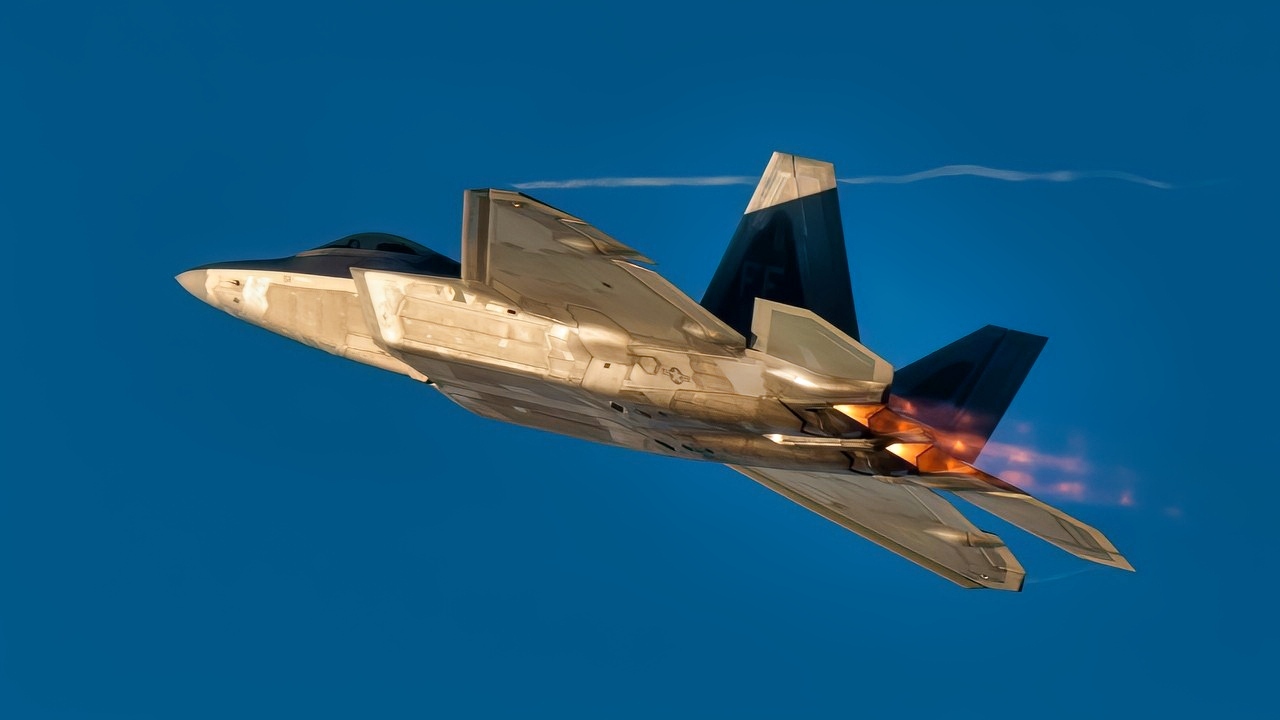
A U.S. Air Force F-22 Raptor assigned to Joint Base Langley-Eustis, Virginia, takes off during Checkered Flag 23-1 at Tyndall Air Force Base, Florida, Nov. 4, 2022. Checkered Flag is a large-force aerial exercise which fosters readiness and interoperability through the incorporation of 4th and 5th-generation aircraft during air-to-air combat training. The 23-1 iteration of the exercise was held Oct. 31 – Nov. 10, 2022. (U.S. Air Force photo by Tech. Sgt. Betty R. Chevalier)
More than 2,800 U.S. and Philippine personnel took part in the exercise, with Hawaii-based F-22s flying more than 30 sorties alongside Philippine FA-50 fighters, demonstrating that joint operations from a forward base on the mainland, only miles from critical waterways like the Luzon Strait, are possible.
Whether or not the F-22 is an outdated aircraft that may be “useless” against China is not necessarily the point here. The U.S. chose to deploy it during the exercise for different reasons.
What the F-22 Was Designed to Do
The F-22 Raptor was built very specifically for air superiority.
Developed during the final decades of the Cold War, the aircraft was designed to defeat advanced Soviet fighters and operate inside heavily defended airspace.
It was designed to be stealthy, fast, and maneuverable, with integrated avionics, all intended to ensure it could detect and destroy enemy aircraft before being detected itself.
Even today, that core mission has not changed. The F-22 remains one of the most capable air-to-air fighters ever fielded, with stealth shaping and sensor fusion capabilities that hold up today, and supercruise performance that still gives it an edge in contested environments.
But the aircraft was never designed to be a multi-role platform like the F-35. It is not optimized for strike missions, and its architecture reflects design decisions made decades ago. That certainly matters today, but only in the right context.

The 187th Fighter Wing unveiled the new Alabama Air National Guard’s F-35 Lightning II fighter jet during an event at Dannelly Field, Alabama, today. The red tails are a historic tribute to the Tuskegee Red Tails, the famed WWII squadron, which lives on as the 100th Fighter Squadron within the wing. “The red tail you will see is a reminder to all that through excellence we will overcome any obstacle and threat regardless of gender, race, or religion, “ said Col. Brian Vaughn, the wing’s commander, during the ceremony. “We are all here for the same mission: to protect our nation, defend our constitution, and to form a more perfect union as the Tuskegee Airmen did.” (U.S. Air Force photo by Tech. Sgt. William Blankenship)
Why the U.S. Is Forward Basing F-22s in the Philippines
The U.S. Air Force deployed F-22 Raptors assigned to the 199th Air Expeditionary Squadron to Basa Air Base in the Philippines on April 3, ahead of Exercise Cope Thunder 26-1.
DVIDS imagery confirms at least two F-22s flying during the exercise, while the official write-up says the Hawaiian Raptors flew more than 30 sorties as part of a combined force of more than 2,800 U.S. and Philippine personnel.
In the DVIDS photo release, the exercise was described as being intended to enhance “combined readiness and interoperability between U.S. and Philippine forces while strengthening the enduring alliance and supporting a free and open Indo-Pacific region.”
The announcement comes amid ongoing changes in the U.S. force posture across the Indo-Pacific, as the U.S. adapts to geopolitical shifts and Beijing’s rapid military buildup over the past few years. Basa Air Base, located in Pampanga province, northwest of Manila, sits within operational reach of both the South China Sea and the Luzon Strait, a key maritime corridor between the Philippine Sea and the wider Pacific.
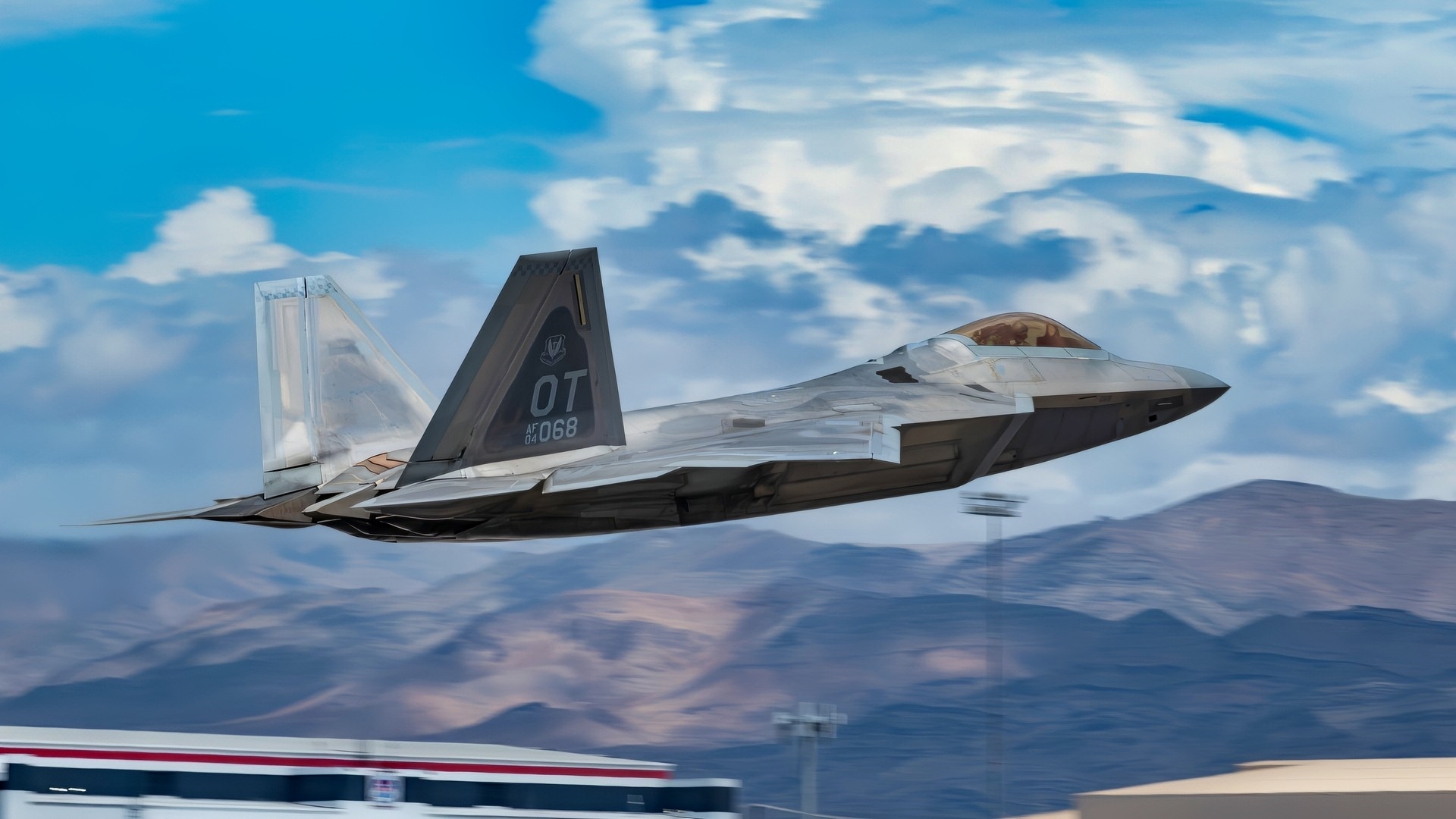
A U.S. Air Force F-22 Raptor fighter jet assigned to the 422nd Test and Evaluation Squadron (TES), takes off for a mission at Nellis Air Force Base, Nevada, Aug. 26, 2025. The 422nd TES is a geographically separated unit of the 53rd Test and Evaluation Group, Eglin AFB, Florida. (U.S. Air Force photo by William R. Lewis)
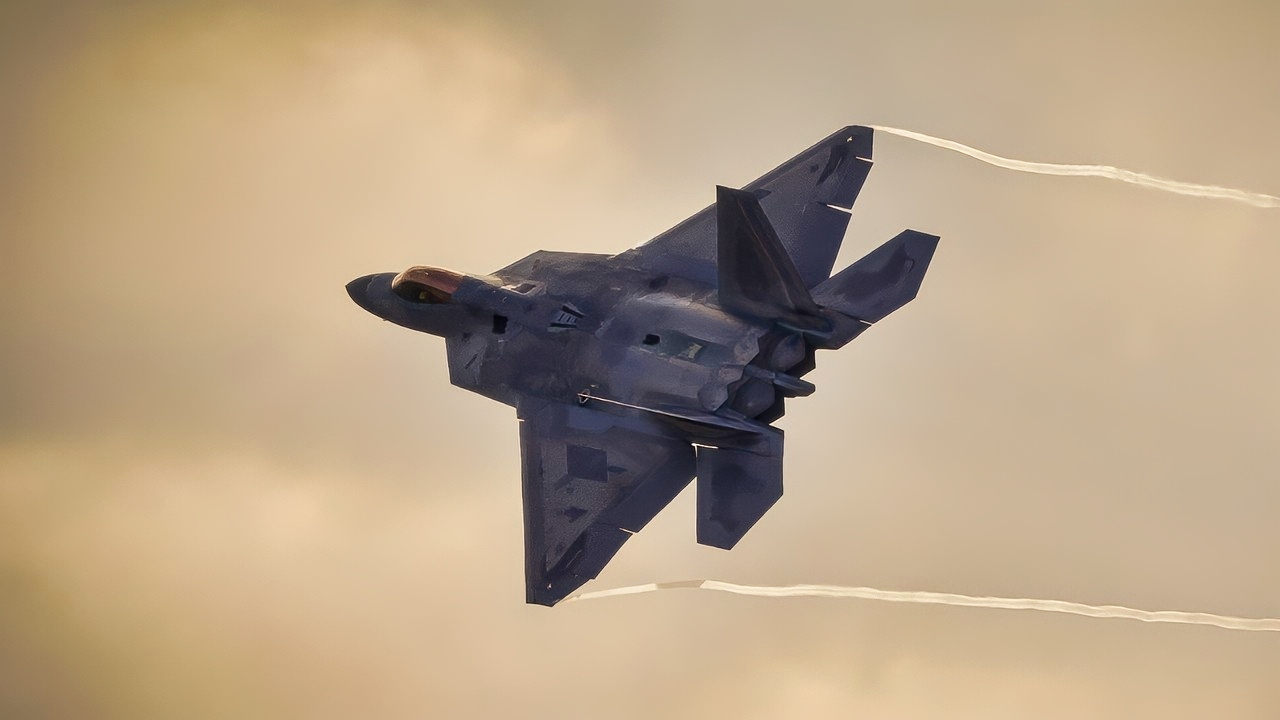
A U.S. Air Force F-22 Raptor assigned to the 90th Fighter Squadron soars over Joint Base Elmendorf-Richardson during ARCTIC EDGE 2025 (AE25), Aug. 18, 2025. AE25 provided Special Operations Command North the opportunity to test a range of capabilities and response options to deter, disrupt, degrade, and deny competitor activity in the Arctic in support of globally integrated layered defense of the homeland. AE25 is a NORAD and U.S. Northern Command-led homeland defense exercise designed to improve readiness, demonstrate capabilities, and enhance Joint and Allied Force interoperability in the Arctic. (U.S. Air Force photo by Airman 1st Class Gracelyn Hess)
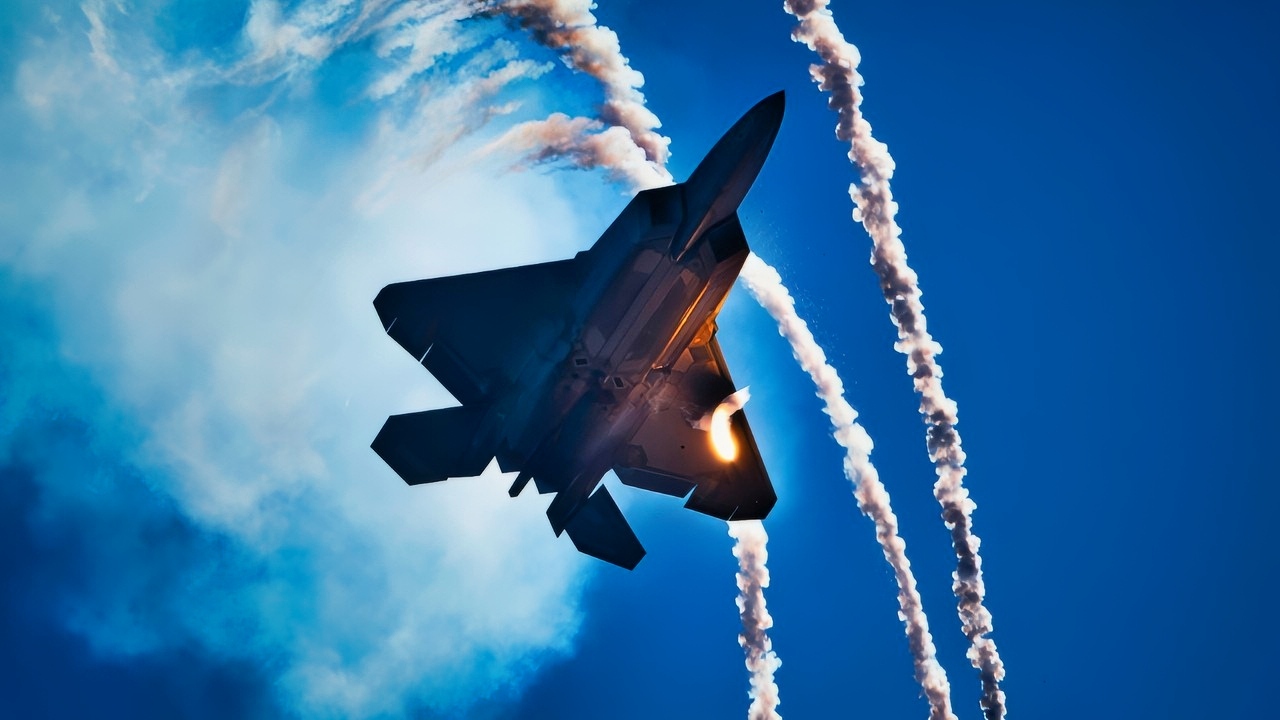
A U.S. Air Force F-22 Raptor, flown by Capt. Samuel “Razz” Larson, F-22 Raptor Demonstration Team pilot, deploys flares over the Gulf of Mexico during the 2024 Gulf Coast Salute Air Show at Panama City Beach, Florida, May 4. The F-22’s unique combination of stealth, speed, agility and situational awareness, combined with lethal long-range air-to-air and air-to-ground weaponry, makes it one of the most advanced fighters in the world. (U.S. Air Force photo by Staff Sgt. Stefan Alvarez)
The base is one of several Philippine facilities that were expanded under the Enhanced Defense Cooperation Agreement (EDCA), which allows U.S. forces to rotate through strategically located sites across the archipelago.
Geography is important and central to how the United States is preparing for a potential conflict with China. The so-called first island chain – stretching from Japan through Taiwan to the Philippines – forms a natural barrier to Chinese naval and air movement into the Pacific.
Operating combat aircraft from within that chain allows U.S. forces to reduce transit times in the event of a conflict and increase sortie generation rates. It also allows U.S. forces to maintain a more persistent presence over contested areas as Beijing begins to throw its weight around.
Cope Thunder 26-1 was designed to test those assumptions in practice. The exercise brought together U.S. and Philippine aircraft, including F-22s and FA-50PH light fighters, to conduct joint air operations from a forward base rather than relying on larger, more secure installations further from the front lines.
Is the F-22 Useless Against China?
The F-22 is by no means the United States’ most critical asset in countering China in the Indo-Pacific. Its range across the vast Pacific limits it, and it relies on aging avionics and data-sharing systems. Its lack of multiple strike capability also makes it less useful than newer platforms.
These are real limitations, but they don’t necessarily matter in the context of the recent deployment. The F-22 was never designed to conduct long-range strike or operate independently across theater-wide distances like this.
Instead, its role is to secure air superiority in the opening phase of a conflict – and forward basing inside the first island chain directly mitigates range constraints. Its stealth and air-to-air performance can also complicate Chinese operations.
If a conflict in the Indo-Pacific occurred, the U.S. would not rely on the F-22 Raptor alone. It would operate as part of a layered force built around the F-35 Lightning II for sensing and data sharing and the F-15EX Eagle II for weapons capacity. The future B-21 Raider would also serve as a long-range strike asset, working alongside additional systems built as part of the Next Generation Air Dominance program.
About the Author: Jack Buckby
Jack Buckby is a British researcher and analyst specializing in defense and national security, based in New York. His work focuses on military capability, procurement, and strategic competition, producing and editing analysis for policy and defense audiences. He brings extensive editorial experience, with a career output spanning over 1,000 articles at 19FortyFive and National Security Journal, and has previously authored books and papers on extremism and deradicalization.


