


Key Points and Summary – After the Soviet collapse, advanced weapons were stranded across new states. In 1997 the United States quietly bought 21 Moldovan MiG-29s—fourteen MiG-29Cs, six MiG-29As, and a UB—plus hundreds of missiles and spares to preempt an Iranian purchase.
-Washington feared the C-models’ nuclear-delivery wiring and the boost those airframes and logistics could give Tehran’s readiness.
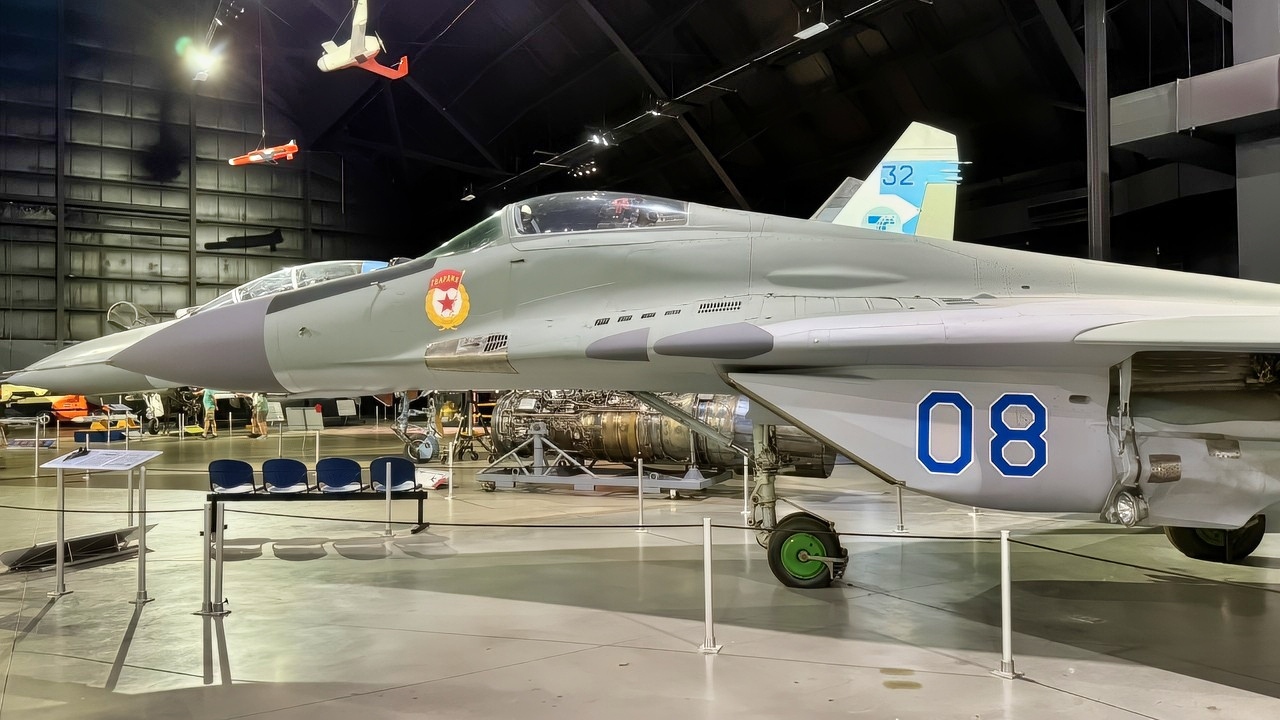
Real MiG-29 at USAF Museum in Dayton. Image Credit: National Security Journal.
-Air Force C-17s ferried the jets to Wright-Patterson for exploitation, turning potential adversary capability into data that sharpened training, tactics, and countermeasures.
-The deal paid Moldova, denied Iran, and set a template for buying down risk before it spreads—nonproliferation by checkbook, not ultimatum. Quiet, quick, decisive.
-BONUS – The National Security Journal saw an example of these MiG-29 Fighters at the U.S. Air Force Museum back in July. In fact, we have a few photos of those fighters included in this article.
The MiG-29 Fighter Threat America Feared
It began with a simple, unnerving question in the mid-1990s: what happens when advanced Soviet fighters, suddenly stranded across new borders and bankrupt air forces, go up for sale? In the chaos that followed the Soviet Union’s collapse, entire fleets of modern jets, missiles, and spares sat on cold ramps from the Baltics to Central Asia. Cash-strapped governments needed revenue. Buyers—some of them America’s rivals—were shopping.
That is the backdrop for one of the most underappreciated nonproliferation moves of the post-Cold War era: in late 1997, the United States quietly bought 21 MiG-29 “Fulcrum” fighters from the tiny republic of Moldova.
The logic was stark. U.S. officials had reason to believe Iran was sniffing around, eager to upgrade from older MiG-29As and, more troublingly, to acquire MiG-29C variants that U.S. officials described as “wired” for nuclear delivery. Rather than watch a problem ripen into a crisis, Washington reached for the fastest tool it had—cash—and removed the jets from the chessboard.
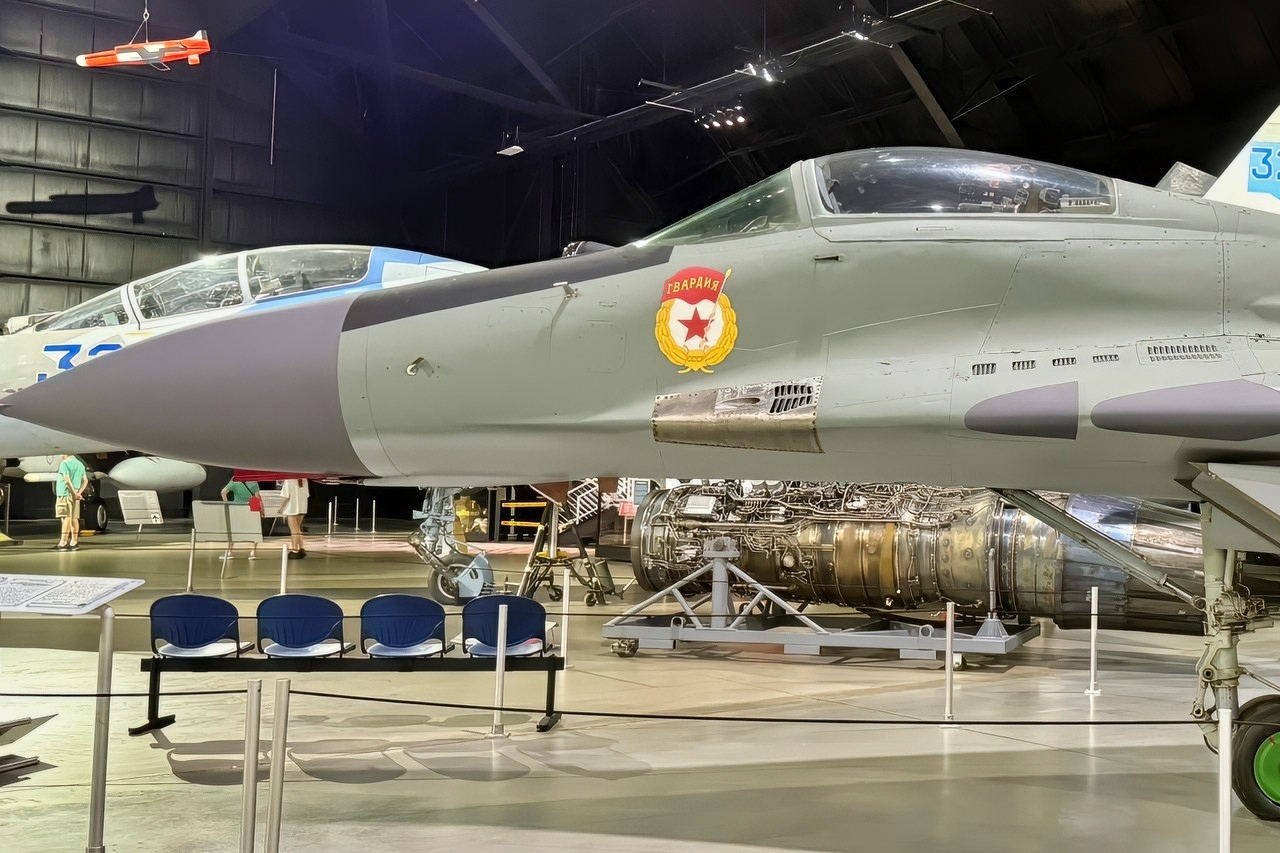
MiG-29 National Security Journal Photo Taken in July, 2025.
This is the story of why the deal mattered, what the West likely learned from those airplanes, and how one airlift out of Eastern Europe blunted a dangerous convergence: surplus Soviet technology, an ambitious Iranian procurement drive, and the world’s most volatile neighborhood.
After the USSR: When Hardware Went Wandering
If you didn’t live through it, it’s easy to underestimate just how disordered the 1990s felt for defense planners. Borders changed. Armies disintegrated. Warehouses full of precision equipment were suddenly controlled by governments that had never budgeted to maintain them.
Some of those states needed hard currency more than they needed fourth-generation fighters. The result was a cascade of ad hoc sales and barters—everything from tanks and surface-to-air missiles to spare parts and radar vans—some benign, others deeply worrying.
To stem the riskiest flows, the United States stood up and expanded a suite of programs loosely grouped under Cooperative Threat Reduction (CTR). Originally targeted at nuclear warheads, missiles, and chemical stockpiles, CTR’s core idea was simple: pay to remove or secure dangerous hardware before it travels. In Moldova—a small, poor state with more MiG-29s than it could afford to fly—the logic resonated. A deal framework took shape. The U.S. would buy aircraft, spares, and missiles; Moldova would get cash, humanitarian aid, and other non-lethal assistance. Critically, the jets would not be available to any other bidder.
There was a practical intelligence dividend, too. Even if Western air arms had already learned a great deal about the “Fulcrum” from other sources, acquiring whole aircraft, with contemporary avionics, wiring, and spares, offered a rare chance to study the type in depth, validate assumptions, and harvest counter-tactics rooted in real hardware rather than rumor.
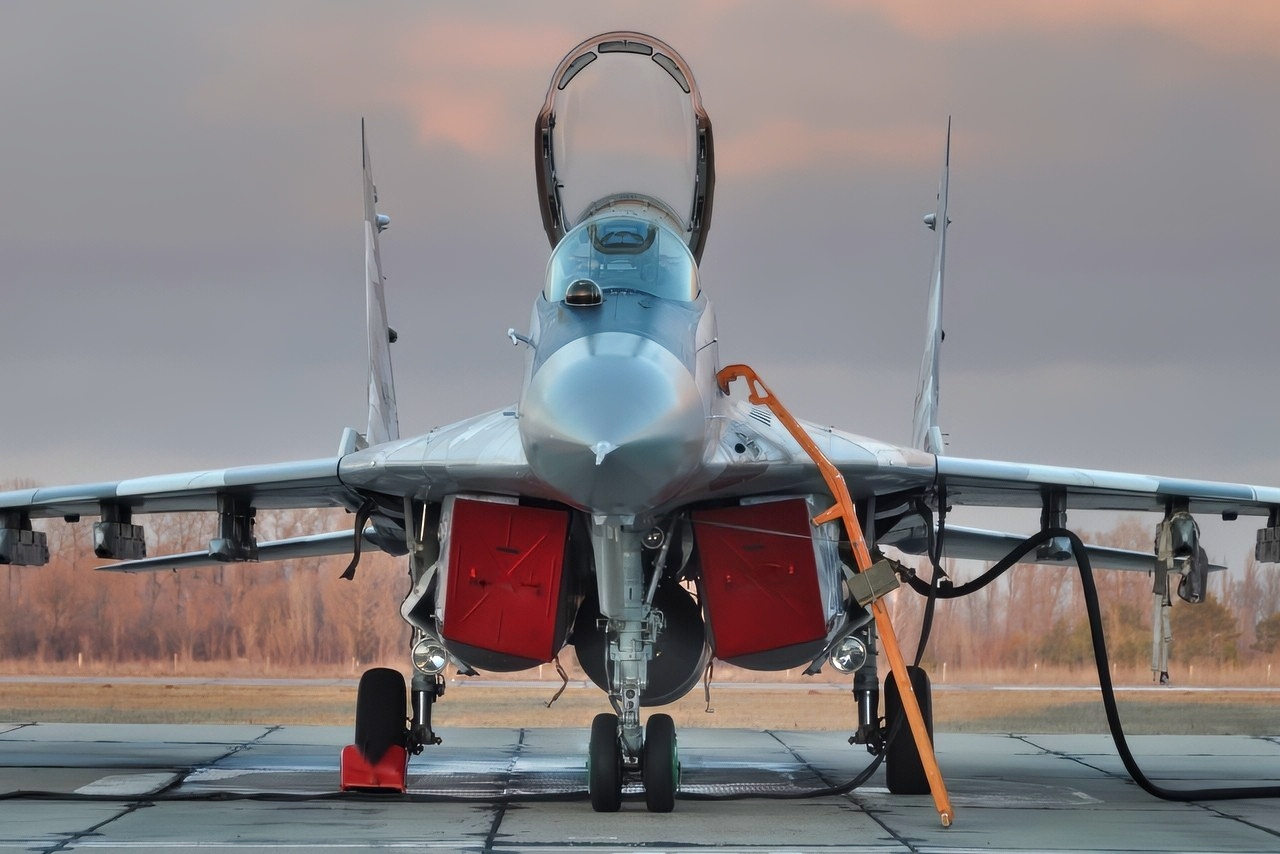
MiG-29 Fighter. Image Credit: Creative Commons.
Why Iran’s MiG-29 Interest Set Off Alarm Bells
Iran already operated MiG-29As, acquired before and after the Gulf War period, and had invested heavily in keeping old airframes flying. Newer MiG-29C (9.13) models were another story. U.S. officials believed the Moldovan C-models were configured to employ “special” ordnance, shorthand for nuclear delivery wiring and interfaces. Even if Tehran lacked a weapon to hang under the jet, simply owning aircraft prepared for that mission would be a strategic step—an insurance policy for a future nuclear breakout.
Beyond the nuclear dimension, more modern Fulcrums carried better radar modes and could employ a richer mix of missiles than Iran’s older stock, raising the risk to U.S. and allied air operations in the Gulf. And because airframes were just part of the package, the spares, diagnostic gear, and missiles sitting on Moldovan bases would have dramatically improved Iran’s readiness and sustainment picture—where Iran often struggles.
In short: letting those jets and crates migrate south would have compounded two problems at once—capability and confidence. The U.S. government decided not to find out how quickly that compounding would happen.
The Airlift That Changed the Narrative
The transaction came together quickly. In October–November 1997, Moldova finalized a sale that included 21 MiG-29s—14 “C” models, six “A” models, and one twin-seat “UB” trainer—plus roughly 500 air-to-air missiles and extensive spares.
U.S. Air Force C-17s landed, technicians partially disassembled the jets on the ramp, and one by one the Fulcrums disappeared into gray cargo bays bound for Wright-Patterson Air Force Base in Ohio. There, the National Air and Space Intelligence Center (NASIC) and associated Foreign Materiel Exploitation teams took over: inventory, inspection, teardown, and—where useful—system-level testing.

MiG-29 Fighter. Image Credit: Creative Commons.
The public rationale from senior U.S. officials was unambiguous: better we have them than Iran. The unspoken message to other new states sitting on ex-Soviet gear was just as clear: there’s a responsible market for your dangerous surplus that doesn’t end in proliferation.
MiG-29: What the U.S. Likely Learned (and Why It Still Matters)
Western pilots and engineers already respected the MiG-29 by the mid-1990s. Germany had inherited East German Fulcrums on reunification; NATO pilots had flown dissimilar air combat against them; the jet’s helmet-mounted sight and R-73 missile combination had shocked Western aircrews into accelerating the AIM-9X and HOBS revolution. But owning a fleet gives you insight that borrowing one never will.
From the Moldovan jets, U.S. analysts could plausibly:
Map the wiring and mission-computer architecture in production-standard airframes—critical for understanding not just current modes but growth potential.
Evaluate radar behavior under controlled conditions, including look-down performance in clutter, susceptibility to jamming, and mode transition quirks.
Inspect propulsion, fuel, and thermal management for the R-27 and R-73 missile ecosystems, validating modeling against real installation tolerances.
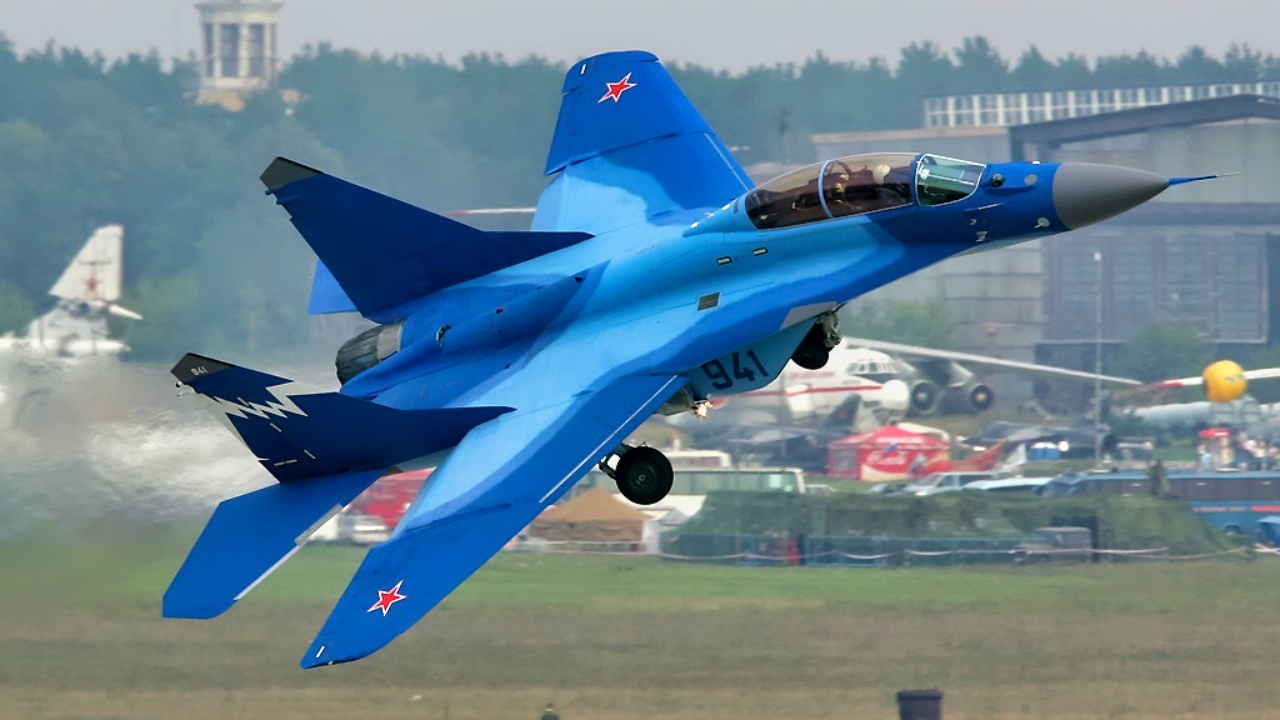
MiG-29K. Image Credit: Creative Commons.
Study maintenance demands—panel fits, corrosion hotspots, mean times between failure—and the logistics burden Iran would have carried had it acquired similar jets.
Test countermeasures and training syllabi with far greater confidence, because lab results were now anchored to hardware-in-the-loop data, not assumptions.
None of these payoffs make for splashy headlines. All of them reverberate in tactics manuals, EW libraries, and threat simulators for years.
Nonproliferation by Other Means
The deal’s greatest success was not what the U.S. learned—it was what Iran didn’t get. In one swoop, Washington:
Denied Tehran a path to newer Fulcrums and their associated support ecosystem.
Prevented potential nuclear “latent” capability from quietly maturing in a frontline Iranian unit via C-model wiring and interfaces—even if no weapon existed to match.
Signaled to other ex-Soviet states that CTR dollars were available for conventional systems when those systems carried strategic risk.
It was classic risk-reduction pragmatism: less about punishing a rival than defusing a convergence of incentives—cash-poor seller, ambitious buyer, globally mobile hardware—before it hardened into new facts.
“Wasn’t the MiG-29 Fulcrum Overrated?” Yes—and No.
A decade after Viktor Belenko’s MiG-25 defection deflated the Foxbat’s myths, the MiG-29 arrived with a different balance of strengths and limits. It was not a long-range machine, and its early radar and hot-section maintenance made sustained high-tempo operations tricky for air arms with frayed budgets. But it carried teeth that mattered in the 1990s: excellent close-in weapons and cueing, respectable acceleration, and a compact frame that, in the hands of a well-trained pilot, could be intensely dangerous inside visual range.
The point of the Moldovan purchase was never to pretend that Fulcrums were unbeatable. It was to acknowledge that, in the Gulf’s cramped geography, a handful of better-equipped airframes backed by a refreshed spares pipeline could stress U.S. and allied air defenses, especially in the early hours of a crisis. Reducing that stress before it existed was a bargain.
The MiG-29C and the Nuclear Question
One detail from 1997 still raises eyebrows: U.S. officials described the MiG-29C tranche as nuclear-capable—“wired to permit delivery” is the careful phrase that appears in contemporary documents. Russian officials pushed back at the time, arguing that capability claims were exaggerated. But the CTR lawyers and policy staff wouldn’t have pushed the deal under that authority if they hadn’t been persuaded by technical indicators: specific hard-points and interfaces, stores management programming, and wiring provisions that differentiate a standard fighter from one that can accept special weapons.
That distinction matters less for what Iran could do that week and more for what it might have done five years down the line if its nuclear trajectory had accelerated. Removing even the possibility was the prudent course.
What It Changed for U.S. and Allied Airpower
You won’t find a flashy “because Moldova” line item in American fighter design after 1997. The deeper impacts are quieter:
Validation beats speculation. U.S. engineers and tacticians could calibrate radar, EW, and missile models against real Fulcrum hardware, reducing uncertainty in weapons development and counter-tactics.
Training got sharper. Dissimilar training already benefited from German Fulcrums; adding forensic insight from Moldova meant better simulators, more realistic threat presentations, and cleaner debriefs grounded in known system behavior.
Interdiction planning tightened. Knowing more about sortie generation limits, maintenance cycles, and failure modes helped planners model Iranian air readiness with more granularity—useful for diplomacy as much as for war gaming.
Nonproliferation gained a new tool. The episode broadened CTR’s political mandate to buy down risks in the conventional realm when those systems could enable WMD missions.
The through-line is the institutional memory the U.S. gained—the sort of lived knowledge that outlasts a single program or platform.
Why the Story Sits at the Intersection of Policy and Tactics
Too often, we silo the policy world of treaties and accords from the operational world of cockpits and checklists. The Moldovan MiG-29 buy sits right where those domains meet. Policy entrepreneurs built a legal and diplomatic lane to spend money quickly across borders; operators and engineers then converted that decision into tangible security effects—fewer threats in one theater and better-targeted investments at home.
It’s exactly the kind of quiet, unsentimental statecraft that rarely makes cable news but often matters most: a small state gets help, a bad outcome is preempted, and the U.S. military learns about a threat system by touching it, not theorizing about it.
What If the U.S. Had Stayed On the Sidelines?
Counterfactuals are messy, but some contours are clear. If Iran had secured MiG-29Cs and meaningful spares, the Iranian Air Force of the early 2000s would have been more credible in defending key airspace and challenging maritime and tanker tracks in the Gulf. The nuclear-wiring shadow would have lengthened; even absent a bomb, planners would have had to game scenarios where that last piece appears. In a region where signaling and miscalculation often rhyme, adding capability without transparency invites crises.
By contrast, the actual outcome is almost boring in its effectiveness: Iran did not get the jets, the West learned, and the Moldovan airframes now sit as museum pieces, test articles, or scrap—threats turned into data.
The Lesson for Today’s Aviation Realities
We’ve entered another era where surplus or orphaned systems move in murky channels, from drones and precision-guided munitions to legacy jets and air defenses. The Moldova model—move early, buy out risk, learn everything—isn’t a universal template. But its logic travels well:
If a platform can unlock a step-change for an adversary, don’t wait for the sale—preempt it.
Paying to deny can be cheaper than paying to fight what you failed to deny.
Exploit what you acquire, not just to write reports but to reshape training, countermeasures, and procurement.
In other words: treat proliferation as an operational problem with policy tools, not just as a diplomatic talking point.
Closing Thought on MiG-29 Fighters: A Rare Win That Stayed Quiet
The purchase of Moldova’s MiG-29s checked all the boxes we want in a nonproliferation success. It was fast, lawful, affordable, and strategically asymmetrical: a modest investment that prevented a high-leverage capability from moving to a volatile buyer. It also gave the United States a hands-on laboratory to refine the way it thinks about a family of fighters that, in one form or another, still flies in many air forces.
The planes themselves are long since gone—parked, parted, or pulped. But the habits they reinforced endure: move early against proliferation risk, assume the other side is shopping, and learn from the metal whenever you can.
About the Author: Harry J. Kazianis
Harry J. Kazianis (@Grecianformula) is Editor-In-Chief and President of National Security Journal. He was the former Senior Director of National Security Affairs at the Center for the National Interest (CFTNI), a foreign policy think tank founded by Richard Nixon based in Washington, DC. Harry has over a decade of experience in think tanks and national security publishing. His ideas have been published in the NY Times, The Washington Post, The Wall Street Journal, CNN, and many other outlets worldwide. He has held positions at CSIS, the Heritage Foundation, the University of Nottingham, and several other institutions related to national security research and studies. He is the former Executive Editor of the National Interest and the Diplomat. He holds a Master’s degree focusing on international affairs from Harvard University.
More Military
Canada Is ‘Full Steam Ahead’ on F-35 Stealth Fighter
Why Does Turkey Have So Many Main Battle Tanks?
‘Cracked Barrels’: The U.S. Navy’s Big Railgun Failure Explained in Just 2 Sad Words
‘Had No Chance’: The Montana-Class Was the 71,000-Ton Battleship Destined to Fail
‘Captain, We Smacked It Another Submarine’: British and French Nuclear Missile Subs Collided


