

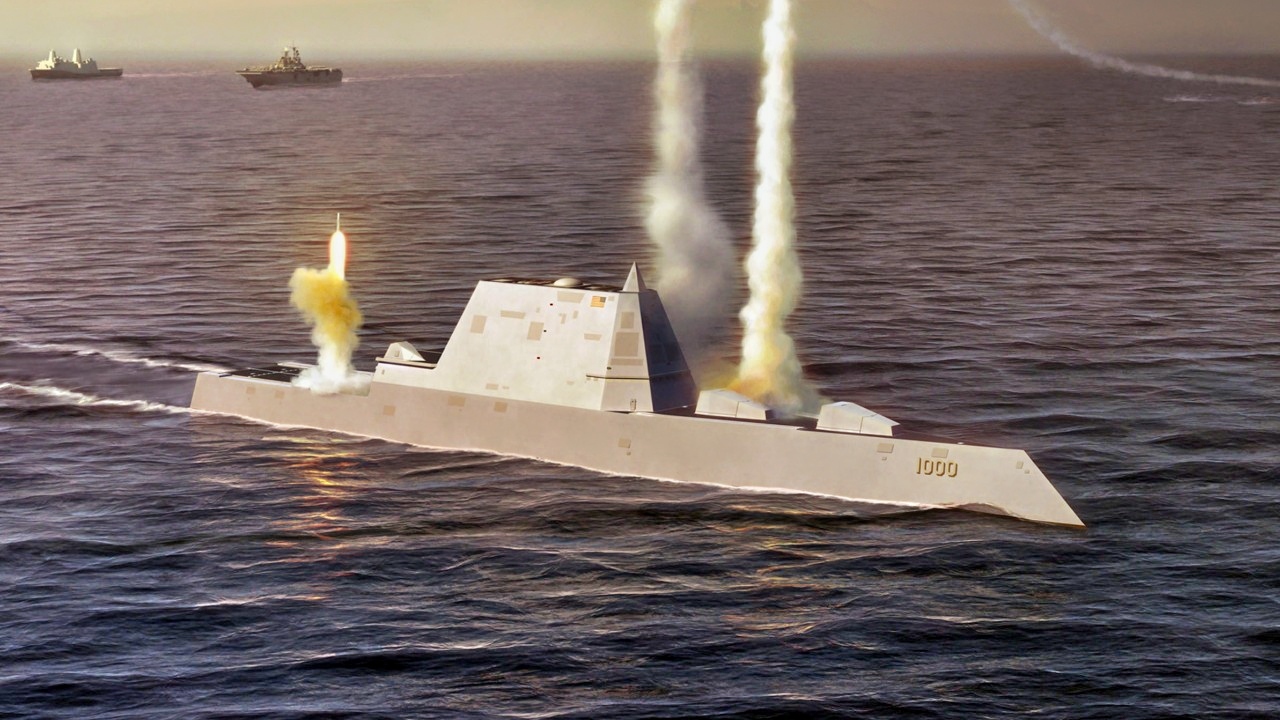
The Zumwalt Was a $23 Billion Mistake With No Mission — Hypersonic Missiles Traveling Mach 6 Might Finally Give It One
The U.S. Navy has been developing the Conventional Prompt Strike (CPS) hypersonic weapon for several years, and the service plans to arm its fleet of three Zumwalt-class destroyers with the missiles within the coming year.
the stealthy destroyers with hypersonics could breathe new operational life into that small, embattled fleet. It could greatly increase the speed and range of attacks from ships, as part of a paradigm-changing set of attack options.
This could help the Navy find a role for the high-tech Zumwalt ships, which are still searching for a tactical identity.
The CPS consists of a two-stage solid rocket booster designed to pinpoint enemy ground formations, track and destroy enemy air defenses, and strike fixed infrastructure or ships at sea.
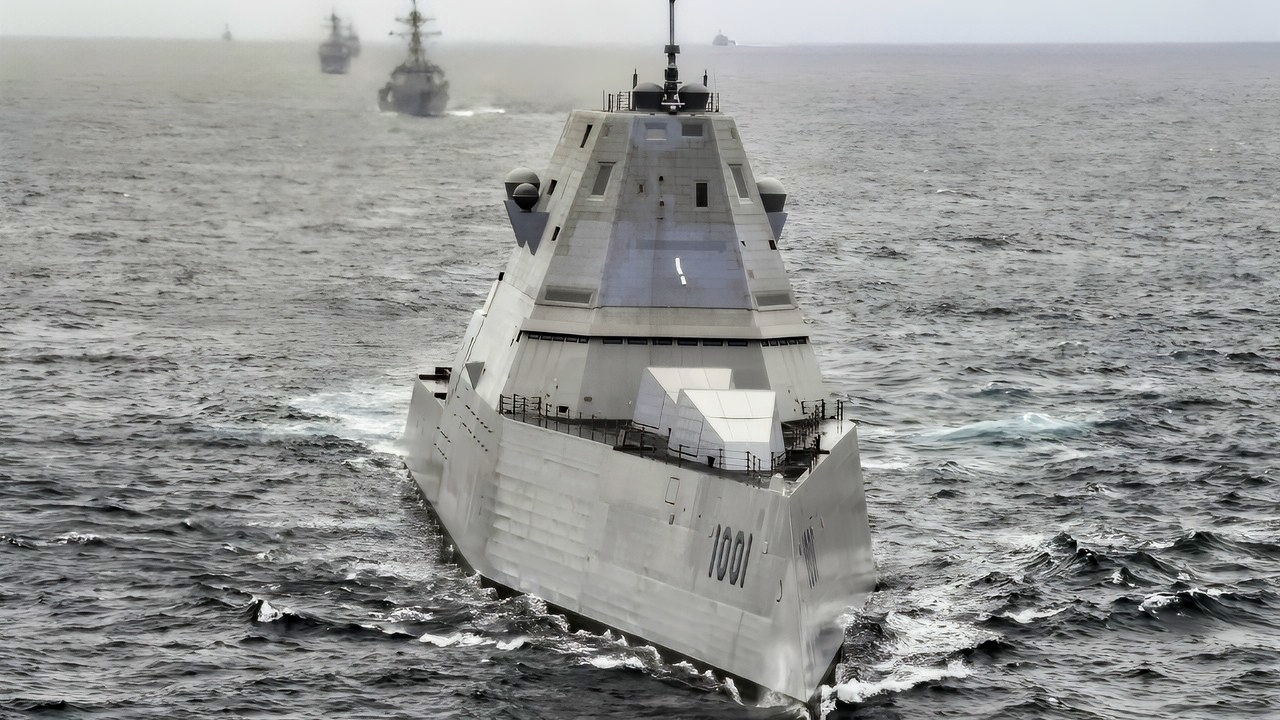
(April 21, 2021) The Zumwalt-class guided-missile destroyer USS Michael Monsoor (DDG 1001) leads a formation including the Arleigh Burke-class guided missile destroyers USS Fitzgerald (DDG 62), USS Spruance (DDG 111), USS Pinckney (91), and USS Kidd (DDG 100), and the Independence-variant littoral combat ship USS Coronado (LCS 4) during U.S. Pacific Fleet’s Unmanned Systems Integrated Battle Problem (UxS IBP) 21, April 21. UxS IBP 21 integrates manned and unmanned capabilities into challenging operational scenarios to generate warfighting advantages. (U.S. Navy photo by Chief Mass Communication Specialist Shannon Renfroe)
The advantages are clear: Hypersonic weapons deliver a paradigm-changing speed advantage in any missile attack. They are intended to target, strike, and destroy an enemy target faster than that enemy can respond.
When faced with an incoming projectile traveling at more than six times the speed of sound, enemy commanders may be unable to identify the threat or determine the optimal defense or countermeasure.
Army-Navy Collaboration
The core of the Navy’s Conventional Prompt Strike weapon consists of a Common Glide Body to be used in both the Navy’s sea-launched CPS and the Army’s ground-launched Long Range Hypersonic Weapon.
The CPS is slated to replace the Advanced Gun System onboard the Zumwalt-class, greatly expanding the ship’s attack range and overall lethality.
The original gun system would have engaged targets at roughly 60–100 nautical miles with precision, yet hypersonic missiles promise ranges measured in the thousands of miles.
This would give the Zumwalt-class the ability to hold high-value, heavily defended targets at risk well before enemy forces could respond.

Zumwalt-Class U.S. Navy. Image Credit: Creative Commons.
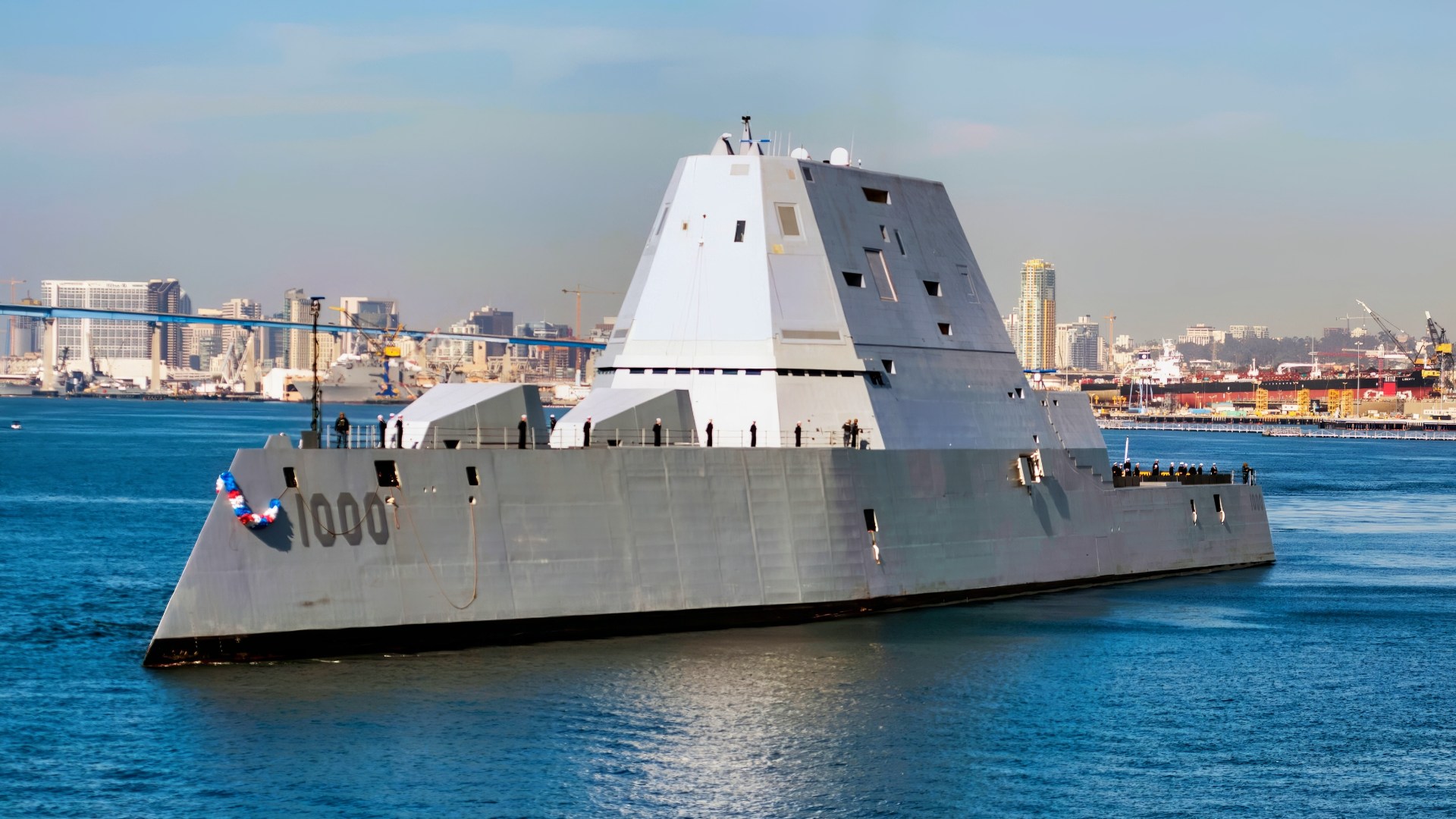
(Dec. 8, 2016) The guided-missile destroyer USS Zumwalt (DDG 1000) arrives at its new homeport in San Diego. Zumwalt, the Navy’s most technologically advanced surface ship, will now begin installation of combat systems, testing and evaluation and operation integration with the fleet. (U.S. Navy photo by Petty Officer 3rd Class Emiline L. M. Senn/Released)
In a maritime environment where adversaries increasingly deploy long-range sensors and anti-ship missiles, the ability to strike deep inland—or at extended maritime ranges—is tactically significant.
Hypersonic weapons would also improve the Zumwalt-class’s survivability in high-threat areas, because they are far more difficult to track than conventional missiles. They would make the Zumwalt-class a credible platform for penetrating sophisticated anti-access/area-denial systems—particularly those deployed by China in the Indo-Pacific.
Zumwalt was built for hypersonics
The ship’s design features would pair well with hypersonic weapons.
The Zumwalt’s stealthy tumblehome hull significantly reduces its radar cross-section, allowing it to operate closer to contested regions while remaining more difficult to detect than traditional destroyers.
This stealth advantage becomes even more meaningful when paired with hypersonic weapons capable of rapid, high-value strikes. A platform with a reduced radar signature, armed with weapons that are more difficult to stop, complicates an adversary’s targeting calculus and forces them to allocate more resources to defense.
Additionally, the Zumwalt’s powerful integrated power system—producing more than 78 megawatts of electrical power—provides ample energy for future advanced sensors, enhanced missile systems, and, potentially, directed-energy weapons that could complement hypersonic strike capabilities.
Hypersonics expand mission
With hypersonic weapons, Zumwalt-class destroyers could support a wider range of missions, including long-range strike, deterrence patrols, and joint operations with submarines and aircraft equipped with similar weapons.
This integration would help distribute U.S. strike capability across more platforms, reducing reliance on aircraft carriers or strategic bombers for attack missions.
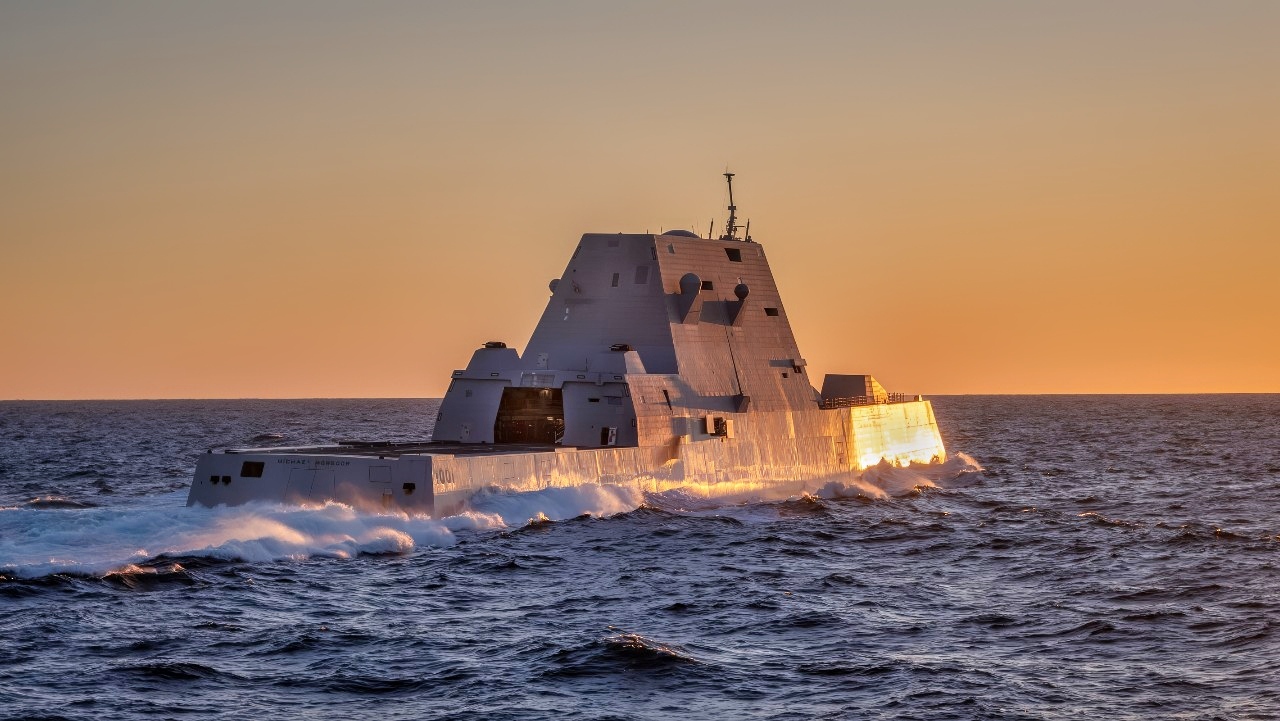
(February 10, 2024) — The Zumwalt Class Guided Missile Destroyer USS Michael Monsoor (DDG 1001) breaks away from the Henry J. Kaiser-class fleet replenishment oiler USNS Pecos (T-AO 197) shortly before sunset after taking on fuel. (U.S. Navy photo by Chief Mass Communication Specialist Mark D. Faram)
The most important element of integrating CPS might be computing. The Zumwalt-class ships carry an advanced computer called Total Ship Computing Environment, designed with 6 million lines of code to connect the ship’s systems.
Connecting CPS to the ship’s computers could expedite fire control and enable integration with radar systems, sensors, and targeting technologies.
About the Author: Kris Osborn
Kris Osborn is the President of Warrior Maven – Center for Military Modernization. Osborn previously served at the Pentagon as a highly qualified expert in the Office of the Assistant Secretary of the Army—Acquisition, Logistics & Technology. Osborn has also worked as an anchor and on-air military specialist at national TV networks. He has appeared as a guest military expert on Fox News, MSNBC, The Military Channel, and The History Channel. He also has a Master’s Degree in Comparative Literature from Columbia University.


