

Cracking the Hull: The Precise Engineering of Nuclear Aircraft Carrier Refueling
Refueling a nuclear-powered aircraft carrier is among the most complex industrial tasks in existence, as it involves lengthy, highly specialized procedures intended to ensure the carrier can continue to surge for several decades.
Many are likely considering these questions as the Navy’s USS Harry S. Truman carrier prepares to enter its Refueling and Complex Overhaul (RCOH).
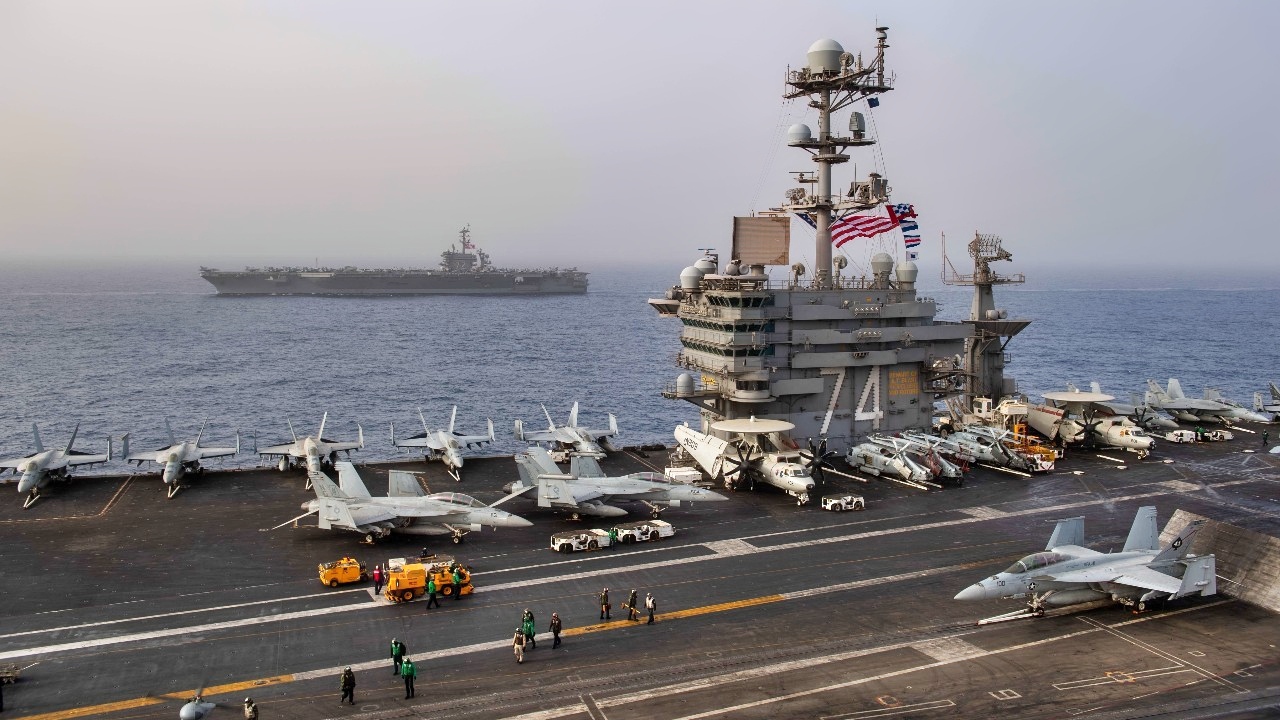
The aircraft carrier USS Abraham Lincoln (CVN 72), back, steams alongside the aircraft carrier USS John C. Stennis (CVN 74) in the Mediterranean Sea, April 24, 2019. The John C. Stennis Carrier Strike Group (CSG) 3 and Abraham Lincoln Carrier Strike Group (CSG) 12 are conducting dual carrier operations, providing opportunity for two strike groups to work together alongside key allies and partners in the U.S. 6th Fleet area of operations. John C. Stennis is underway in the Mediterranean Sea as part of the John C. Stennis Carrier Strike Group (JCSCSG) deployment in support of maritime security cooperation efforts in the U.S. 6th Fleet area of responsibility. (U.S. Navy photo by Mass Communication Specialist 3rd Class Grant G. Grady)
Predicting how long the USS Truman will remain dry-docked for RCOH is difficult, as it depends on several critical factors, many of which are analyzed during the process itself.
RCOH is intended as a “mid-life” service extension and massive upgrade, involving the opening of a huge hole in the ship to enable access to the reactor and other critical ship systems.
The process is quite involved, as the reactor must first be brought to a low-power state before being fully shut down and left to “cool off” for several days until procedures can begin.
Reactor Refueling
Then the top of the reactor needs to be cracked open by removing bolts, and then literally lifted off with a large crane.
Once the top of the reactor is off, new fuel assemblies can be added in place of old ones in large increments.
Several hundred rods can be removed at one time, but all of the nuclear reactor’s rods need to be replaced to fully refuel the boat.
This entire process takes quite a bit of time because it must be done carefully and with great precision. Following this process, the large top of the reactor can be “bolted” back on after all the water is pumped out. The RCOH process, however, involves much more than refueling the reactor, as many other systems on a carrier can only be upgraded while the reactor is offline.
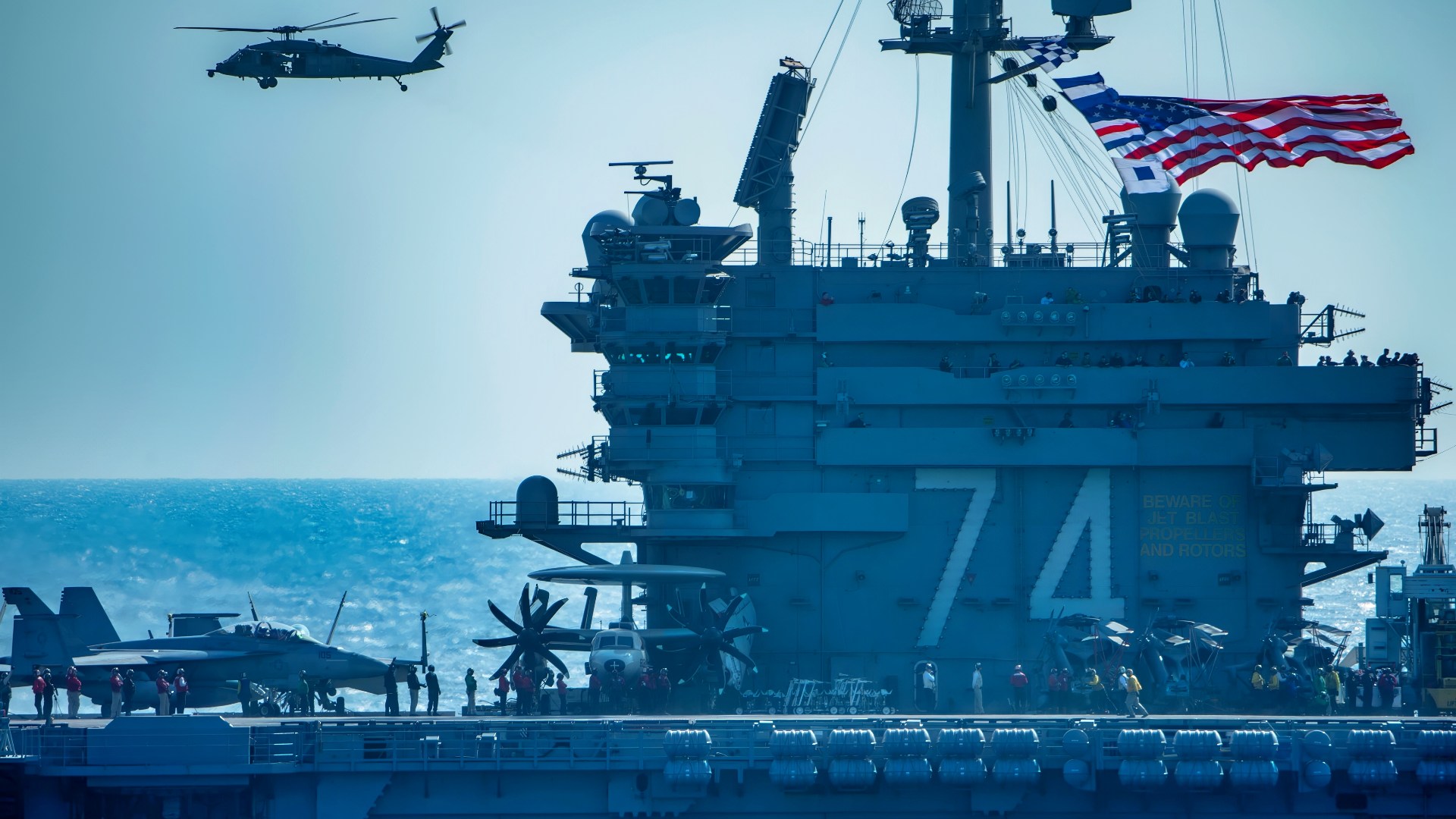
ARABIAN SEA (Dec. 14, 2018) The Nimitz-class aircraft carrier USS John C. Stennis transits the Arabian sea with the Essex Amphibious Ready Group (ARG) and 13th Marine Expeditionary Unit (MEU). The John C. Stennis Carrier Strike Group, Essex ARG, and 13th MEU are conducting integrated operations in the Arabian Sea to ensure stability in the Central Region, connecting the Mediterranean and the Pacific through the western Indian Ocean and three strategic choke points. (U.S. Navy photo by Mass Communication Specialist 3rd Class Tyler Diffie)
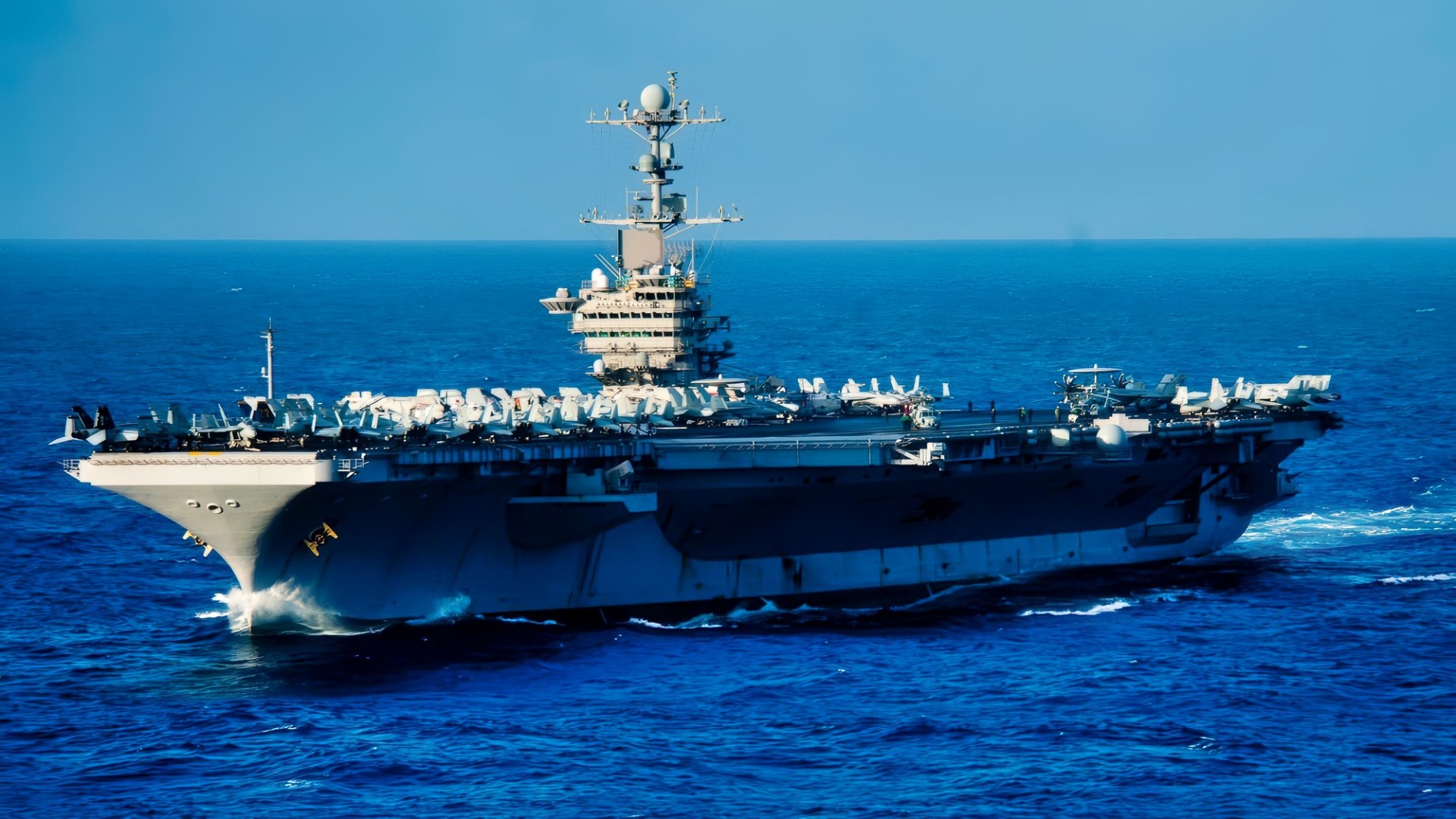
USS John C. Stennis Carrier. Image Credit: Creative Commons.
When the reactor is taken apart, there is a massive amount of additional work, as new areas of access are opened and maintenance crews can reach them.
RCOH Upgrades
This relates to what is likely the largest unrecognized reality of an RCOH: the modernization elements.
With access to the ship’s critical systems enabled by the refueling process, engineers can upgrade the ship’s electronics, command and control systems, digital sensors, radar, and computing.
Essentially, an RCOH offers an opportunity for a massive modernization overhaul to the carrier’s weapons systems, fire control apparatus, and overall “wiring.” Much of the hardware likely needs to be replaced due to wear and tear through service, yet there are also many opportunities to upgrade much of the software woven through the ship’s computer systems.
Alongside modernization, RCOH opens vast, typically empty caverns in the body of the ship where key equipment, such as generators, pipelines, water supplies, and other ship necessities, is housed and shepherded through or utilized as needed.
There is likely extensive piping throughout the body of a carrier to carry water and cooling materials while also ensuring on-board generators sustain the power supply throughout the ship.

USS John C. Stennis Aircraft Carrier. Image Credit: Creative Commons.
All of this takes time, and once upgraded, much of the ship needs to be reassembled, and parts of the hull and internal steel casings need to be cleaned and, in some cases, reinforced.
The process can be lengthy and cumbersome, and while it is expected to take roughly 4 years to finish, many RCOH efforts can take up to 6 years.
Not Enough Carriers
The complexity and duration of the RCOH dry-docking period are a major reason the US Navy maintains at least 11 carriers.
At any one time, typically four aircraft carriers are at sea patrolling or on key deterrence or global stability missions, three or four more are docked and standing by “ready” in case of an emergency or faster-erupting conflict, and three carriers can be “dry docked” for repairs, refurbishment, or RCOH.
This essential breakdown enables the US Navy to consistently maintain seven or eight “ready” carriers in position to support operations around the world, ensuring massive power-projection potential for the US Navy.
There are many theaters of operation, and the regular availability of deployable carriers is extremely relevant in light of the Pacific, as the vast region can accommodate as many as three Carrier Strike Groups at one time.
One carrier is permanently based in Yokosuka, Japan, and five others are spread along the Western coast of the United States, including San Diego and Bremerton, Washington.
About the Author: Kris Osborn
Kris Osborn is the President of Warrior Maven – Center for Military Modernization. Osborn previously served at the Pentagon as a highly qualified expert in the Office of the Assistant Secretary of the Army—Acquisition, Logistics & Technology. Osborn has also worked as an anchor and on-air military specialist at national TV networks. He has appeared as a guest military expert on Fox News, MSNBC, The Military Channel, and The History Channel. He also has a Master’s Degree in Comparative Literature from Columbia University.


