

The nearly six-year-long overhaul of the USS George Washington is a story (and a lesson) the U.S. Navy won’t soon forget. That Refueling and Complex Overhaul (RCOH) was supposed to be routine, but a series of failures and delays proved just how much can go wrong in technical and bureaucratic terms.
USS George Washington entered RCOH in 2018 with an expected four-year timeline, but it did not return to sea until May 2023, after roughly 2,117 days in the shipyard. But how did it happen?
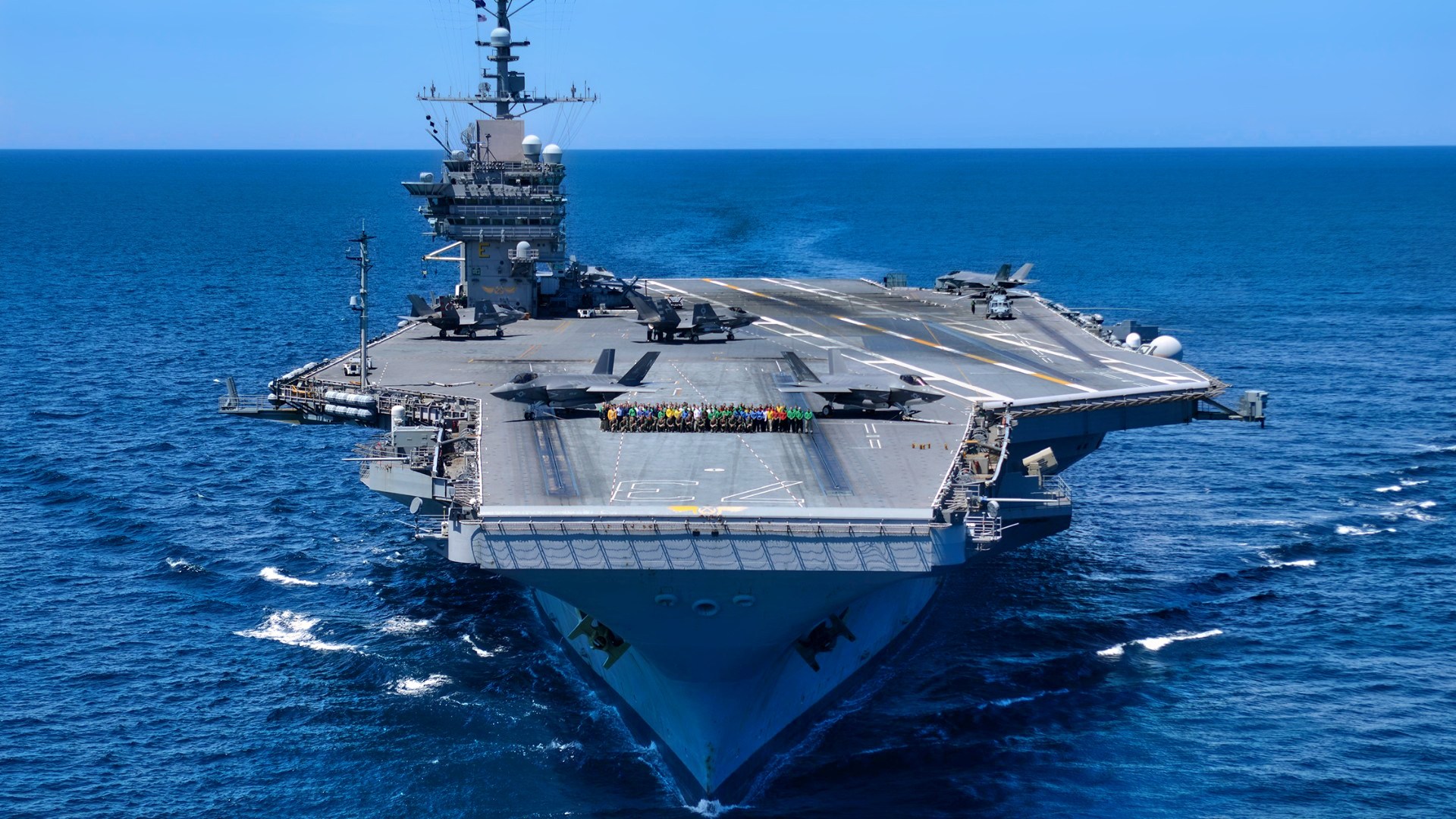
ATLANTIC OCEAN (Aug. 16, 2016) Sailors assigned to the Grim Reapers of Strike Fighter Squadron (VFA) 101, the Navy’s F-35C Fleet replacement squadron, pose on the flight deck of the aircraft carrier USS George Washington (CVN 73) during an aerial photo exercise. VFA-101 aircraft and pilots are conducting initial qualifications aboard George Washington in the Atlantic Ocean. The F-35C is expected to be Fleet operational in 2018. (U.S. Navy photo by Mass Communication Specialist Seaman Apprentice Krystofer Belknap)
A Routine Overhaul That Went Wrong
A Refueling and Complex Overhaul is one of the most demanding maintenance events in naval service. It takes place roughly halfway through a carrier’s life, refueling its nuclear reactors and modernizing nearly every system onboard.
For a Nimitz-class carrier, the Navy typically plans for this process to take about four years.
USS George Washington did not come close to that benchmark. What should have been completed around 2021 stretched into mid-2023, effectively removing the ship from service for nearly 6 years.
That difference matters. A two-year overrun on a single carrier is not just a scheduling hiccup; it directly reduces the number of deployable carriers available at any given time, placing additional strain on the rest of the fleet.
The scale of the delay suggests that this was not the result of a single failure but a breakdown in both planning and capacity.

EAST CHINA SEA (Dec. 06, 2010) Sailors assigned to the Eagles of Strike Fighter Squadron (VFA) 115 move an F/A-18E Super Hornet on the flight deck aboard the aircraft carrier USS George Washington (CVN 73). George Washington is participating in Keen Sword 2010 with the Japanese Maritime Self-Defense Force through Dec. 10. (U.S. Navy photo by Mass Communication Specialist 3rd Class David A. Cox/Released)
Hidden Damage and Growth Work
One of the most consistent drivers of delay was what the Navy refers to as “growth work” – repairs that were not planned in advance but became necessary once the ship was opened up. According to the shipbuilders involved with the work, the carrier arrived in a more challenging condition than initially expected, requiring additional repairs across numerous major systems.
This is a known and expected problem in carrier maintenance, because ships may operate for decades and accumulate wear that is not fully visible until deep inspection begins. And once the overhaul begins, those hidden problems begin to emerge – and they often cascade.
In the case of USS George Washington, that meant more work and labor hours, as well as a longer timeline than originally anticipated and budgeted.
And then there’s the broader context. The ship had spent years forward-deployed in Japan, operating under a maintenance cycle different from that of U.S.-based carriers.
That likely contributed to the poor condition of the material discovered during the overhaul.
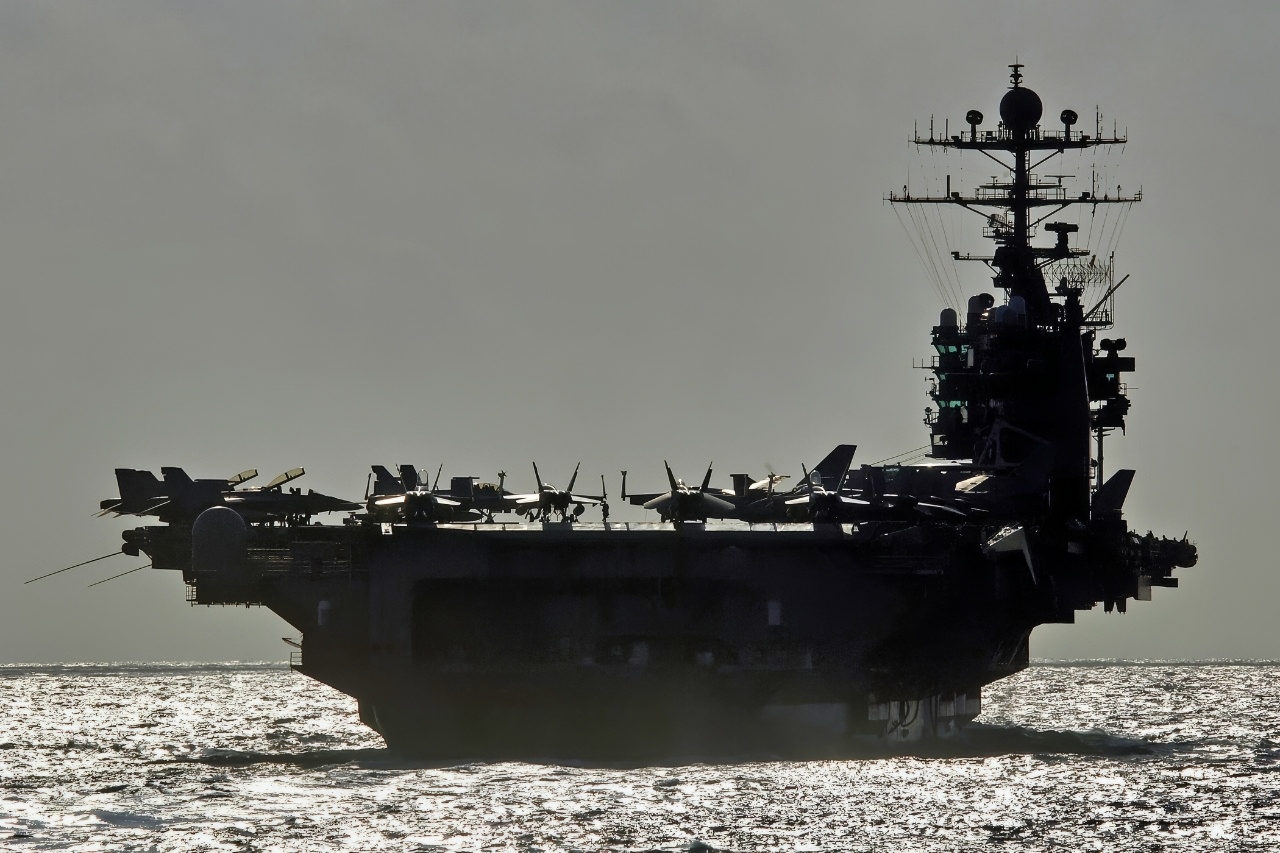
The aircraft carrier USS George Washington (CVN 73) prepares to conduct a refueling at sea with the guided missile cruiser USS Monterey (CG 61) as the two ships operate in the Caribbean Sea on April 20, 2006. The George Washington Carrier Strike group is participating in Partnership of the Americas, a maritime training and readiness deployment of U.S. Naval Forces along with navies of Caribbean and Latin American countries for enhanced maritime security.
(DoD photo by Petty Officer 3rd Class Michael D. Blackwell II, U.S. Navy. (Released))
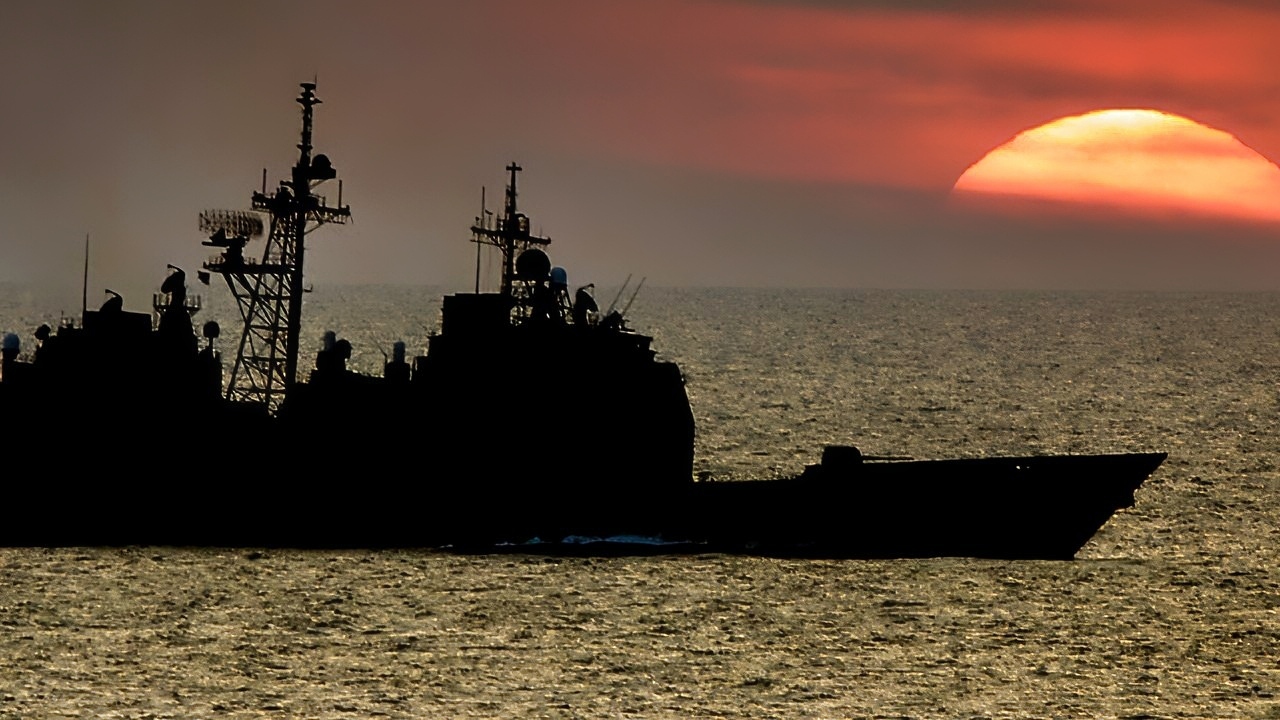
The Ticonderoga Class Cruiser USS Normandy (CG 60) steams at sunset in the Atlantic Ocean while operating with the USS George Washington battle group on May 18, 2000. The Normandy, homeported in Norfolk, Va., is participating in a Joint Task Force Exercise with the battle group.
(DoD photo by Petty Officer 2nd Class Shane McCoy, U.S. Navy. (Released))
The result was the Navy having to adjust its original four-year timeline to account for the ship’s unexpected condition.
Pandemic, Workforce Shortages, and Other Problems
Technical issues caused the initial delays, but the pandemic ultimately made them far worse. The overhaul took place at Newport News Shipbuilding, the only U.S. shipyard capable of performing nuclear carrier refueling.
That single-point dependency is critical here, because it’s what ultimately became the bottleneck. During the pandemic, workforce disruptions from quarantines and reduced productivity significantly slowed progress. Supply chain disruptions further delayed parts and materials required to complete the work.
At the same time, the yard was juggling a number of priorities, including building new Ford-class carriers while maintaining existing ones. That created a capacity problem that extended beyond any single ship.
The result was slowed work and slipping timelines.
That exposed a much deeper issue: the U.S. naval industrial base is highly specialized but relatively thin overall. So when something goes wrong – whether that’s a pandemic or a labor shortage – there is very little redundancy to absorb that shock.
Budget Decisions and Cannibalization
Perhaps the most underappreciated factor in the delay is that the problems began before the overhaul even started. Earlier budget debates considered cancelling the refueling altogether, creating uncertainty and delaying planning timelines. The instability had downstream effects on contracts and schedules, making the entire process less efficient.
Once the overhaul was finally underway, new pressures appeared. Parts from USS George Washington were removed to support higher-priority carriers. And while those were necessary decisions, it was nonetheless a form of cannibalization of the shop that slowed its overhaul.
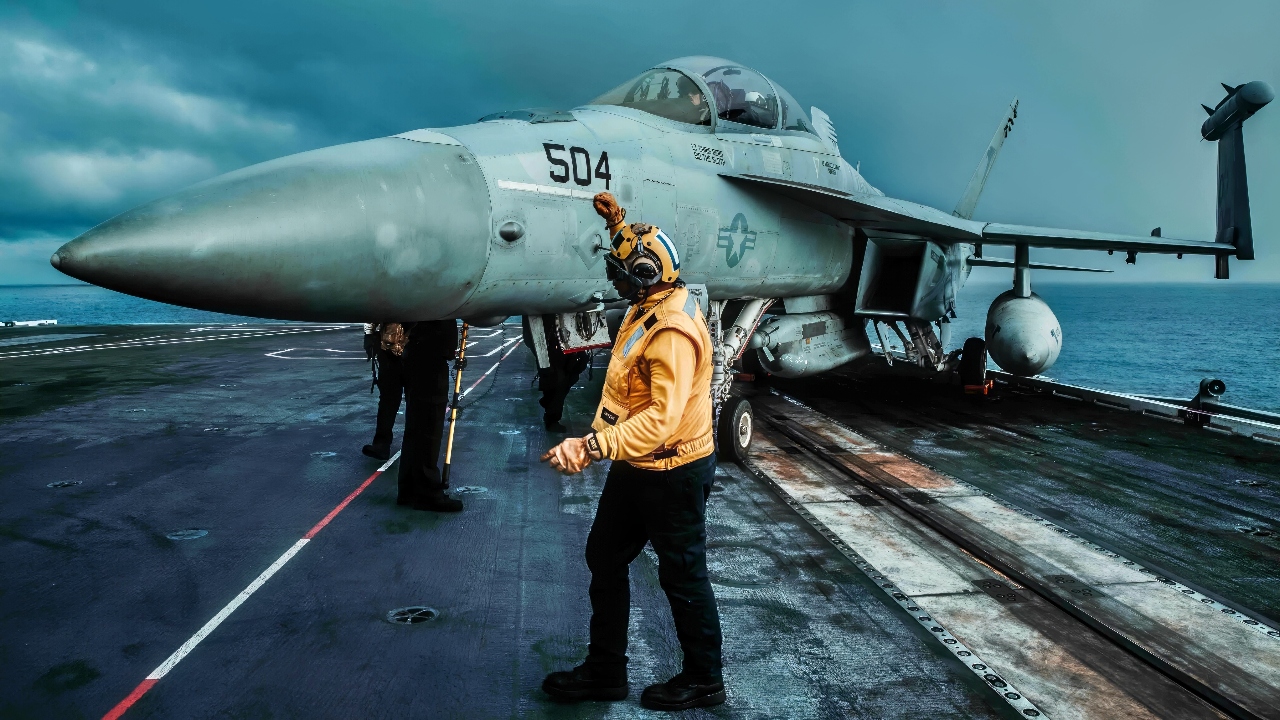
An E/A-18G Growler, attached to Electronic Attack Squadron (VAQ) 141, taxis on the flight deck of Nimitz-class aircraft carrier USS George Washington (CVN 73), while underway in the Indian Ocean, July 24, 2025. The USS George Washington Carrier Strike Group (GWA CSG) is conducting routine operations in the U.S. 7th Fleet area of operations. George Washington is the U.S. Navy’s premier forward-deployed aircraft carrier, a long-standing symbol of the United States’ commitment to maintaining a free and open Indo-Pacific region, while operating alongside allies and partners across the U.S. Navy’s largest numbered fleet. (U.S. Navy photo by Mass Communication Specialist Seaman Nicolas Quezada)
And then, the carrier became a sort of catch-up project – years of operational use and inconsistent funding or planning meant that far more work needed to be done than originally anticipated.
It all paints a grim picture: the Navy encountered problems during the overhaul after it had already fallen behind. Thankfully, though, the pandemic is over – the question now is whether these industrial bottlenecks can be rectified and even prevented in the future.
About the Author: Jack Buckby
Jack Buckby is a British researcher and analyst specialising in defence and national security, based in New York. His work focuses on military capability, procurement, and strategic competition, producing and editing analysis for policy and defence audiences. He brings extensive editorial experience, with a career output spanning over 1,000 articles at 19FortyFive and National Security Journal, and has previously authored books and papers on extremism and deradicalisation.


