

Summary and Key Points: National security analyst Jack Buckby evaluates the strategic logic of extending Ohio-class SSGN service lives following the 2027 extension of the USS Nimitz (CVN-68).
-As Operation Epic Fury consumes Tomahawk (TLAM) stocks at a rate of 168 missiles per 100 hours, the retirement of the USS Ohio, Michigan, Florida, and Georgia would eliminate over 600 vertical launch cells.

SILVERDALE, Wash. (Oct. 27, 2025) Ohio-class ballistic missile submarine USS Pennsylvania (SSBN 735) arrives at Naval Base Kitsap-Bangor following routine operations at sea, Oct. 27, 2025. Pennsylvania is assigned to Commander, Submarine Group (SUBGRU) 9, which exercises operational and administrative control authority for assigned submarine commands and units in the Pacific Northwest providing oversight for shipboard training, personnel, supply and material readiness of SSBNs and their crews. SUBGRU-9 is also responsible for nuclear submarines undergoing conversion or overhaul at Puget Sound Naval Shipyard in Bremerton. (U.S. Navy photo by Mass Communication Specialist 1st Class Ryan Riley).

SOUDA BAY, Greece (March 27, 2022) The Ohio-class ballistic-missile submarine USS Georgia (SSGN 729) near Souda Bay, Greece, during training with U.S. Marines from Task Force 61/2 (TF-61/2), conducting launch and recovery training with their combat rubber raiding craft, March 27, 2022. TF-61/2 will temporarily provide command and control support to the commander of U.S. 6th Fleet, to synchronize Navy and Marine Corps units and capabilities already in theater, in support of regional Allies and Partners and U.S. national security interests. (U.S. Marine Corps photo by Sgt. Dylan Chagnon)
-Buckby argues that while Virginia-class Block V submarines featuring the Virginia Payload Module (VPM) are the intended successors, their lower capacity per hull creates a “missile gap” that risks American deterrence in contested 2026 maritime theaters.
If USS Nimitz Can Stay, Should the Ohio-Class Too?
The U.S. Navy is facing some difficult questions about the future of some of its oldest and most powerful ships, and it has all come to a head with the debate over the USS Nimitz (CVN-69), the oldest active American aircraft carrier, which is scheduled to retire in 2026 after more than 50 years of service.
But with new Ford-class carriers arriving slowly and the fleet already stretched thin, some analysts have suggested that the Navy may need to keep the ship operational longer than planned.
The debate is actually broader: the Navy may be retiring major platforms faster than their replacements arrive.
For example, the Navy’s Ohio-class guided-missile submarines, the most heavily armed conventional strike submarines ever built, are scheduled for retirement later this decade.
But at the same time, the United States is rapidly burning through Tomahawk cruise missiles during the ongoing military options against Iran, making strike capacity perhaps more important than it has been in some time.
So, if the Navy is willing to reconsider retiring an aircraft carrier like Nimitz, could that logic be extended to underwater vessels, too?
The USS Nimitz and How Plans Can Change
The USS Nimitz is the lead ship of the Nimitz-class aircraft carriers and has served as a cornerstone of American naval power since its commissioning in 1975. The ship has participated in conflicts ranging from the Cold War to operations in the Middle East and Indo-Pacific.
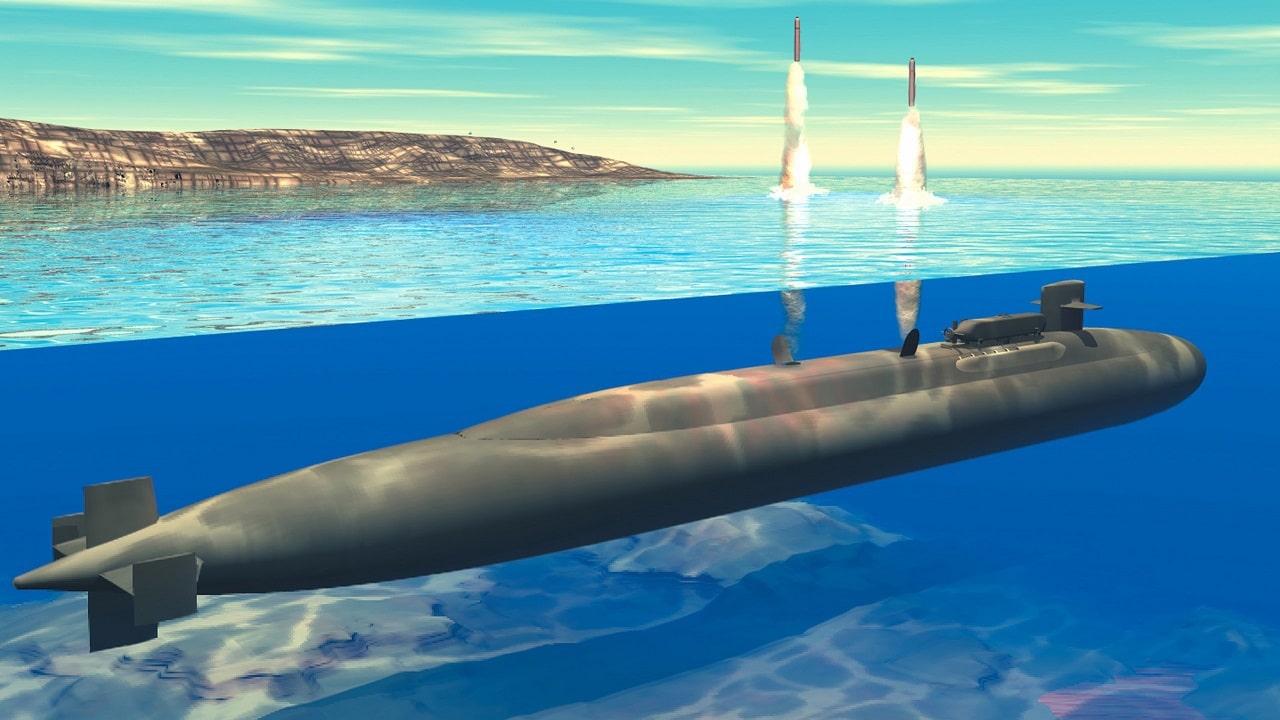
Ohio-class SSGN. Image Credit: Creative Commons.

An artist rendering of the future U.S. Navy Columbia-class ballistic missile submarines. The 12 submarines of the Columbia-class will replace the Ohio-class submarines which are reaching their maximum extended service life. It is planned that the construction of USS Columbia (SSBN-826) will begin in in fiscal year 2021, with delivery in fiscal year 2028, and being on patrol in 2031.
Under current plans, Nimitz will be retired as the Navy transitions toward the newer Ford-class carriers, which are designed to bring improved power generation, advanced launch systems, and reduced crew requirements. But the transition has not been smooth. Shipbuilding delays, maintenance backlogs, and heavy operational demand have all placed pressure on the carrier fleet.
The United States is legally required to maintain 11 aircraft carriers, yet retiring Nimitz before its replacement is fully operational could push the fleet below that threshold.
That reality has sparked discussion about whether the Navy might delay the ship’s retirement to avoid a temporary capability gap. While no official decision has been made, the debate itself illustrates a key point: retirement timelines for major military platforms are not always fixed. When strategic conditions change, governments sometimes extend the life of aging systems to maintain critical capabilities.
The same logic could soon apply to another powerful but aging asset – the Navy’s Ohio-class cruise-missile submarines.
The Ohio-Class SSGNs Are America’s Biggest Conventional Missile Subs
The Ohio-class SSGNs are among the most formidable conventional strike platforms in the U.S. military. Originally built during the Cold War as ballistic-missile submarines carrying nuclear weapons, four of these boats were later converted into cruise-missile submarines in the early 2000s.
After conversion, each submarine was equipped to carry up to 154 Tomahawk cruise missiles, along with facilities for deploying U.S. special operations forces.
The four vessels – USS Ohio, USS Michigan, USS Florida, and USS Georgia – remain the most heavily armed conventional submarines ever operated by the United States. However, they are also old. Most of the hulls were built in the early 1980s, and the Navy currently plans to retire them between 2026 and 2028, when they reach the end of their roughly 40-year service lives.
Their replacement will be Virginia-class Block V attack submarines, which include a new “Virginia Payload Module” designed to carry additional cruise missiles. But even these improved submarines carry far fewer missiles — roughly 40 Tomahawks each, far below the Ohio-class capacity.
As a result, retiring the four SSGNs would remove hundreds of missile launch cells from the U.S. fleet almost overnight.
The Tomahawk Crisis Emerging From the Iran Conflict
As the Navy faces a potential loss of firepower, there’s also growing demand for Tomahawk cruise missiles.
Tomahawks are the U.S. military’s primary long-range precision strike weapon, capable of hitting targets more than 1,000 miles away from ships and submarines. They are frequently used during the opening stages of military campaigns because they allow the United States to strike targets without risking pilots or aircraft.
Recent and ongoing operations against Iran have already consumed large numbers of the missiles, too. According to the Center for Strategic and International Studies, the United States fired 168 Tomahawks within the first 100 hours of the war – compared with 322 procured over the past five years.
Should the Navy Keep the Ohio-Class for Longer?
Consider this: each SSGN carries more than 150 Tomahawks, meaning the four submarines together represent over 600 missile launch opportunities in the U.S. arsenal. Removing them from service would significantly reduce the Navy’s ability to launch large cruise-missile strikes from stealthy underwater platforms.

The Ohio-class ballistic-missile submarine USS Maine (SSBN 741) begins a dive into the Strait of Juan de Fuca off the Washington Coast, March 18, 2025, during routine operations. Special units within the Coast Guard are tasked with the protection of U.S. Naval submarines while surfaced and transiting U.S. territorial waters to and from their patrol stations. (U.S. Coast Guard photo by Petty Officer 1st Class Steve Strohmaier)
The boats are ultimately too old to keep operating indefinitely because nuclear submarines are limited in terms of lifespan by the life of their reactors, general hull fatigue, and rising maintenance costs. But it is becoming increasingly clear that the Navy may be retiring them at the worst possible time, as replacement submarines arrive slowly and geopolitical tensions rise.
So if the Navy ultimately decides to keep the USS Nimitz in service longer than expected to avoid a carrier gap, does it not seem logical that the U.S. should consider extending the lives of the Ohio-class for at least a few more years to preserve its cruise-missile capacity?
About the Author: Jack Buckby
Jack Buckby is a British researcher and analyst specialising in defence and national security, based in New York. His work focuses on military capability, procurement, and strategic competition, producing and editing analysis for policy and defence audiences. He brings extensive editorial experience, with a career output spanning over 1,000 articles at 19FortyFive and National Security Journal, and has previously authored books and papers on extremism and deradicalisation.


Charlie Roscoe
March 19, 2026 at 10:33 pm
The US Military budget is the largest in the world and yet is short on ships, shipyards, drydocks, crew especially pilots and is running out munitions.
Soo, W T F did all the $$$$$$$$$$ go to? Sadly, no audit.
Goal: The DoD is striving for a clean audit across all components by 2028, with the Marine Corps already achieving successful audits.
Challenges: The Navy has faced challenges in managing findings, with recent reports indicating potential issues with, for example, the modernization of shipyard master plans.