

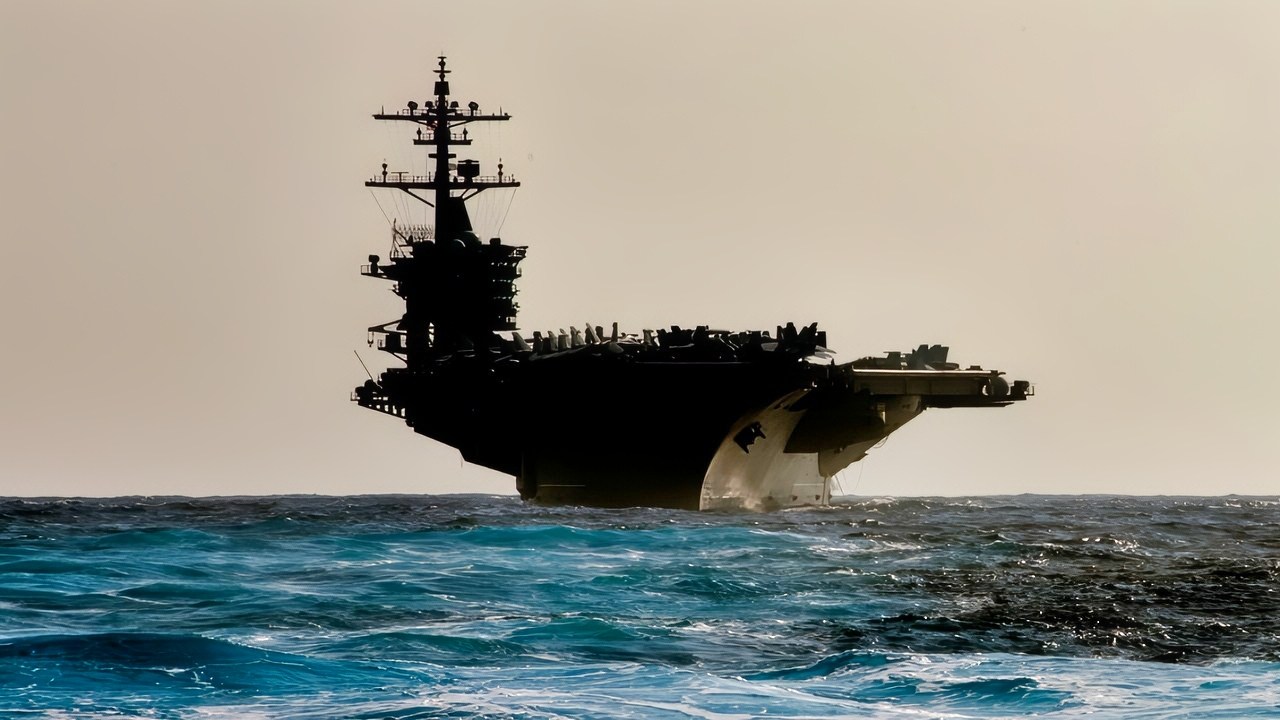
Summary and Key Points: National security expert Harrison Kass analyzes the U.S. Navy’s decision to extend the service of USS Nimitz (CVN-68) until March 2027.
-As the lead ship of its class, the 51-year-old supercarrier is shifting homeports to Norfolk to begin a $96 million inactivation process at Newport News Shipbuilding.
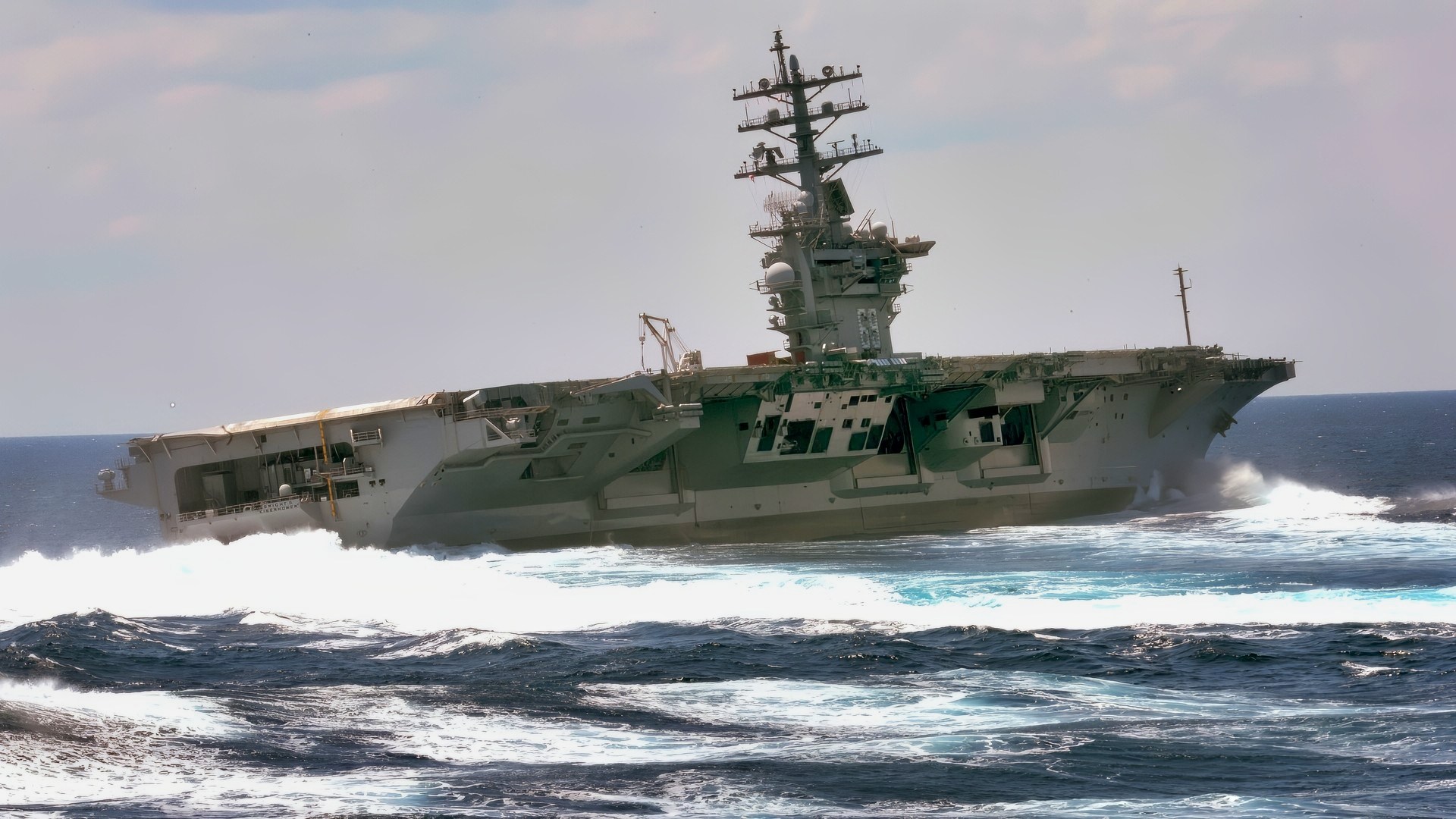
The Nimitz-class aircraft carrier USS Dwight D. Eisenhower conducts rudder turns during sea trials.
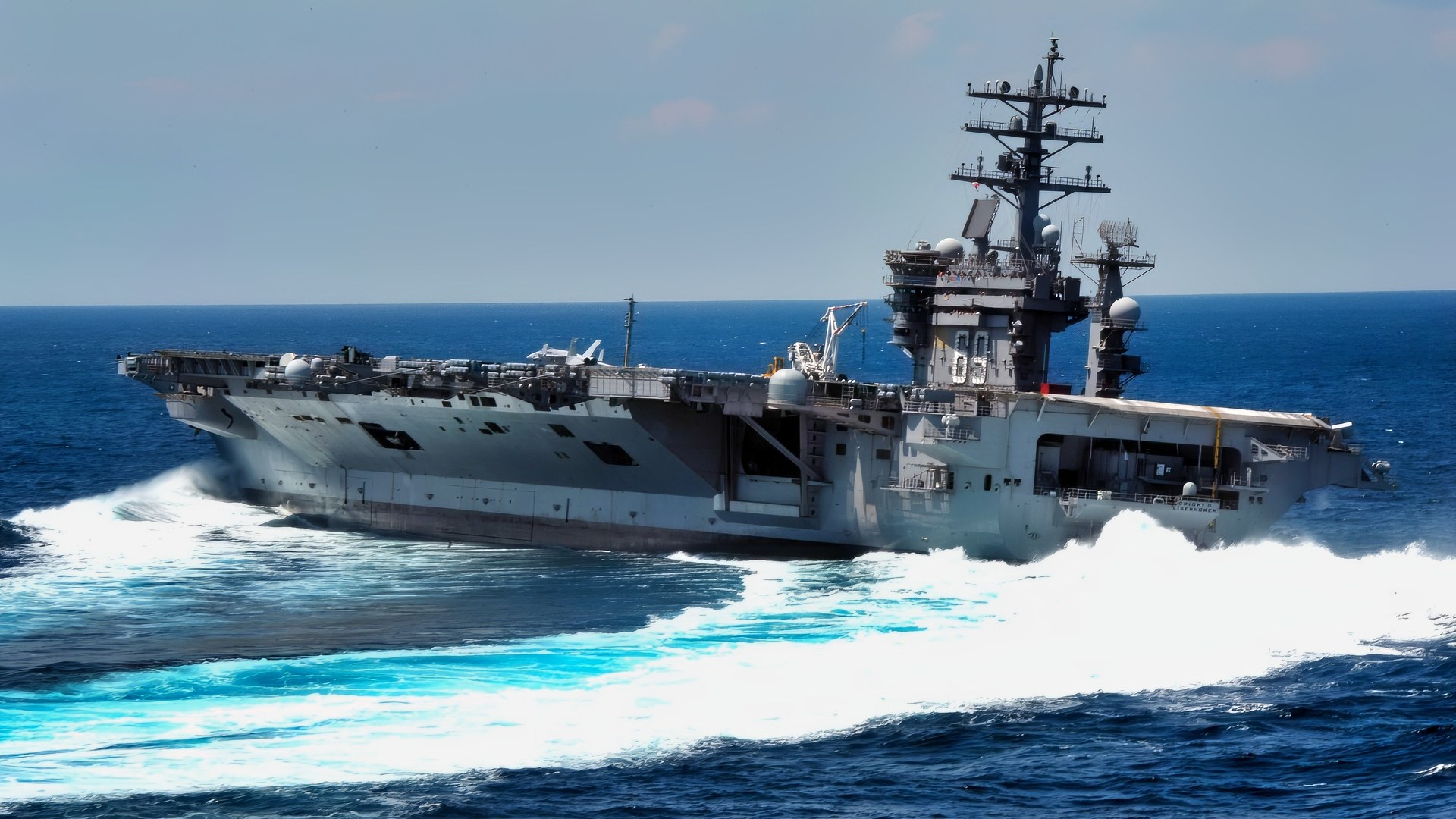
The Nimitz-class aircraft carrier USS Dwight D. Eisenhower conducts rudder turns during sea trials. Dwight D. Eisenhower completed a nine-month planned incremental availability at Norfolk Naval Ship Yard on June 10, 2011.
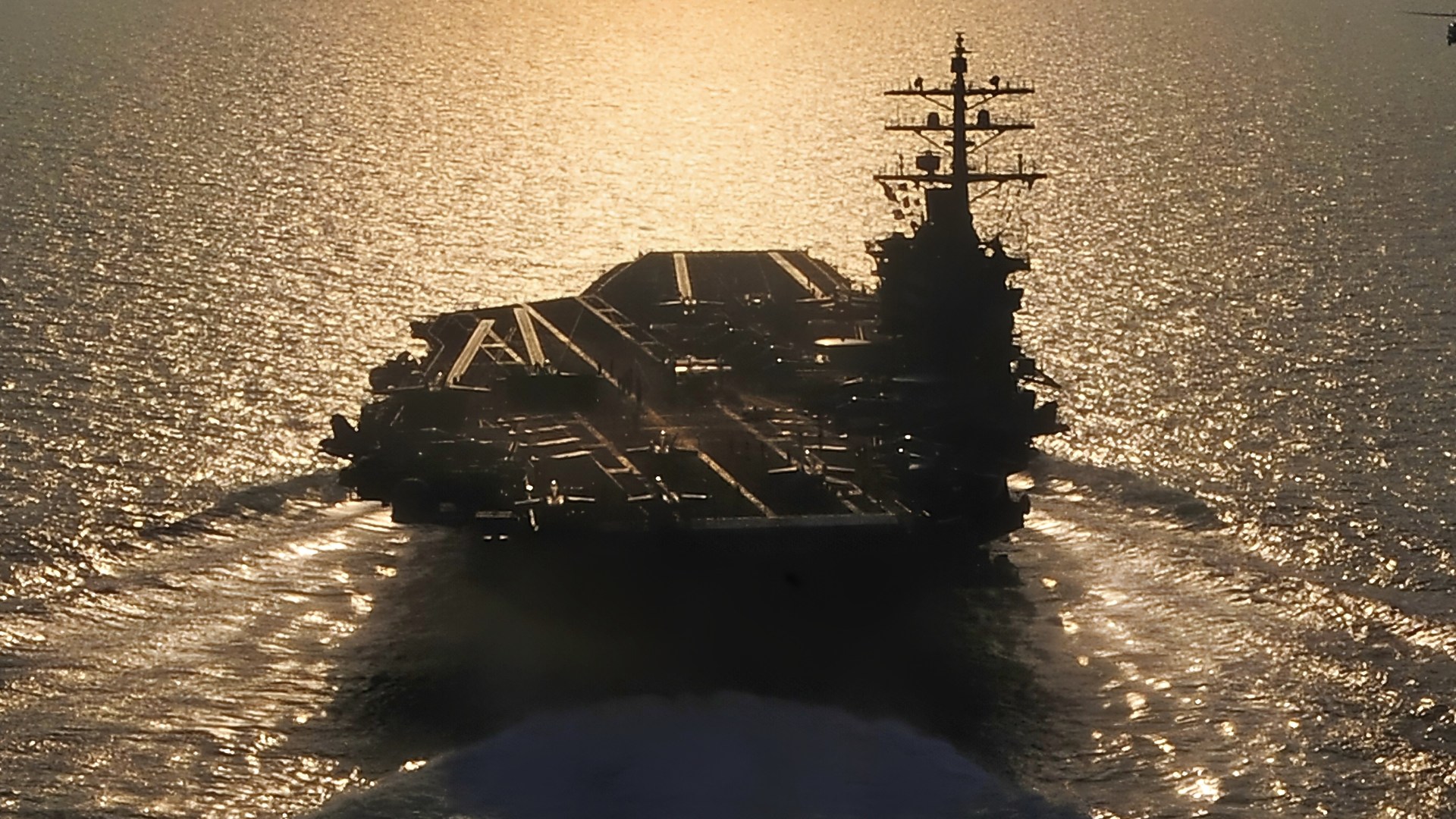
120710-N-RY232-571 MEDITERRANEAN SEA (July 10, 2012) – An SH-60F Seahawk from the Nightdippers of Helicopter Anti-Submarine Squadron (HS) 5 flies alongside Nimitz-class aircraft carrier USS Dwight D. Eisenhower (CVN 69), July 10. Dwight D. Eisenhower is on a regularly scheduled deployment in support of Maritime Security Operations (MSO) and Theater Security Cooperation (TSC) efforts in the U.S. 5th and 6th Fleet areas of responsibility. IKE deployed as part of Eisenhower Carrier Strike Group (CSG), which includes CSG 8, IKE, guided-missile cruiser USS Hue City (CG 66), guided-missile destroyer USS Farragut (DDG 99), guided-missile destroyer USS Winston S. Churchill (DDG 81), USS Jason Dunham (DDG 109), the seven squadrons of Carrier Air Wing (CVW) 7, and Destroyer Squadron 28. (U.S. Navy photo by Mass Communication Specialist 2nd Class Julia A. Casper/Released)
-This ten-month “lifeline” ensures the Navy meets the statutory 11-carrier requirement as its successor, the Ford-class USS John F. Kennedy (CVN-79), faces certification delays for its AAG and AWE systems.
-While the Nimitz marks the end of a Cold War legacy, the transition underscores the complexity of modernizing American maritime power.
USS Nimitz Extension: Keeping the 11-Carrier Fleet Alive Through 2027
The U.S. Navy aircraft carrier USS Nimitz (CVN-68)’s service life has been extended until 2027.
The boat is one of the most iconic aircraft carriers ever built and the lead ship of the US Navy’s Nimitz-class super carriers.
Commissioned in 1975, the Nimitz helped usher in the modern era of nuclear-powered carrier strike groups.
And for five decades, the Nimitz has served as the de facto centerpiece of American naval power, capable of projecting air power worldwide.
But with retirement scheduled for later this decade, the Nimitz story is closing; while other ships in the class still have decades of service life, the lead ship will soon exit service, marking the beginning of the end for one of the most storied classes in naval history.

Souda Bay, Crete, Greece (Feb. 22, 2006) Nimitz-class aircraft carrier USS Theodore Roosevelt (CVN 71) heads to sea following a brief logistics stop on the Greek island of Crete. Roosevelt and Carrier Air Wing Eight (CVW-8) are currently underway on a regularly scheduled deployment supporting maritime security operations.
Roosevelt is the fourth ship in the NIMITZ – class of nuclear powered aircraft carriers and is homported in Norfolk, VA.
U.S. Navy photo by Mr. Paul Farley
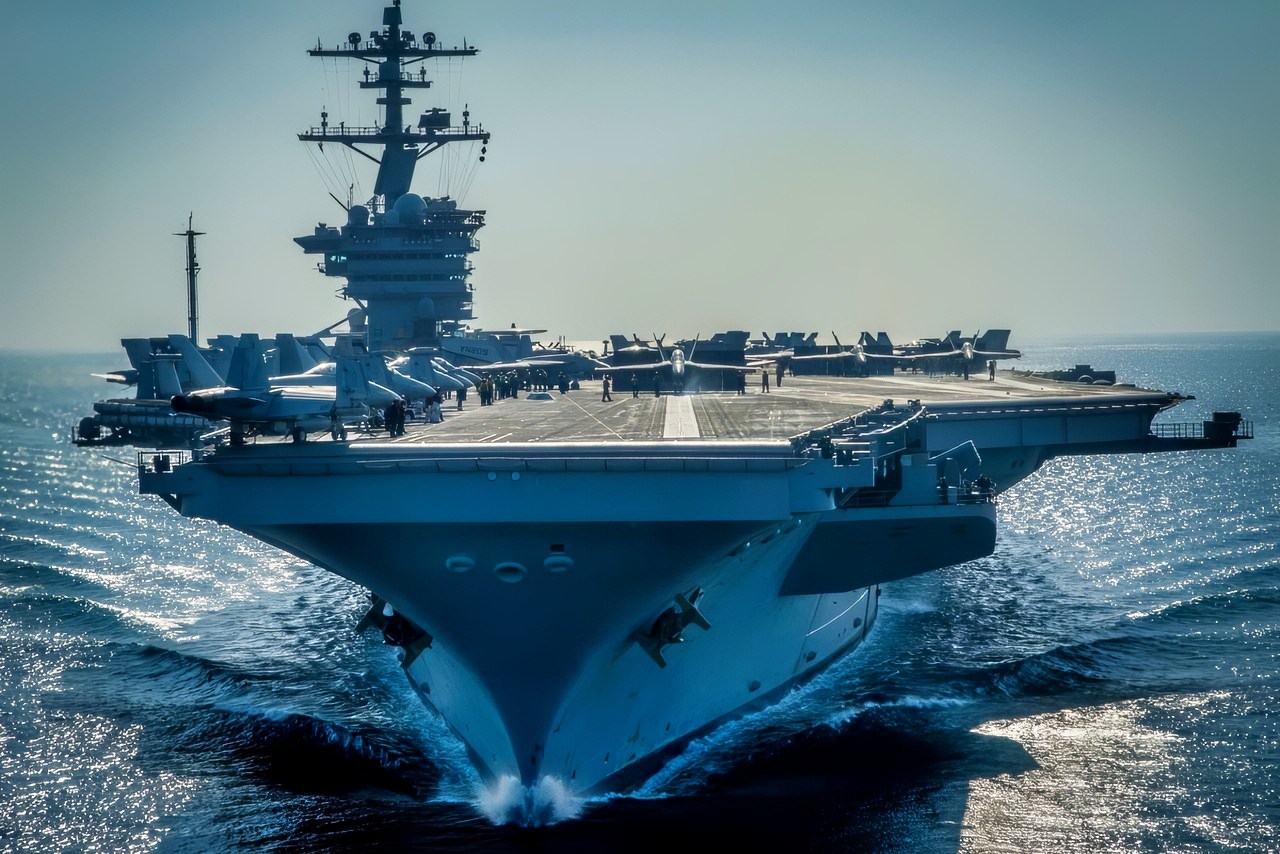
141208-N-WD464-386 ARABIAN GULF (Dec. 8, 2014) The Nimitz-class aircraft carrier USS Carl Vinson (CVN 70) prepares for flight operations in the Arabian Gulf. Carl Vinson is deployed in the U.S. 5th Fleet area of operations supporting Operation Inherent Resolve, strike operations in Iraq and Syria as directed, maritime security operations, and theater security cooperation efforts in the region. (U.S. Navy photo by Mass Communication Specialist 2nd Class Alex King/Released)
Born from the Cold War
The Nimitz-class was conceived during the Cold War as the next evolution of the US Navy’s carrier fleet.
Earlier nuclear carriers, like the USS Enterprise (CVN-65), demonstrated the advantages of nuclear propulsion—but were extremely complex and expensive, complicating operations and budgeting.
The Nimitz, therefore, relied on a simplified design that standardized nuclear carrier construction while dramatically increasing endurance and sortie generation rate (SGR). The boat was named for Fleet Admiral Chester W. Nimitz, who commanded US Pacific forces during World War II, and, when it entered service in 1975, quickly became one of the most powerful warships ever built.
Building a Monster
USS Nimitz remains one of the largest warships in the world—with a length of 1,092 feet and a displacement of 100,000 tons. For propulsion, the boat relies on two A4W nuclear reactors and can reach over 30 knots.
Crewed with approximately 5,000 personnel, the Nimitz is more of a floating city than a simple boat. The flight deck is roughly 4.5 acres, allowing the launch and recovery of enough aircraft to influence global events.
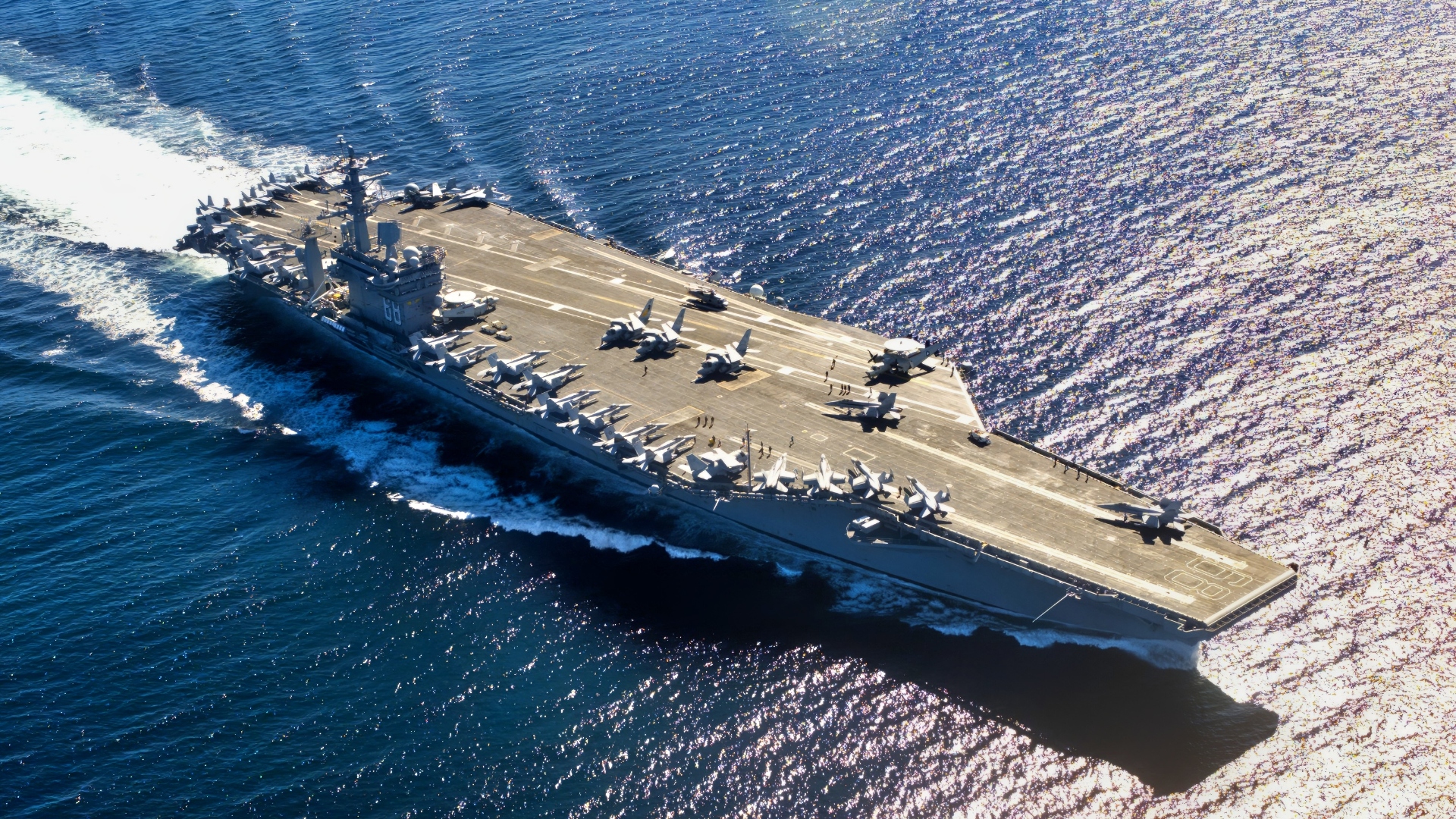
Nimitz-Class. Image Credit: Creative Commons.

(Oct. 17, 2017) The aircraft carrier USS Nimitz (CVN 68) transits the Arabian Gulf, Oct 17, 2017. Nimitz is deployed in the U.S. 5th Fleet area of operations in support of Operation Inherent Resolve. While in this region, the ship and strike group are conducting maritime security operations to reassure allies and partners, preserve freedom of navigation, and maintain the free flow of commerce. (U.S. Navy photo by Mass Communication Specialist Seaman David Claypool/Released)
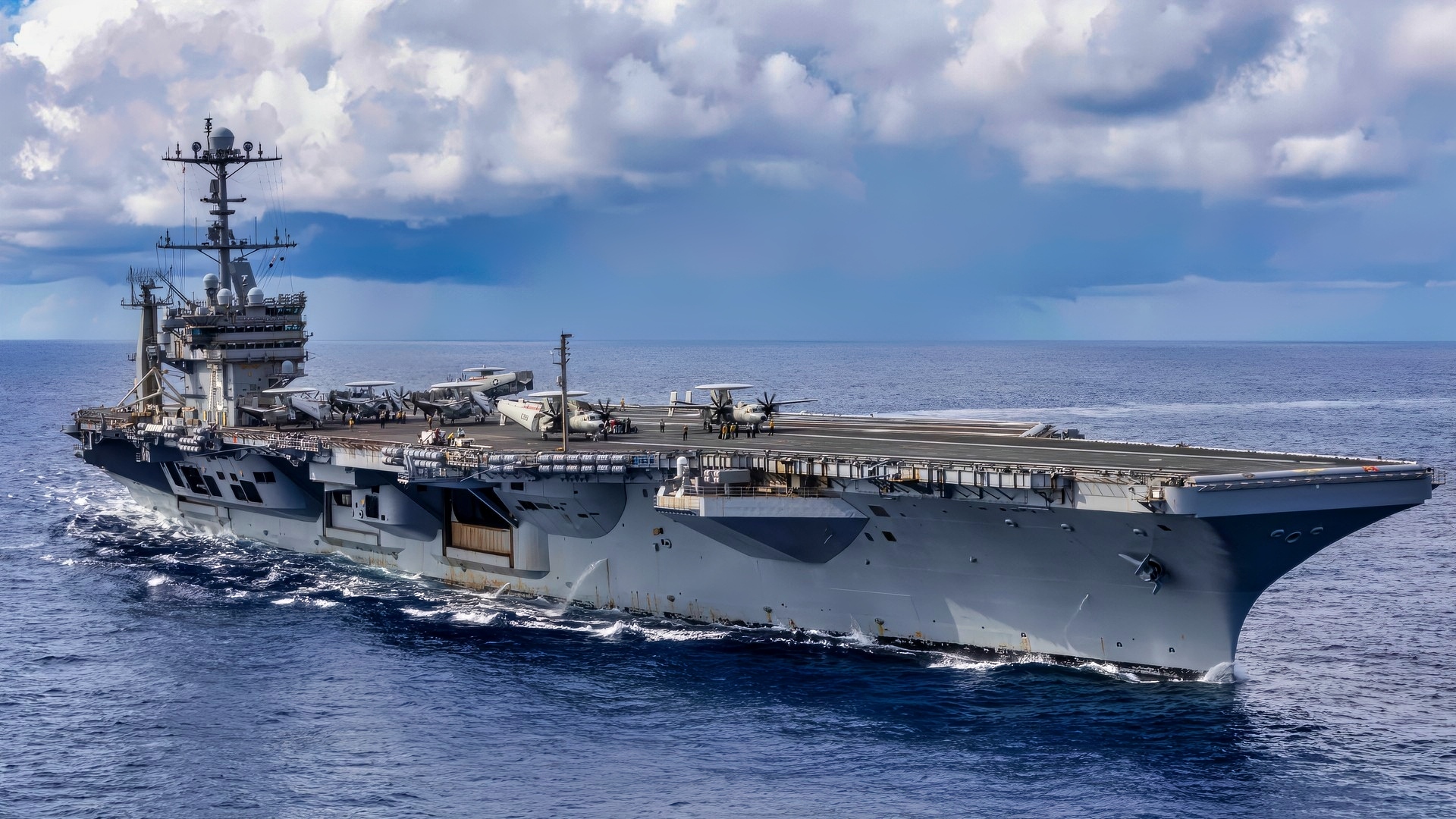
(Sept. 23, 2025) The Nimitz-class aircraft carrier USS Harry S. Truman (CVN 75) conducts carrier qualifications in the Atlantic Ocean. Truman is currently underway carrying out routine operations that support the Navy’s commitment to readiness, innovation, and future fleet lethality. (U.S. Navy photo by Mass Communication Specialist 2nd Class Mike Shen)
And with nuclear propulsion, the Nimitz can operate for more than two decades without refueling, giving it enormous operational endurance compared to conventional ships. The true combat power of the Nimitz comes from its carrier air wing, which typically consists of about 70-90 aircraft, like the F/A-18E/F Super Hornet, EA-18G Growler, E-2D Hawkeye, and MH-60 Seahawk.
Sailing Through the Decades
USS Nimitz has participated in numerous major operations throughout its service life.
Notable deployments include deterrence operations against the Soviet Union during the Cold War, strike missions against Iraqi targets during Operation Desert Storm, air operations over Afghanistan and Iraq during the Global War on Terror, and, more recently, patrols aimed at deterring Chinese and North Korean aggression. O
ver the decades and decades of service, the Nimitz has logged millions of nautical miles and thousands of combat sorties.
Strategic Value of Supercarriers
Aircraft carriers, including the Nimitz, remain among the most important tools of US global power projection.
A carrier like Nimitz can deploy dozens of combat aircraft anywhere in the world within days.
This makes carrier a key instrument for crisis response, deterrence, sustained military operations, etc, giving the US a capability that other nations simply lack.
And in regions of growing importance, notably the Indo-Pacific, carrier strike groups remain central to US strategy for countering major powers.
USS Nimitz Faces a Changing World
But the threat environment is changing.
Despite their power, super carriers are facing increased challenges; emerging threats include long-range anti-ship missiles, hypersonic weapons, and advanced submarine forces. Indeed, countries such as China have developed anti-access/area-denial (A2/AD) systems to keep carriers out of contested regions.
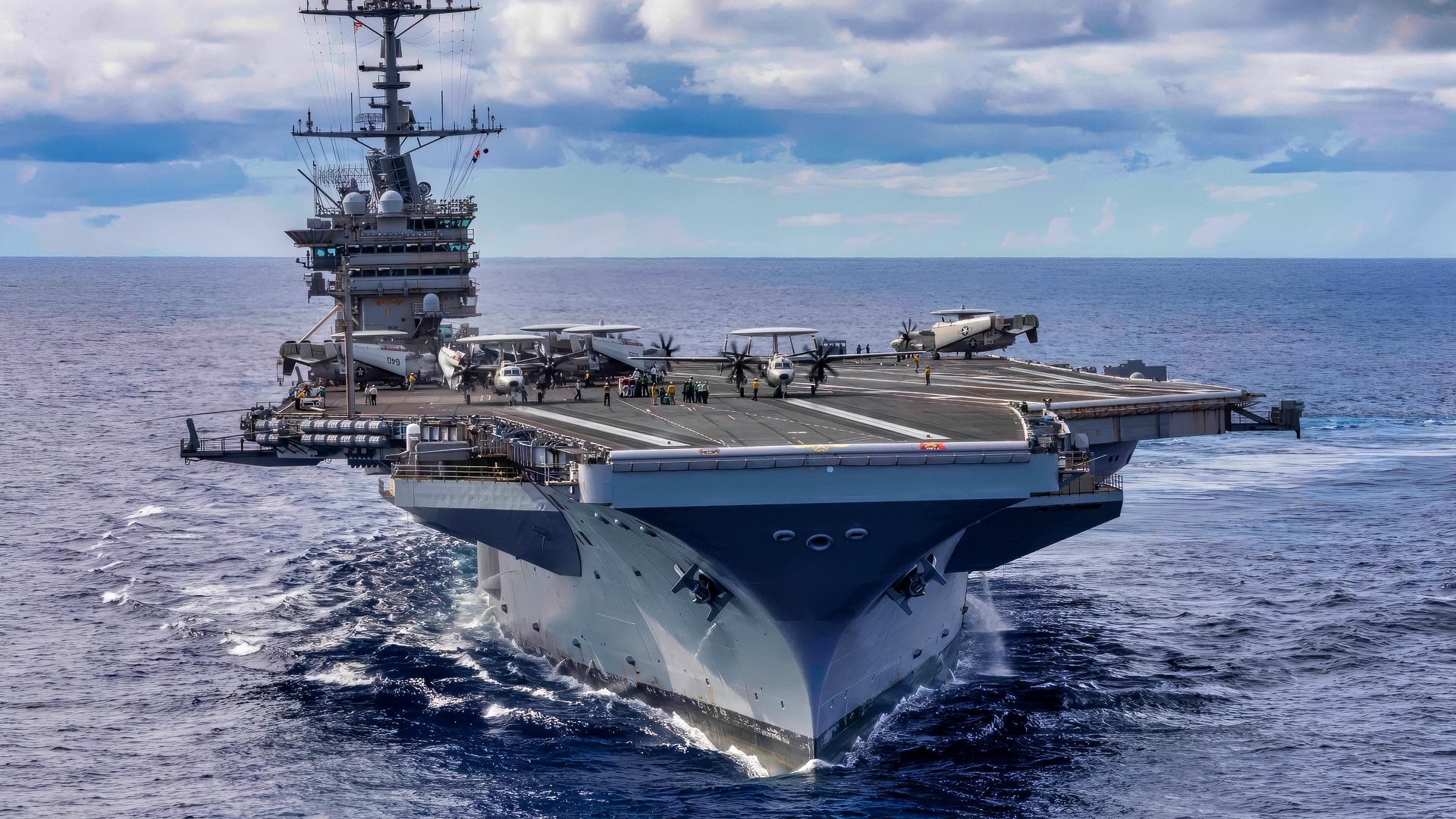
250923-N-FY193-1405 ATLANTIC OCEAN (Sept. 23, 2025) The Nimitz-class aircraft carrier USS Harry S. Truman (CVN 75) conducts carrier qualifications in the Atlantic Ocean. Truman is currently underway carrying out routine operations that support the Navy’s commitment to readiness, innovation, and future fleet lethality. (U.S. Navy photo by Mass Communication Specialist 2nd Class Mike Shen)
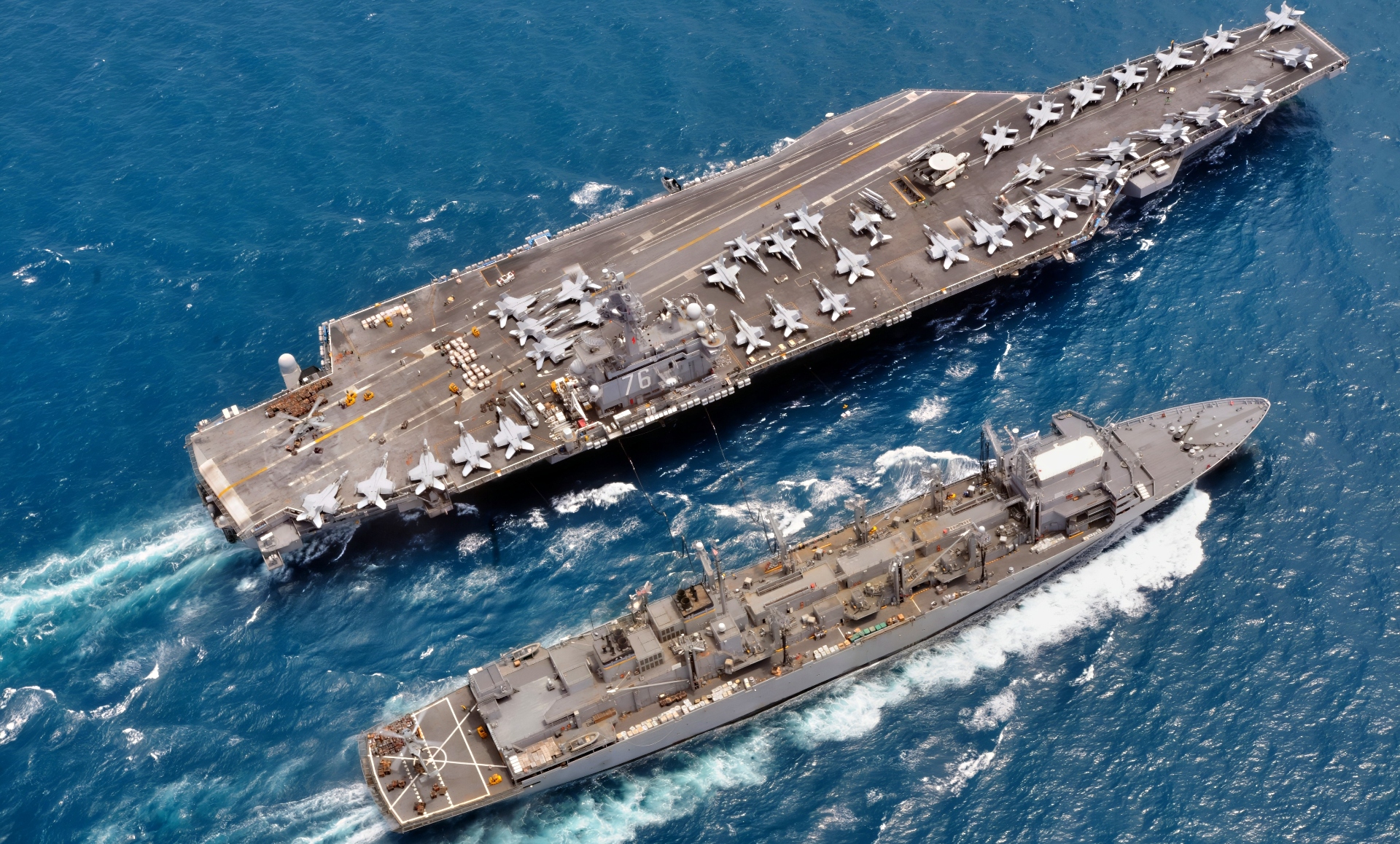
(August 15, 2008) With SH-60 helicopters moving pallets of supplies both USS Ronald Reagan (CVN 76) and USNS Bridge (T-AOE 10) work together during a replenishment at sea or RAS. With Reagan’s six galleys and approximately 4,100 Sailors it takes a lot of produce to feed that many folks and the Nimitz-class aircraft carrier got what it needed from USNS Bridge to do so.
The Ronald Reagan Carrier Strike Group is on a routine deployment in the 7th Fleet area of responsibility. Operating in the Western Pacific and Indian Ocean, the U.S. 7th Fleet is the largest of the forward-deployed U.S. fleets covering 52 million square miles, with approximately 50 ships, 120 aircraft and 20,000 Sailors and Marines assigned at any given time.
U.S. Navy photo by Senior Chief Mass Communication Specialist (SW/NAC) Spike Call
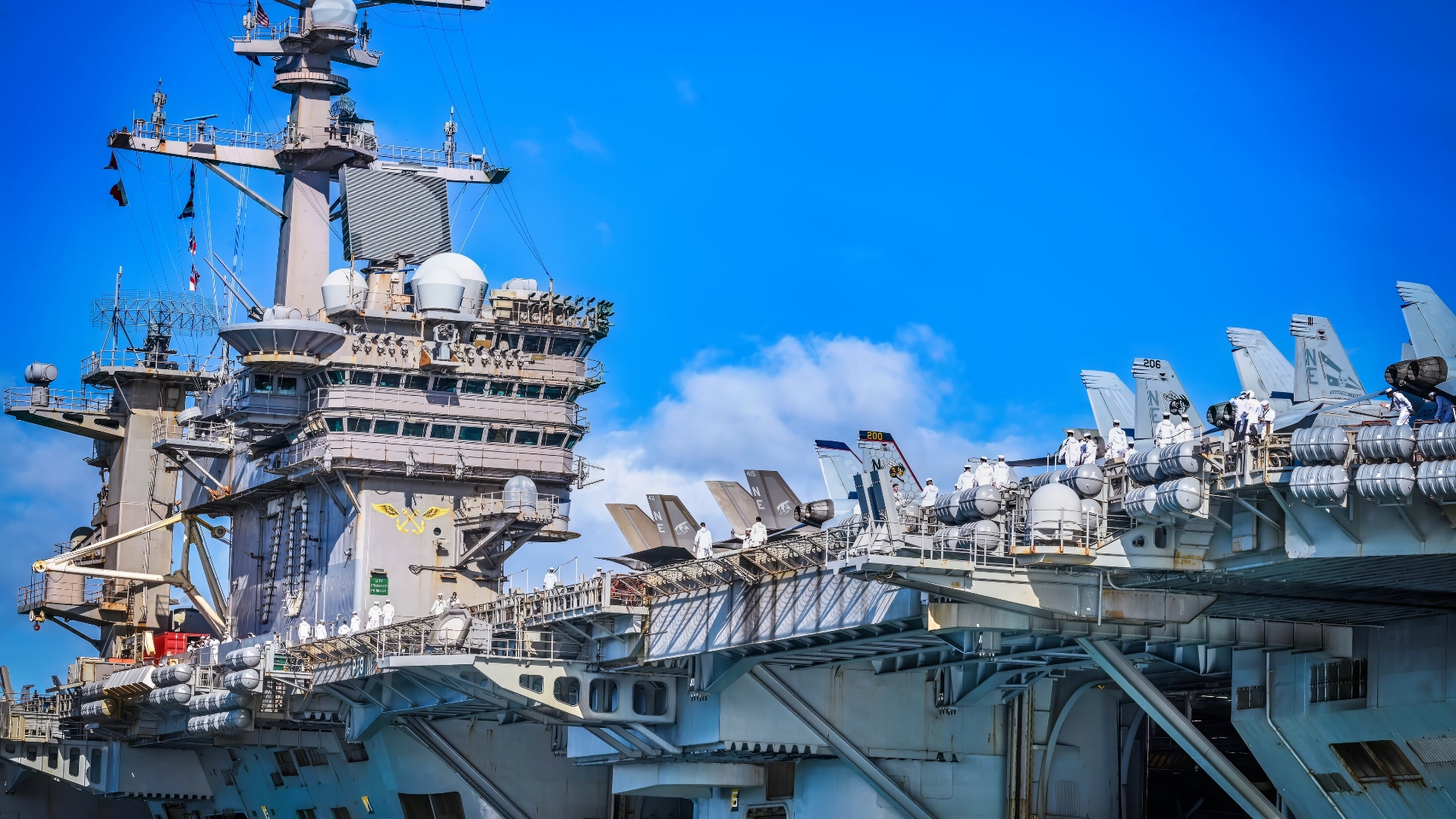
The Nimitz-class aircraft carrier USS Carl Vinson (CVN 70) arrives in Joint Base Pearl Harbor-Hickam, Hawaii, for a scheduled port visit, July 30, 2025. Vinson, the flagship of Carrier Strike Group ONE, is underway conducting routine operations in the U.S. 3rd Fleet area of operations. (U.S. Navy photo by Roann Gatdula)
The US is adapting, of course, with longer-range aircraft, stand-off weapons, and distributed naval operations. And while the supercarrier is a well-defended and still valuable tool, it is not impervious.
Retirement Inevitable
After nearly a half-century of service, the Nimitz’s retirement is set for 2027, which will coincide with the delivery of the USS John F. Kennedy, a Gerald R. Ford-class super carrier.
The Nimitz-class will be replaced by carriers of the newer Ford-class, which are already entering the fleet, and will incorporate innovative features such as advanced electromagnetic launch systems and arresting gear, improved radar, and automation that allow for reduced crew.
The Ford program was ambitious, and the transition to the platform hasn’t been perfectly smooth, but the Ford is clearly the future of US naval power projection, with the Nimitz’s retirement inevitable.
About the Author: Harrison Kass
Harrison Kass is an attorney and journalist covering national security, technology, and politics. Previously, he was a political staffer and candidate, and a US Air Force pilot selectee. He holds a JD from the University of Oregon and a master’s in global journalism and international relations from NYU.


yeye
March 16, 2026 at 12:46 pm
Old ships like Nimitz are a magnet for fast flying rockets, like the north Korean kn series.
North Korea recently tested its latest kn-25, which while presently is called an artillery rocket, is actually a ballistic missile, that can be topped with a nuke warhead.
The kn-25 is carried by a mobile launcher truck, which holds a maximum stack of four rockets.
The range of the kn-25 is around 400 km, so if the Nimitz suddenly waddles around the north Korean coast, it instantly becomes a piece of dead meat.
But if the Nimitz stays a little further afield, it’s by no means safe.
North Korea today, has a wide variety of fast-flying missiles and rockets, including the hwasong-16B.
That rocket is so highly mobile, and one hit from it will instantly break an old ship into two or more pieces.