

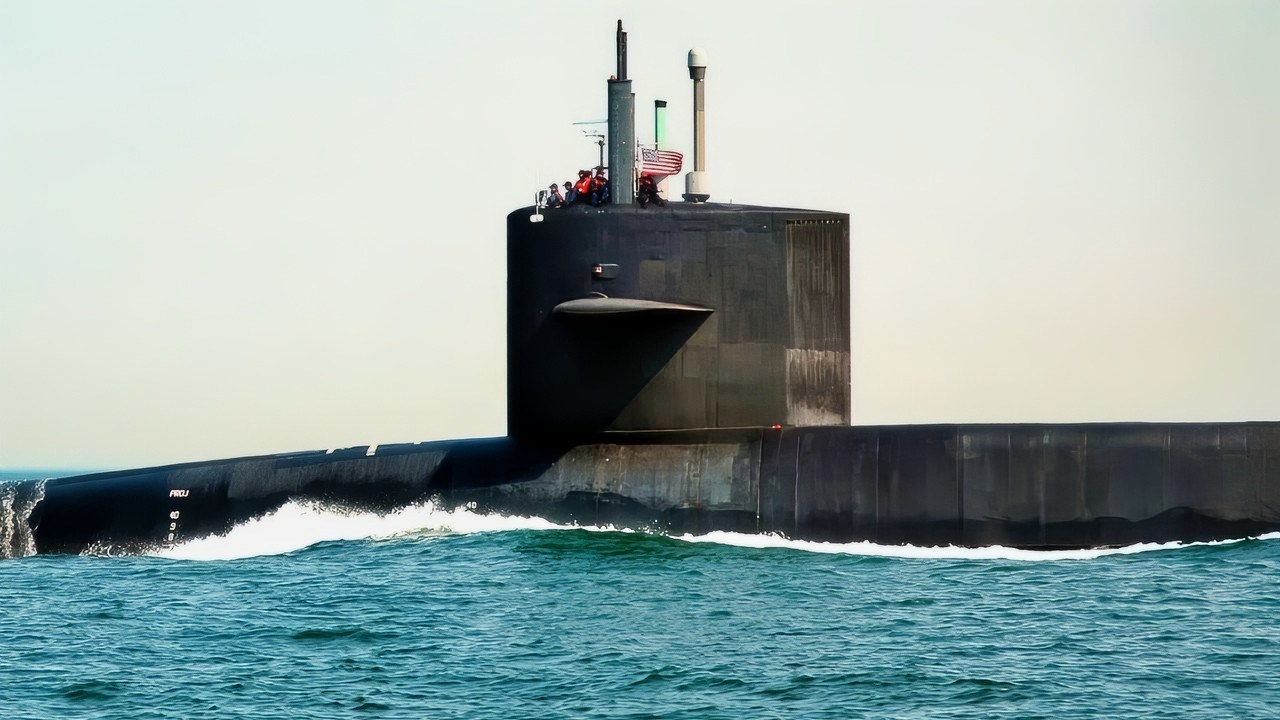
Summary and Key Points: Defense expert Dr. Brent M. Eastwood evaluates the Tomahawk cruise missile supply chain during the 2026 Iran conflict.
-With over 400 missiles fired in the first 72 hours of Operation Epic Fury, the U.S. Navy is facing a strategic “magazine depth” crisis.
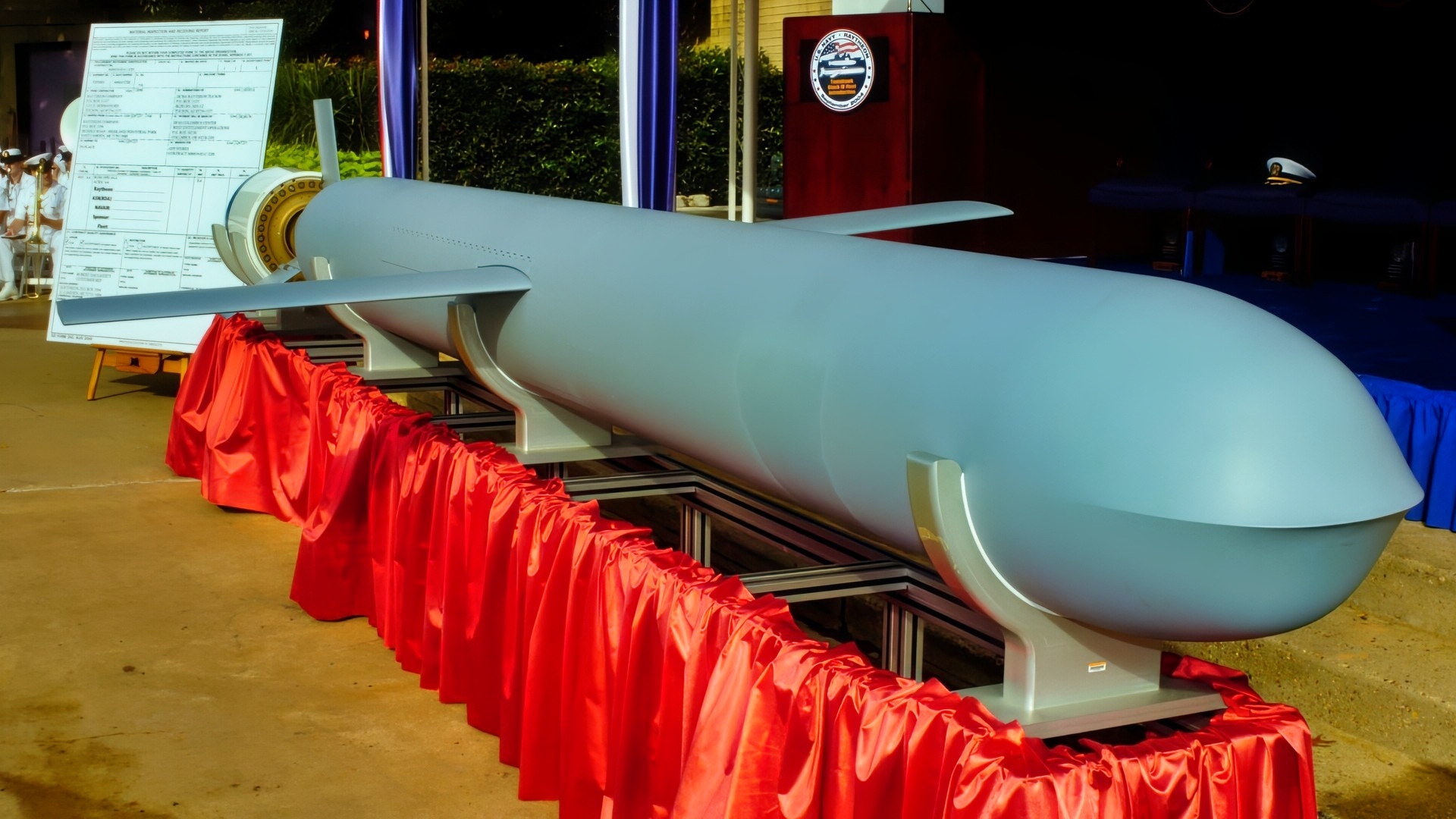
Tomahawk Block IV Missile. Image Credit: Creative Commons.

Tomahawk Launch. Image Credit: Creative Commons.
-This report analyzes the RTX (Raytheon) framework agreement to surge production to 1,000 units per year to counter the “Kinetic Missile Fight.”
-Eastwood explores the transition to JDAM guided bombs to preserve standoff stocks for a potential peer conflict with China, concluding that industrial base revitalization is now a primary national security priority.
The “Winchester” Risk: Why the Massive Expenditure of Tomahawks in Iran Threatens Pacific Deterrence
You just can’t beat Tomahawk land attack cruise missiles for overall mission flexibility and combat power. They have been effective during Operation Epic Fury and have punished many Iranian targets during the U.S. military action. Often launched from submarines and warships, the Tomahawks are difficult to eliminate and pack a potent mix of speed and firepower. They are presidential-level assets during peacetime and can be utilized instead of boots on the ground if strikes are needed in a kinetic fashion.
Dwindling Numbers Are Challenging
But there is a finite supply of Tomahawks. They are expensive and difficult to produce quickly. Numerous efforts to destroy around 15,000 ground targets in Iran, such as ballistic missile launchers, projectile factories, and command and control centers, have depleted the force of Tomahawks.
Submarines and Ships Carry Hundreds of cruise missiles
Many fast-attack and cruise-missile submarines carry as many as 154 Tomahawks, but it is unclear how long the supply will last as Operation Epic Fury continues. Many U.S. Navy ships can also fire cruise missiles as well.
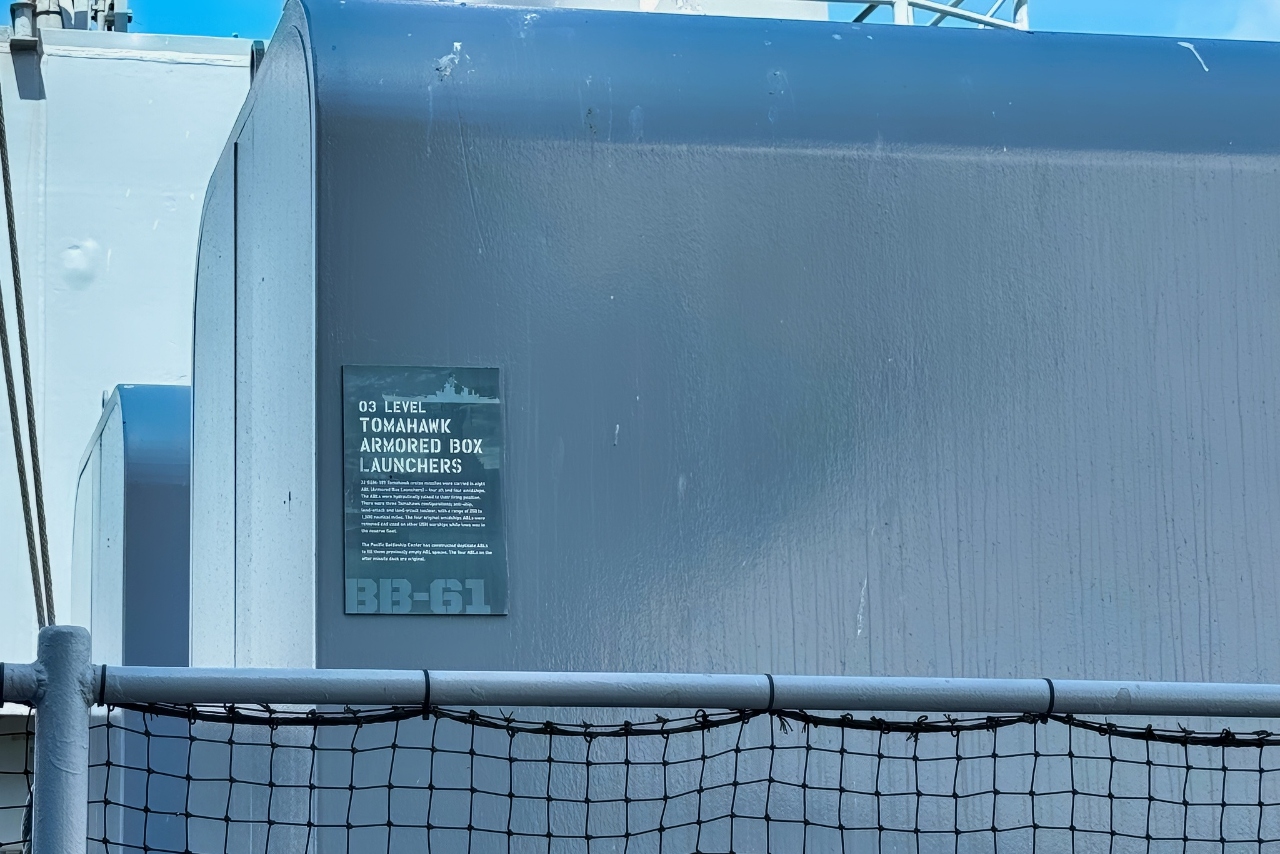
USS Iowa Tomahawk Box. National Security Journal Photo.

Puget Sound Naval Shipyard, Wash. (Aug. 14, 2003) — Illustration of USS Ohio (SSGN 726) which is undergoing a conversion from a Ballistic Missile Submarine (SSBN) to a Guided Missile Submarine (SSGN) designation. Ohio has been out of service since Oct. 29, 2002 for conversion to SSGN at Puget Sound Naval Shipyard. Four Ohio-class strategic missile submarines, USS Ohio (SSBN 726), USS Michigan (SSBN 727) USS Florida (SSBN 728), and USS Georgia (SSBN 729) have been selected for transformation into a new platform, designated SSGN. The SSGNs will have the capability to support and launch up to 154 Tomahawk missiles, a significant increase in capacity compared to other platforms. The 22 missile tubes also will provide the capability to carry other payloads, such as unmanned underwater vehicles (UUVs), unmanned aerial vehicles (UAVs) and Special Forces equipment. This new platform will also have the capability to carry and support more than 66 Navy SEALs (Sea, Air and Land) and insert them clandestinely into potential conflict areas. U.S. Navy illustration. (RELEASED)
However, even though the Iranian missile inventory has been attritted heavily, there is still the problem of Tehran’s supply of kamikaze, loitering drones that have struck targets around the Middle East and menaced U.S. allies. Tomahawks will be needed to answer this threat.
Is There Enough For a Two-Front War?
What if the war ended today? Would there be enough cruise missiles to engage in a potential war with Russia or China? The U.S. military in the past has tried to maintain enough munitions for a “two-front” war. But the Americans do not have an unlimited missile supply and may have discounted the risk of what I call the “Kinetic Missile Fight.” This is a stage of warfare that emphasizes the need to use numerous projectiles of all kinds – whether air-dropped, land-launched, or deployed from submarines and ships.
The Missile ‘Magazine’ Is Not Perpetually Deep
There could even be the “Magazine Depth” crisis. This is a case of dwindling Tomahawk stocks that take a long time to produce and deploy once stocks are depleted. More than 400 of the cruise missiles were fired during the first 72 hours of Operation Epic Fury.
From High-End to Low-End Munitions
These are known as “high-end munitions” by the Pentagon. After successful strike missions have been carried out at the beginning of the war, the U.S. military said it will be relying on lower-cost and more plentiful JDAM guided bombs to punish Iran.

B-52 Stratofortress, 40th Expeditionary Bomb Squadron, loaded with 12 Joint Direct Attack Munitions (JDAM) heads toward Iraq with it’s new mission directive. The bomber’s mission is to provide close air support for coalition troops stabilizing the country of Iraq, April 15, 2003. Operation Iraqi Freedom is the multi-national coalition effort to liberate the Iraqi people, eliminate Iraqi’s weapons of mass destruction and end the regime of Saddam Hussein. (U.S. Air Force photo by Tech. Sgt. Richard Freeland) (Released)
So one way to look at the situation is that the Tomahawks have been effective at suppressing enemy air defenses so U.S. Air Force and Navy strike airplanes can do their jobs without as much worry about being shot down.
Take a Closer Look at These Projectiles
Tomahawk cruise missiles have been used since the early 1980s in many combat operations.
They have a strike radius of around 16 feet and are about 16 feet long. The range is at least 1,500 miles, and they knife through the air at 550 miles per hour. Their propulsion systems do not generate that much heat, so they can be effective at avoiding infrared sensors. Since they fly low and have a minimized radar cross-section, they can also streak to targets stealthily.
An Average of Around $2 Million to Build with a two-year production length for Each Missile
The Center for Strategic and International Studies estimates the U.S. Navy destroyers can be supplied with 150 to 250 Tomahawks. The cruise missiles can cost between $1.3 million and $3.6 million each, depending on the model and “Block” designation. Each Tomahawk can take up to two years to build.
Could the Prime Contractor Build 1,000 Per Year?
The rocket motors can be difficult to obtain due to supply chain issues and the limited number of domestic builders with the means to produce them. There are thousands of hard-to-make parts that can cause production delays. The United States may sometimes only acquire 90 to 100 Tomahawks a year. However, RTX says it will increase this output to 1,000 a year.
Past Use of Tomahawks
Previous missions in the Middle East have deployed Tomahawks. During Operation Midnight Hammer, strikes against Iranian nuclear infrastructure last year, 30 Tomahawks were used. During counter-strikes against Iranian-backed Houthi terrorists in Yemen, around 135 Tomahawks were fired against enemy missile and drone sites.
U.S. Adversaries Can Do the Math Too
China and Russia are likely closely watching the development of potential Tomahawk missile shortages. As the operation against Iran continues, there could be additional shortages. The U.S. defense industrial base must be energized to produce the missiles. Workers should be fired up and patriotic at this point.
They know that Tomahawks are a critical and finite munition, but they must take painstaking care that all new cruise missiles will be produced without errors.
A two-front war would be difficult for the supply of projectiles, and that could mean the United States would have to make choices that would crimp military effectiveness in Europe or the Indo-Pacific. U.S. logisticians are also closely calculating supply, though, and as Iranian air defenses are less effective, the Americans can use lower-end munitions like JDAMs, which they have in greater supply.
The U.S. military will have to prod defense contractors to ramp up production in the future to keep the Tomahawk supply at the highest level possible. However, the Americans understand what’s at stake and will answer the call to the best of their ability in defense production.
About the Author: Brent M. Eastwood
Author of now over 3,000 articles on defense issues, Brent M. Eastwood, PhD, is the author of Don’t Turn Your Back On the World: A Conservative Foreign Policy and Humans, Machines, and Data: Future Trends in Warfare, plus two other books. Brent was the founder and CEO of a tech firm that predicted world events using artificial intelligence. He served as a legislative fellow for US Senator Tim Scott and advised the senator on defense and foreign policy issues. He has taught at American University, George Washington University, and George Mason University. Brent is a former US Army Infantry officer. He can be followed on X @BMEastwood.


Doyle
March 15, 2026 at 8:38 pm
Don’t read gratuitous trash articles so no different here. You switch to low cost JDAMs over cruise missiles (stand off weapons) fool because the enemy air defenses have been suppressed or are non-existent.