

Summary and Key Points: Jack Buckby, a New York-based defense analyst and British researcher, evaluates the looming “magazine depth” crisis as the U.S. Navy prepares to decommission its four Ohio-class SSGNs.
-As of March 9, 2026, the ongoing Operation Epic Fury in Iran has underscored the vital role of the Tomahawk land-attack cruise missile (TLAM), with the Navy exhausting stockpiles to dismantle IRGC infrastructure.

SILVERDALE, Wash. (Oct. 27, 2025) Ohio-class ballistic missile submarine USS Pennsylvania (SSBN 735) arrives at Naval Base Kitsap-Bangor following routine operations at sea, Oct. 27, 2025. Pennsylvania is assigned to Commander, Submarine Group (SUBGRU) 9, which exercises operational and administrative control authority for assigned submarine commands and units in the Pacific Northwest providing oversight for shipboard training, personnel, supply and material readiness of SSBNs and their crews. SUBGRU-9 is also responsible for nuclear submarines undergoing conversion or overhaul at Puget Sound Naval Shipyard in Bremerton. (U.S. Navy photo by Mass Communication Specialist 1st Class Ryan Riley).

SOUDA BAY, Greece (March 27, 2022) The Ohio-class ballistic-missile submarine USS Georgia (SSGN 729) near Souda Bay, Greece, during training with U.S. Marines from Task Force 61/2 (TF-61/2), conducting launch and recovery training with their combat rubber raiding craft, March 27, 2022. TF-61/2 will temporarily provide command and control support to the commander of U.S. 6th Fleet, to synchronize Navy and Marine Corps units and capabilities already in theater, in support of regional Allies and Partners and U.S. national security interests. (U.S. Marine Corps photo by Sgt. Dylan Chagnon)
-This report analyzes the 75% reduction in strike capacity per hull as the fleet transitions to the Virginia Block V with the Virginia Payload Module (VPM). Buckby concludes that retiring these “underwater missile barges” during a high-intensity conflict creates a strategic gap that shipyard bottlenecks cannot immediately close.
Ohio-Class Sub Retirements Could Cut U.S. Tomahawk Firepower
The U.S. Navy is preparing to retire one of its most powerful conventional strike platforms: the Ohio-class guided-missile submarine.
Over the next several years, all four of these submarines, which were originally built during the Cold War and later converted to carry cruise missiles, will leave service – and with them, the U.S. will lose a significant amount of long-range strike capability from the fleet.
Each Ohio-class SSGN can carry up to 154 Tomahawk land-attack cruise missiles, giving the four-boat fleet the ability to deploy more than 600 precision strike weapons from a stealthy underwater platform.
And with tensions rising in the Middle East and the Indo-Pacific, and as recent military operations demonstrate the continued demand for long-range precision strike weapons, the retirement of these submarines will create a significant gap in U.S. missile firepower. Here’s why.
What the Ohio-Class SSGN Submarines Are
The Ohio-class submarines were originally designed as ballistic missile submarines (SSBNs) during the Cold War, forming a key part of the U.S. nuclear deterrent alongside intercontinental ballistic missiles and strategic bombers.
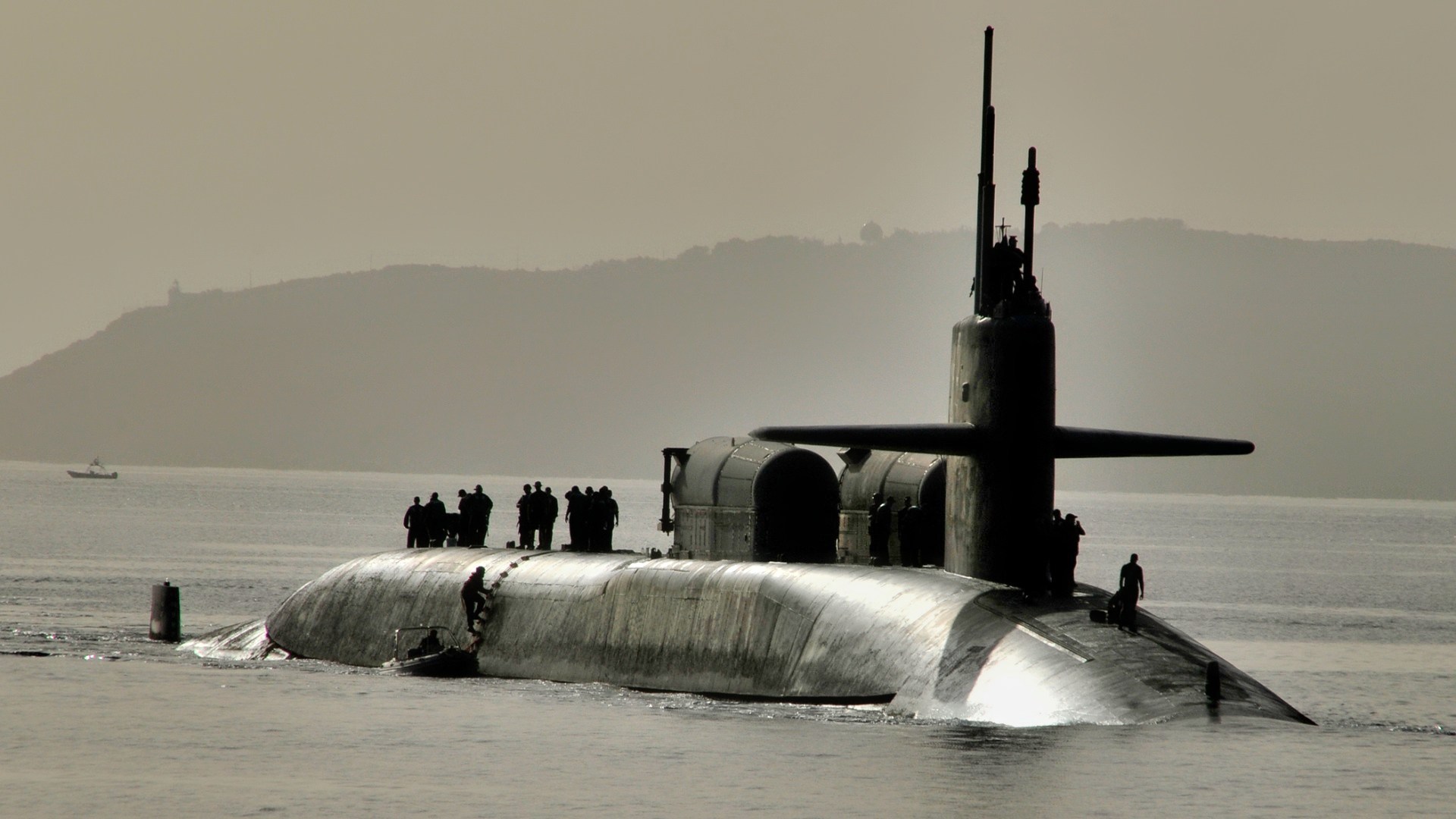
The guided missile submarine USS Florida (SSGN 728) arrives in Souda Bay, Greece, May 21, 2013, for a scheduled port visit. The Florida was underway in the U.S. 6th Fleet area of responsibility conducting maritime security operations and theater security cooperation efforts. (U.S. Navy photo by Paul Farley/Released)

The Ohio-class ballistic-missile submarine USS Maine (SSBN 741) begins a dive into the Strait of Juan de Fuca off the Washington Coast, March 18, 2025, during routine operations. Special units within the Coast Guard are tasked with the protection of U.S. Naval submarines while surfaced and transiting U.S. territorial waters to and from their patrol stations. (U.S. Coast Guard photo by Petty Officer 1st Class Steve Strohmaier)
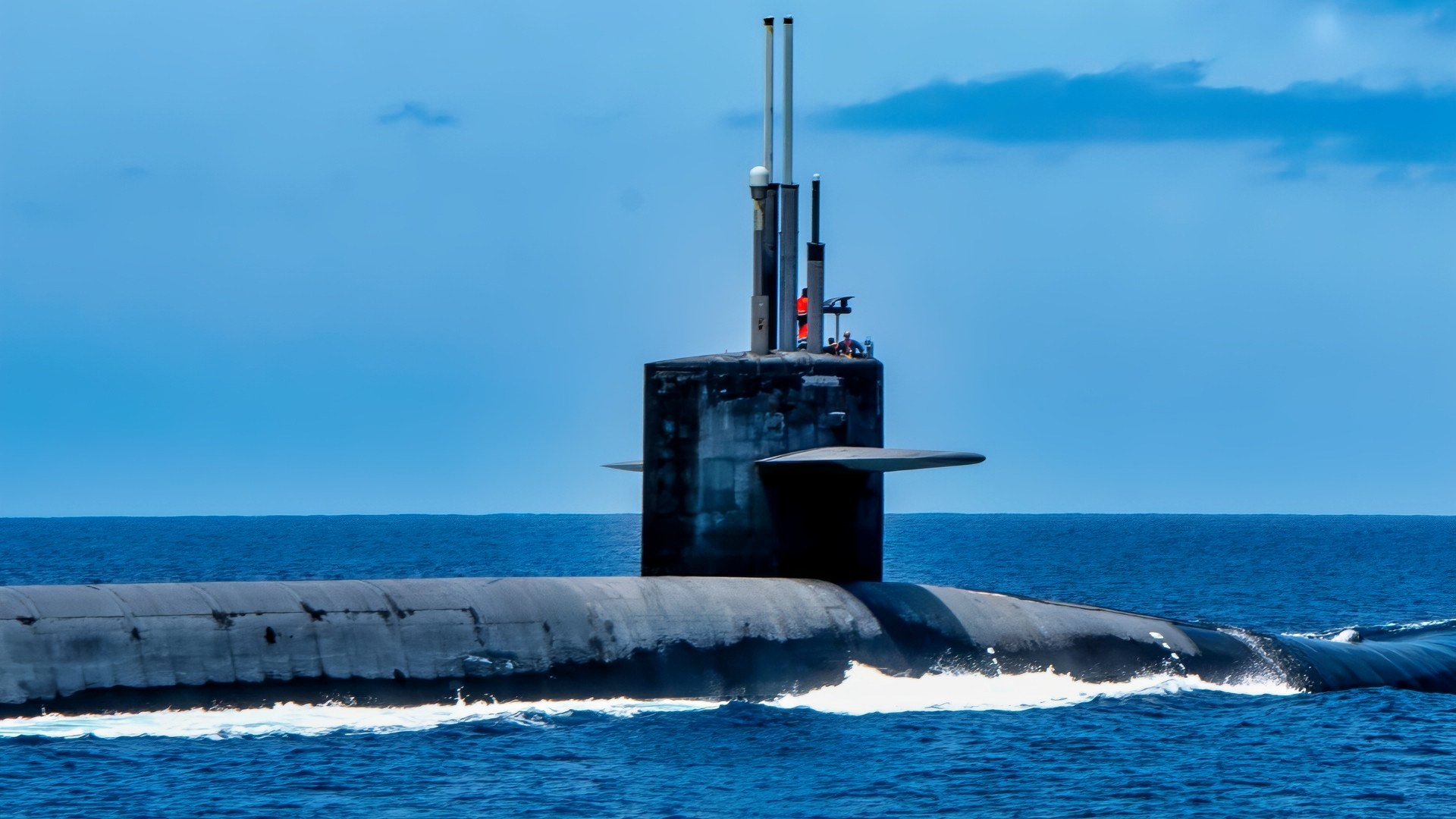
(July 29, 2025) – A U.S. Air Force A10C Thunderbolt II flies over the Ohio-class ballistic missile submarine USS Kentucky (SSBN 737) in the Pacific Ocean, July 29, 2025. The armed airborne escort exercise is designed to increase and demonstrate the Joint Force’s capability to protect strategic assets like Kentucky. Submarine Group (SUBGRU) 9, exercises administrative and operational control authority for assigned submarine commands and units in the Pacific Northwest providing oversight for shipboard training, personnel, supply and material readiness of submarines and their crews. SUBGRU-9 is also responsible for nuclear submarines undergoing conversion or overhaul at Puget Sound Naval Shipyard in Bremerton, Washington. (U.S. Navy Photo by Lt. Zachary Anderson)
However, after nuclear arms reductions in the 1990s, the U.S. Navy determined it no longer needed all 18 boats in the strategic deterrent fleet. Instead of retiring the oldest vessels outright, four submarines – USS Ohio, USS Michigan, USS Florida, and USS Georgia – were converted into guided-missile submarines capable of carrying large numbers of conventional cruise missiles.
The conversion program, completed between 2002 and 2008, replaced nuclear ballistic missiles with vertical launch systems for Tomahawk cruise missiles.
Because the submarines were originally built to carry enormous Trident ballistic missiles, their launch tubes were large enough to hold clusters of cruise missiles. In the SSGN configuration, each tube can hold seven Tomahawks, allowing a single submarine to carry up to 154 cruise missiles.
That makes them some of the most heavily armed conventional submarines ever built. In addition to missile strikes, they can deploy special operations forces and support intelligence missions. The result was an underwater stealth platform that is capable of launching large precision strikes without exposing surface ships to enemy defenses – a valuable tool today as surface vessels become increasingly vulnerable to modern adversaries.
Why the Ohio SSGNs Are Being Retired
Despite their firepower, the Ohio-class SSGNs are approaching the end of their service lives. Most of the hulls were built in the early 1980s and are now more than four decades old. The Navy currently expects the first retirements to begin this year, with the remaining submarines leaving service by 2028.
Their retirement is not ideal, no, but it is the product of aging infrastructure and the fact that the nuclear submarines are reaching the end of their natural lifespan. Even after mid-life refueling and conversion work, their reactors and structural components eventually reach limits that make continued operation impractical and unsafe.
The Navy does, however, intend to replace some of the lost strike capacity with Virginia-class attack submarines equipped with the Virginia Payload Module (VPM). Those submarines are not a like-for-like replacement, though, as they carry far fewer cruise missiles than the Ohio SSGNs. Even with the additional payload module, a Virginia-class submarine can carry around 40 Tomahawk missiles, compared with 154 on the converted Ohio subs.
That means it would take multiple Virginia-class submarines to generate the same missile firepower as a single Ohio-class SSGN.
Why Tomahawk Missiles Matter Right Now
The retirement of these subs was already controversial, but it matters even more now that the United States is at war with Iran.
The Tomahawk Land Attack Missile (TLAM) is a long-range precision weapon designed to strike targets deep inside enemy territory, and it has already been used repeatedly during the current campaign against Iran. In the opening phases of the conflict.
U.S. Navy ships and submarines launched Tomahawk strikes against Iranian military infrastructure, including air-defense systems, missile sites, and command facilities, helping suppress defenses before follow-on operations by aircraft and other strike assets.
This is exactly the role Tomahawks have historically played in U.S. military campaigns: they allow the United States to conduct large precision strikes at long range without risking pilots or exposing surface ships to enemy defenses.
The problem, though, is scale. High-intensity conflicts can consume large numbers of cruise missiles very quickly. Tomahawk stockpiles and production rates could also be strained during prolonged conflicts, and in a potential Indo-Pacific war, those missiles would likely be used to strike Chinese air defenses and radar networks across wide geographic areas.
At the same time, tensions in the Middle East could continue to demand large cruise-missile barrages against hardened targets. Losing submarines capable of launching more than 150 Tomahawks each therefore reduces the Navy’s ability to deliver the kind of large and rapid missile strikes that modern conflicts increasingly require.
About the Author: Jack Buckby
Jack Buckby is a British researcher and analyst specialising in defence and national security, based in New York. His work focuses on military capability, procurement, and strategic competition, producing and editing analysis for policy and defence audiences. He brings extensive editorial experience, with a career output spanning over 1,000 articles at 19FortyFive and National Security Journal, and has previously authored books and papers on extremism and deradicalisation.


