

The United Arab Emirates secretly conducted military strikes against Iran during the 2026 war. The strikes were revealed in a Wall Street Journal report. The UAE is the only nation besides Israel and the U.S. to actively participate as a combatant against Iran. The UAE struck an Iranian refinery on Lavan Island in the Persian Gulf. The attack sparked a major fire and knocked out most of the refinery’s capacity for several months. Iran retaliated with missile and drone strikes against UAE and Kuwait. The UAE has not publicly acknowledged its involvement.
UAE vs. Iran: The War The World Missed

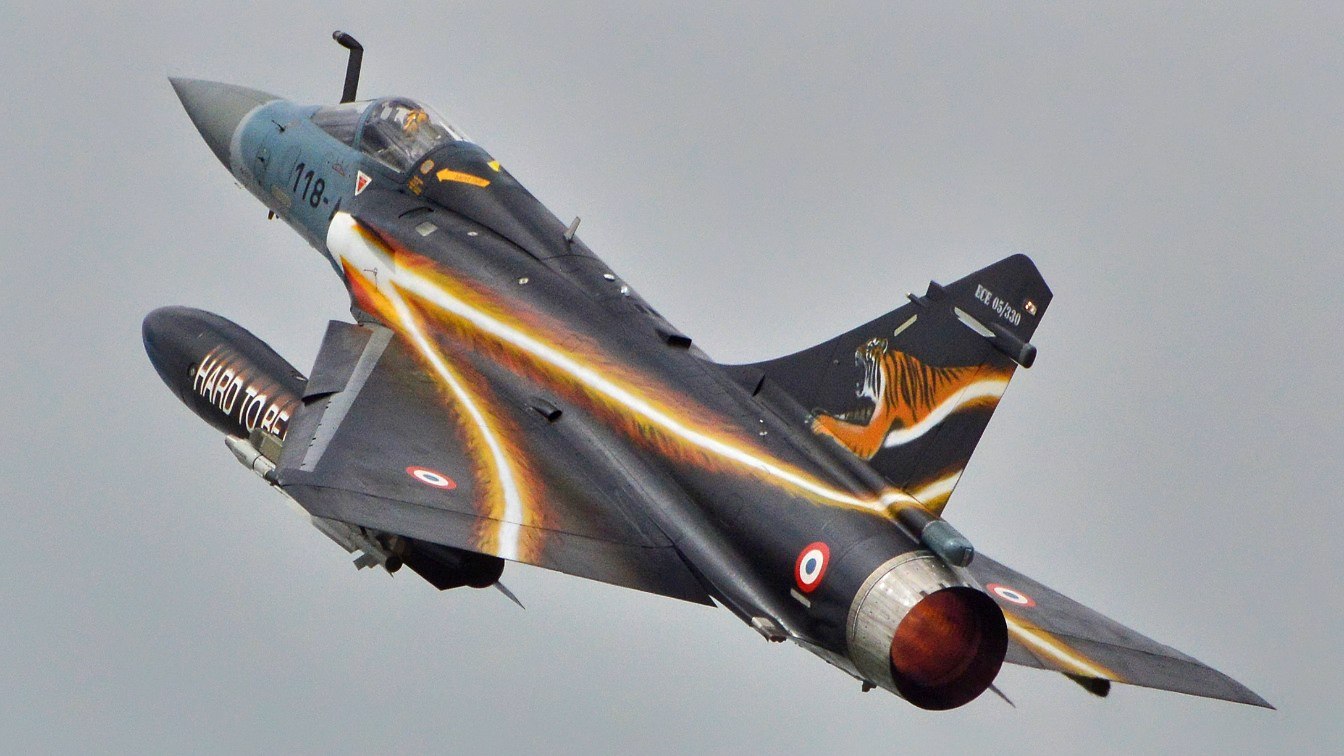
Mirage 2000 Fighter. Image Credit: Creative Commons.
Reports are breaking that the United Arab Emirates has carried out military strikes against Iran, according to sources informed on the details of the air war that began against the Islamic Republic at the end of February. These attacks would make the Gulf Monarchy the only other nation aside from Israel, to participate as an active combatant in the war alongside the US.
The UAE has not publicly acknowledged its involvement in the hostilities, but the missions carried out by its armed forces are reported to have included an attack on a refinery located on Iran’s Lavan Island in the Persian Gulf. This attack reportedly sparked a major fire at the facility and took out most of the refinery’s operational capacity for the next several months.
Iran announced at the time that the facility had been struck in an enemy attack and that its armed forces had launched a missile attack and drone strikes against the UAE and Kuwait in retaliation.
These and other details were released in a report carried in the Wall Street Journal.
According to those details, the UAE attacks on Iran were launched early in April at the end of what had already been a five-week air campaign, according to the WSJ report. This puts these actions near the time when US President Donald Trump announced that a ceasefire had been agreed, but no dates have yet been specified for the UAE combat missions.
A Long Time Coming
The UAE’s involvement in a military campaign against Iran has been a long time coming and is not unexpected to anyone familiar with the region’s history. The nation, whose capital is Abu Dhabi, had been engaged in planning for hostilities with the Iranians for more than three decades.
The two nations have also had no small history of contentious issues.
In the recent past, the UAE has accused Iran of expanding its influence in the region by funding armed separatist groups and sectarian movements. This is particularly the case in Yemen.
In 2016, the UAE reduced its diplomatic presence in Tehran following an attack on the Saudi embassy in Iran. Then, in 2020, Iran-backed Houthis targeted UAE infrastructure in a series of attacks, causing another rise in tensions.
Finally, in 2020, the UAE signed on for the historic normalization of relations with Israel by joining the Abraham Accords. Consequently, Iran condemned the UAE as a threat to regional security.
But as an Israeli assessment written late in April points out, “the 2026 Iran war has forced a strategic reckoning on every state in the Persian Gulf, but none more acutely than the United Arab Emirates (U.A.E.). Over the past fifteen years, the UAE pursued the most ambitious and most experimental foreign policy of any Gulf state, evolving from a commercially oriented federation of city-states into a regional power with an interventionist agenda, an ideological project, and a vision for regional order that culminated in the Abraham Accords in 2020.”
The UAE’s Military Power
Speaking to a US defense marketing official several years back, he explained the types of alliances the UAE has built with the US and other defense suppliers to create the military establishment it has today – and how it has diversified its weapons supplier base.
“There has been a gentlemen’s agreement between the Gulf nations and the US, which is that they would have half of their air force inventory made up of American aircraft and the other half sourced from Europe,” he said.
The UAE fits that profile to a “T,” as it has had an air force with the main platforms being the French Dassault Mirage 2000-9 and the US-built F-16E/F Block 60 Desert Falcon. Both aircraft are advanced versions that include on-board systems that the French and US Air Force aircraft do not operate.
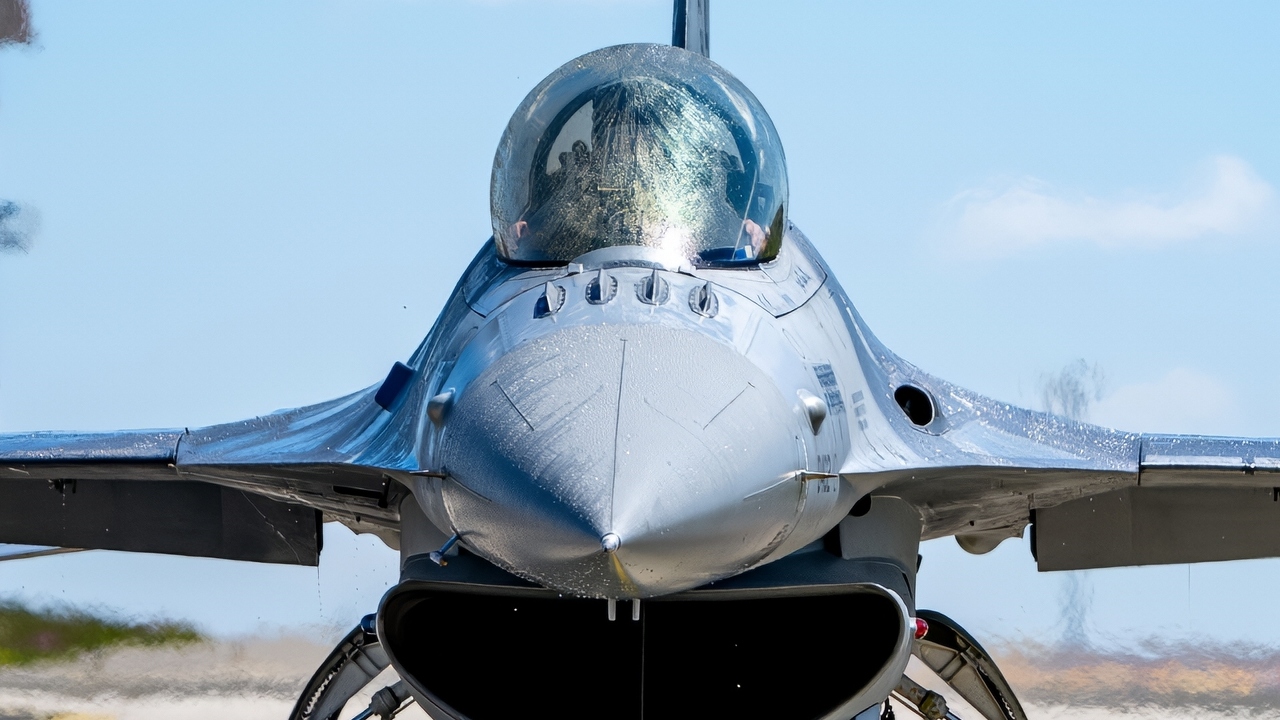
U.S. Air Force Col. Kevin Crofton, 52nd Fighter Wing commander, taxis in an F-16 Fighting Falcon during his fini flight at Spangdahlem Air Base, Germany, May 19, 2025. The fini flight is a long-standing U.S. Air Force tradition that marks the final flight of an aircrew member’s current assignment. (U.S. Air Force photo by Senior Airman Albert Morel)
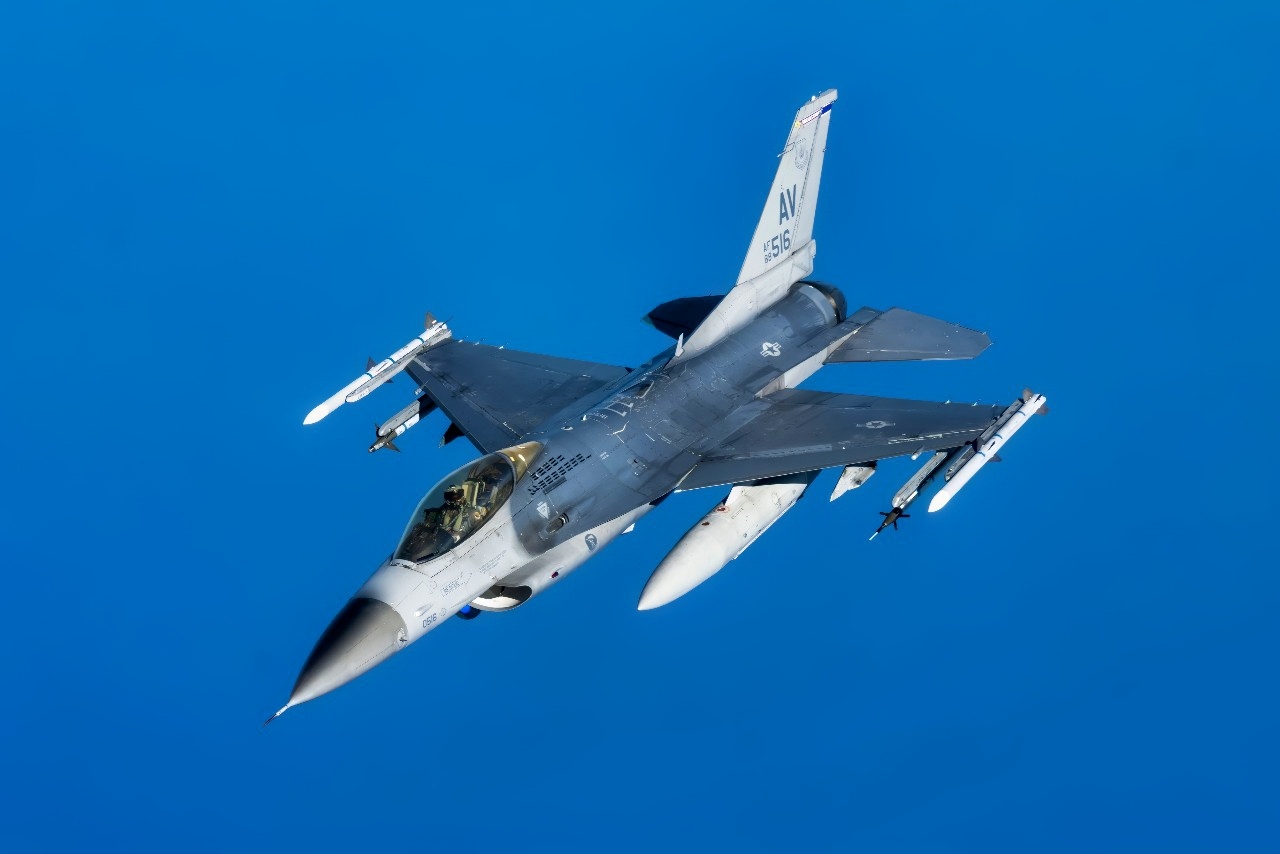
A U.S. Air Force F-16 Fighting Falcon from the 31st Fighter Wing, Aviano Air Base, Italy, descends after receiving fuel from a KC-135 Stratotanker from the 100th Air Refueling Wing, RAF Mildenhall, England, over the Adriatic Sea, Aug 7, 2025. The F-16 is a compact, highly maneuverable multi-role fighter aircraft with robust air-to-air combat and air-to-surface attack capabilities. (U.S. Air Force photo by Senior Airman Christopher Campbell)
The Mirage 2000-9s will now be replaced by the next-generation Dassault Rafale in the F4 configuration. The UAE’s acquisition of these systems was originally envisioned to safeguard its economic power and growing influence across the Middle East. But as circumstances have dictated, they are now pressed into service in offensive operations against a long-time adversary.
The UAE is now reporting – along with Kuwait and Qatar – that despite a ceasefire still supposedly being in place, Iran is ramping up drone attacks on targets in their territory anyway.
Iranian state media had reported Sunday afternoon that Tehran had submitted its response to the latest US proposals for a permanent end to the war and initiation of peace talks via Pakistani mediators. The US proposal calls for a formal end to the war and a reopening of the Strait of Hormuz – both of which must be agreed to before any talks on more contentious issues, including the Iranian nuclear program, could begin.
About the Author: Reuben F. Johnson
Reuben F. Johnson has thirty-six years of experience analyzing and reporting on foreign weapons systems, defense technologies, and international arms export policy. Johnson is the Director of Research at the Casimir Pulaski Foundation. He is also a survivor of the Russian invasion of Ukraine in February 2022. He worked for years in the American defense industry as a foreign technology analyst and later as a consultant for the U.S. Department of Defense, the Departments of the Navy and Air Force, and the governments of the United Kingdom and Australia. In 2022-2023, he won two consecutive awards for his defense reporting. He holds a bachelor’s degree from DePauw University and a master’s degree from Miami University in Ohio, specializing in Soviet and Russian studies. He lives in Warsaw.


