

Key Takeaways – China’s Shenyang J-35 and its land-based J-35A just took center stage at the Dubai Airshow, signaling that Beijing is ready to sell fifth-generation stealth jets abroad.
-For Middle Eastern air forces blocked or delayed from buying the U.S. F-35, the J-35 promises a carrier-capable, low-observable multirole fighter with far fewer political strings attached.
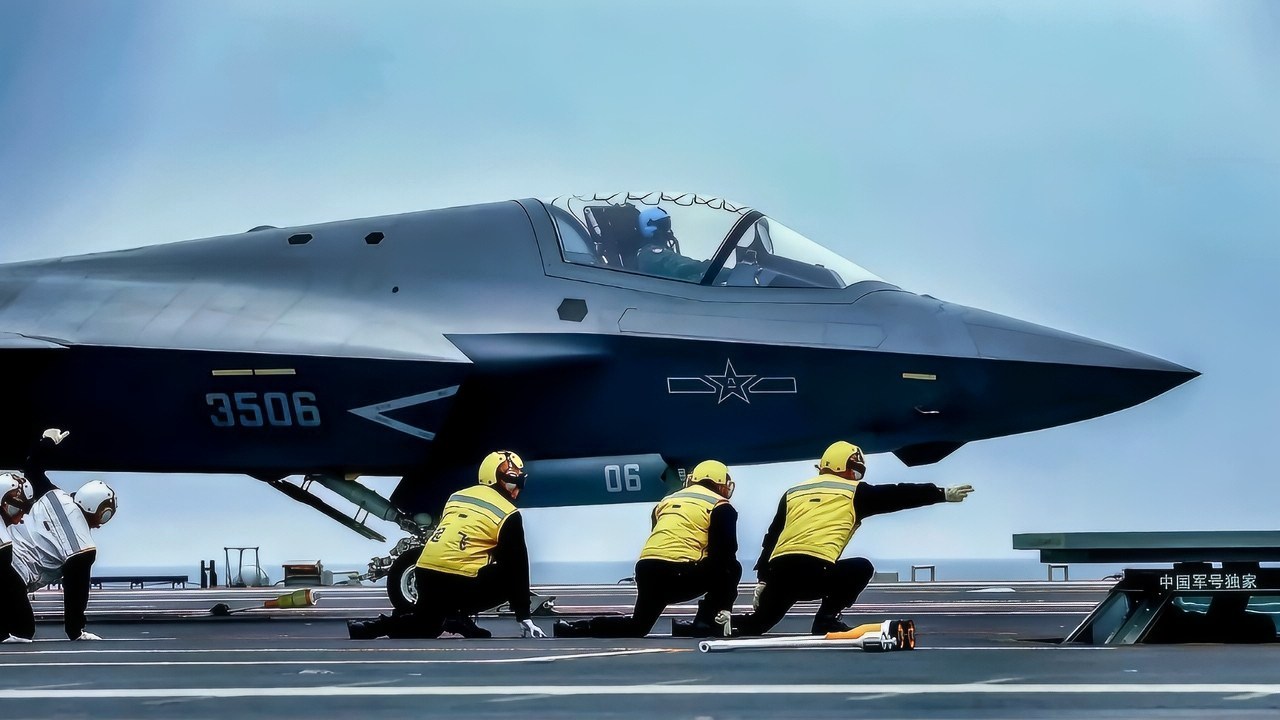
China J-35 Fighter. Image Credit: Chinese Navy/PLAN.
-That combination could tempt buyers in the UAE, Saudi Arabia, Qatar, and beyond—and chip away at Washington’s traditional dominance of the region’s fighter market.
-If even one significant Gulf state signs on, regional air-power balances, air-defense planning, and arms-race dynamics will all shift. And that could make America uncomfortable, to say the least.
China’s J-35 Stealth Jet Could Be Coming to the Middle East
Global powers rolled out their latest military hardware at the Dubai Airshow between November 17 and 21, and among the most curious aircraft on display was the Chinese stealth jet Shenyang J-35 – along with its land-based variant J-35A.
The aircraft drew attention because Beijing’s attendance – and the appearance of the two jets – signaled Beijing’s intent not just to field their own advanced stealth fighters, but to reach out to the Middle Eastern export market.
According to news reports, a J-35 model was on display at the show, and it’s clearer than ever that China wants new export customers.
And that potential pivot, from domestic use to export sales, carries implications for the West, for the region’s balance of air-power, for geopolitics, and for the international arms market.
What is the J-35?
The Shenyang J-35 is China’s single-seat, twin-engine, stealth multirole fighter. Introduced in September 2025, it is the first fifth-generation fighter in the world to have been launched from an aircraft carrier using an electromagnetic catapult system.
The J-35 traces its lineage to the twin-engine stealth prototype, officially known as the FC-31, which first flew in October 2012.
After China developed a carrier-capable variant, the revised design – now the J-35 – first flew on October 29, 2021, and the land-based variant, the J-35A, followed on September 26, 2023.
The J-35 now appears to be in service, following years of speculation about when it would officially be fielded.
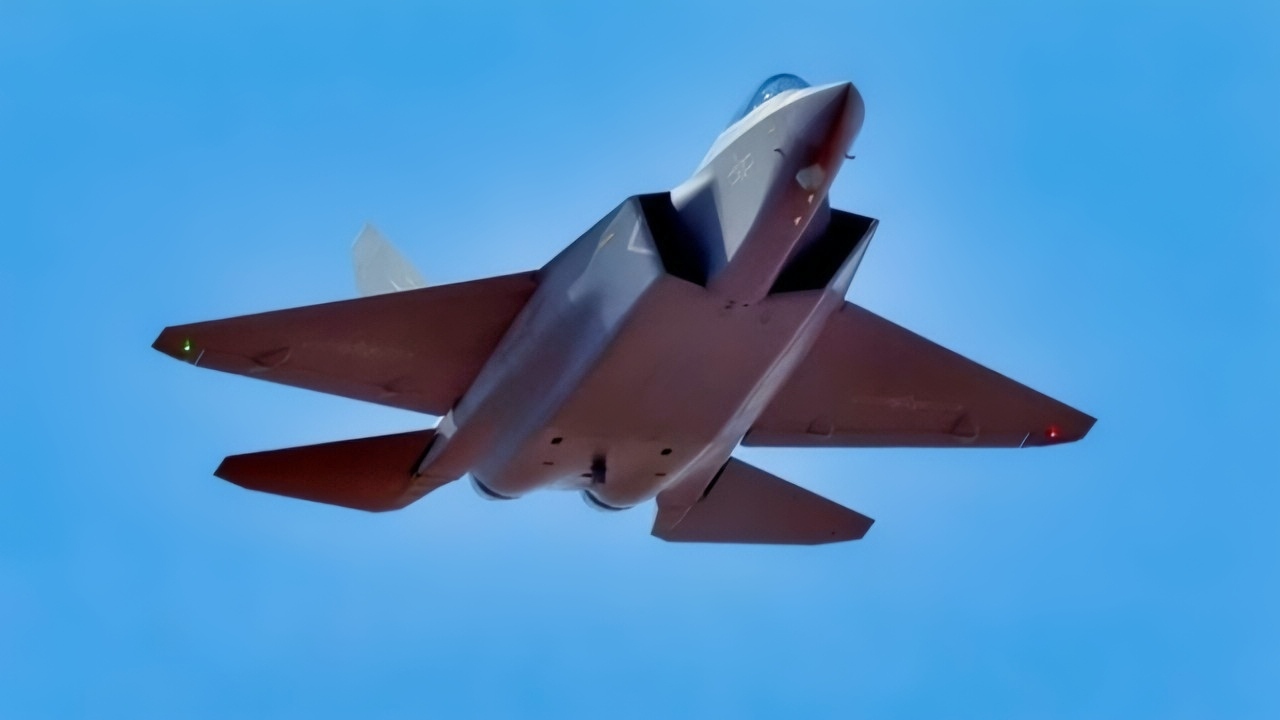
J-35 Fighter from China. Image Credit: PLAAF.
In October 2025, Chinese media released footage showing the J-35 and J-35A in final-assembly hangars – an indication that the platform has finally entered production maturity.
And the recent appearance at the Dubai Airshow reflects that reality; it is apparently ready for prime time.
According to the manufacturer and Chinese media, the J-35 has a maximum takeoff weight of nearly 30 tons and is powered by two domestically developed medium-thrust engines.
That indigenous power system reflects China’s growing self-reliance in aerospace design, and along with recent developments in stealth coatings – using, perhaps unbelievably, compounds made out of loofah – it’s clear that China is closer than ever to closing the technological gap with the U.S. Air Force.
Design-wise, the J-35 and J-35A both have stealth-optimized features: internal weapons bays, diverterless supersonic inlets, and configurations intended to reduce their radar cross-sections.
Reports in Chinese media have recently indicated that their aircraft’s RCS is smaller than a human palm, again suggesting that China is closing the gap with America’s world-class stealth fighters.
But public data remains sparse, and much of what we know about the jets is what China wants the West to know about them – but that doesn’t particularly matter much when it comes to selling them to markets in the Middle East.

J-35 Factory in China. Image Credit: CCTV Screenshot.
The reality is that should China sell capable stealth fighters to the Middle East in sufficient numbers, the world will soon begin to close the gap with Washington’s fighters in the same way Beijing is – and even if U.S. technology is superior, fielding them in sufficient numbers would substantially impact Western planning.
Why the Middle East Is Watching the J-35 – and What’s At Stake
China’s participation in the Dubai Airshow is interesting, and the intent here is apparent when one considers the fact that the Middle East has become one of the world’s fastest-growing markets for advanced fighters.
Regional militaries are also actively seeking new suppliers.
The United Arab Emirates, for instance, has spent years attempting to purchase the U.S. F-35. After the first Trump administration initially approved the sale, the deal stalled in 2021 amid concerns about technology safeguards.
Similar political constraints have affected other buyers as well. Qatar has repeatedly expressed interest in the F-35 but has not been cleared to receive it, and Saudi Arabia appears to be on the verge of obtaining approval for its own purchase in the coming weeks or months.
Bottlenecks like this create an opening for Beijing. China has already sold armed drones to the UAE, Saudi Arabia, and Iraq, when U.S. export restrictions blocked the sale of similar American systems.
And the Pentagon publicly acknowledged this trend in a 2020 report, noting that Chinese unmanned systems were being purchased in large numbers across the region because they were available without the political conditions attached to U.S. sales.
For countries frustrated by delays or reluctant to make political decisions to appease Washington, China is the obvious answer – and Beijing finally has the product the Middle East wants.
A Chinese stealth fighter marketed with shorter delivery timelines and fewer restrictions will certainly be tempting – and even if one major Middle Eastern air force adopts the J-35, it would shift regional planning assumptions by a substantial amount.
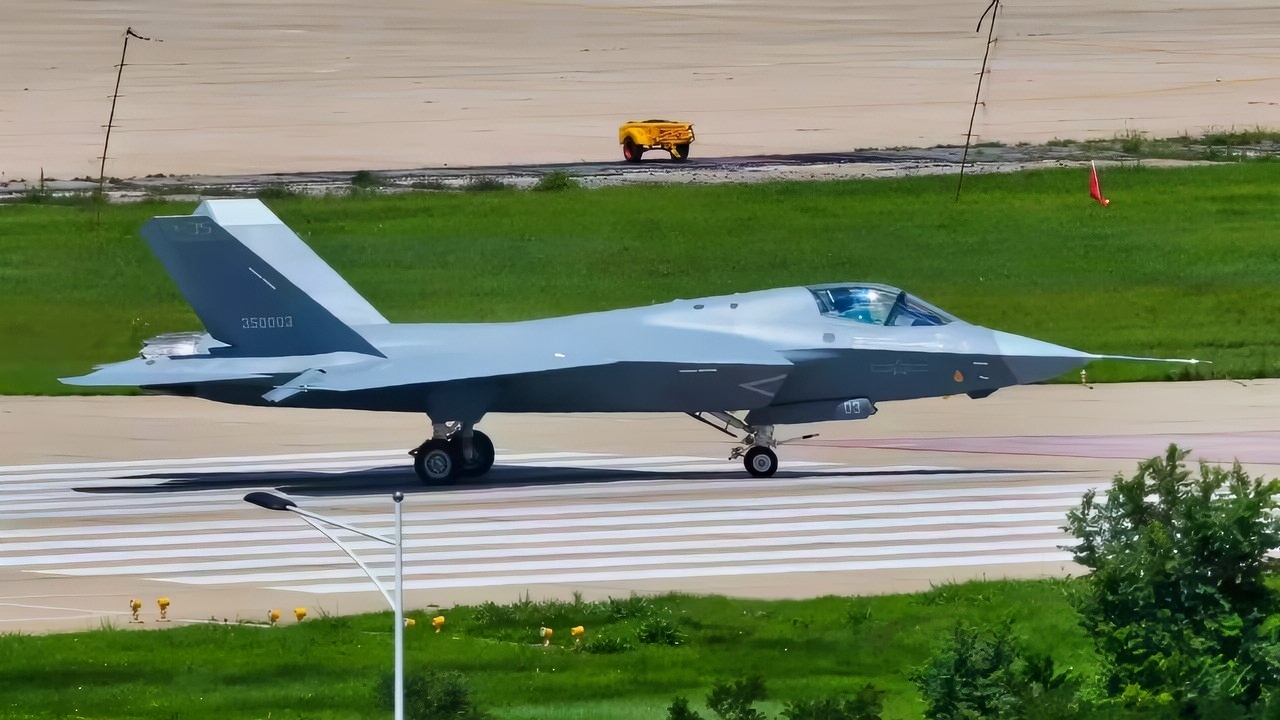
J-35 Fighter X Screenshot. Image Credit: X Screen Capture.
Fifth-generation aircraft complicate air-defense networks, change deterrence calculations, and accelerate arms-race dynamics – and that’s particularly true in a region like this that is already defined by various complex rivalries.
If those purchases begin to happen, it would mark a strategic setback that Washington can ill afford.
About the Author:
Jack Buckby is a British author, counter-extremism researcher, and journalist based in New York who writes frequently for National Security Journal. Reporting on the U.K., Europe, and the U.S., he analyzes and understands left-wing and right-wing radicalization and reports on Western governments’ approaches to the pressing issues of today. His books and research papers explore these themes and propose pragmatic solutions to our increasingly polarized society. His latest book is The Truth Teller: RFK Jr. and the Case for a Post-Partisan Presidency.


Subhash Garg
November 30, 2025 at 9:50 pm
How can you write an article about advanced Chinese fighters without mentioning its impact on India? Is it just due to ignorance or do you have an agenda?