


Article Summary – The F-14 Tomcat was built to defend U.S. carriers from Soviet bombers with long-range radar and Phoenix missiles, not to duel stealth fighters.
-China’s J-35, by contrast, is a fifth-generation, low-observable jet with AESA radar, IRST, sensor fusion, and modern PL-series missiles.
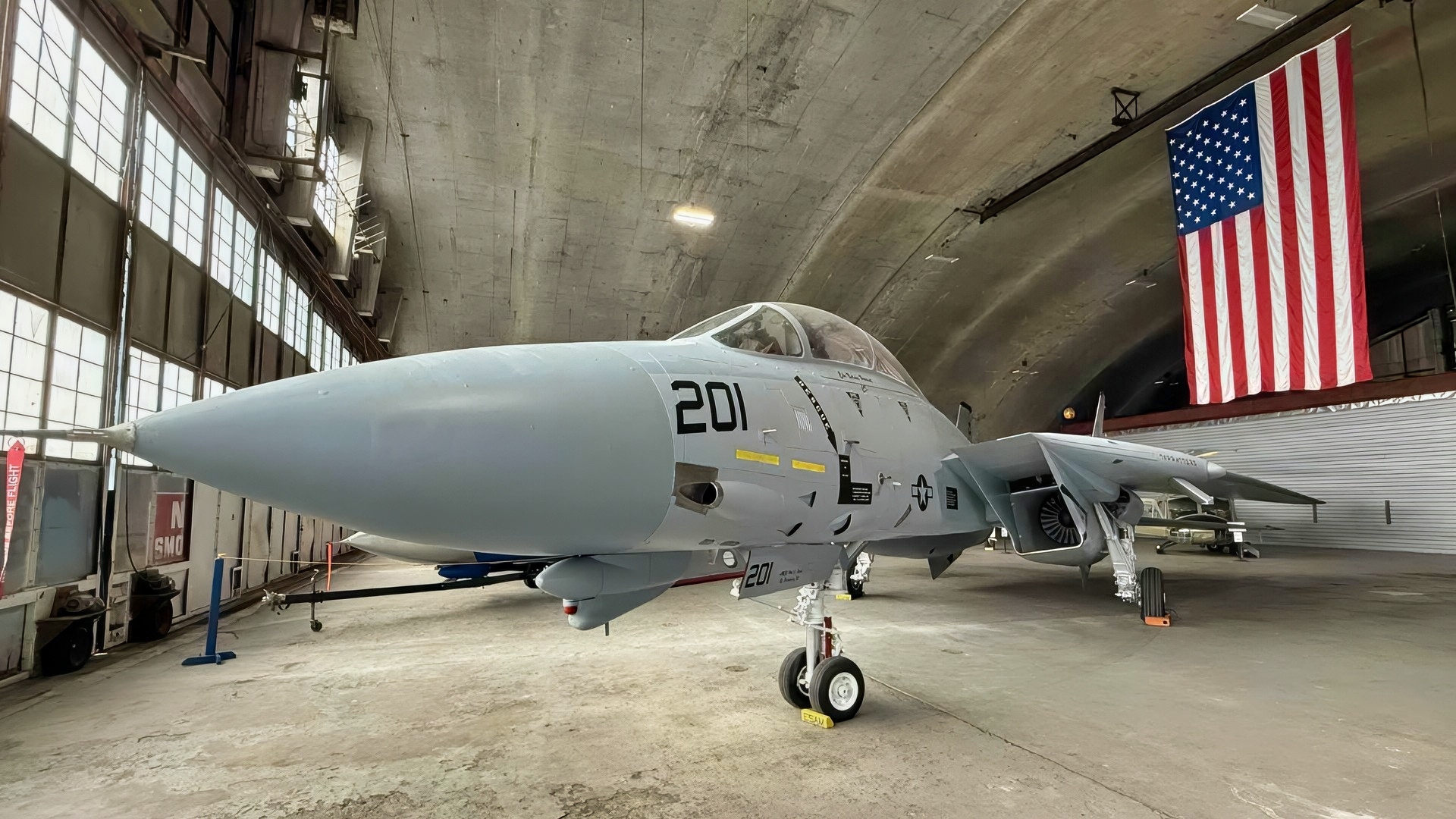
F-14 Tomcat in Museum with US Flag. Image Credit: National Security Journal.

F-14D Tomcat Fighter Image from National Security Journal
-In a BVR fight, the Tomcat’s big radar cross-section and analog avionics leave it blind and vulnerable, while the J-35 can quietly engage from long range.
-Even within visual range, the J-35’s agility, helmet-mounted sights, and high off-boresight missiles dominate. The F-14 was superb in its era—but against the J-35, it’s thoroughly outmatched.
F-14 Tomcat vs China’s J-35: This ‘Top Gun’ Legend Wouldn’t Stand a Chance
For several decades, the F-14 Tomcat was the U.S. Navy’s naval aircraft of choice.
Its high speeds and long combat range made it ideal for the Navy during the Cold War, but today, it is considered obsolete, especially when compared to modern naval aviation.
For example, China recently accepted the J-35 into service with the PLAN.
This fifth-generation aircraft features state-of-the-art avionics and sophisticated stealth technology to reduce its visibility across all spectrums.
While some argue that it is less advanced than the F-35, the J-35 is still miles ahead of the F-14 in many regards.
But what if these two fighters met in the sky?
The Tomcat Takes on the J-35
The Tomcat was introduced in the mid-1970s as the U.S. Navy’s premier fleet defense fighter, designed primarily to intercept Soviet bombers and cruise missiles before they could threaten carrier strike groups.
Its design philosophy emphasized long-range engagement, powerful radar, and heavy missile armament.
The aircraft featured variable-sweep wings for aerodynamic flexibility, a two-seat cockpit to share workload, and the AN/AWG-9 radar system paired with AIM-54 Phoenix missiles, which allowed it to track multiple targets and engage them at distances exceeding 100 miles. For decades, the Tomcat was a symbol of American naval air power, remaining in service until 2006.
In contrast, the Shenyang J-35 is a fifth-generation stealth fighter developed by China, entering service in 2025. It evolved from the FC-31 prototype and was designed for both carrier and land-based operations.
The J-35 reflects the PLAAF’s modern priorities: stealth, sensor fusion, and multirole flexibility.
It incorporates low-observable shaping, internal weapons bays, advanced avionics, and networked warfare capabilities.
While its exact specifications remain classified, Chinese sources suggest it rivals Western fifth-generation fighters like the F-35 in terms of stealth and electronic warfare capabilities.
Specs and Capabilities
The F-14 measures about 19 meters in length with a wingspan that varies between 11 and 19 meters depending on wing sweep.
It can reach speeds of Mach 2.34 and has a service ceiling of around 53,000 feet.
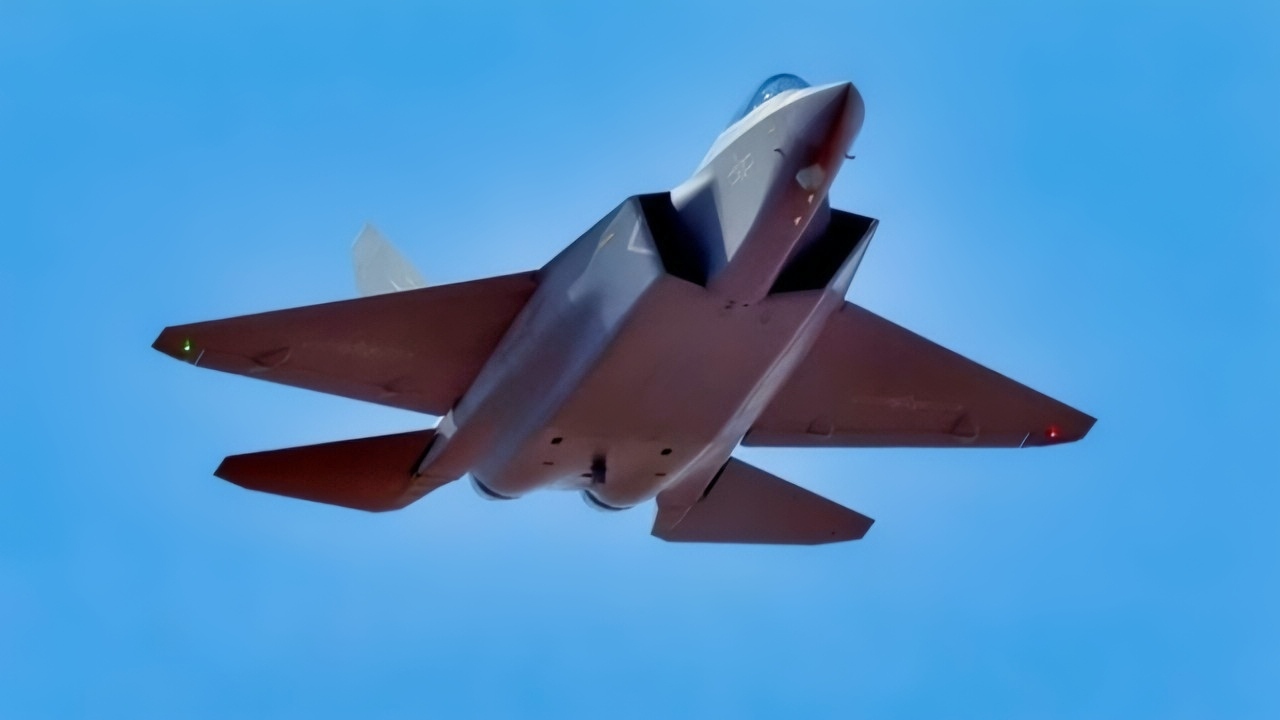
J-35 Fighter from China. Image Credit: PLAAF.
Powered by two General Electric F110 engines in later variants, it produces roughly 55,600 pounds of thrust combined. Its radar, the AN/AWG-9, was revolutionary for its time, capable of tracking 24 targets and guiding six Phoenix missiles simultaneously.
However, it lacks modern sensor fusion, infrared search-and-track systems, and electronic warfare capabilities.
The J-35, by comparison, is slightly smaller at about 17 meters long with a wingspan near 11.5 meters. It is estimated to reach speeds of Mach 1.8 to 2.0 and has a service ceiling of approximately 55,000 feet.
Its two WS-19 engines generate around 46,000 pounds of thrust combined.
While slightly less powerful than the Tomcat in raw thrust, the J-35 compensates with advanced aerodynamics, digital flight controls, and stealth shaping.
Its avionics suite includes an AESA radar, IRST, and electro-optical targeting systems, likely integrated into a sensor fusion architecture similar to that of the F-35.
These systems provide superior situational awareness compared to the Tomcat’s analog-era electronics.
Stealth and Armament
There is one aspect that greatly separates the F-14 from the J-35 and that is stealth.
The F-14 has a large radar cross-section, making it easily detectable by modern sensors.
It was never designed with low observability in mind; instead, it relied on speed and long-range missiles for survival.
The J-35, on the other hand, is built for stealth, with an estimated frontal radar cross-section of about 0.01 square meters.
This makes it extremely difficult for older radars like the AWG-9 to detect at long range, effectively neutralizing the Tomcat’s primary advantage.
The F-14’s main air-to-air armament consisted of AIM-54 Phoenix missiles for long-range engagements, AIM-7 Sparrow for medium range, and AIM-9 Sidewinder for close combat, along with a 20mm Vulcan cannon.
These weapons were formidable in the Cold War era but are now considered obsolete due to outdated guidance systems and the development of modern countermeasures.
The J-35 carries PL-15 and PL-17 missiles for beyond-visual-range combat, offering ranges comparable to or exceeding the Phoenix, but with active radar seekers and electronic counter-countermeasures.
For short-range engagements, the PL-10 missile provides high off-boresight capability when paired with helmet-mounted sights, giving the J-35 a decisive edge in dogfights.
It’s Over for the F-14 Tomcat (In 1 Word, ‘Stealth’ Wins)
Unsurprisingly, the F-14 is way out of its depth in this hypothetical matchup.
In a beyond-visual-range scenario, the J-35’s stealth would prevent the F-14 from detecting it until very late, if at all.
The Tomcat’s AWG-9 radar and Phoenix missiles were designed to counter large, non-stealthy targets like bombers, not fifth-generation fighters.
Meanwhile, the J-35 could detect and engage the Tomcat from long range using its AESA radar and PL-series missiles, all while remaining largely invisible to the older aircraft.
In a close-range fight, the J-35’s agility, helmet-mounted sights, and advanced missiles would give it overwhelming superiority.
Even if the Tomcat managed to close the distance, its lack of high-off-boresight missile capability and older avionics would leave it at a severe disadvantage.
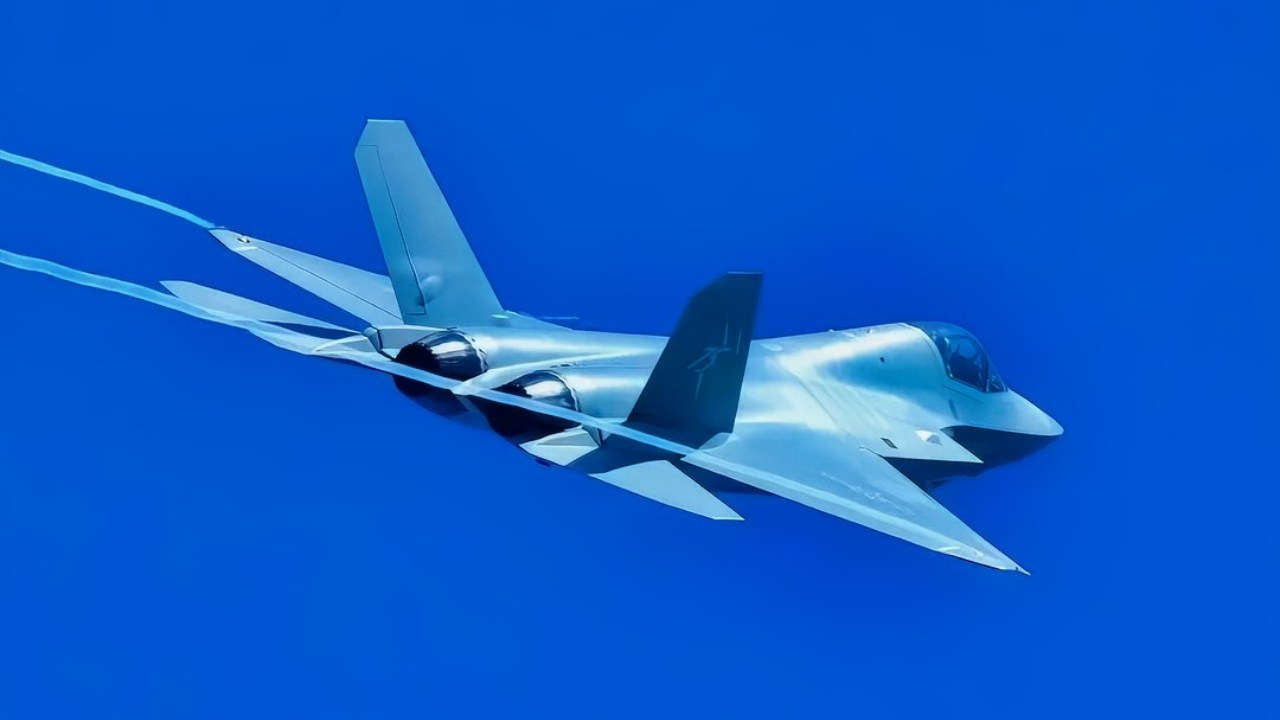
J-35A Fighter from China. Image Credit: PLAAF
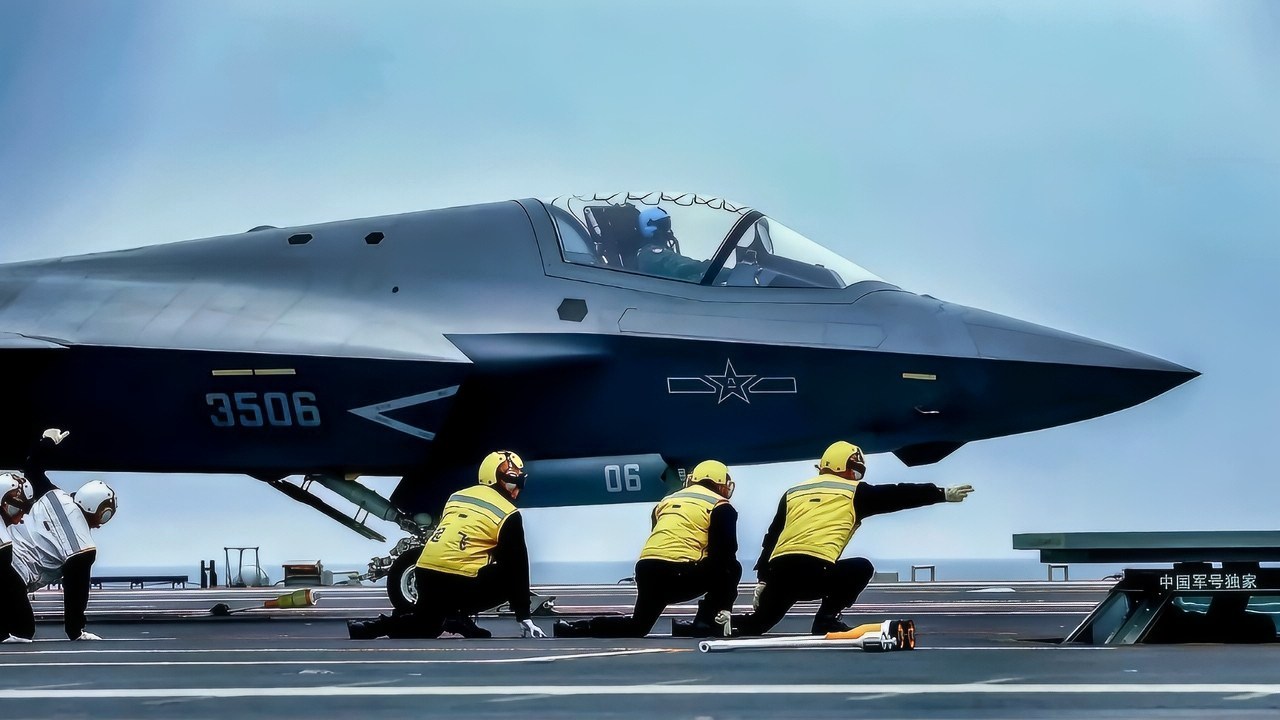
China J-35 Fighter. Image Credit: Chinese Navy/PLAN.
The F-14 was an excellent fighter for its time, but without the continuous upgrades that other fighters like the F-15 and F-16 received, it is hopelessly outclassed by fifth-generation aircraft.
The gap is further compounded by factors such as EW systems and networked operations.

A 96th Test Wing F-15E Strike Eagle flies during a test mission May 22, 2025 over Eglin Air Force Base, Florida. The 96 TW and the 53rd Wing teamed up to test AGR-20F Advanced Precision Kill Weapon System II laser-guided rockets on the F-15E in May in an effort to get the capability to the warfighter as quickly as possible. (U.S. Air Force photo by Staff Sgt. Thomas Barley)
The J-35 operates as part of a networked system, sharing data with other platforms and benefiting from sensor fusion.
The F-14, by contrast, functions mainly as a standalone platform with limited datalink capability.
This disparity in information would make the fight even more one-sided.
About the Author: Isaac Seitz
Isaac Seitz, a Defense Columnist, graduated from Patrick Henry College’s Strategic Intelligence and National Security program. He has also studied Russian at Middlebury Language Schools and has worked as an intelligence Analyst in the private sector.


