
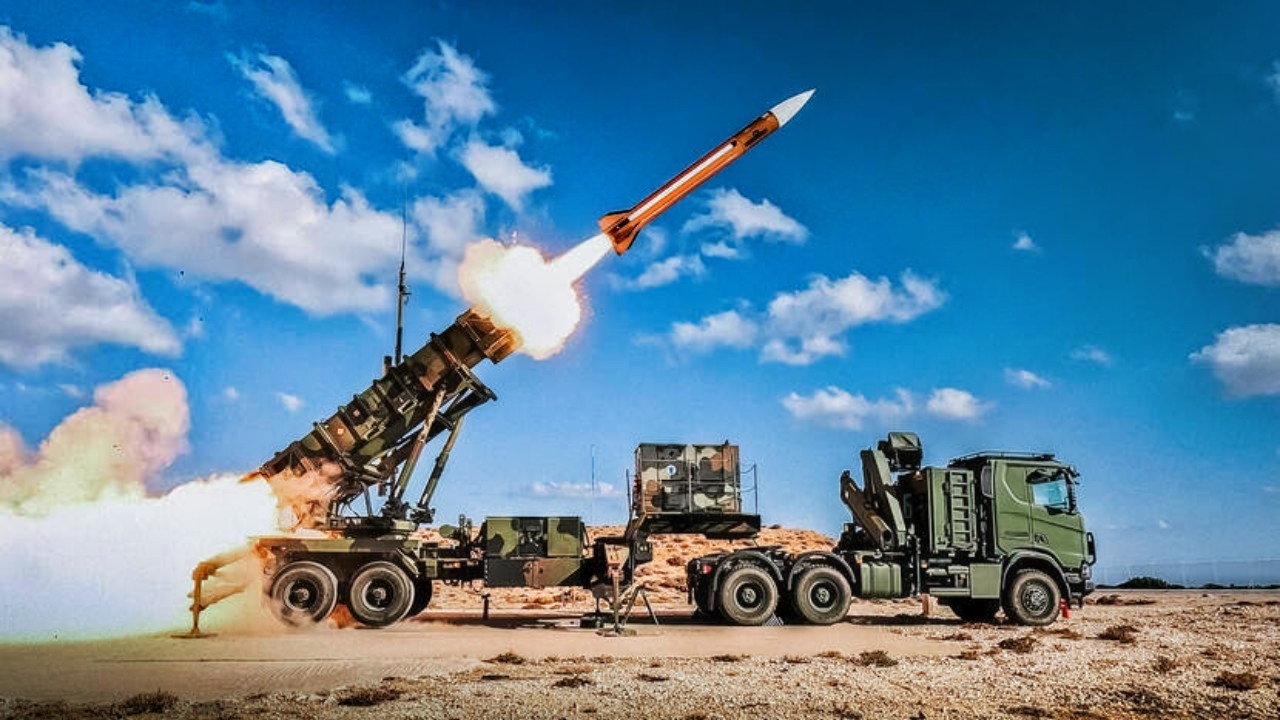
A major in the US Army has come forward with accusations that the Pentagon ignored warnings that soldiers on a US military base in Kuwait were not properly protected.
A Soldier Comes Forward
Maj. Stephen Ramsbottom appeared on CBS on Sunday, November 15, and told “60 Minutes” host Norah O’Donnell that an Iranian attack on an American base in the port of Shuaiba, Kuwait, on March 1 was a “tactical failure.” He partially took blame for the failure, but also pointed the finger at the Army and its leadership.
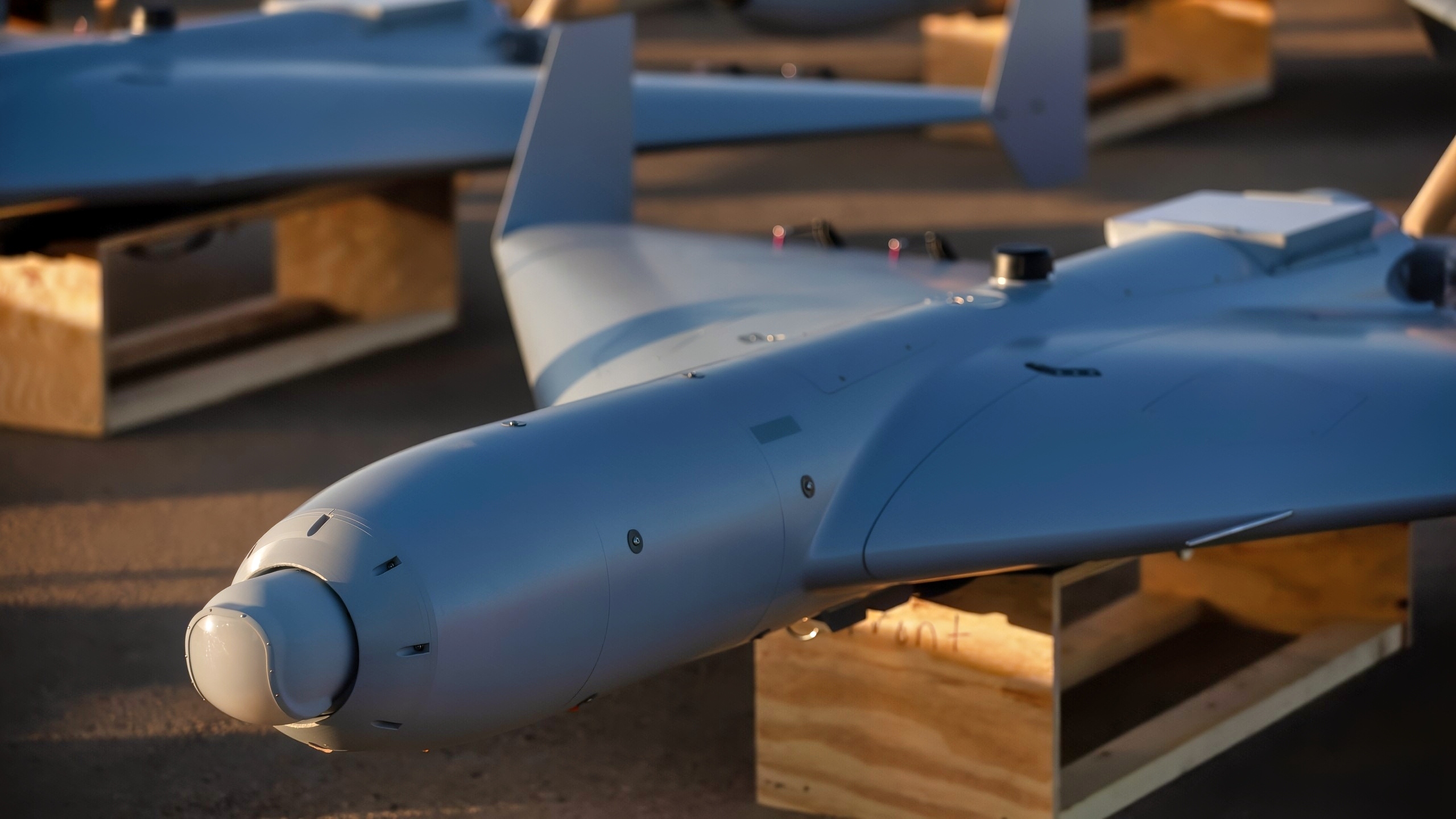
U.S. CENTRAL COMMAND AREA OF RESPONSIBILITY (Nov. 23, 2025) Low-cost Unmanned Combat Attack System (LUCAS) drones are positioned on the tarmac at a base in the U.S. Central Command operating area, Nov. 23. Costing approximately $35,000 per platform, LUCAS drones are providing U.S. forces in the Middle East low-cost, scalable capabilities to strengthen regional security and deterrence. (Courtesy Photo)
The attack happened the day after US President Donald Trump ordered a military operation against Iran, kicking off the ongoing war.
The drone strike in Kuwait was a retaliatory strike, and the targeted base was not prepared, according to the whistleblower.
Ramsbottom compared it to a “trailer park” and said the fortifications were only fit to protect against “car bombs and threats like that,” but not aerial attacks.
On top of insufficient overhead protection, Ramsbottom said there was no counter-drone system as promised and on-site medical support was inadequate.
“They Killed My Wife”
One of the six US Army soldiers who died that day was Master Sgt. Nicole Amor, who was honored among the other five with flag-draped caskets.
President Donald Trump and other military leaders were present during the ceremony at Dover Air Force Base in March when the bodies were returned from Kuwait.
Amor’s husband, Joey Amor, recently spoke with CNN reporters and said his wife was “proud… constant… unwavering [and] dedicated.” He noted that since the attack, the deadliest committed by Iran so far, other soldiers began enlisting and would “have to trust” that what happened to his wife would not be their fate as well. Joey said he loves those soldiers and so did his wife.
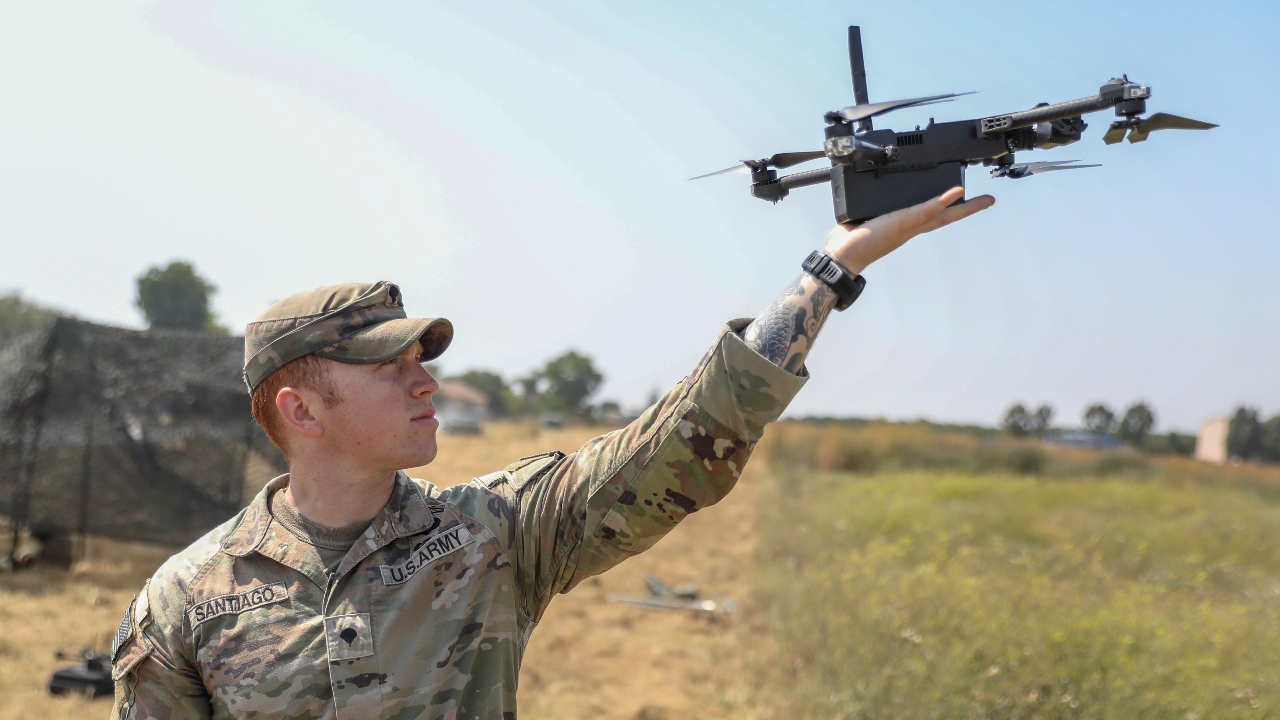
U.S. Army Spc. Harry Santiago IV, assigned to the Multi-Functional Reconnaissance Company, 2nd Brigade Combat Team, 101st Airborne Division (Air Assault), launches a Skydio X2D drone on Mihail Kogalniceanu Air Base, Romania, July 09, 2025. V Corps provides essential support to multinational training and exercises of robust and evolving complexity, scope, scale, rigor, and operational conditions and provides targeted security force assistance alongside national and multinational corps and divisions. (U.S. Army photo by Spc. Breanna Bradford)
Joey did not blame Iran exclusively, instead laying it at the feet of the 103rd Sustainment Command unit in which his wife served.
“They killed my wife,” he said, adding that “it’s on them.” Joey said his view on the matter was based on the choices made by those in command.
An Unforgettable Noise
The same day Ramsbottom appeared on “60 Minutes,” The Atlantic published a detailed report on the March 1 attack.
The report cited over a dozen sources, including current and former US military officers and Ukrainian military officers.
The drone was a variant of a model known as a Shahed — an Iranian design. The drone reportedly “slammed through the roof” of an Army Reserve office building where dozens of American personnel were working. After the drone’s payload detonated, six service members were dead and over two dozen were injured from the blast.
Ramsbottom was among the 25 wounded.
According to the article, the survivors said forgetting the “distinctive noise” of the drone was difficult. Ukrainian military sources told The Atlantic that they are quite familiar with the sound of these drones, which they compared to the revving engine of a Vespa. Ukrainian arms manufacturers eventually developed a “cheap and effective” method for shooting them down.
Warnings Ignored
The report claims that senior officials in the US military were aware of this Ukrainian technology for months before the Iran war, and that officers expressed concern that the exact type of Shahed attack could occur in Kuwait.
The officials reportedly urged the commanders stationed in Middle Eastern bases to deploy that technology.
The warnings included official, detailed reports delivered up the military chain of command, and many of the officers who tried to sound the alarm were since “forced into early retirement” or even outright fired.
The Pentagon Responds to the Accusations
When asked by The Atlantic for a statement, Pentagon spokesman Sean Parnell told the outlet that their report was “disgusting” for suggesting a lack of preparation before entering a war with Iran.
“Central Command established the most extensive air defense umbrella in the world over the Middle East,” Parnell said. “Make no mistake: The U.S. military has the best offensive and defensive capabilities of any nation on Earth, and we always protect our bases and our people.”
The Pentagon has not publicly announced whether it will launch a formal investigation into the allegations.
About the Author: Tim Ramos
Tim Ramos has written for various publications, corporations, and organizations, covering everything from finance, politics, travel, entertainment, and sports – in Asia and the U.S. for more than 10 years.