

Iran launched a new military attack against American military assets in Bahrain and claims to have destroyed a U.S. early-warning radar installation.
It comes as tensions between Washington and Tehran escalate, with U.S. President Donald Trump insisting that a deal with Iran is no longer necessary.
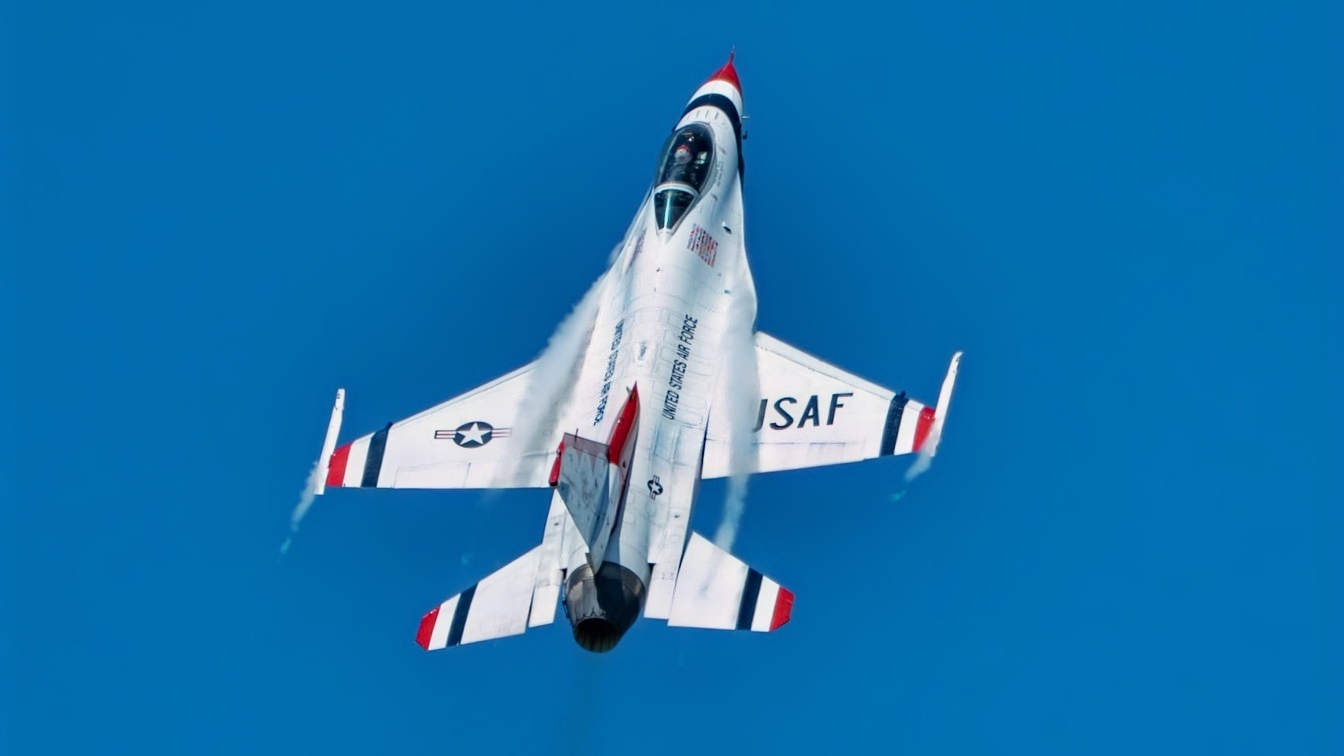
A U.S. Air Force F-16 Fighting Falcon assigned to the United States Air Force Air Demonstration Squadron “Thunderbirds” performs during the 2026 Sioux Falls AirShow: Power on the Prairie at Joe Foss Field, Sioux Falls, South Dakota, July 17, 2026. The Thunderbirds’ demonstration featured close-formation flying and solo routines showcasing the precision and performance of the F-16 Fighting Falcon. (U.S. Air National Guard photo by Master Sgt. Luke Olson)
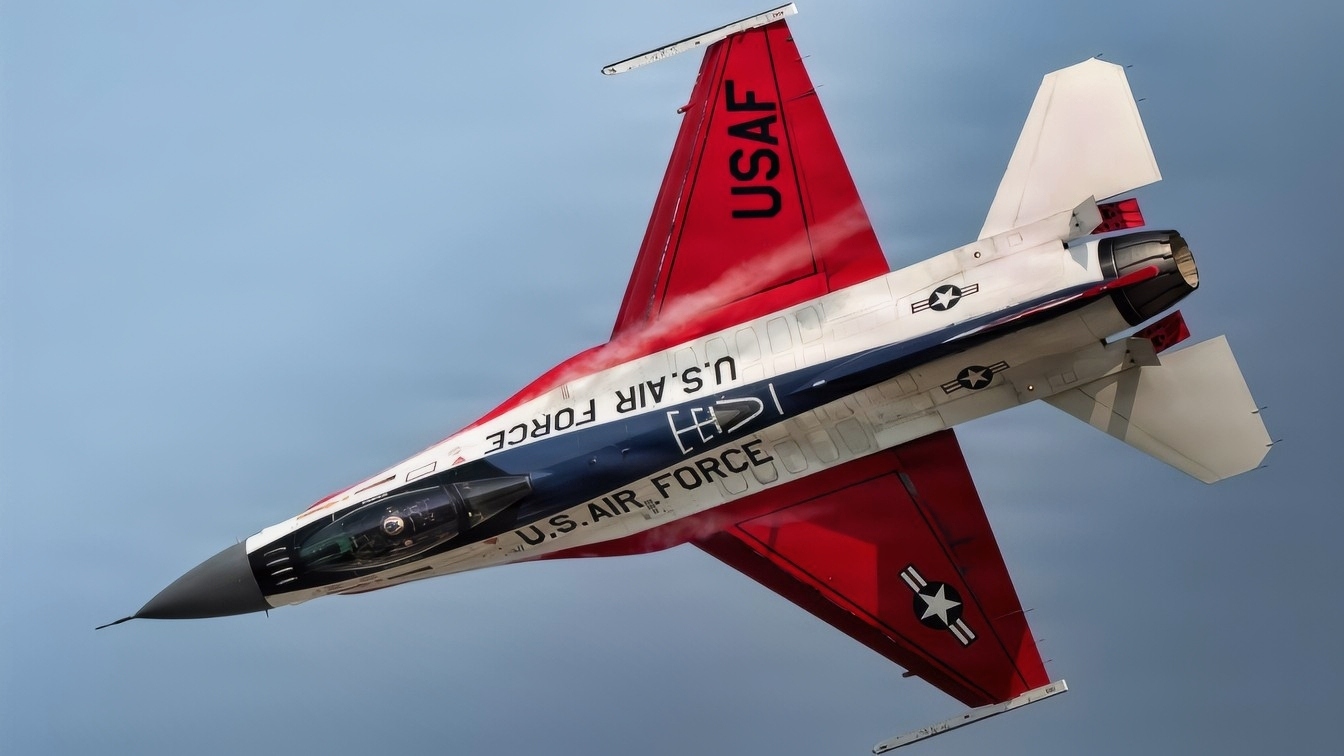
U.S. Air Force Maj. Taylor “FEMA” Hiester, F-16 Viper Demonstration Team commander and pilot, performs aerial maneuvers in a U.S. Air Force F-16C Fighting Falcon during AirVenture at Oshkosh, Wisconsin, July 24, 2026. The F-16, a multi-role fighter aircraft capable of both air-to-air and air-to-ground combat, demonstrates its versatility through dynamic aerial demonstrations across the U.S. and abroad. (U.S. Air Force photo by Staff Sgt. Steven Cardo)
The Islamic Revolutionary Guard Corps (IRGC) announced the operation against U.S. assets on Friday, November 13.
They described it as retaliation for an alleged U.S. attack against telecommunications infrastructure in southern Iran.
The United States said that the Iranian operation was unsuccessful.
The U.S. military did, however, confirm that two Iranian attack drones were launched toward Bahrain, but said that both were intercepted before they reached their targets. U.S. Central Command (CENTCOM) reported no damage or injuries.
The incident marks the first claim from Tehran that it had attacked American military infrastructure in a Gulf country since the beginning of September.
It also comes as Iran claims that it hit another commercial tanker with a naval mine in the Strait of Hormuz, and as the U.S. president warns that he is willing to resume strikes against Iran if he deems it necessary.
What Iran Claims
In a statement issued early on Friday, the IRGC said that its aerospace forces had struck American radar infrastructure in Bahrain.
The statement claimed that the system had been destroyed.
The IRGC also said that the operation was conducted in retaliation for a U.S. strike against a telecommunications tower in Sirik, a coastal town in Hormozgan province, on Thursday, November 12.
According to Iranian state media, the communications infrastructure in question was hit by enemy forces, but responsibility for the strike has not been independently confirmed.
Al Jazeera reports that the IRGC described the operation as a warning to Washington over its military activity in the region and its ongoing efforts to maintain the flow of commercial shipping through the Strait of Hormuz.
“Early Friday, IRGC Aerospace Force fighters targeted and destroyed the US aggressors’ early-warning radar on Bahrain Island in response to the enemy’s airstrike on a telecommunications tower in Sirik, southern Iran,” the statement reads.
“This is a serious warning to the aggressor enemy to put an end to its aerial provocations and oil smuggling in the Strait of Hormuz. Should violations and acts of aggression be repeated, the IRGC Aerospace Force is on full alert to respond without limits,” it continued.
The statement added that “companies that violate the rules by being deceived by the aggressor enemy will face even harsher penalties,” in what appeared to be a threat to shipping and oil firms that continue to move oil through the strait with the support of the U.S. military.
What the U.S. Says
The U.S. military has rejected the claims, with CENTCOM confirming on Friday that two drones were launched in Bahrain’s direction but were successfully intercepted. The military reported no damage or injuries.
The incident comes as Iran continues to strike commercial shipping moving through the Strait of Hormuz, with the IRGC also claiming on Friday that a tanker carrying liquefied natural gas had struck a naval mine while attempting to pass via what Tehran calls an “unauthorized” route.
The identity of the tanker and the extent of the reported damage are unclear.
Reuters reports that at least 10 ships were attacked during the first 10 days of November, with 37 reported attacks in October.
Trump Says Gulf Allies Want to Avoid More Strikes
The attack also comes as President Donald Trump says that he has no immediate intention to return to military conflict, and that he believes a deal with Iran is no longer necessary.
He also recently revealed that Gulf allies have urged him not to resume large-scale military operations in the region over fears of Iranian retaliation on Gulf states and U.S.-linked infrastructure.
Speaking to Stephen A. Smith on Thursday, November 12, President Trump said that Saudi Arabia, Qatar, Kuwait, the United Arab Emirates, and Bahrain had encouraged him to maintain the current economic pressure campaign rather than launch new strikes.
“Saudi Arabia has asked me to please just let it be the way it is now for a while,” he said, adding, “I’m not sure I agree with it.”
Fresh Concerns Over Iran’s Nuclear Program
Meanwhile, the International Atomic Energy Agency (IAEA) warns that it still cannot inspect a uranium enrichment facility at Isfahan.
On Friday, the United Nations nuclear watchdog said that it does not know the exact location of the facility, its operational status, or whether it contains nuclear material — but Iran is still refusing to allow inspectors back into its nuclear facilities that have been damaged by U.S. and Israeli strikes, leaving international monitors incapable of determining how much highly enriched uranium is still in Tehran’s possession.
About the Author: Jack Buckby
Jack Buckby is a British researcher and analyst specializing in defense and national security, based in New York. His work focuses on military capability, procurement, and strategic competition, and he produces and edits analysis for policy and defense audiences. He brings extensive editorial experience, with a career output spanning over 1,000 articles at National Security Journal, and has previously authored books and papers on extremism and deradicalization.


