
Iran’s Islamic Revolutionary Guard Corps (IRGC) has claimed that a supertanker was struck by mines in the Strait of Hormuz.
The vessel reportedly struck two mines and caught fire in the early hours of Monday, 31st August.

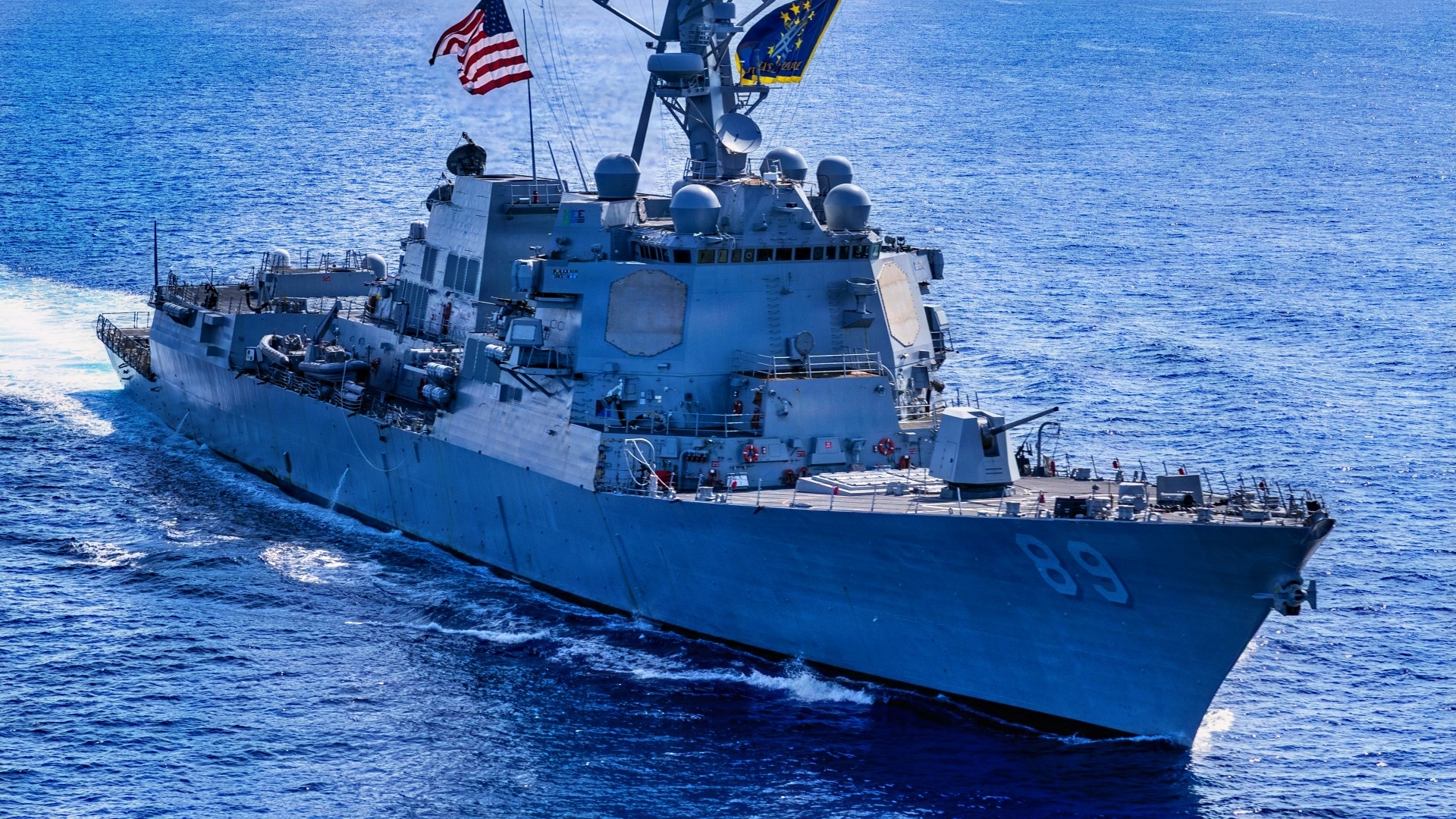
The guided-missile destroyer USS Donald Cook (DDG 75) steams behind the aircraft carrier USS Theodore Roosevelt (CVN 71) in the Persian Gulf on Jan. 31, 2006. The Roosevelt Carrier Strike Group is conducting maritime security operations in the Persian Gulf.
(DoD photo by Airman Apprentice Nathan Laird, U.S. Navy. (Released))
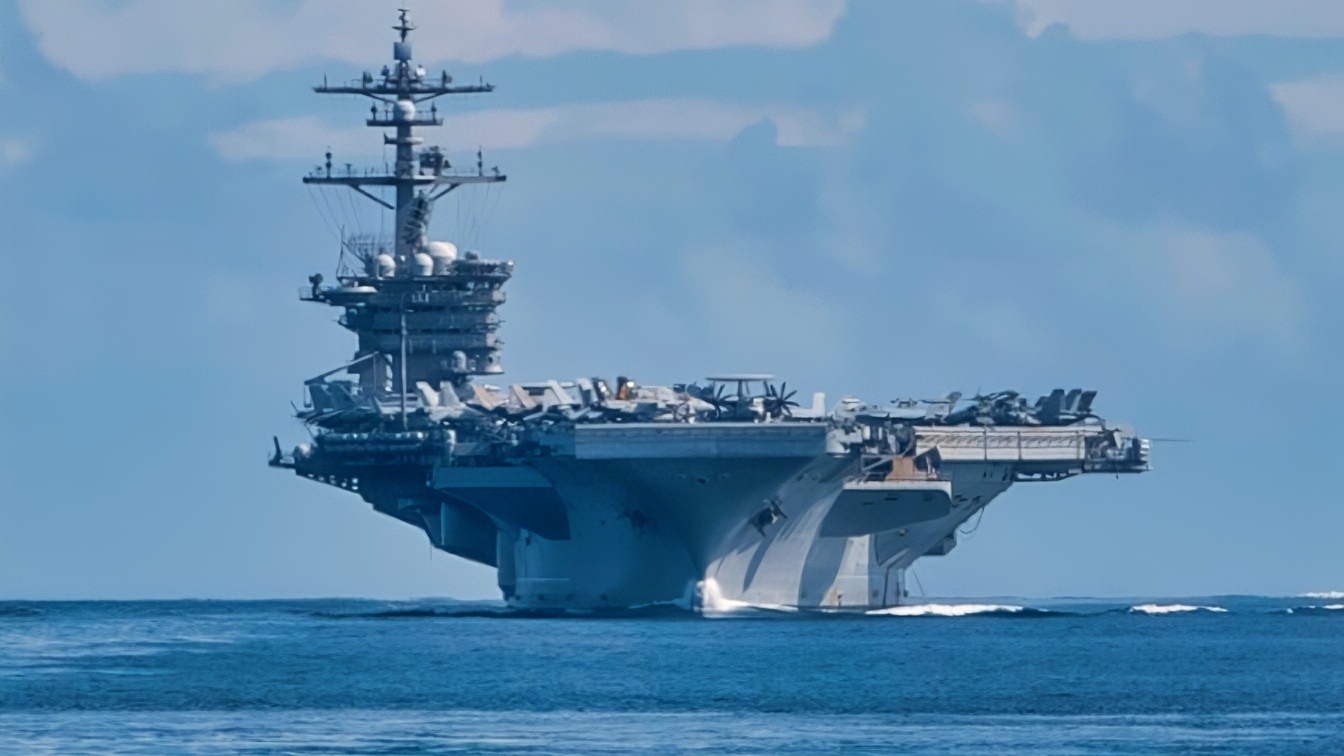
SIBUTU PASSAGE (Feb. 6, 2025) – The Nimitz-class aircraft carrier USS Carl Vinson (CVN 70), left, and the Ticonderoga-class guided-missile cruiser USS Princeton (CG 59) transit the Sibutu Passage Feb. 6, 2025. The Carl Vinson Carrier Strike Group is underway conducting routine operations in the U.S. 7th Fleet area of operations. (U.S. Navy photo by Mass Communication Specialist 3rd Class Brianna Walker)
However, the U.S. Central Command (CENTCOM) denied the claim, describing it as “false”.
What Happened?
According to Iranian media, the supertanker struck two sea mines in the Strait of Hormuz before catching fire.
The IRGC said the tanker had been attempting to pass through the strait without permission. It did not provide any details about the vessel or its crew.
The IRGC warned other ships not to violate its security rules, stating that compliance with its regulations is mandatory.
U.S. Denial
CENTCOM denied that a vessel had been struck by mines in response to Iran’s claim.
On social media, CENTCOM wrote: “Iran’s Islamic Revolutionary Guard Corps (IRGC) claims that a supertanker passing through the southern route of the Strait of Hormuz struck two mines and was brought to a complete stop. This is FALSE.”
It added: “No ships have hit mines in the Strait of Hormuz. This is yet another IRGC attempt to intimidate regional commercial shipping through disinformation.”
Strait Remains Closed
The Strait of Hormuz is a key passage for Iran, Oman, and other Gulf states, including Saudi Arabia, the UAE, and Qatar.
Approximately 20% of the world’s oil and gas passed through the waterway before the war began in February.
Since then, Iran has used a chokehold to prevent the vast majority of shipping from passing through, forcing a rise in global oil prices as traffic remains stranded in the Gulf.
At its narrowest, the strait is 24 miles wide, meaning Iran is able to strike any vessel that attempts to breach its blockade.
Tehran has used this leverage in order to create economic uncertainty worldwide, increasing living costs across the world and limiting support for the U.S.-Israeli campaign.
In addition to missile strikes, Iran has planted sea mines throughout the Strait of Hormuz to deter commercial shipping from flouting its regulations.
The U.S. says it cleared these mines after a large minesweeping operation earlier this month.
The Strait of Hormuz has been a long sticking point of the war.
On Sunday, 30th August, the U.S. and Iran exchanged strikes for the first time in over a month, with the former targeting missile launchers on Larek Island, which CENTCOM said were in the process of deploying additional sea mines. Iran responded by targeting a U.S. military base in Jordan, although the missiles were intercepted before they reached their intended target.
The Conclusion of the War
The Strait of Hormuz is the key decider in how the war concludes. Oman, which borders the southern shores of the strait, has been discussing a potential deal with Tehran to reopen the vital waterway.
On Tuesday, 25th August, Iranian Deputy Foreign Minister Kazem Gharibabadi said in an interview with state TV that the two nations were discussing a proposal he described as temporary. However, military shipping would remain prohibited from passing through if a deal was reached.
“If the understanding becomes binding, no military vessel will be permitted to pass through the Strait of Hormuz,” he said. “No military vessel at all.”
Under the proposals, commercial shipping traffic into the Persian Gulf would pass solely through Iranian waters, while traffic heading in the other direction would pass partly through both nations’ territory. Any deal would be temporary, with Iran and Oman required to negotiate a permanent solution within 60 days of reaching an agreement.
U.S. President Donald Trump has expressed skepticism over the proposed agreement and Oman’s mediation efforts.
The U.S. position has long been that the strait is an international waterway where no country has jurisdiction as to what transits through.
These loggerheads are not only preventing a conclusion to the war, but preventing the warring sides from negotiating.
Trump demands that the Strait of Hormuz be reopened before negotiations can resume on a permanent peace deal.
Iran, meanwhile, is adamant that the U.S. must halt its economic and military campaign before discussions take place – something the U.S. is unwilling to do under the status quo.
Until an agreement on the strait is reached, an agreement on the war is impossible.
That’s looking unlikely any time soon.
About the Author: Shay Bottomley
Shay Bottomley is a British journalist. He has written for the Western Standard, Business Insider, Maidenhead Advertiser, Slough Express, Windsor Express, Berkshire Live and Southend Echo.