

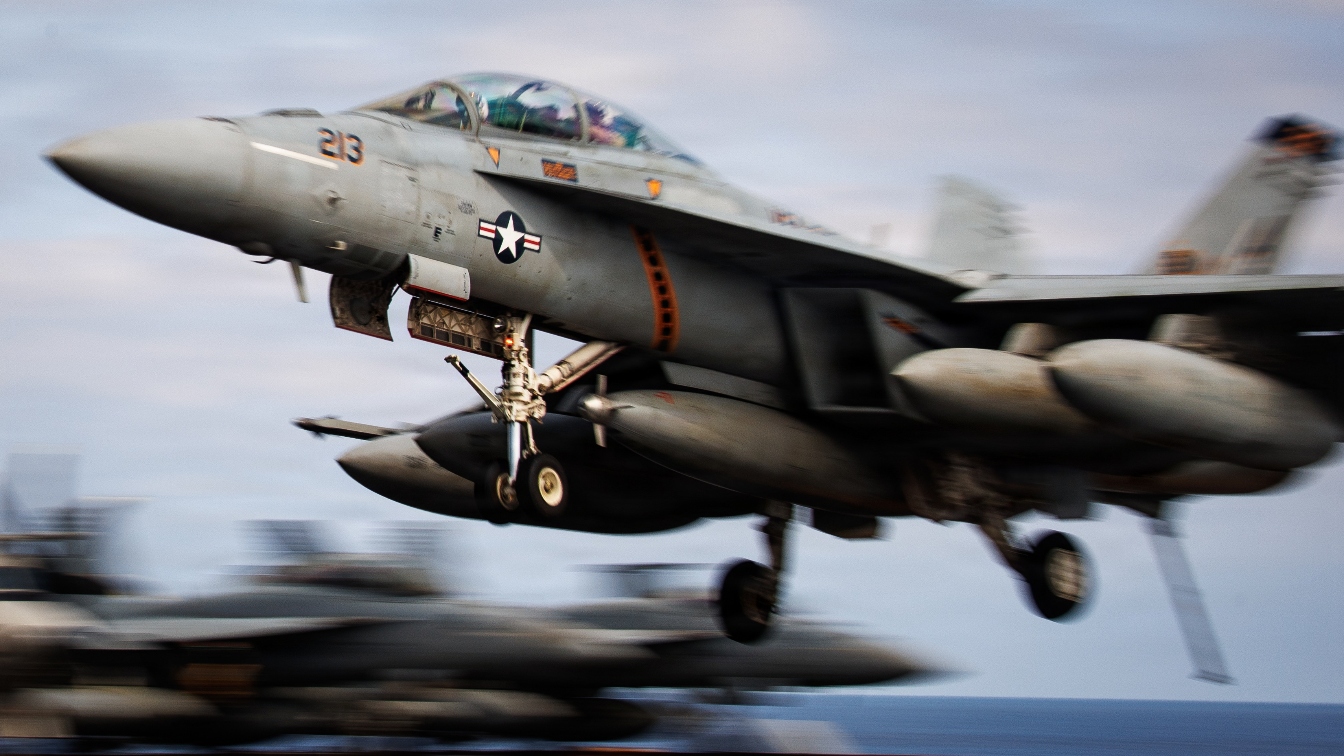
A couple of days ago, CNN released footage showing the aftermath of the laundry fire, which burned several hundred living spaces aboard the USS Gerald R. Ford (CVN-78). Initially downplayed by U.S. Navy officials, the newly released footage shows the immense scale of the devastation, which burned over 600 bunks and berthing spaces and nearly cost the U.S. one of its most advanced naval vessels. With a clearer picture of the damage, it is clear that repairs on the supercarrier will take longer than analysts originally anticipated. Unofficial estimates ranged from 12 to 14 months of repair time, but now it appears that even these hefty estimates may have been overly optimistic.
Much Worse Than Reported: The USS Gerald R. Ford Fire, Explained

A U.S. Sailor inspects an aircraft catapult launch track on the flight deck of the world’s largest aircraft carrier, Ford-class aircraft carrier USS Gerald R. Ford (CVN 78), while underway in the Caribbean Sea, Nov. 25, 2025. U.S. military forces are deployed to the U.S. Southern Command area of responsibility in support of Operation SOUTHERN SPEAR, Department of War-directed operations, and the president’s priorities to disrupt illicit drug trafficking and protect the homeland. (U.S. Navy photo)
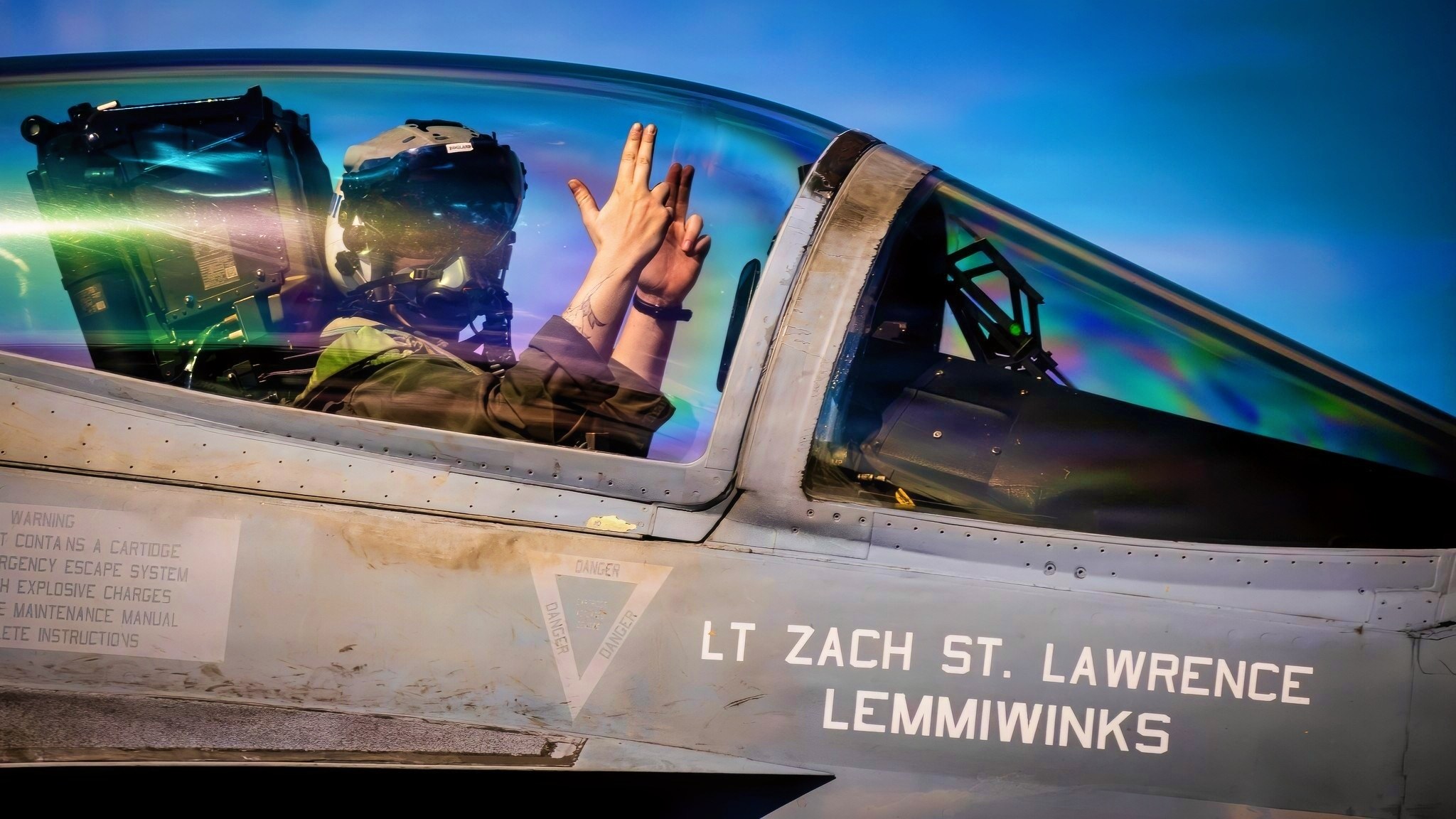
A U.S. Sailor assigned to Strike Fighter Squadron 37 signals to arm ordnance in an F/A-18E Super Hornet aircraft on the flight deck of the world’s largest aircraft carrier, Ford-class aircraft carrier USS Gerald R. Ford (CVN 78), while underway in the Caribbean Sea, Nov. 30, 2025. U.S. military forces are deployed to the U.S. Southern Command area of responsibility in support of Operation SOUTHERN SPEAR, Department of War-directed operations, and the president’s priorities to disrupt illicit drug trafficking and protect the homeland. (U.S. Navy photo)

A U.S. Sailor, assigned to Airborne Command and Control Squadron 124, signals the launch of a Carrier Air Wing 8 E-2D Hawkeye aircraft on the flight deck of the world’s largest aircraft carrier, Ford-class aircraft carrier USS Gerald R. Ford (CVN 78), while underway in the Caribbean Sea, Nov. 29, 2025. U.S. military forces are deployed to the U.S. Southern Command area of responsibility in support of Operation SOUTHERN SPEAR, Department of War-directed operations, and the president’s priorities to disrupt illicit drug trafficking and protect the homeland. (U.S. Navy photo)
On June 4th, CNN aired footage obtained from an anonymous sailor who served aboard the Ford. The video showcased the charred remains of some of the crew quarters, which had been completely destroyed by the onboard fire. The ceiling also appears to have been heavily damaged by the inferno, with multiple spaces completely hollowed out and wires dangling haphazardly from above. In the brief statement released by the U.S. Navy, officials had said that the ship was still “fully operational” and that the blaze had been quickly “contained.” When asked about the extent of the fire, a Navy spokesperson simply responded, “The investigation of the fire is ongoing.”
What was not mentioned was that the fire suppression system had failed to activate, allowing the fire to spread much further and destroy more of the ship. The anonymous sailor who had contacted CNN described his experience fighting the fire. “It shouldn’t have gotten that bad. The fire-suppression system built into the ship should have put it out,” he said. “Everybody — me included — helped put the fire out.” The fire raged so hard that some sailors thought the whole ship was on the verge of being lost. “I seriously thought we were going to lose the ship,” the sailor continued, “It’s either fight or die.” The failure of the fire suppression system meant firefighting efforts took much longer than necessary, allowing the fire to wreak greater havoc on the carrier.
Maintenance Problems During War: Ford Needs a Break
Unfortunately for the crew aboard the USS Ford, the fire was only one of many hardships endured during the carrier’s 11-month-long deployment. The ship experienced technical difficulties with its vacuum plumbing system, resulting in frequent clogging and sewage leaks. “If you were in the forward section of the ship, you’d have to walk all the way to the aft section just to find a toilet that worked,” the sailor said. Vacuum Collection, Holding, and Transfer (VCHT) systems aren’t unique to Ford; several other surface ships and submarines use vacuum plumbing, and all of them experience similar issues. Repairing the ship’s plumbing systems is one of many goals for the ship’s maintenance efforts.
While Ford was reeling from her onboard fire and plumbing issues, the carrier also had to engage in the high tempo of Operation Epic Fury. The carrier’s air wing had participated in thousands of combat sorties and dropped several thousand tons of munitions on Iranian targets.
According to reports, the carrier was targeted multiple times by Iranian drones and missiles, with some munitions apparently coming close to the ship. Thankfully, the carrier managed to return home without receiving any damage from enemy attacks. This was also after the carrier’s deployment had been extended multiple times. The ship and her crew had been redirected to the Middle East after they had taken part in the operation to abduct Maduro from Venezuela.
How Long Will Ford Remain Out of Action?
One of the big takeaways from Ford’s nearly year-long deployment is that the ship’s crew is nothing short of heroes. The fact that the crew was able to fight such a fire and return the ship to combat in a relatively short time is a testament to their skill and discipline.
For their efforts, the Department of War recognized the crew with a Presidential Unit Citation, the highest honor awarded to a U.S. military unit for collective action, presented by Secretary of Defense Pete Hegseth. “Over the course of the last 326 days, this team sailed the equivalent of four trips around the globe,” Said Capt. Gavin Duff, the ship’s Commanding Officer. “Every time, in every corner of the world, these sailors showed what it means to be an American.”
With Ford now back at port, the carrier is entering an extended maintenance period following her deployment. The lingering question on everyone’s mind is how long the carrier will remain out of action. According to an official from the U.S. Navy, the ship may remain in port for at least a year before she is ready for action.
Given the extent of the fire damage and her numerous other mechanical problems, it is likely that Ford will be out of action for more than a year.
It is impossible to say how long maintenance will take, but we could be looking at 14-15 months, though it would be nice to see the repairs completed in only 12 months. Until then, however, the U.S. Navy will have to rely on other carriers to fill the gap left by Ford.
About the Author: Isaac Seitz
Isaac Seitz, a Defense Columnist, graduated from Patrick Henry College’s Strategic Intelligence and National Security program. He has also studied Russian at Middlebury Language Schools and has worked as an intelligence Analyst in the private sector.


