

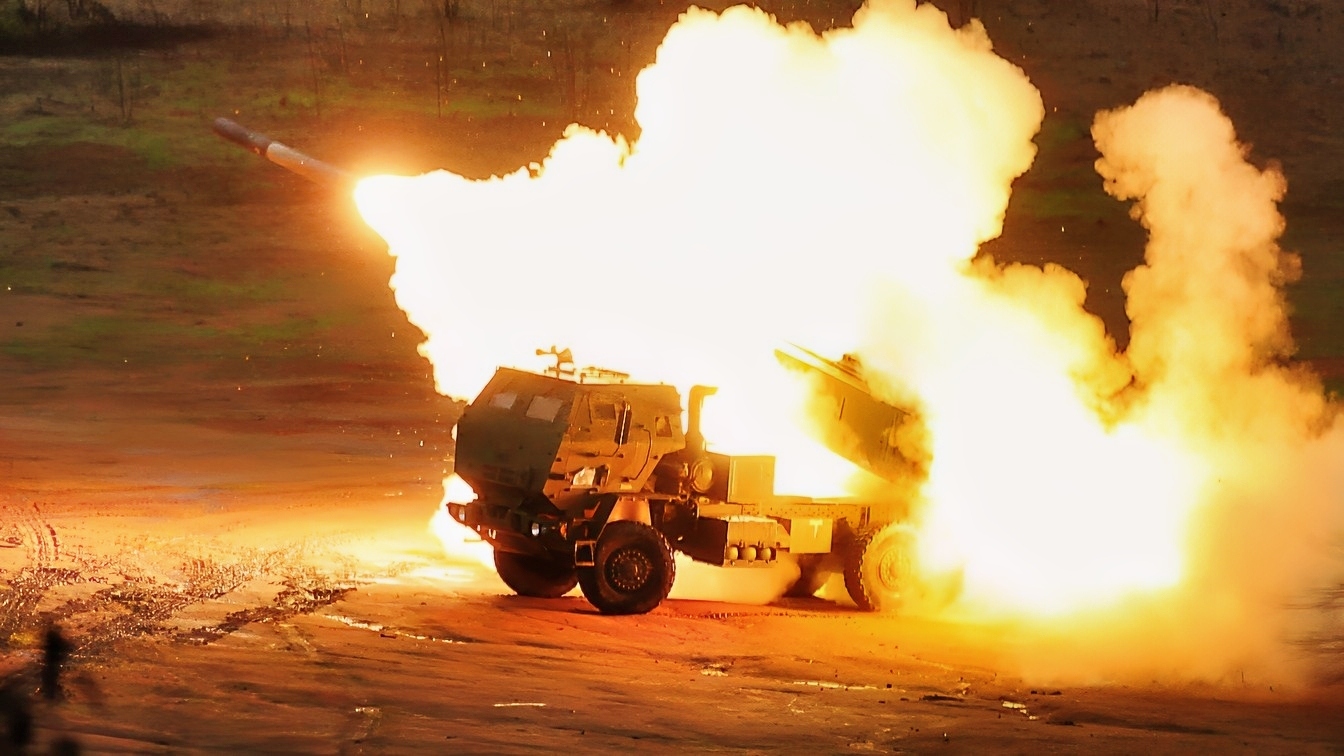
UAE Blames Iran for Drone Attack on Oil Tankers – Two Emirati tankers have been struck by drones while transiting the Strait of Hormuz, Reuters reported on Thursday.
No Casualties Reported
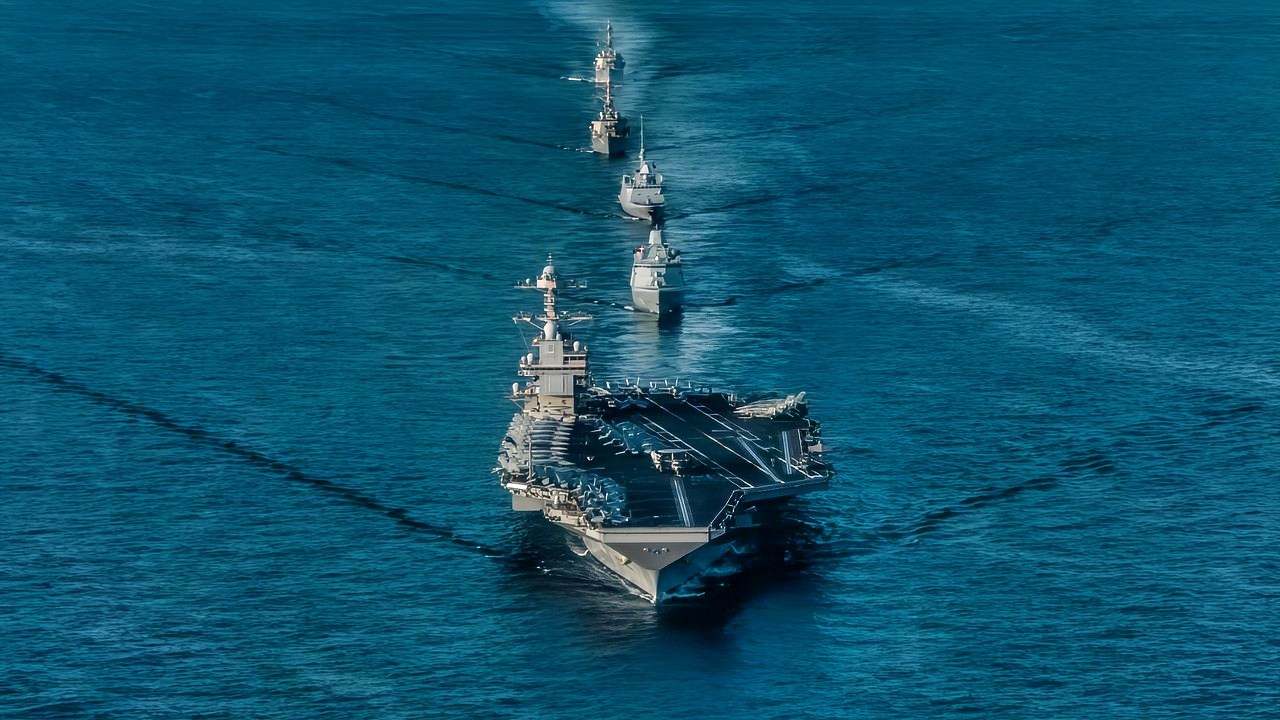
USS Gerald R. Ford Aircraft Carrier Training. Image Credit: U.S. Navy.
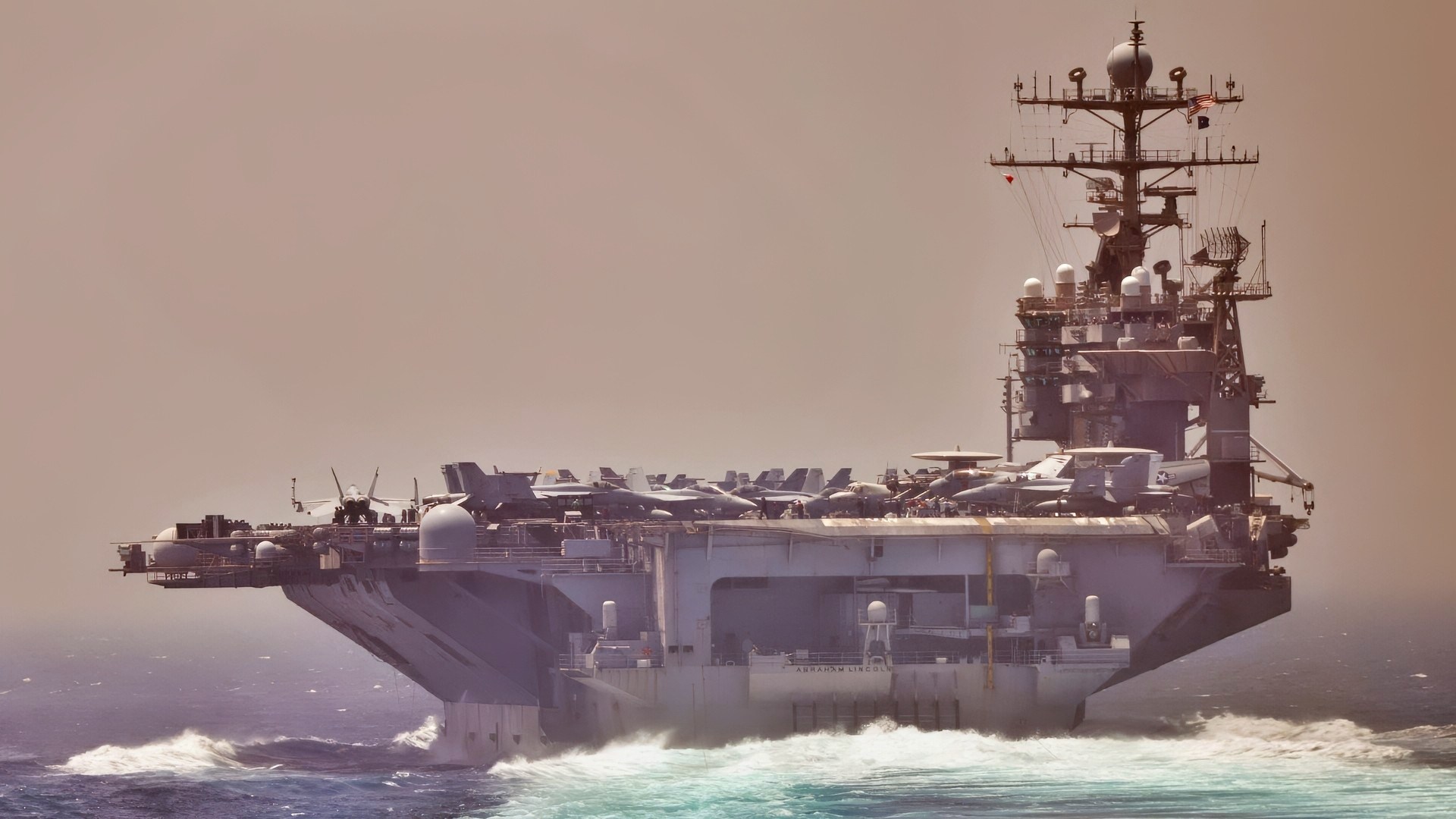
120501-N-WO496-013
STRAIT OF HORMUZ (May 1, 2012) The aircraft carrier USS Abraham Lincoln (CVN 72), left, and the guided-missile cruiser USS Cape St. George (CG 71) transit the Strait of Hormuz. Abraham Lincoln and Cape St. George are deployed to the U.S. 5th Fleet area of responsibility conducting maritime security operations, theater security cooperation efforts and support missions as part of Operation Enduring Freedom. (U.S. Navy photo by Mass Communication Specialist 3rd Class Alex R. Forster/Released)
The United Arab Emirates’s (UAE) state oil firm, which operates the ships, announced that no casualties had been reported. British maritime authorities separately said a tanker had been damaged by a drone strike in the vicinity, but that environmental damage had not taken place.
The UAE says Iran is behind the attack, which it slammed as piracy and a threat to global trade. Tehran has not commented on the matter.
The attacks come as shipping traffic through the strait remains well below normal amid the ongoing U.S.-Iran conflict.
Hormuz Traffic Dwindles
A total of nine trade vessels traveled via the Strait of Hormuz on Thursday, a decrease compared to this month’s daily average of 12 so far.
Iran claims that it “has control and management” over the strait, which also sits on the Omani coastline, and through which Saudi Arabia and Iraq ship oil. The U.S. has stressed that it is able to keep up its naval blockade of Iran until a deal is reached.
The waterway saw around one-fifth of the world’s oil and liquefied natural gas (LNG) pass through it prior to the recent war.
Iran is reportedly in talks with Oman to partially reopen the strait, although such a move would see Tehran controlling who enters and Muscat controlling who exits. For the U.S., an easing of conflict in the area would provide breathing space for the world economy, but without any securing of its key aims in the Iran war, including ending the Islamist regime’s nuclear program.
World Fuel Supplies Under Stress
Almost six months into the current conflict, global fuel stockpiles are under strain, with no obvious peace deal on the horizon.
US President Donald Trump continues to stress that the waterway is under Washington’s control.
The stalling of talks over the strait also means that energy prices remain a focus in U.S. politics ahead of November’s midterm elections. Diesel fuel prices now stand at around $5.37 a gallon in the U.S., compared to $3.7201 this time last year.
“They don’t have control. We have total control. We own it, and at some point, maybe they’ll do something, and then they get blown away. Right now, we’re in a very good position,” Trump said on Wednesday.
Iran has refused to fully reopen the strait until the U.S. meets a series of major concessions, including withdrawing troops from the Gulf region and lifting all economic sanctions.
The American blockade prohibits ships from entering or leaving Iranian ports on either side of the strait, damaging the Islamic Republic’s export revenue.
A small amount of traffic has been permitted to pass through the Gulf, but the military threats mean most firms simply are not willing to risk the safety of their staff and equipment. Before the war, more than 130 commercial ships would pass through each day.
Retired Air Force Col. Cedric Leighton told CNN that neither the U.S. or Iran had the total upper hand, stating: “What you’re really dealing with is a standoff here.”
“Because of the proximity of US forces, because of the blockade, and because of Iran’s ability and willingness to at least threaten the use of mines and the use of small boats to harass vessels … neither side is really able to exercise full control over the strait.”
Rebranding ‘Regime Change’
The impasse over Hormuz is an element of a wider deadlock over Washington’s seemingly inconsistent strategy in Iran.
When President Donald Trump announced the start of operations against Iran in February 2026, joint U.S.-Israeli strikes took out key government, defense and infrastructure sites. A string of senior Iranian officials, including Supreme Leader Ali Khamenei, were killed.
Trump had urged opponents of the regime to “take over” the Iranian government. By late March, The New York Times was already reporting that U.S. officials had redefined what they meant by regime change in Iran, with Trump stating that, “one regime was decimated.”
Polymarket traders are currently predicting a 46% chance that Strait of Hormuz traffic will return to normal by December 31.
About the Author: Georgia Gilholy
Georgia Gilholy is a journalist based in the United Kingdom who has been published in Newsweek, The Times of Israel, and the Spectator. Gilholy writes about international politics, culture, and education.


