

Donald Trump entered the Iran war with more opposition than support, and nearly five months of fighting have made the political problem worse. The president still holds the loyalty of most MAGA Republicans, but polling since early March shows independents, non-MAGA Republicans, and voters focused on household costs moving away from his strategy.
A March 3 YouGov survey found that 48 percent of Americans disapproved of the initial U.S. attacks, while 37 percent approved. Independents were more than twice as likely to oppose the operation as to support it. Trump never received the broad rally-around-the-flag effect that sometimes follows the opening of a military campaign.

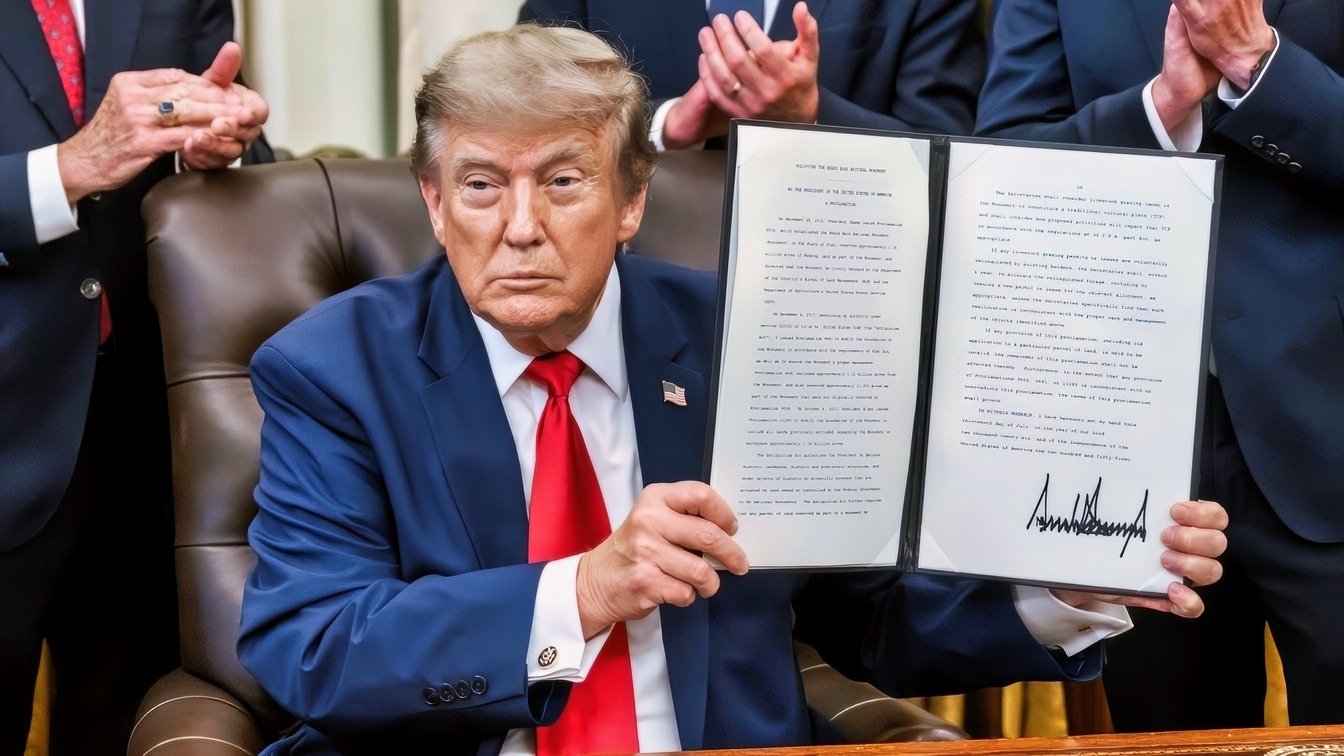
President Donald Trump signs executive actions to support the coal industry at an Unleashing American Energy Executive Order event, Tuesday, April 8, 2025, in the East Room of the White House. (Official White House Photo by Daniel Torok)
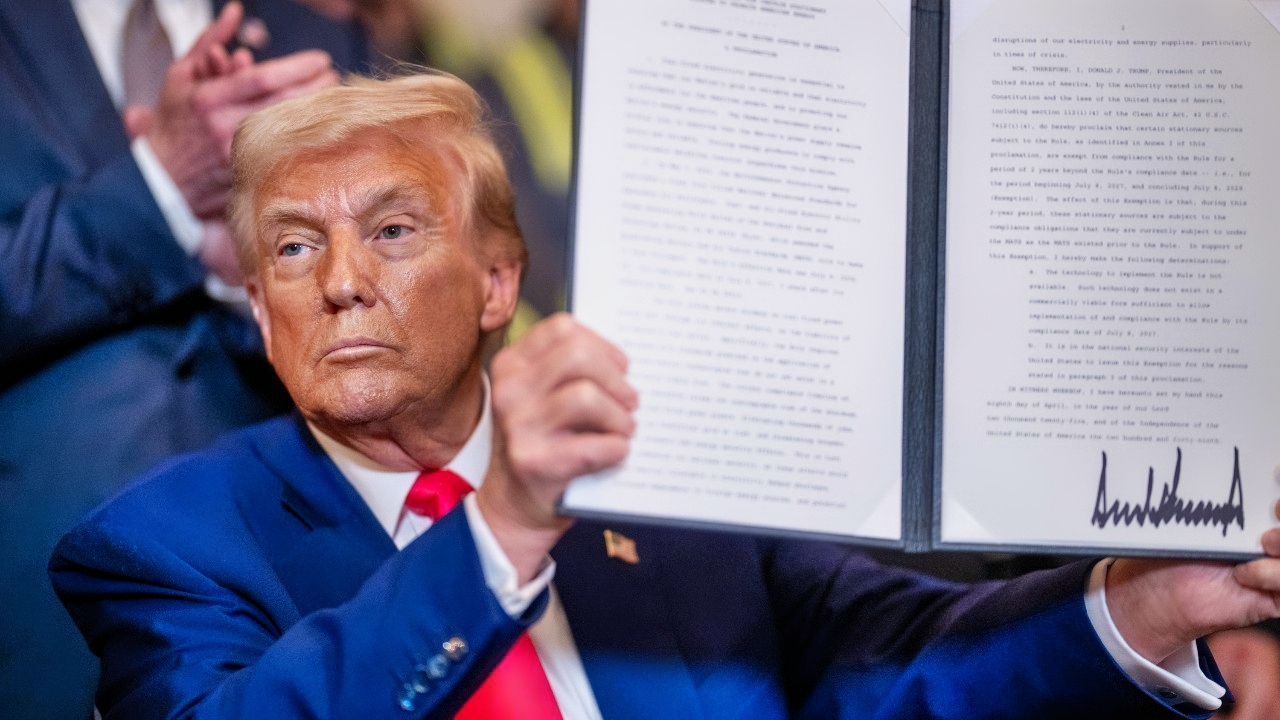
President Donald Trump signs executive actions to support the coal industry at an Unleashing American Energy Executive Order event, Tuesday, April 8, 2025, in the East Room of the White House. (Official White House Photo by Daniel Torok)
The resistance held through the spring. Pew Research Center found in March that 59 percent believed using force was the wrong decision, and 61 percent disapproved of Trump’s handling of the conflict. A second Pew survey completed in late April produced almost identical results, while the share saying the campaign was going badly increased.
By July, the gap had widened. The latest Economist/YouGov poll found that 57 percent called the war the wrong decision and 27 percent called it right. A Reuters/Ipsos survey found that 79 percent expected prolonged American involvement, only 37 percent approved of the strikes, and 60 percent expected gasoline prices to worsen.
Trump Is Holding MAGA but Losing the Wider Coalition
The July YouGov results show the split inside the Republican Party. MAGA Republicans supported the decision to go to war by 77 percent to 5 percent. Non-MAGA Republicans opposed it by 51 percent to 31 percent. That group had favored the war in April, making the shift one of the clearest signs that Trump’s support beyond his core base has weakened.
Trump can survive bad polls among Democrats. Republicans have a harder time winning competitive races when independents and softer GOP voters turn away. The war has also strained the political identity that helped Trump in 2024. He presented himself as the candidate who would avoid prolonged foreign conflicts and bring prices down. Instead, voters opposed the war from its opening days, while disruption around the Strait of Hormuz pushed energy costs back into the center of American politics.
The Iran War Is Now a Cost-of-Living Issue
Foreign policy rarely dominates a midterm election for months without connecting to daily life. Iran has made that connection through gasoline, shipping, inflation, and federal spending. A June Reuters/Ipsos poll put Trump’s approval at 35 percent and found that 70 percent disapproved of his management of the cost of living.
The economic link is politically dangerous because the war is reaching voters through household expenses, not only through television coverage from the Gulf. Republicans planned to campaign on tax cuts and affordability. Higher fuel costs and another request for war funding make that argument more difficult.
The White House still has several possible exit paths, but none offer a quick political reset. A settlement that looks weak could anger Trump’s base. Continued fighting keeps the risk of costs and casualties alive. A larger operation around Hormuz would increase the military and economic burden.
Republicans Could Pay in the 2026 Midterms
Republicans hold narrow congressional majorities and need to defend districts where voters are less loyal to Trump than the national GOP base. Party strategists were already trying to emphasize local issues and Trump’s policies while reducing his personal role in competitive races, according to Reuters reporting in April.
Congress has also provided evidence of growing discomfort. Both chambers passed a war-powers resolution directing Trump to end military action without congressional authorization. Four Republicans joined Democrats in each chamber, according to Reuters. The measure’s legal effect is disputed, but the votes put Republican lawmakers on record against the president’s war.
The conflict does not guarantee a Democratic wave. Candidate quality, district maps, turnout, immigration, and the economy will shape the result. Iran still adds weight to an already difficult environment. Trump’s weak approval and the party’s exposed House position give Democrats a simple case: Republican control produced a war most voters opposed and costs they feel at home.
The 2028 Republican Nominee Could Inherit Trump’s War
The problem extends beyond November. Vice President JD Vance and Secretary of State Marco Rubio are already being treated as possible 2028 contenders. Both have defended the administration’s Iran policy, and Reuters reported in May that the conflict was expected to loom over their political futures.
A future Republican nominee could face three bad choices: defend a prolonged war, break with Trump, or promise an end without a credible route to achieve it. The available American options remain expensive and politically risky, as the competing exit strategies make clear.
Trump’s base remains with him, which prevents a complete political collapse. The rest of the coalition is moving in the wrong direction. If the war continues through the midterms, keeps gasoline prices elevated, or produces more American casualties, Republicans will carry the consequences into 2026. If it survives beyond that, the party’s next presidential nominee will inherit a conflict that voters increasingly identify with Trump and the GOP.
About the Author: Harry J. Kazianis
Harry J. Kazianis (@Grecianformula) was the former Senior Director of National Security Affairs at the Center for the National Interest (CFTNI), a foreign policy think tank founded by Richard Nixon based in Washington, DC. Harry has over a decade of experience in think tanks and national security publishing. His ideas have been published in the NY Times, The Washington Post, The Wall Street Journal, CNN, and many other outlets worldwide. He has held positions at CSIS, the Heritage Foundation, the University of Nottingham, and several other institutions related to national security research and studies. He is the former Executive Editor of the National Interest and the Diplomat. He holds a Master’s degree focusing on international affairs from Harvard University.


