

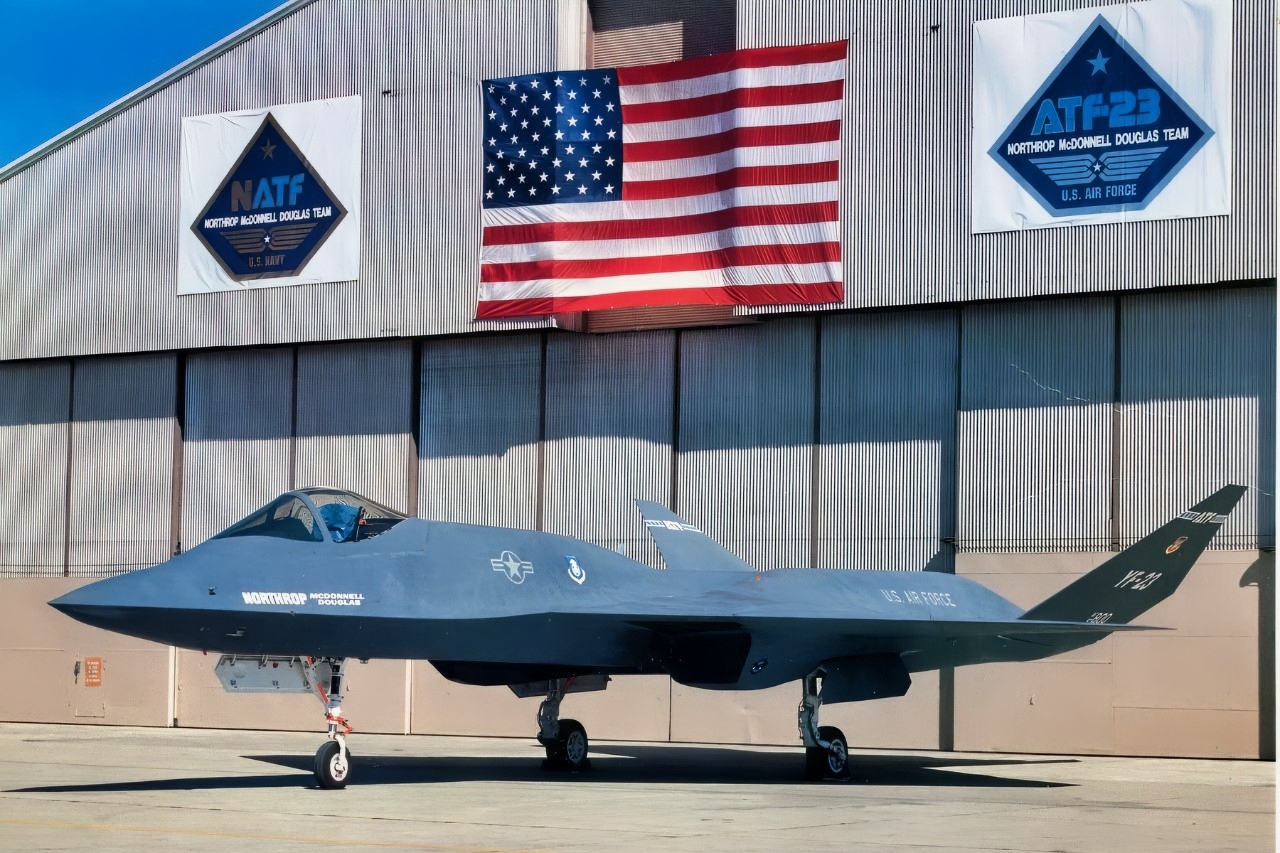
PUBLISHED on August 9, 2025, 03:15 PM EDT – Key Points and Summary – The U.S. Navy’s F/A-XX next-generation fighter program is in peril, and its fate may rhyme with a controversial decision from history: the YF-23 Black Widow II.
-The F/A-XX, much like the technically superior YF-23 prototype in 1991, is at risk of being canceled not for its design, but due to political, budgetary, and bureaucratic pressures.
-With funding battles already underway, unless lessons are learned from the YF-23’s defeat, the Navy’s more advanced fighter could once again be sacrificed for reasons that have more to do with politics than combat potential.
YF-23: What the Future Holds for the F/A-XX?
“History doesn’t repeat itself, but it often rhymes.”
This oft-repeated apothegm about the cycles of human history, usually attributed to 19th-century American humorist and writer Mark Twain, was not originally meant as a commentary on the state of the U.S. Navy’s F/A-XX future fighter program.
However, Twain’s pithy observation seems to have some special resonance when it comes to the prospects for Northrop Grumman’s next-generation carrier-based fighter.
Specifically, it suggests that if those pushing for the F/A-XX do not heed the lessons of the past, they will not be so much “condemned to repeat it” as they will be fated to hear its familiar, dissonant rhyme echoing through the halls of power where the ultimate fate of the F/A-XX will be decided.
History Is Back…
It was only last week, of course, that Northrop Grumman released the first images of their version of the F/A-XX.
As those pictures were unveiled and examined by media and the defense industry alike, the similarities between the F/A-XX and Northrop’s last attempt at an advanced fighter, the YF-23, were noted with interest and some measure of irony.

YF-23 National Security Journal Photo. Taken by Harry J. Kazianis at U.S. Air Force Museum on 7/19/2025.

YF-23 National Security Journal Photo. Taken by Harry J. Kazianis at U.S. Air Force Museum on 7/19/2025.
After all, not only does the F/A-XX bear an uncanny resemblance to the YF-23 in many technical and design aspects, but the disturbing similarities between the two programs don’t end there.
Just as was the case with the YF-23 two decades ago, the more things change, it seems, the more they remain the same; and one of the elements that continues to be the same despite changes in technology, budgets and requirements is the way that political and bureaucratic factors can be allowed to trump technical superiority.
YF-23: The Failure
In the U.S. Air Force’s Advanced Tactical Fighter (ATF) competition program several decades ago, a particular mix of budgetary, political, and bureaucratic forces lined up against the sixth-generation YF-23, despite its qualitative advantages over the winning YF-22, which was the technically less capable of the two aircraft.
When the decision was finally made in 1991, that particular constellation of forces overpowered those constituencies that favored the technically more advanced YF-23.
In today’s competition for the next-generation carrier-based fighter, a similar but historically distinct set of budgetary, political, and bureaucratic forces has mobilized against those who are in favor of the sixth-generation F/A-XX as the U.S. Navy’s next-generation carrier-based fighter.
If the past is prologue, this historically distinct constellation of forces could overwhelm good engineering choices, just as a slightly different set of forces did in 1991.
When the Air Force conducted its ATF competition to replace its, at the time, aging F-15 and F-16 fighters, Northrop entered its YF-23 into that competition. The YF-23 was a highly innovative and audacious design that, in all key areas, far outclassed anything the rest of the industry could muster in competition with it.
The YF-23 Black Widow II Should Have Won
The YF-23 offered stealth that was orders of magnitude better than anything else in the sky; supercruise performance that left anything else on the drawing boards in the dust; and overall performance that was light years beyond anything anyone else was working on or proposing.
Yet, the YF-23 lost the competition because its patent technical superiority was set aside in favor of the Lockheed Martin YF-22, which more closely matched the Air Force’s longer-term budgetary, industrial, and strategic concerns. The Air Force’s decision ultimately came down to choosing a solution to a problem that had much more to do with politics than potential, with Capitol Hill and Congress rather than combat capability.
This is the specter of failure that has many people in the defense industry and with security analysts across the spectrum wary of the current state of the F/A-XX fighter program. The technical features of the YF-23 that made it the clear favorite over the YF-22 are already on display in the pictures and concept art of the F/A-XX.
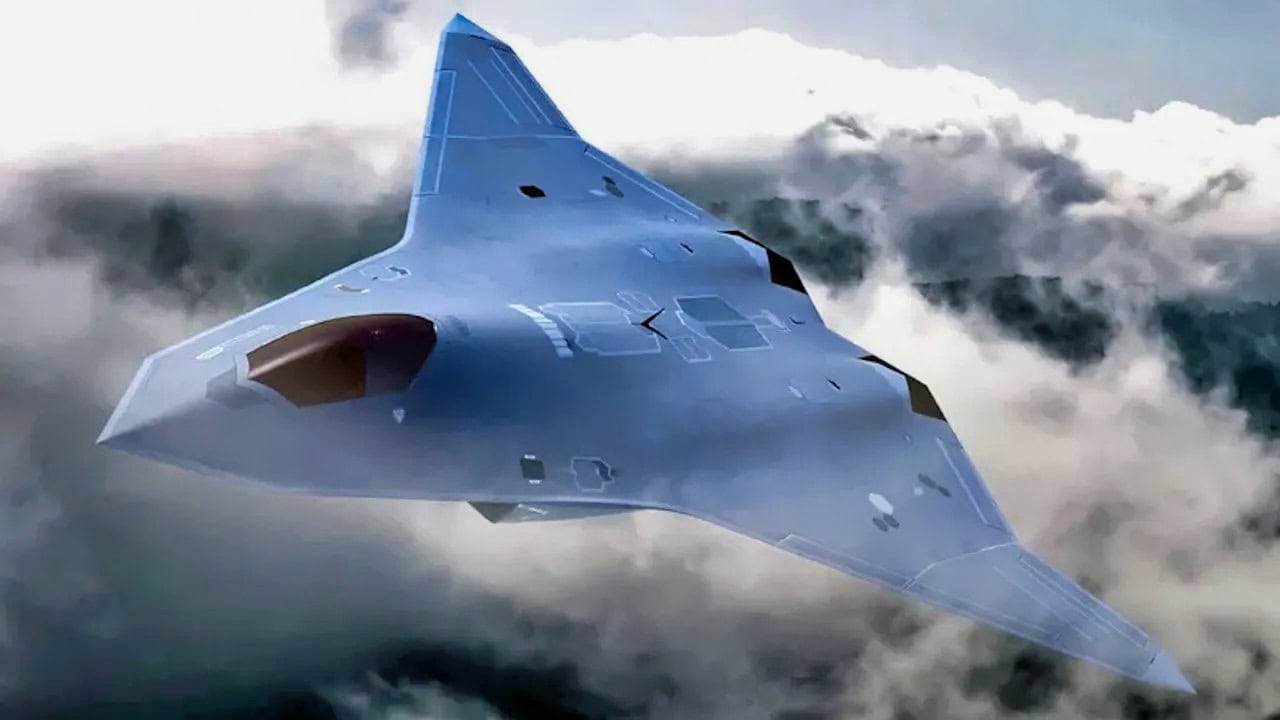
F/A-XX Fighter Mockup. Image Credit: Creative Commons.
Stealth features, overall performance, and an aggressive wing design are already apparent in the pictures, while the promise of features such as artificial intelligence-based navigation, decision-making, and target prioritization will make the F/A-XX appear like a much more formidable aircraft than the YF-23 was thought capable of being. What that doesn’t do is protect the F/A-XX from the same political and bureaucratic factors that killed the YF-23 back in 1991.
This is because the F/A-XX is still very much in the development phase. As such, and with the military already struggling to make ends meet, the F/A-XX program could very well be caught up in the various forces of uncertainty about its funding and likelihood of ever reaching full-rate production.
As the U.S. military and the nation it defends deal with the various calls for service priorities to be either increased or decreased across the board in order to deal with the competing demands of modernization and warfighting readiness, the F/A-XX could very easily be the one that takes the hit just as the YF-23 did over two decades ago.
Same Old Problems
At this stage in the carrier-based fighter procurement process, those advocating for the F/A-XX would be well advised to recognize the influential constellation of politics and industrial interests that will bear on this upcoming competition, as well as their relative lack of influence over them.
The constellation driving this subsequent fighter acquisition is, as hinted above, a closely related but also historically distinct variation on the one that drove the ATF competition between the YF-22 and YF-23. There was nothing even remotely analogous to today’s ATF-size crosscurrent of broad pressure that the Air Force’s F-47 program should come first, plus tightening budgets, which will demand early cuts to non-first-in-line programs.
As currently constructed, the F/A-XX is, for all its technical superiority, a target standing in the sights of many important constituencies. It is a target not because it is a flawed design—though it could end up being just that—but because it is the victim of a battle over scarce resources, and most of those resources have other places they want to go first. If this next fighter is to be the most important aircraft the U.S. Navy fields in the next few decades, as I think it almost certainly will be, then if Northrop Grumman is left out in the cold once again, it will be not in spite of its superior technology, but because of those other factors.
And it’s those political and industrial forces, which then become bureaucratic ones at both the Pentagon and the Capitol, that could ultimately doom the F/A-XX before it has even begun.
In the case of the YF-23, the reasons for it being overlooked in favor of a far less capable fighter were that it was Northrop Grumman’s entry into the competition, that it was a radically new airframe design, that it was more expensive, and that it didn’t fit the rest of the Air Force’s entrenched vision of its future force structure.
The Navy’s own current and projected future fleet and priorities, which include everything from modernization to budgeting and ship construction, could just as easily be used against the F/A-XX, a fighter that clearly will have greater technical and warfighting superiority over everything else in the skies but one that can be easily sacrificed for budgetary and bureaucratic reasons, just as the YF-23 was two decades ago.
The F/A-XX: Will It Happen?
All of which leaves the F/A-XX and the YF-23 where?
If the Pentagon, the Navy, and Northrop Grumman have in fact learned the lessons of history, then the F/A-XX may have the opportunity that the YF-23 never did to prove that it can be a truly transformational aircraft that can usher in a new era of naval air power.
But if, as is all too likely, some variation on the constellation of political and industrial forces that caused the YF-23 to be derailed is allowed to predominate in this competition, then the same fate will no doubt await the F/A-XX: it will be consigned to the dustbin of defense procurement history on the basis of politics rather than prowess or even potential.
If this happens, the history of the F/A-XX, while not repeating exactly the history of the YF-23, will have doubtless rhymed with it.
And if this is the way the histories of these two aircraft ultimately rhyme, then perhaps the real lesson of history will be that the more things change, the more they stay the same, particularly when it comes to defense spending.
About the Author: Dr. Andrew Latham
Andrew Latham is a non-resident fellow at Defense Priorities and a professor of international relations and political theory at Macalester College in Saint Paul, MN. You can follow him on X: @aakatham. He writes a daily column for National Security Journal.
Defense Watch
F/A-XX Is the YF-23 on a Carrier?


AZ
August 13, 2025 at 8:52 am
Well, the fact that the YF-23 does continue to exist, albeit in museums is good. The powers that conspired against it weren’t able to physically destroy it like they did with Northrop’s original flying wing design, the XB-35, and XB-49 decades before. The political opposition wanted those wings destroyed so they wouldn’t cause questions about the decisions taken and motivation behind them… so that nobody asked why flying wings weren’t developed further… and the uncomfortable truths behind that. The YF-23 existing makes the forces behind its cancellation answer those questions every day, and may help save the F/A-XX in the end.
William
August 19, 2025 at 9:37 am
Maybe if we did not have to pay for “birthday” parades, constant golf outings, gifted air force one retrofits, among other stupid expenditures, we would have more money to design and produce needed air frames to outfit our defense forces!
Raptor1
September 6, 2025 at 4:46 pm
William, get a hold of yourself. Your hatred and complete disregard for fact, or the matter under discussion foe that matter, detracts from something you didnt even have the wherewithall to comment on… The article equates the conpetion between YF-22 and YF-23 to the NGAD and F/A-XX program… But NGAD and F/A-XX arent even in competition with each other, theyre not even for the same service.
You must have missed that, being all clouded up by your clear TDS. Maybe you just came on here to grandstand more of the crazy-crazy that the world is mocking. Nice job.