

PUBLISHED on August 6, 2025, 11:40 AM EST – Key Points and Summary – The Pentagon’s move to defund the Navy’s F/A-XX sixth-generation fighter in favor of the Air Force’s F-47 could put U.S. aircraft carriers at “greater risk” in a future conflict.
The Flaw – Top Navy officials, like CNO nominee Adm. Daryl Caudle, warn that without the F/A-XX’s crucial long-range capabilities, carriers would be forced to operate dangerously close to sophisticated threats, such as China’s “carrier killer” missiles.
-This would threaten not only the carriers’ survivability but also their ability to maintain air superiority against China’s own emerging sixth-generation fighters.
What Will The Lack Of The F/A-XX Mean For US Aircraft Carriers?
The Pentagon and the Navy are locked in a tug of war over the F/A-XX sixth-generation stealth fighter, a program the DoD moved to defund in favor of the Air Force’s F-47.
The Trump administration’s budget request for fiscal 2026 includes just $74 million in R&D funds for the effort, far less than the nearly $900 million the Navy had previously planned to spend in FY’26, according to budget documents.
The Pentagon is prioritizing the development of the Air Force’s sixth-generation fighter, the F-47, planning to spend $3.5 billion on the program in fiscal 2026. DOD officials have said they’re willing to slow down the Navy program due to concerns about the ability of the defense industrial base to handle two sixth-generation fighter programs simultaneously.
Help Coming From Congress?
The Senate Appropriations Committee has advanced a draft defense spending bill that would reverse the Pentagon’s plan to freeze the US Navy’s F/A-XX next-generation carrier-based combat jet program.
In addition, the legislation includes funding for the US Air Force to continue with the acquisition of E-7 Wedgetail airborne early warning and control aircraft, something the Department of Defense also wants to cut.
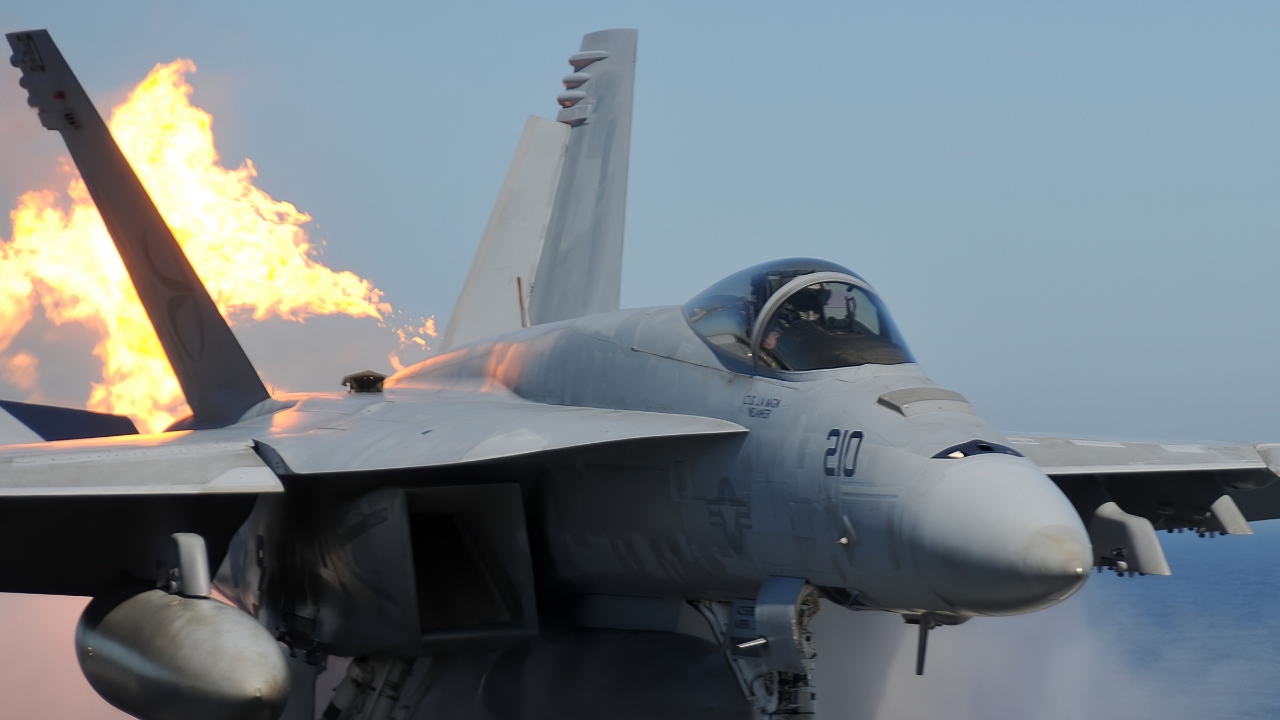
The Navy needs and wants to replace the fourth-generation F/A-18E and F Super Hornet jets on Navy carriers. However, the DoD’s shifting $500 million from the F/A-XX program to the F-47 could mean leaving our aircraft carriers at risk in the Indo-Pacific if war with China happens.
Putting Aircraft Carriers At Risk In The Pacific
The lack of a dedicated sixth-generation fighter like the F/A-XX could put US Navy aircraft carriers at greater risk in future conflicts.
The F/A-XX is designed to address the limitations of current carrier-based aircraft, particularly in terms of range and advanced capabilities, which are crucial for operating in contested environments. Without it, carriers might be forced to operate closer to potential threats, increasing their vulnerability.
“Without a replacement for the F/A-18E/F Super Hornet and E/A-18G Growler, the Navy will be forced to retrofit 4th generation aircraft and increase procurement of 5th generation aircraft to attempt to compete with the new 6th generation aircraft that the threat is already flying,” Adm. Daryl Caudle told lawmakers.
President Trump has nominated Caudle to be the Navy’s next Chief of Naval Operations.
“Nothing in the Joint Force projects combat power from the sea as a Carrier Strike Group, which at the heart has a nuclear-powered aircraft carrier (CVN). To maintain this striking power, the CVN must have an air wing that is comprised of the most advanced strike fighters.
“Therefore, the ability to maintain air superiority against peer competitors will be put at risk if the Navy is unable to field a 6th Generation strike fighter on a relevant timeline.
“Without a replacement for the F/A-18E/F Super Hornet and E/A-18G Growler, the Navy will be forced to retrofit 4th generation aircraft and increase procurement of 5th generation aircraft to attempt to compete with the new 6th generation aircraft that the threat is already flying,” Caudle added.
Limited Range of F/A-18 Family of Aircraft
The current F/A-18 Super Hornet and EA-18G Growler have limitations in range and payload, making them vulnerable to advanced adversaries, such as Chinese aircraft and long-range missiles.
The F/A-XX was designed to provide the Navy with the range and advanced stealth and sensor technology capabilities necessary to operate effectively in future high-threat environments, including potential conflicts with near-peer adversaries like China.
Without a capable replacement for the F/A-18, carriers may need to operate closer to enemy threats to launch and recover aircraft, exposing them to greater risk from long-range missiles and other weapons.
In the event of a war with China, especially over Taiwan, US carriers would be vulnerable because the Chinese, due to the close proximity of their mainland to Taiwan, would be under fire from mainland missiles as well as from naval vessels.
F/A-XX’s Impact on Air Superiority
The F/A-XX is also seen as crucial for maintaining air superiority, which is essential for the success of carrier operations.
Beijing’s major defense and aerospace firms are currently testing at least two possible sixth-generation combat aircraft – the Chengdu J-36 and the Shenyang J-50. The two Chinese design teams also have two previously developed 5th-generation fighters in production, the Chengdu J-20 that first flew in 2011 and the Shenyang J-35A/B/B.
The J-35B model has been confirmed as a carrier-capable platform that will be launched by catapult aboard the newest PRC Navy (PLAN) CV 18 Fujian. Having some response to these Chinese fighters is the only way to remain “relevant” in the air battlespace of the future, he said.
Delays in the F/A-XX program, or a decision not to develop it, could force the Navy to rely on expensive upgrades to its older fourth-generation F/A-18 aircraft, potentially hindering its ability to project power and respond to threats.
The Pentagon, however, has concerns about whether the aerospace industry can develop both the F/A-XX and the Air Force’s Next Generation Air Dominance (NGAD) fighter simultaneously.
But failure to do so would risk losing the Navy’s carriers in a wartime situation.
About the Author: Steve Balestrieri
Steve Balestrieri is a National Security Columnist. He served as a US Army Special Forces NCO and Warrant Officer. In addition to writing on defense, he covers the NFL for PatsFans.com and is a member of the Pro Football Writers of America (PFWA). His work was regularly featured in many military publications.
More Military
The F-117 Stealth Fighter Won’t Stay Retired


