

Iran Really Wants the U.S. To Accept Its Hormuz Deal – Iran is pushing the United States to accept an offer President Donald Trump has already rejected, suggesting it will reopen the Strait of Hormuz within seven days if Washington eases economic sanctions against Tehran and lifts its naval blockade. The new offer comes as the war surpasses its eighth month, as traffic through the Strait of Hormuz begins to dip again, and as Iranian attacks on commercial ships moving through the waterway escalate.
Iranian Foreign Minister Abbas Araghchi said on Sunday, October 18, that Tehran’s previous offer is still on the table, despite weeks of unsuccessful negotiations and an American counterproposal that Iranian officials also rejected.
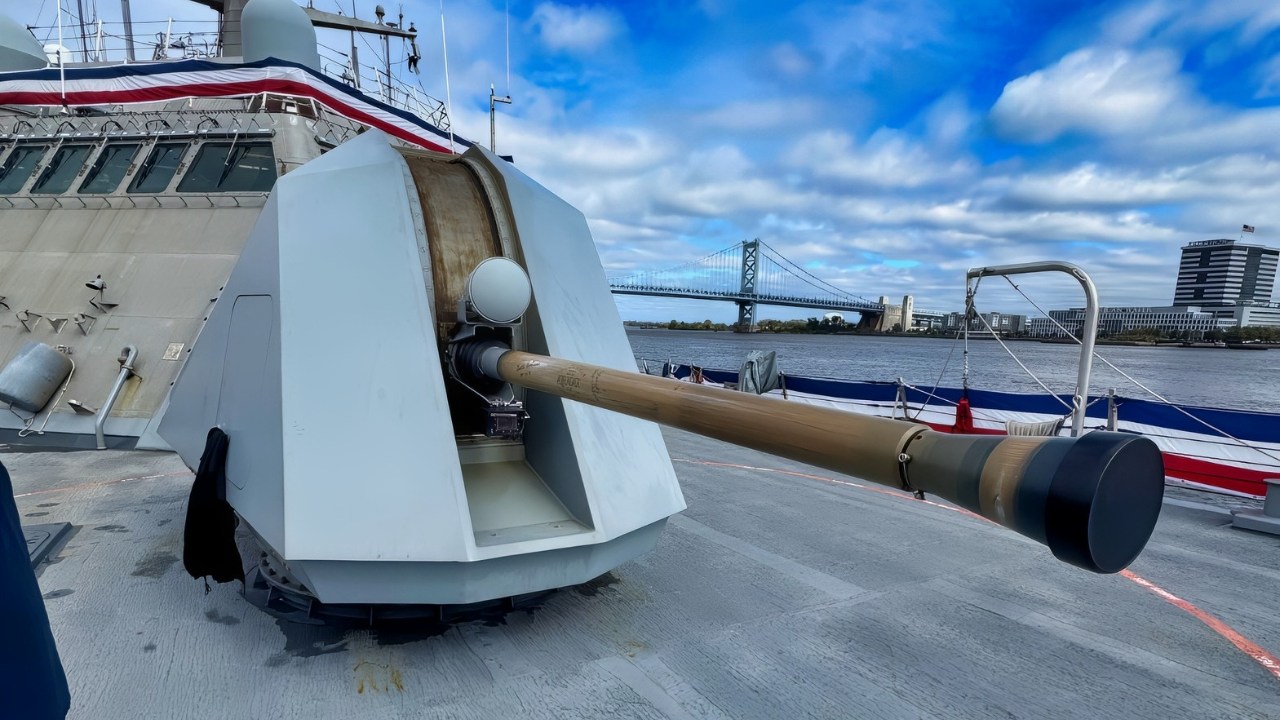
Littoral Combat Ship Deck Gun U.S. Navy. Image Taken by National Security Journal on October 14, 2025.
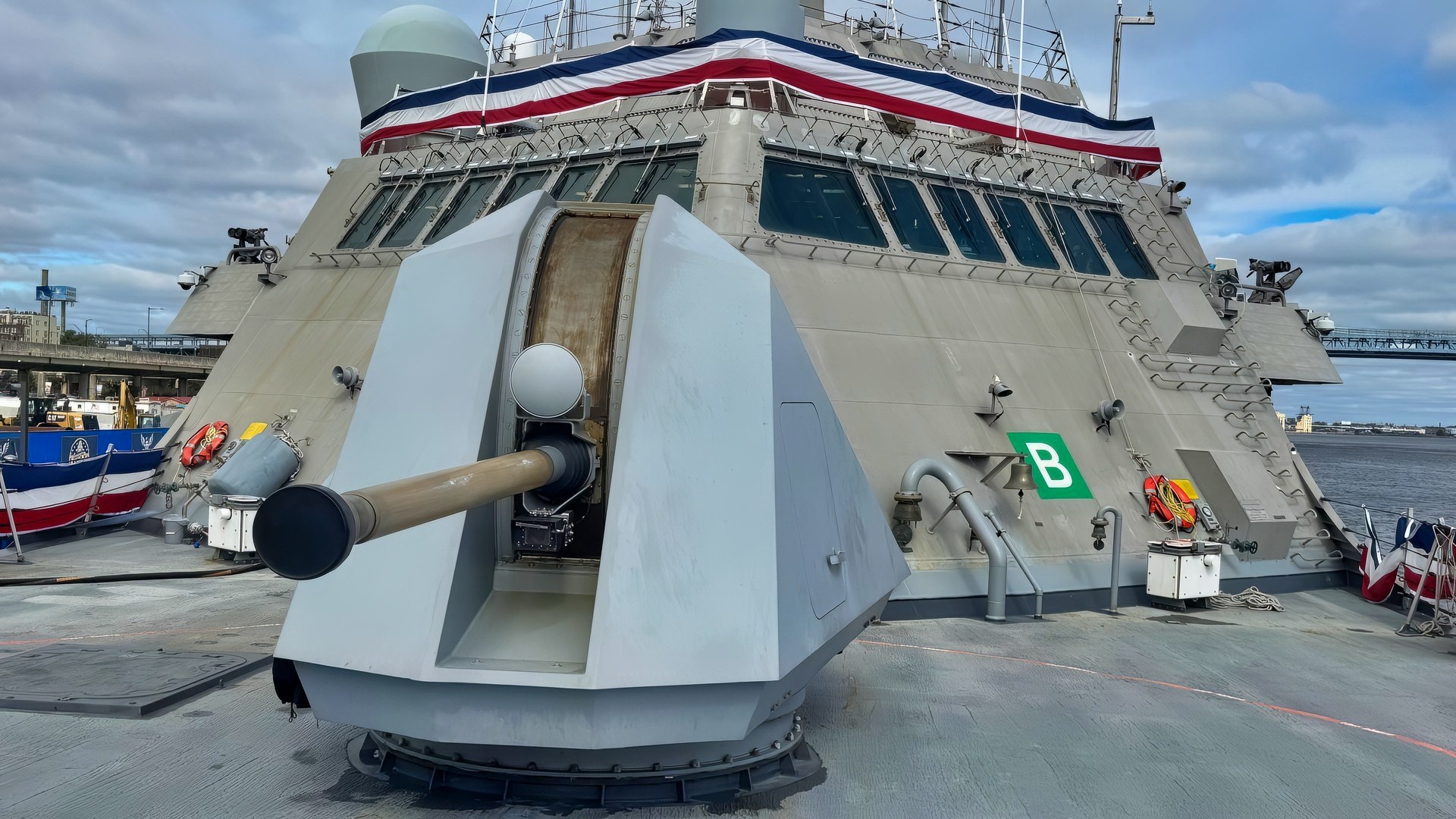
Littoral Combat Ship USS Cooperstown. Image Taken By National Security Journal October 14, 2025.
Araghchi told reporters during a visit to Baghdad for an Organization of Islamic Cooperation meeting that the United States could reopen the strait almost immediately, but only if it is willing to make concessions.
Hormuz Open Within Days?
Reuters reported on Sunday that Araghchi is again insisting that Tehran is willing to refrain from striking ships in the Strait of Hormuz. He also said that Tehran is considering feedback received from American negotiators through intermediaries.
Under the proposal, shipping through the strait would return to normal within six days of Washington accepting Iran’s conditions, with more negotiations beginning on the seventh day. Araghchi said the offer has not been withdrawn despite the lack of progress since it was first made in late September.
What Does Iran Really Want?
When President Trump rejected Iran’s offer, it wasn’t because he doesn’t want to see the Strait of Hormuz open — it was because Tehran is making demands for concessions and expects that the United States will permit it to begin rebuilding its nuclear program. Washington will not accept those demands.
Iran first put forward the proposal on September 24 during meetings on the sidelines of the United Nations General Assembly in New York. Araghchi formally announced the proposal the next day, telling reporters that Tehran had presented Washington with a roadmap for reopening the strait and restarting peace negotiations.
In exchange, Iran expected Washington to end its naval blockade on Iranian ports and temporarily waive sanctions on Iranian oil exports. Both sides would also agree to a ceasefire covering other regional conflicts, including Lebanon. Tehran also sought security guarantees and the release of frozen Iranian assets.
For the deal to take effect, Washington would need to make all those concessions before Tehran ended its strike campaign against commercial shipping through Hormuz. Effectively, the deal was that the United States must end its war against Iran — military and economic — in exchange for Iran ceasing strikes against ships in the Strait of Hormuz.
It was hardly a compelling offer to Washington.
Tehran says the conditions align with the memorandum of understanding negotiated in June, which established a temporary ceasefire. The agreement soon collapsed after Iran violated the deal.
A major point of contention in Iran’s proposal, however, is the order in which both countries would implement their commitments, with Iran expecting the United States to make changes first.
Washington Seeks Nuclear Concessions
President Trump rejected Iran’s seven-day proposal in September. Speaking to reporters outside the White House on September 26, before departing for Tennessee, Trump was unequivocal about his position on the offer.
“I reject their proposal,” he said.
The president also said Iranian officials wanted an agreement only because they were losing badly, though he said he is still interested in ending the conflict through negotiations. But he described Tehran’s proposal as unacceptable.
Then, two days later, Trump publicly denied reports that he was considering offering Iran sanctions relief and access to frozen funds in exchange for concessions on its nuclear program.
Nonetheless, American negotiators continued to communicate with Tehran through Qatari mediators, and Araghchi received Washington’s counterproposal in Doha on September 29.
On October 6, Vice President JD Vance provided additional details about Washington’s demands in a Reuters interview in Fairbanks, Alaska. The vice president said that Iran was expected to make a “meaningful” reduction in its uranium enrichment capacity before the war can end. The comments were interpreted by some as a potential watering down of the U.S. position, providing Iran an opportunity to scale back its nuclear ambitions – rather than ending them entirely – to appease Washington and make securing a deal more likely.
Hormuz Disruption Continues
Meanwhile, shipping through the Strait of Hormuz remains disrupted and vulnerable to further attacks, keeping pressure on global energy markets.
Despite ongoing diplomatic efforts, Washington and Tehran seem no closer to an agreement.
Critically, Tehran also remains steadfast in its belief that uranium enrichment is a “sovereign right” that the regime will not give up.
About the Author: Jack Buckby
Jack Buckby is a British researcher and analyst specializing in defense and national security, based in New York. His work focuses on military capability, procurement, and strategic competition, and he produces and edits analysis for policy and defense audiences. He brings extensive editorial experience, with a career output spanning over 1,000 articles at National Security Journal, and has previously authored books and papers on extremism and deradicalization.


