

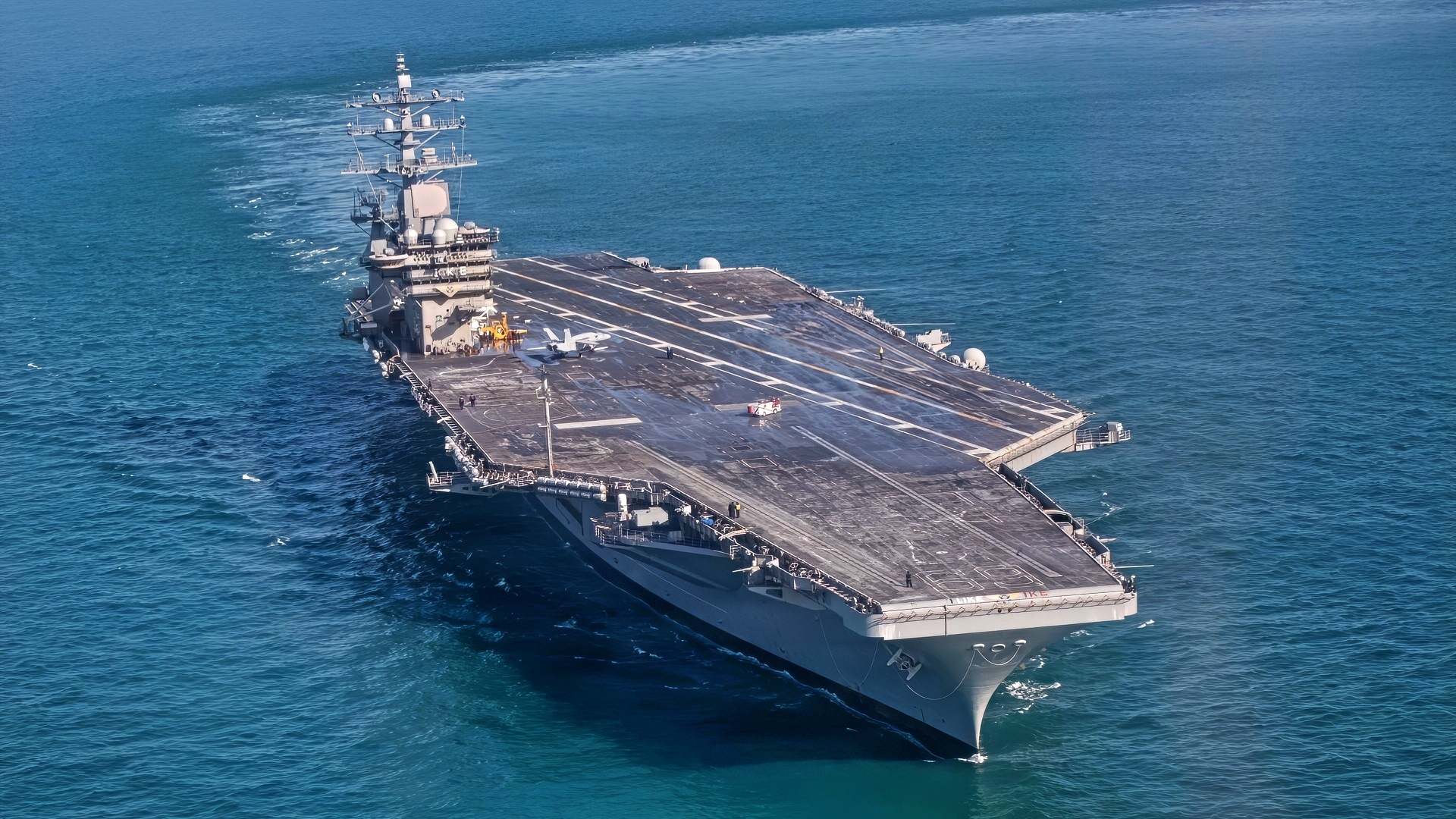
Iran claims that its attacks in the Strait of Hormuz have pushed American forces away from its coastlines, despite Washington’s insistence that more than one billion barrels of crude oil have passed through the region under its military protection.
19 large ships exited the strategic waterway last week, according to Kpler trade tracking data obtained by Reuters.
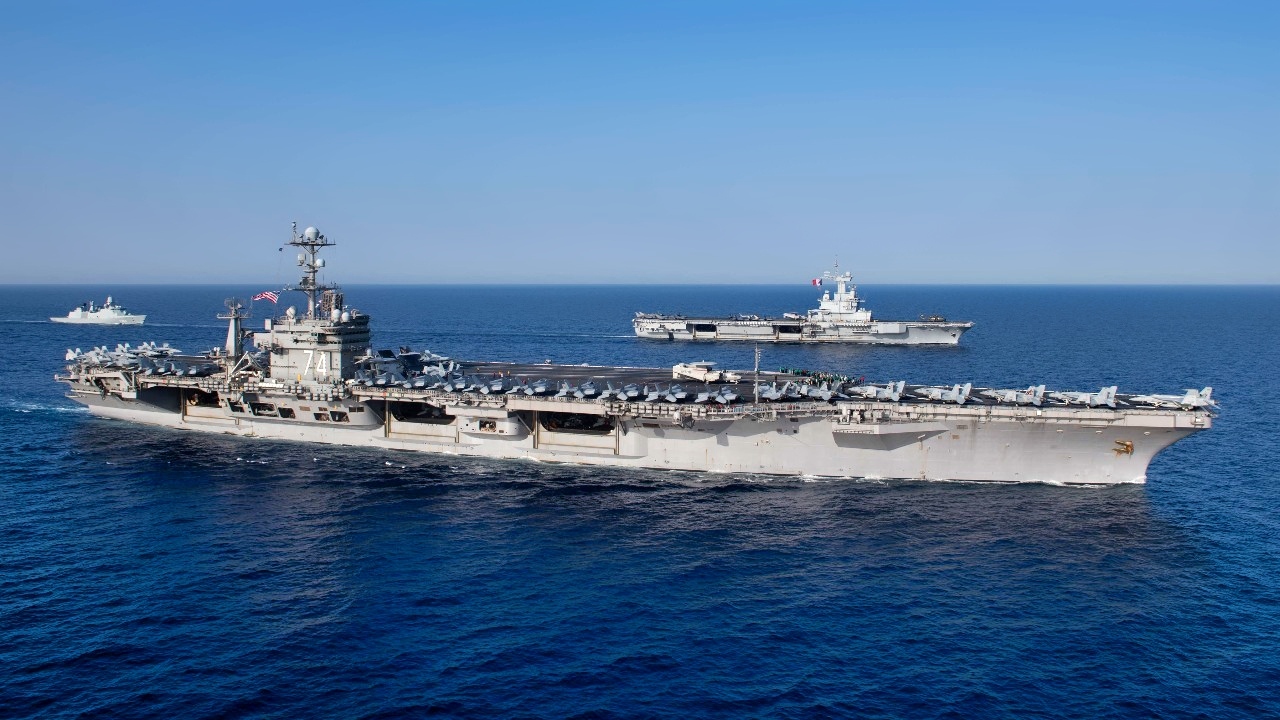
The French Marine Nationale aircraft carrier FS Charles De Gaulle (R91), and the aircraft carrier USS John C. Stennis (CVN 74) are underway in formation in the Red Sea, April 15, 2019. The John C. Stennis Carrier Strike Group is deployed to the U.S. 5th Fleet area of operations in support of naval operations to ensure maritime stability and security in the Central Region, connecting the Mediterranean and the Pacific through the western Indian Ocean and three strategic choke points. (U.S. Navy photo by Mass Communication Specialist Seaman Joshua L. Leonard)

Amphibious assault ship USS Makin Island (LHD 8) and aircraft carrier USS Nimitz (CVN 68) perform expeditionary strike force (ESF) operations, Feb. 15, 2023 in the South China Sea. Nimitz Carrier Strike Group (NIMCSG) and amphibious assault ship USS Makin Island (LHD 8) with embarked 13th Marine Expeditionary Unit are conducting joint ESF operations, representing unique high-end war fighting capabilities, maritime superiority, and power projection, demonstrating the U.S. commitment to our allies and partners in the Indo-Pacific region. (U.S. Navy photo by Mass Communication Specialist 3rd Class Kendra Helmbrecht)
Some ships may have transited with their AIS transponders turned off.
Before the conflict, about 125 large commercial ships transited the Strait daily on average, carrying 20% of global crude oil and LNG trade.
Iran Sees Victory in its Strategy To Hinder Shipping Traffic
Iranian officials have sought to interpret the latest developments as proof of their strategy to slow down commerce through the Strait.
“Today, having suffered painful blows at the hands of valiant fighters and the guardians of the Strait of Hormuz, they (the U.S.) do not venture beyond the Arabian Sea,” Supreme Leader Mojtaba Khamenei declared on Monday.
Iranian state media report that American warships have been ordered to pull back from positions near Chabahar and the Gulf of Oman towards the center of the Arabian Sea.
There is no public evidence to suggest this is true, and the Iranian regime is known for its bombastic, propagandistic claims.
Marines Injured
Eight Marines were injured during an Iranian attack on a non-military vessel they were traveling on earlier this month, American officials confirmed to The Washington Post.
They described the injuries as minor, noting that the staff had suffered from smoke inhalation and head trauma.
The Pentagon and CENTCOM are yet to publicly comment on the matter.
According to the Pentagon’s public list of casualties, 861 American personnel have been wounded and 19 killed since the start of the hostilities on February 28, although the Post notes that the conflict’s death toll may have been undercounted.
Reopening Gulf Trade Routes
Meanwhile, Washington is seeking to position itself as a winner in the wider effort to reopen Gulf trade routes.
“CENTCOM forces have supported more than one billion barrels of crude oil leaving the Gulf.
That’s one billion barrels of crude oil out through the Strait of Hormuz in the last couple of months.
We’ve reached this significant milestone while assisting over 2,000 commercial ship transits through the strait by providing coordinated protection.
Clearly, momentum is building,” CENTCOM’s commander Adm. Brad Cooper noted during a video briefing on September 19.
Energy Secretary Chris Wright took the opportunity to boast in a similar vein on Sunday, saying during an appearance on Fox News that “The running average today is almost 13 million barrels a day.” He added that one day last week saw more than 20 million barrels of oil transit the Strait.
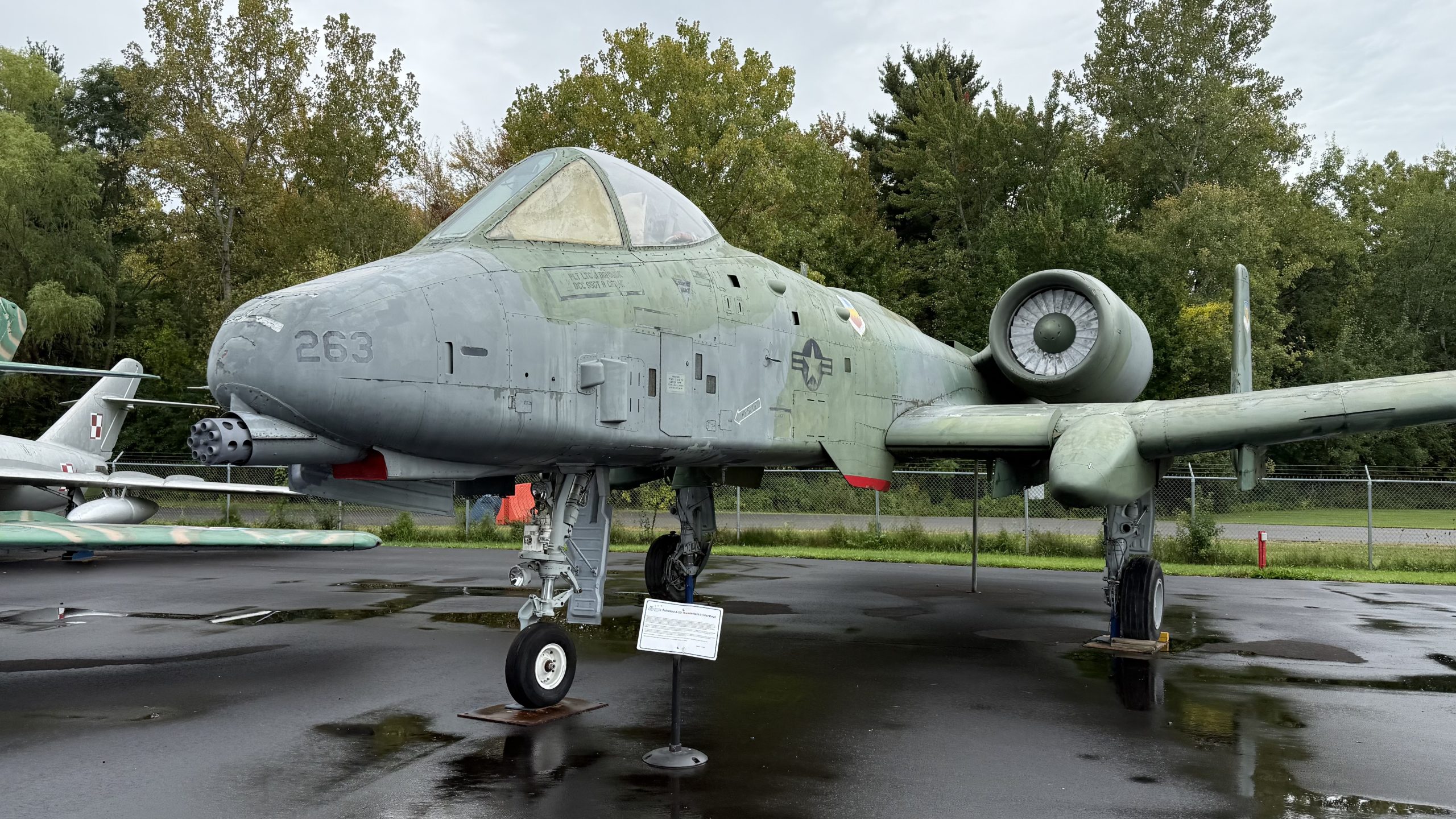
A-10 Warthog. National Security Journal Photo Taken on 9/26/2026.
However, commercial figures tell a more nuanced story.
Preliminary Kpler data cited by Reuters now puts September crude exports through the Strait of Hormuz at about 9.719 million barrels per day.
Total crude exports from Saudi Arabia, the UAE, Iraq, Oman, Qatar, Kuwait and Iran reached 16.328 million barrels per day, the highest since the war began, though still around 3.2 million barrels per day below February’s prewar level.
Treasury Secretary Scott Bessent was even more optimistic than Wright in his optimism, claiming on Fox News that “The straits are open” and that exports are now averaging 15 to 22 million barrels per day.
“The score is United States one billion… Iran zero,” Bessent said, referring to Washington’s claims of facilitating over one billion barrels of oil exports via the Strait versus the zero barrels of flows Iran can record due to the ongoing naval embargo.
Escalation Looms over Stalled Diplomatic Efforts
President Trump has dismissed Iran’s latest proposal to reopen Hormuz within seven days.
Iran’s foreign minister, Abbas Araghchi, suggested the Islamic Republic was ready for either diplomacy or renewed fighting.
“At the same time, we stand ready for diplomacy. It is up to President Trump to choose,” he said on NBC’s Meet the Press.
U.S. Ambassador to the UN Mike Waltz argued that Iran has been seeking “everything up front,” including billions in sanctions relief and access to frozen assets, before promising further talks.
President Masoud Pezeshkian gave a similar response to CBS’s Face the Nation, saying that “We’re not seeking war. War was imposed on us.” However, he suggested that Iran would still engage in negotiations if their demands were met.
About the Author: Georgia Gilholy
Georgia Gilholy is a journalist based in the United Kingdom who has been published in Newsweek, The Times of Israel, and The Spectator. Gilholy writes about international politics, culture, and education. You can follow her on X: @llggeorgia.


