

President Donald Trump rejected Iran’s latest proposal to reopen the Strait of Hormuz over the weekend. By Monday, however, there was less agreement on whether a new round of talks was planned.
“I reject their proposal,” Trump said to reporters Saturday.

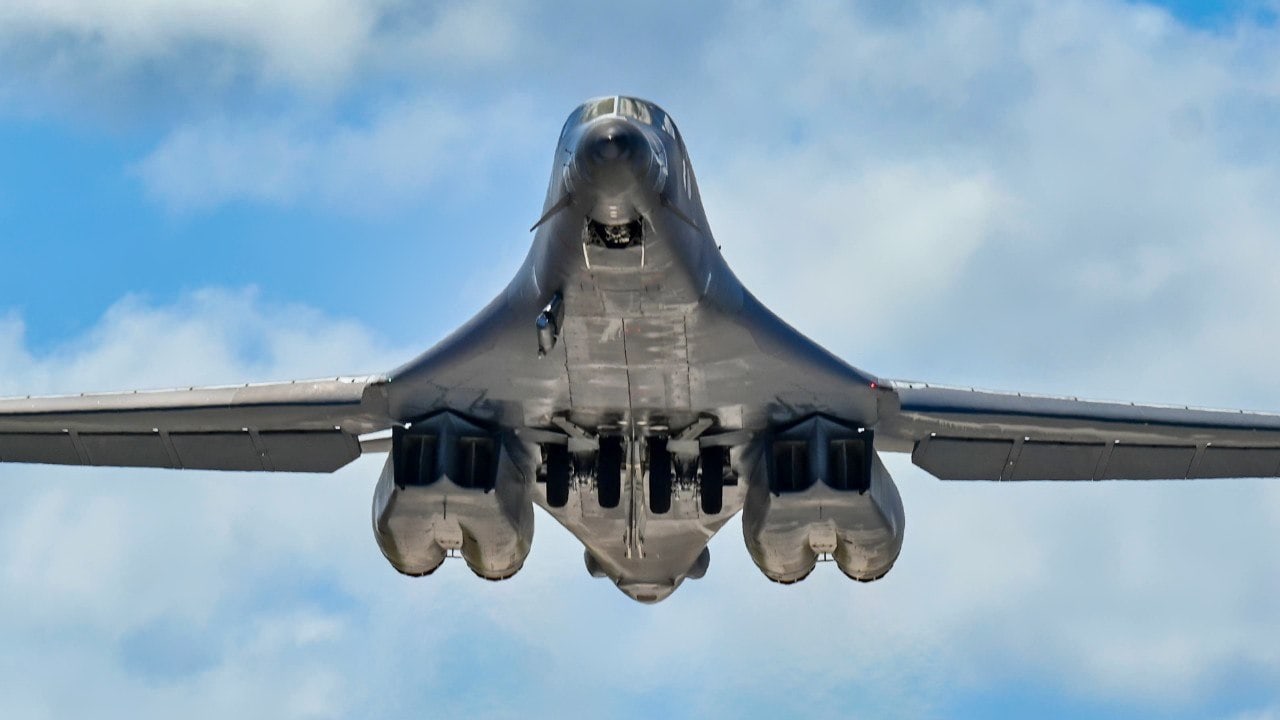
A B-1 Bomber, 77th Weapons Squadron, Dyess Air Force Base, Texas, performs a fly by for the crowd during an Air Force Firepower Demonstration at Indian Springs Air Force Auxiliary Field, Nev., Oct 8. The Firepower Demonstration is held twice a year and gives the general public a glimpse into the Air Force’s ability to perform its wartime mission.
USAF Photo by MSgt Robert W. Valenca (Released)

B-1B Lancer Bomber. Image Credit: Creative Commons.
Iran had proposed a seven-day plan under which the strait would reopen, and negotiations would resume, provided Washington first met a series of demands from Tehran.
Trump suggested that Iran wanted a deal because it was “losing so badly.”
Tehran Disagrees With Trump
Trump seemed to leave the door open to more talks on Sunday.
“I expect more talks with Iran [this week],” Trump revealed to Axios, adding that he still opposed the proposal on the table. “They overplayed their hand,” he said. When asked whether renewed U.S. strikes were a possibility, Trump said, “I am always thinking about it.”
“Iran’s delegation in New York has no plans for negotiations with the United States,” Iran’s official IRNA news agency reported, citing an unnamed source close to the delegation.

A U.S. Air Force B-1B Lancer assigned to the 34th Expeditionary Bomb Squadron, Ellsworth Air Force Base, S.D., descends after conducting aerial refueling with a KC-135 Stratotanker assigned to the 506th Expeditionary Air Refueling Squadron in support of Bomber Task Force 25-1 over the Pacific Ocean, Mar. 4, 2025. Bomber Task Force enhances readiness, to include joint and multilateral, to respond to any potential crisis or challenge in the Indo-Pacific. (U.S. Air Force photo by Airman 1st Class Alec Carlberg)
IRNA said that Tehran had already made its position clear to Washington via Qatar and was waiting for the U.S. reply.
The Iranian delegation is set to depart New York on Tuesday.
Foreign Minister Abbas Araghchi laid out Iran’s proposal during the U.N. General Assembly last week.
The ‘Seven-Day’ Plan
The plan would involve a halt to hostilities across the region, including Lebanon.
Washington would lift its naval blockade of Iranian ports, ease sanctions against Iranian oil and free up at least $12 billion in Iranian assets that are frozen.
Iran would then reopen the Strait of Hormuz within seven days, with negotiations set to continue.
“Our conditions are clear,” Araghchi said Sunday, adding that progress on reopening the strait would depend on Iran meeting its demands. “Only a negotiated solution can get them out of this deadlock.”
Araghchi used an interview with NBC News’ Meet the Press on Sunday to underscore that Tehran’s proposal was still on the table, despite Trump’s public dismissal of it.
“If they are serious that they want a deal to reopen the Strait of Hormuz, now there is the possibility,” he said. Araghchi said Iran sought an end to the freeze on its assets and the sale of its oil as part of an agreement.
But he added that Iran was “fully prepared for the war to be resumed.”
“We stand firm in the face of any new aggression, even if it comes to a doomsday war,” he said.
“At the same time, we stand ready for diplomacy,” he added. “It is up to President Trump to choose.”
Masoud Pezeshkian, Iran’s president, made similar arguments in an interview with CBS’ Face the Nation, taped Friday, before Trump rejected Tehran’s proposal.
“We’re not seeking war. War was imposed on us,” Pezeshkian said, arguing that Washington should honor past commitments before negotiations could resume.
When asked about the economic pressure on Iran and the prospect of concessions, Pezeshkian said his government was “doing everything humanly possible, but not through bullying and coercion intended to force us into submission.”
U.S. Says Iran Wanted Concessions First
One issue for Washington was Tehran’s proposed order of business.
U.S. Ambassador to the United Nations Mike Waltz said Iran was demanding concessions before negotiations on more substantial issues, including the lifting of the U.S. blockade of Iranian ports, the unfreezing of Iranian assets and the lifting of sanctions on Iranian oil.
A senior Iranian official told Reuters on Friday that Tehran would not show any flexibility on its nuclear program, even if Washington accepted the Hormuz proposal.
The official said Iran would not abandon its “right” to enrich uranium.
Trump has said multiple times that the United States will not allow Iran to acquire a nuclear weapon.
Tehran has made it clear that it believes it has leverage over the U.S. with the strait.
Mohsen Rezaei, secretary of Iran’s Supreme National Security Council, said on state television last week that Washington had just a few days to accept Tehran’s conditions.
Iran’s Oil Will Go to China
“We have given the Americans four to five days to comply with Iran’s conditions,” Rezaei said.
“Until Iran’s conditions are accepted, there will be no negotiations and the Strait of Hormuz will not be reopened.”
Oil prices jumped on Monday, following Trump’s rejection of the Iranian proposal.
Brent crude futures were up $3.43, or 3.29%, at $107.75 a barrel, as of 5:40 a.m. GMT.
The Trump administration argues that its pressure on Iran’s economy is paying off.
Treasury Secretary Scott Bessent said on Fox News’ Sunday Morning Futures that only about 15 million barrels of Iranian oil remained for delivery.
“They will have nothing to trade for anything, probably within the next two weeks. They are going to make their final deliveries of oil to China, and then they will have nothing,” he said.
About the Author: Georgia Gilholy
Georgia Gilholy is a journalist based in the United Kingdom who has been published in Newsweek, The Times of Israel, and the Spectator. Gilholy writes about international politics, culture, and education.


