
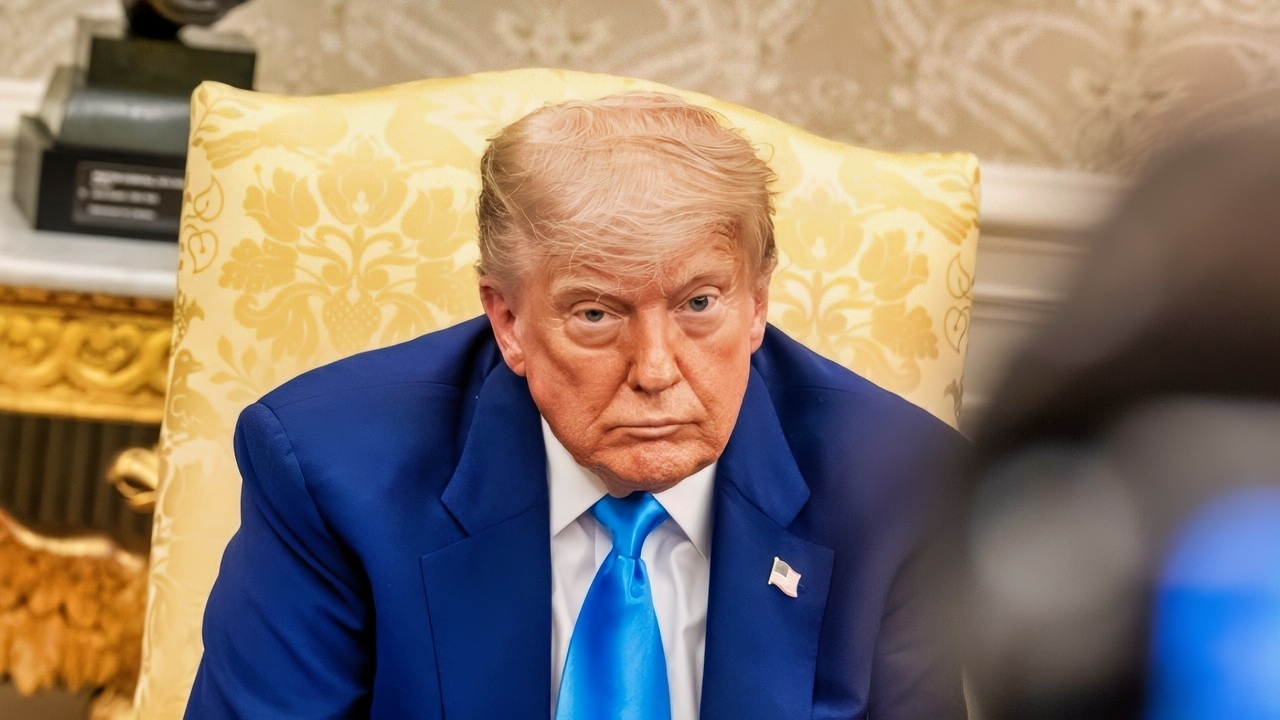
Trump Suggests Iran Could “Take Out” San Diego or Los Angeles – U.S. President Donald Trump proved again this week that he cares little about the political conventions that have long governed how politicians — and presidents — speak in front of the media, telling a crowd of supporters that Iran could “take out” major U.S. cities and that it would be worth it to prevent the Islamic regime from building a nuclear weapon.
At least that’s how many experts interpret it.

Iran’s Drones That Russia Is Using. Image Credit: Creative Commons.

Iran Missiles. Image Credit: Creative Commons.
Speaking at a campaign rally in Grand Island, Nebraska, on Monday, October 5, the president argued that today’s higher prices are a small price to pay to prevent Iran from posing a greater future threat to the United States.
“It’s a small price to pay for keeping the world safe, for keeping our country safe. They could take out a city. Let ‘em take out Los Angeles, let ‘em take out San Diego. This is a very small price to pay, and it’s going to be over with very soon,” the president said.
The comments immediately sparked outrage.
Trump also predicted, again, that the war would be over “very soon.”
California Leaders Respond
Predictably, California Governor Gavin Newsom responded in outrage, describing the president as “deranged and dangerous” and accusing Trump of encouraging a foreign adversary to attack American cities.
Los Angeles Mayor Karen Bass also condemned the comments, arguing that the president’s responsibility is to protect U.S. citizens rather than make comments that, she believes, could endanger them.
San Diego Mayor Todd Gloria said the city was not “collateral damage” and that residents should not be treated as a “small price to pay” for the war.
Candidates Distance Themselves From Trump
While President Trump made a largely philosophical point about war, Democrats and Republicans alike are distancing themselves from the president as voters consider which party they would prefer to control Congress this November. Jim Desmond, a Republican candidate for Congress in California, said that he “vehemently” disagreed with the president.
“America must stand up to Iran and defend our interests, but the first responsibility of our Commander in Chief is to protect the American people and our homeland,” Desmond said in a statement.
What Did Trump Mean?
The context of the president’s comments matters, even if they were unusually direct for a president.
Immediately before he mentioned Los Angeles and San Diego, President Trump was discussing the economic consequences of the war with Iran and arguing that elevated prices were a temporary hurdle and a cost worth accepting to ensure American security. The president then appeared to shift to a different argument — that Iran must be prevented from developing weapons that are capable of threatening an American city, and that doing so would incur worthwhile costs.
Trump, therefore, was not literally suggesting that he would prefer or allow Iran to destroy Los Angeles or San Diego — but that Iran was on the verge of building weapons that could destroy American cities, and indeed that any response from Iran now is worth it to prevent a larger, more destructive response in the future.
The White House also offered a more innocent interpretation of the president’s comments than Democrats and reporters have presented.
On Tuesday, October 6, White House Communications Director Steven Cheung pushed back against claims that the president was encouraging Iran to attack the two California cities and said that he was, instead, describing what could happen if Tehran were allowed to develop the weapons necessary to threaten the United States.
Cheung said that the controversy surrounding the comments was a media “freakout” and said that Trump’s war against Iran was intended to prevent the kind of attack that the media was outraged Trump was talking about.
Could Iran Strike California?
If Trump were actively encouraging Iran to strike California, his comments would be tantamount to torment and teasing — because Iran does not currently possess a publicly known missile capable of striking either Los Angeles or San Diego directly from Iranian territory.
Iran has spent decades building an extensive ballistic missile arsenal that includes weapons capable of striking targets all over the Middle East, and even Europe. Reaching California, however, would require an intercontinental ballistic missile with a range of around 7,000 miles. That same missile would also need to evade tracking throughout the journey. Iran does not have that capability — or, at least, that capability has never been publicly demonstrated.
Iran’s longest-range missiles include the Sejjil and Khorramshahr-4, which have publicly recognized ranges of around 2,000-2,500 kilometers. In March, however, Iran fired two missiles towards Diego Garcia, roughly 4,000 kilometers away. One missile failed, and another was intercepted, demonstrating that Iran’s reach may be technically a little longer—but still nowhere near California.
About the Author: Jack Buckby
Jack Buckby is a British researcher and analyst specializing in defense and national security, based in New York. His work focuses on military capability, procurement, and strategic competition, and he produces and edits analysis for policy and defense audiences. He brings extensive editorial experience, with a career output spanning over 1,000 articles for National Security Journal, and has previously authored books and papers on extremism and deradicalization.


