
Trump Has Few Good Options Left In Iran – President Donald Trump is closing in on the November 3 midterm elections and the second half of his final term as president — and his options in the fight against Iran are narrowing. American military planners are preparing for another potential escalation, including the deployment of the famed “Mother of All Bombs” against Iran’s Pickaxe Mountain, and Iranian attacks against commercial shipping in the Strait of Hormuz continue. In fact, Iranian strikes on ships are now reaching some of their highest levels since the conflict began, even as the U.S. and its international partners push traffic through the waterway beyond its pre-war levels.
The president said earlier this month that he would not order major new strikes before the midterm elections. This week, a CNN investigation also claimed that military planners are preparing to deploy the largest conventional bomb in the U.S. arsenal against Iran’s Pickaxe Mountain nuclear site. But as the conflict continues, Trump’s time runs out, and negotiations remain deadlocked, analysts and observers increasingly fear another American offensive is inevitable, and that escalation could trigger a wider conflict that further disrupts the global economy.

B-52 Stratofortress, 40th Expeditionary Bomb Squadron, loaded with 12 Joint Direct Attack Munitions (JDAM) heads toward Iraq with it’s new mission directive. The bomber’s mission is to provide close air support for coalition troops stabilizing the country of Iraq, April 15, 2003. Operation Iraqi Freedom is the multi-national coalition effort to liberate the Iraqi people, eliminate Iraqi’s weapons of mass destruction and end the regime of Saddam Hussein. (U.S. Air Force photo by Tech. Sgt. Richard Freeland) (Released)
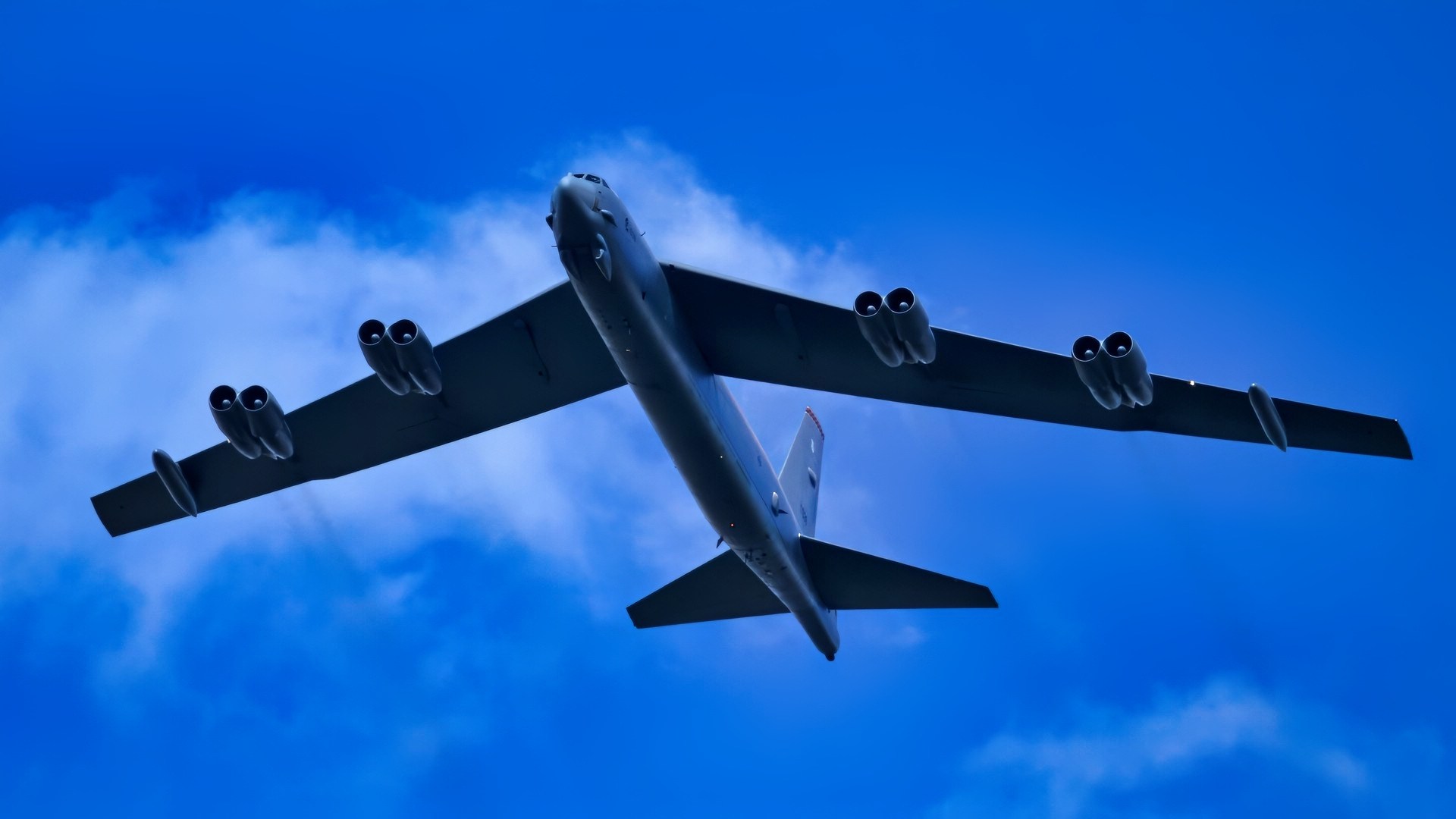
Boeing B-52H Stratofortress. Image Credit: Creative Commons.
Iran Adopts New Tactics
Meanwhile, as Tehran watches and waits, it has begun adopting new military tactics and reportedly started preparing for war this week.
On October 15, reports described how Iran has ordered a full military mobilization and placed its armed forces on the highest alert for the next 72 hours.
The same day, reports also revealed that Iran has allegedly been sending messages to Hezbollah to “prepare for war,” with reports describing how Iranian officials believe that another American attack is imminent.
The Pentagon is continuing to move additional forces to the Middle East, with the U.S. now operating three aircraft carrier strike groups in and around the region. But the increased American presence has so far failed to persuade Tehran to reopen the Strait of Hormuz without conditions, and the less Tehran has to lose, the less willing it seems to negotiate.
A new Al Jazeera analysis, published on October 15, examined how the president’s military options are narrowing, with experts warning that another bombing campaign could be extremely expensive, ineffective, and even dangerous for U.S. forces.
Iran Complicates U.S. Operations
On Wednesday, reports revealed that Iran had begun using new methods to identify and attack vessels attempting to pass through the waterway.
The new system no longer relies on communication and monitoring stations situated on the Iranian coastline, which have been largely destroyed by U.S. strikes.
Instead, Iran is using small boats that carry unarmed observers to physically identify potential targets, allowing Iranian forces to continue threatening vessels despite the damage to its surveillance infrastructure.
The attacks are relentless and have expanded beyond the Strait of Hormuz, with vessels now facing threats in the Gulf of Oman and waters around neighboring Gulf states.
The United Kingdom Maritime Trade Operations center recorded 15 attacks against commercial vessels between October 6 and 14. Those figures are high, and they are especially impressive given that Iran is now literally replacing its surveillance infrastructure with military service members on boats.
And the tactic is working. A Reuters report confirmed that two vessels had sunk near the Strait of Hormuz following recent attacks, including the Singapore-flagged container ship GFS Pride. All 21 crew members were evacuated safely.
Nonetheless, the attacks prove that Iran still retains the ability to disrupt international shipping even after months of American military operations.
Maintain Pressure Or Escalate Again?
The president still has several options with Iran, but none guarantees an end to the war.
Washington could, for example, continue its naval blockade against Iranian ports, while also continuing to escort commercial vessels through the Strait of Hormuz.
This would keep economic pressure on Tehran and could eventually trigger an economic crisis, but it may not stop Tehran’s ideological rulers from striking its neighbors’ energy infrastructure.
Alternatively, Trump could authorize another wave of air and missile strikes targeting Iranian military facilities and missile launchers — or perhaps even Iran’s nuclear infrastructure.
But with Iran adapting to these new attacks and making it more difficult to locate its remaining weapons, this strategy is not guaranteed to work, either — and if any of the strikes fail, Iran could again lash out at its neighbors’ energy infrastructure.
Then there is the possibility of a limited ground operation against Kharg Island, which handles about 90% of Iran’s oil exports.
Former CENTCOM commander General Joseph Votel has suggested that between 800 and 1,000 American troops could hypothetically seize the island, although holding it as Iranian forces retaliate could be extremely difficult.
Trump needs to choose, and must do it soon — but every next move is likely to be met with an Iranian response that could further damage the global economy and cause new problems in the Middle East.
About the Author: Jack Buckby
Jack Buckby is a British researcher and analyst specializing in defense and national security, based in New York. His work focuses on military capability, procurement, and strategic competition, and he produces and edits analysis for policy and defense audiences. He brings extensive editorial experience, with a career output spanning over 1,000 articles at National Security Journal, and has previously authored books and papers on extremism and deradicalization.


