


Greenland is pushing back against U.S. President Donald Trump’s assertion that a major resource exploration campaign is set to begin, saying such projects face years of approvals.
Earlier this year, Trump courted controversy after suggesting Washington could annex the Danish territory.
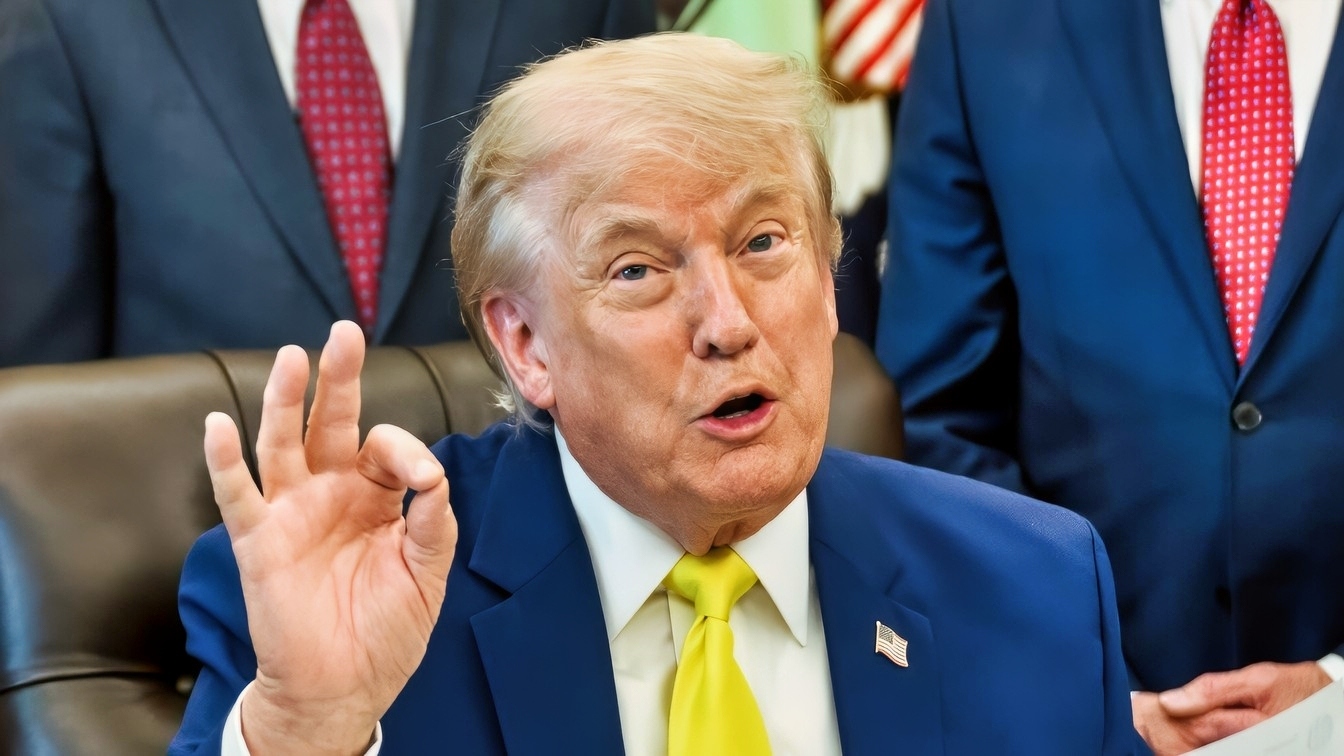
President Donald J. Trump, joined by Secretary of Energy Chris Wright, Secretary of the Interior Doug Burgum, EPA Administrator Lee Zeldin and others, makes an announcement on coal, Thursday, June 4, 2026, in the Oval Office. (Official White House Photo by Molly Riley)

Donald Trump In New York City White House Photo
“Massive Oil, Gas, and Mineral Exploration is getting ready to begin in our new and beautiful Greenland!” President Donald Trump said on Wednesday.
The Associated Press noted that it was unclear which specific projects he was referring to.
His statement follows an Alaska visit, about three weeks after President Trump announced an agreement with Denmark and Greenland that would allow far more U.S. military installations in the territory, without offering special concessions to resource explorers.
Greenland Challenging the Timing of the Explorations
Jørgen Hammeken-Holm, Greenland’s deputy mining minister, told CNN, “We are very far away from ‘massive’ exploration.”
He noted that many smaller explorations are underway but could take years to become effective.
Naaja H. Nathanielsen, member of the Danish Parliament for Greenland, challenged the view that there will be an immediate bonus.
“I recognize the worry in the U.S., but I think it’s not a quick fix. There are no Greenlandic barrels of oil on the ground in any near future,” she told AP.
Nathanielsen speculated that concern about gas prices just before the November 3 midterm elections was what motivated Mr. Trump.
The Security Deal Details
While Greenland is a semi-autonomous Danish territory, the text of the agreement signed by President Trump, Danish Prime Minister Mette Frederiksen, and Greenlandic Prime Minister Jens-Frederik Nielsen on Sept. 22 reaffirms “the sovereignty and territorial integrity of the Kingdom of Denmark” and Greenland’s residents’ “right to self-determination.”
Denmark’s Foreign Ministry told Reuters that it does not give US investors any preferential treatment for natural resources compared with investors from other NATO allies, partners, and European Union members.
It also calls for expanded facilities at Pituffik Space Base and other defense sites at Narsarsuaq and Mestersvig, with implementation to be negotiated.
It bans potentially threatening investment from any nation outside the NATO alliance, its partners and the European Union.
It also recognizes the critical need for cooperation on minerals but does not grant specific exploration rights.
It takes effect once both Denmark and Greenland have approved it in parliament.
At the signing, Greenlandic Prime Minister Jens-Frederik Nielsen stressed the security partnership: “Your security is our security and our security is your security,” he said in remarks published by the White House.
Current Oil Projects Will Take Time to Begin Commercial Drilling
In 2021, Greenland ended new licensing for oil and gas exploration while allowing existing licenses to continue.
The Greenlandic government said it made the decision in part because “considerations of the impact on climate and the environment also play a central role in the decision.”
The issue with delays is clear given Jameson Land’s recent history, a project in which U.S. companies are deeply involved.
In an August 12 regulatory filing from 80 Mile, owner of the licenses for the Greenland project, it states that current regulatory guidelines call for drilling to begin in winter 2027.
Its American partner, Greenland Energy Company, announced last month that the government completed environmental surveys to facilitate permits, including soil and freshwater samples, and wildlife and botanical studies.
Rare Earth Minerals and Missile Defense Are Also of Interest To Washington
Washington’s keen interest in Greenland also spans rare earth minerals, to reduce dependence on China, and missile defense.
This latter point, defending the territory, may explain why Mr. Trump has continued to claim it is second to none.
The United States already has the Pituffik installation in the territory for missile detection, defense, and space observation, the AP noted.
Mr. Trump also boldly claimed that “Any future attack on the United States will have to come across Greenland, where our Defense will routinely knock down drones, missiles, or any other form of weapon not yet even conceived.”
One month ago, the President committed to “building two very major military bases” in the territory. The security agreement specifies potential bases, while resource projects are subject to separate permitting processes.
About the Author: Georgia Gilholy
Georgia Gilholy is a journalist based in the United Kingdom who has been published in Newsweek, The Times of Israel, and the Spectator. Gilholy writes about international politics, culture, and education.


