
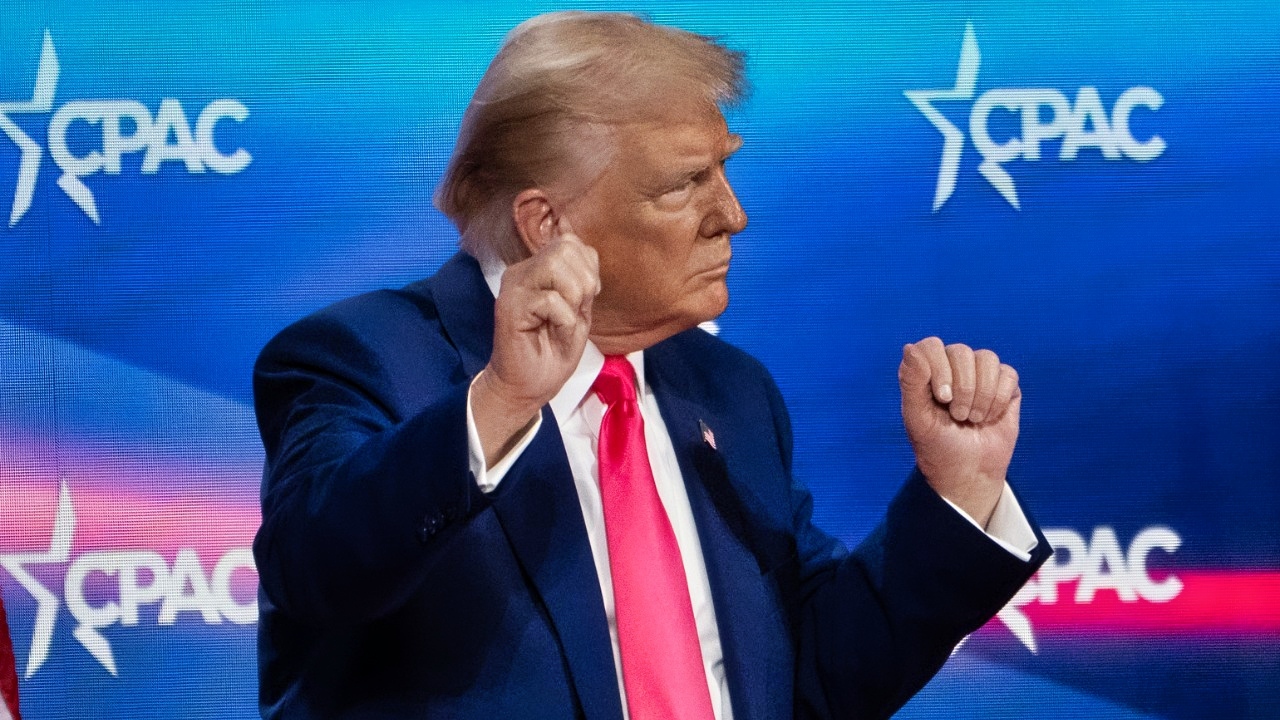
U.S. President Donald Trump this week said that he believes the war with Iran will end in the coming months, but not before the November midterm elections.
The president, based on recent events and statements by officials in Tehran, suggested that the Islamic regime is looking to inflict as much pain as possible to weaken Washington’s negotiating position and lose the Republicans the midterm elections.

A B-2 Spirit stealth bomber assigned to Whiteman Air Force Base takes off from Oscoda, Michigan, Aug. 5, 2025. Maintainers and pilots conducted a flight crew changeover during Exercise Northern Strike, a National Guard Bureau sponsored training event designed to build readiness with joint and partner forces in all domains of warfare. (U.S. Air National Guard photo by Staff Sgt. Whitney Erhart)
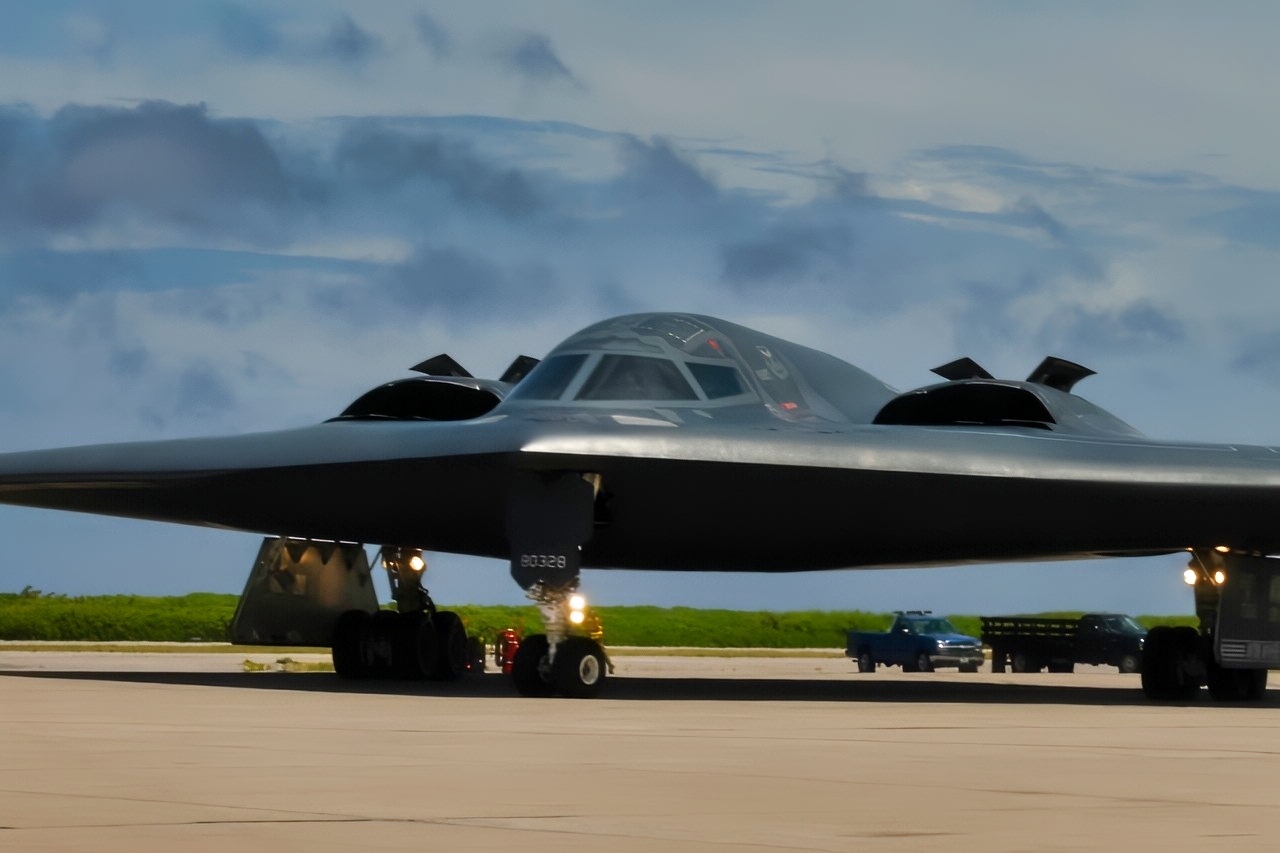
A B-2 Spirit Stealth Bomber, deployed from Whiteman Air Force Base, Missouri, taxis for take off at Naval Support Facility Diego Garcia, in support a Bomber Task Force mission, Aug. 26, 2020. BTF missions allow U.S. Strategic Command to provide persistent, long-term bomber presence to aid in U.S. Indo-Pacific Command’s commitment to a free and open Indo-Pacific. (U.S Air Force photo by Tech. Sgt. Heather Salazar)
The president made the comment to reporters on Wednesday, September 9, before heading to the Republican midterm convention in Dallas.
The president predicted that the fighting could end shortly after Americans cast their votes on November 3.
“I think war is going to end immediately after the election because they can’t hold out any longer.
They’re desperate to try and affect the election,” Trump told reporters.
He also confirmed that his administration is not seeking to resume negotiations with Iran, despite recent reports that Tehran rejected yet another peace proposal from Washington, delivered through mediators.
Trump then repeated the same argument during his convention speech at the American Airlines Center, describing the seven-month conflict with Iran as a necessary operation to prevent Iran from building nuclear weapons.
President Trump Warns Voters
The president’s comments seem to admit the war is far from over, but also to tell voters he believes he should not be punished for a conflict he sees as necessary and that will end soon anyway.
The president also appears to be basing his view on assessments by analysts and statements from Iranian officials about how the war is impacting Republicans’ chances of maintaining control of Congress.
And Tehran has indeed directly stated that it will not end the war until Washington makes concessions, or until Trump leaves office.
Speaking to PBS NewsHour in August, Mohammad Reza Naghdi, a senior advisor to the commander of the Islamic Revolutionary Guard Corps (IRGC), said that Tehran could deliberately prolong the conflict until Trump leaves office.
“One way is to prolong this war until we get to the next term of the presidency and cause attrition, so that if anyone else wants to attack Iran, they will know there is a cost,” he said.
Naghdi also said that Iran needed to establish sufficient deterrence to ensure that an adversary like the United States would not strike again — further reinforcing the idea that Iran is not going to back down any time soon.
Former Iranian Foreign Minister Manouchehr Mottaki also argued that Tehran should pursue the defeat of “Trumpism” by pushing back until at least November.
He argued that continued pressure on U.S. energy supplies and disruption in the Strait of Hormuz would raise the domestic political cost of the war for Trump and his party.
The War Is Escalating
Trump knows the situation is bad, and he presumably knows it could get worse.
This week, Iran claimed to have attacked 10 ships near the Strait of Hormuz after the United States struck five Iranian oil tankers.
That exchange sent oil prices skyrocketing to over $100 per barrel on Wednesday, and the prices have not since fallen.
Trump also acknowledged that Americans are paying for the disruption caused by the Iran war, but predicted during his convention speech that prices would begin to fall after the election.
He also argued that Iran could not sustain the economic pressure it is currently facing indefinitely, and that something would soon need to change.
But there may be little opportunity left for energy prices to fall significantly before Election Day, which means Americans will be forced to pay higher prices to heat their homes through the winter.
They’ll also have to pay more for food and goods as record-setting diesel prices raise the cost of transportation costs.
Trump Bets Voters Will Wait
Trump, then, is asking Americans to accept the economic costs of the war for at least several more weeks – but in reality, those prices will likely remain high for several more months, and potentially deep into next year.
But the polling suggests that Trump is overly optimistic – and even promising $5,000 rebate checks to voters if the Republicans maintain control of Congress may not be enough to turn things around.
A Reuters/Ipsos poll published September 4 found that only 25% of Americans believed the war was worthwhile, while another survey put Trump’s overall approval rating at 33%, the lowest level Reuters/Ipsos has recorded during either of his terms.
Democrats also appear to be more motivated to vote than Republicans, with some 46% of Democrat respondents telling Reuters/Ipsos pollsters in late August that they were highly enthusiastic about the midterms, compared to 31% of Republicans. Independents also leaned Democrat over Republicans 36% to 22%.
Trump may be betting that voters will wait and that transparency about the nature of the conflict will be enough, but the polls – and the economic data – suggest Republicans are in for a tough election indeed.
About the Author: Jack Buckby
Jack Buckby is a British researcher and analyst specializing in defense and national security, based in New York. His work focuses on military capability, procurement, and strategic competition, producing and editing analysis for policy and defense audiences. He brings extensive editorial experience, with a career output spanning over 1,000 articles at National Security Journal, and has previously authored books and papers on extremism and deradicalization.


