

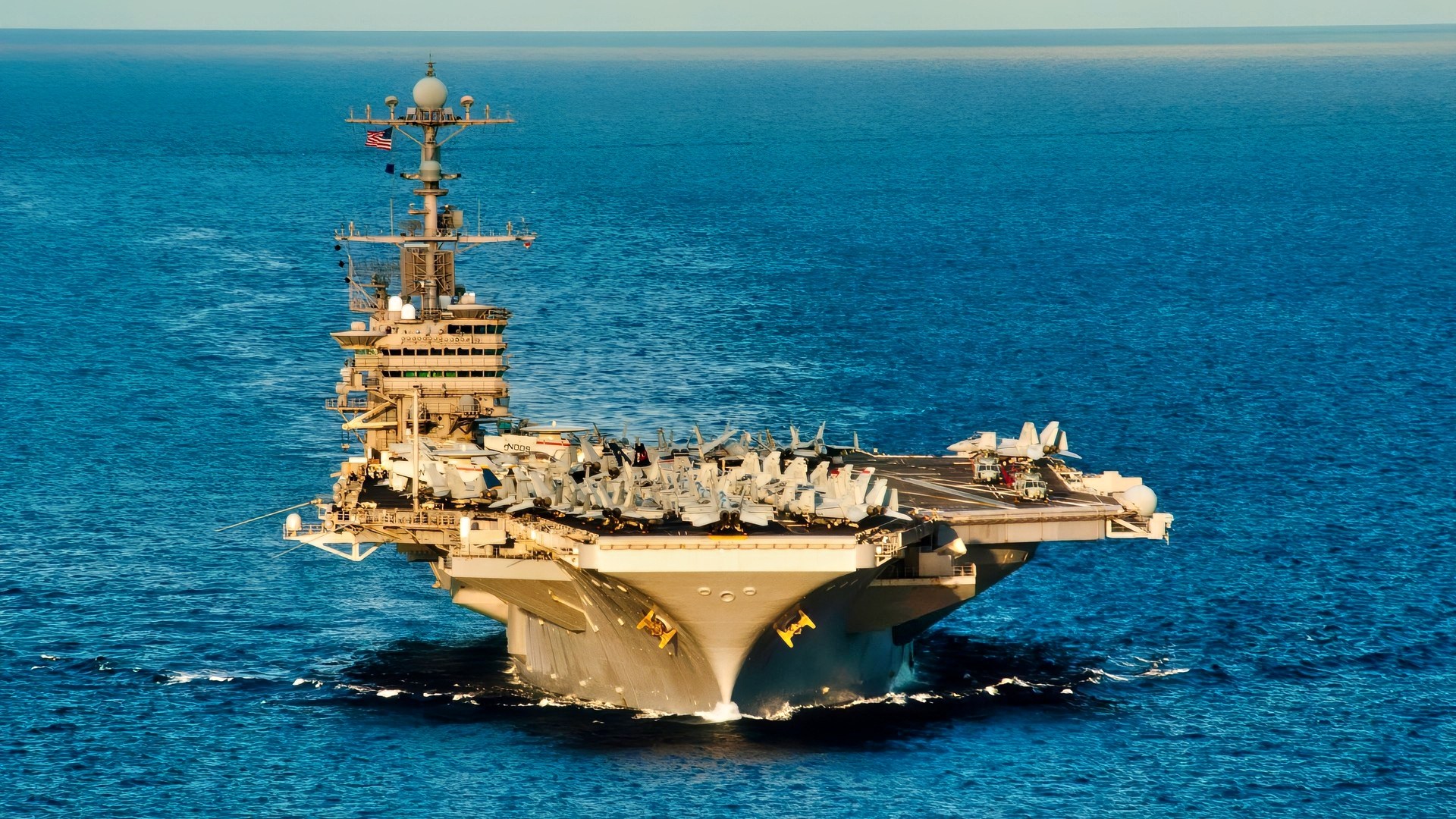
Iran’s currency has reached a record low, and long lines have formed at gasoline stations in Tehran as Washington tries to up the economic pressure on the Islamic Republic six months into the war.
The Iranian rial plummeted to below 2 million to the U.S. dollar on the free market Wednesday.
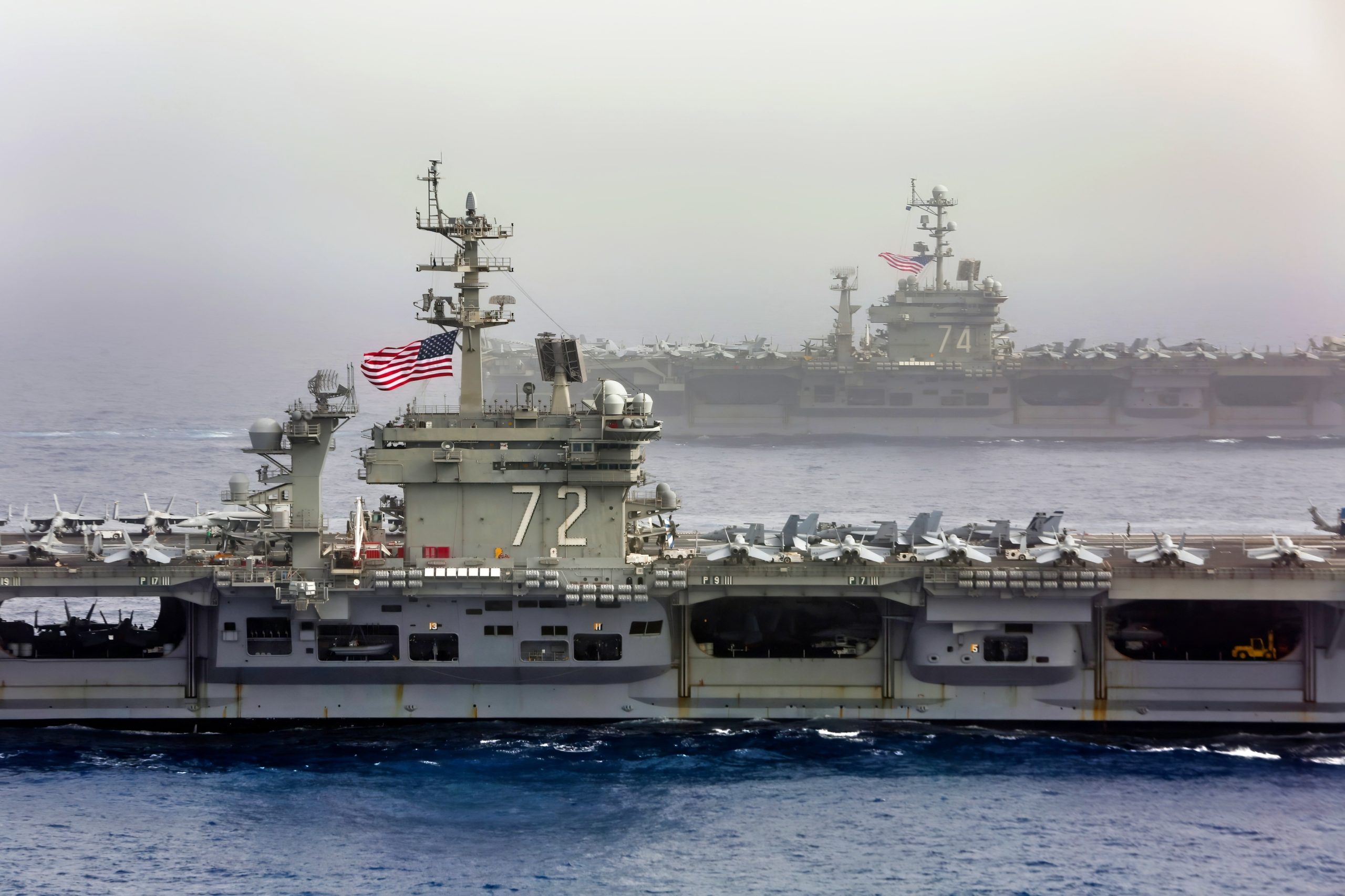
The Abraham Lincoln and John C. Stennis carrier strike groups conduct carrier strike force operations in the U.S. 6th Fleet. Together, the strike groups will complete high-end warfighting training, enhancing interoperability with key allies and partners in the European theater. (U.S. Navy video by Mass Communication Specialist 1st Class Brian M. Wilbur/Released)
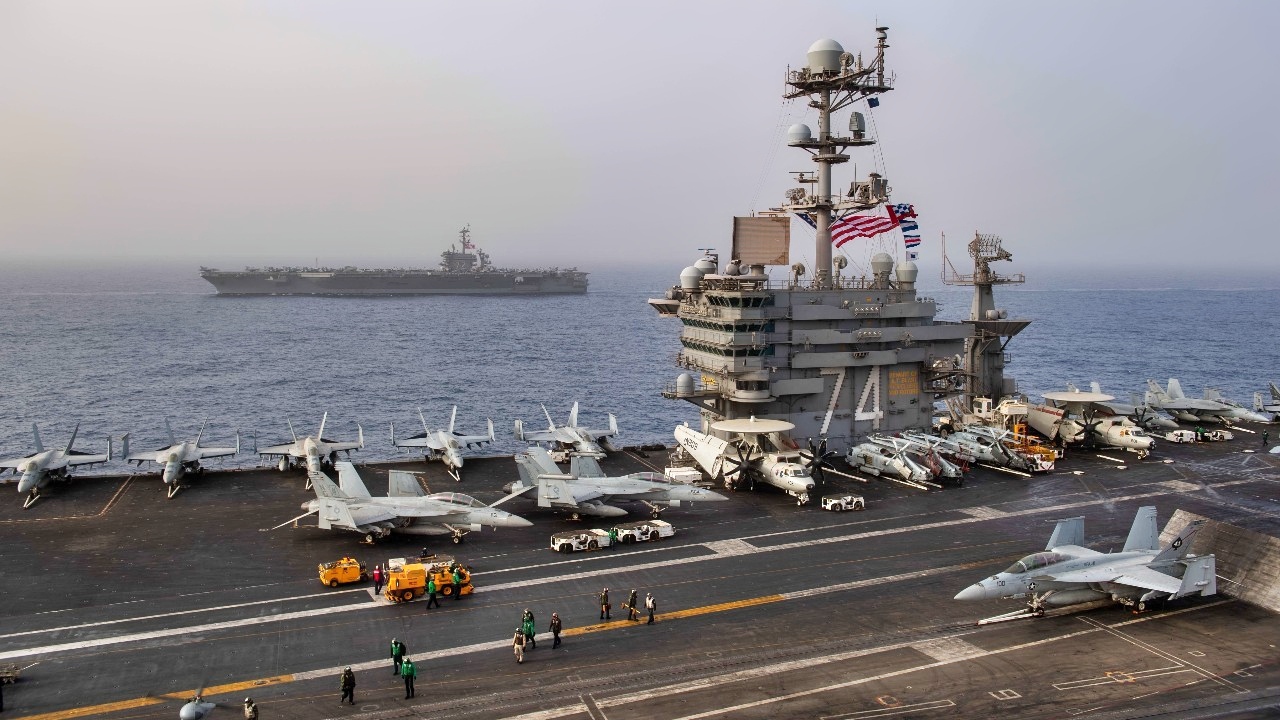
The aircraft carrier USS Abraham Lincoln (CVN 72), back, steams alongside the aircraft carrier USS John C. Stennis (CVN 74) in the Mediterranean Sea, April 24, 2019. The John C. Stennis Carrier Strike Group (CSG) 3 and Abraham Lincoln Carrier Strike Group (CSG) 12 are conducting dual carrier operations, providing opportunity for two strike groups to work together alongside key allies and partners in the U.S. 6th Fleet area of operations. John C. Stennis is underway in the Mediterranean Sea as part of the John C. Stennis Carrier Strike Group (JCSCSG) deployment in support of maritime security cooperation efforts in the U.S. 6th Fleet area of responsibility. (U.S. Navy photo by Mass Communication Specialist 3rd Class Grant G. Grady)
The slide comes as Washington begins Treasury Secretary Scott Bessent’s so-called “Operation Economic Outcast,” a campaign intended to isolate Tehran from the global financial system.
60 New Sanctions Issued
On Monday, U.S. Treasury Secretary Scott Bessent announced that Iran’s digital assets, technology, gold, aviation, and shipping sectors would be targeted in the plans.
Bessent said Washington’s aim was to “sever every economic lifeline that sustains this tyrannical regime until Tehran stands alone.” He also warned companies and governments continuing to facilitate Iranian trade could lose access to the U.S. financial system.
The impacts of Iran’s broader economic crisis are increasingly visible on the streets.
AFP said long gasoline lines were popping up across Tehran on Tuesday.
Meanwhile, more than 26 million liters of gasoline were reportedly distributed in the capital Monday, described by an Iranian refining official as a record for the current Iranian year.
Pressure Beyond the Pump
For many ordinary Iranians, the pressure is clear well beyond their fuel pumps.
The Qatari state-run Al Jazeera broadcaster, which tracked prices in Tehran, reported that since the war began in February, the average price of tomatoes has risen 71%, chicken 74%, cooking oil 177%, and baby formula 95%.
Insulin prices reportedly jumped 642%. The government-approved minimum wage is 166 million rials a month, equivalent to roughly $82 at Wednesday’s free-market exchange rate.
Earlier this month, RFE/RL detailed how the average Iranian household had been forced to slash their spending on food, medicine, and utilities as prices soared.
One Tehran local told the news outlet that many people were now priced out of purchasing fruit and dairy products. Another source claimed the price of 30 eggs had rocketed from 4 million rials to 5.7 million rials over the last week alone.
Still, Tehran claims it is ready to handle the pressure. On Monday, Economy Minister Ali Madanizadeh said the government has a two-year plan to manage the new measures and claimed Washington would suffer “another defeat.”
The China Factor
Then there is the question of where China fits in. Beijing, Iran’s top oil customer, slammed the latest sanctions Tuesday.
Foreign Ministry spokesman Lin Jian said China “firmly opposes illegal unilateral sanctions” and would take measures to protect its interests. In recent years, China itself has imposed targeted sanctions on public figures who have expressed criticism of its government.
While Washington has yet to impose the harshest penalties on Iran’s key trading partners, it says it is open to widening them.
On Monday, Reuters highlighted how, of the financial institutions suspected of facilitating Iranian oil trade on the fresh sanctions list, zero of them were Chinese. Several China-based firms were impacted, however.
When quizzed over why Washington had offered countries time to comply, Bessent said: “Why would I want to blow up the global financial system?”
Bessent said any institution involved in evading the new sanctions could even be barred from the dollar-based U.S. financial system.
Iranian President: War Must End ‘At Some Point’
Iranian President Masoud Pezeshkian said on Wednesday that “the war must end at some point.” Meanwhile, Parliamentary Speaker Mohammad Bagher Ghalibaf issued an even starker warning, stressing military power alone could not sustain a country “if people are hungry” and economic growth disappears.
In the short term, however, the strait remains central to the global energy market. Before the war, roughly one-fifth of global oil and liquefied natural gas passed through Hormuz.
Iran and Oman are continuing to discuss a temporary navigational corridor and mine-clearance arrangement.
Reuters reported Wednesday that those talks pushed oil to its lowest level in more than two weeks, with Brent crude falling 3.1% to $85.85 a barrel.
Iran’s stranglehold on the narrow Strait of Hormuz is pushing up global energy prices, but such leverage is a double-edged sword. The prolonged disruption is frustrating Iran’s neighbors, who are looking into other export options.
The White House logic seems to be that bigger sanctions will make Tehran’s posture increasingly unrealistic and pressure it into concessions. The jury is certainly out on whether the U.S. will get its own way.
About the Author: Georgia Gilholy
Georgia Gilholy is a journalist based in the United Kingdom who has been published in Newsweek, The Times of Israel, and the Spectator. Gilholy writes about international politics, culture, and education.


