
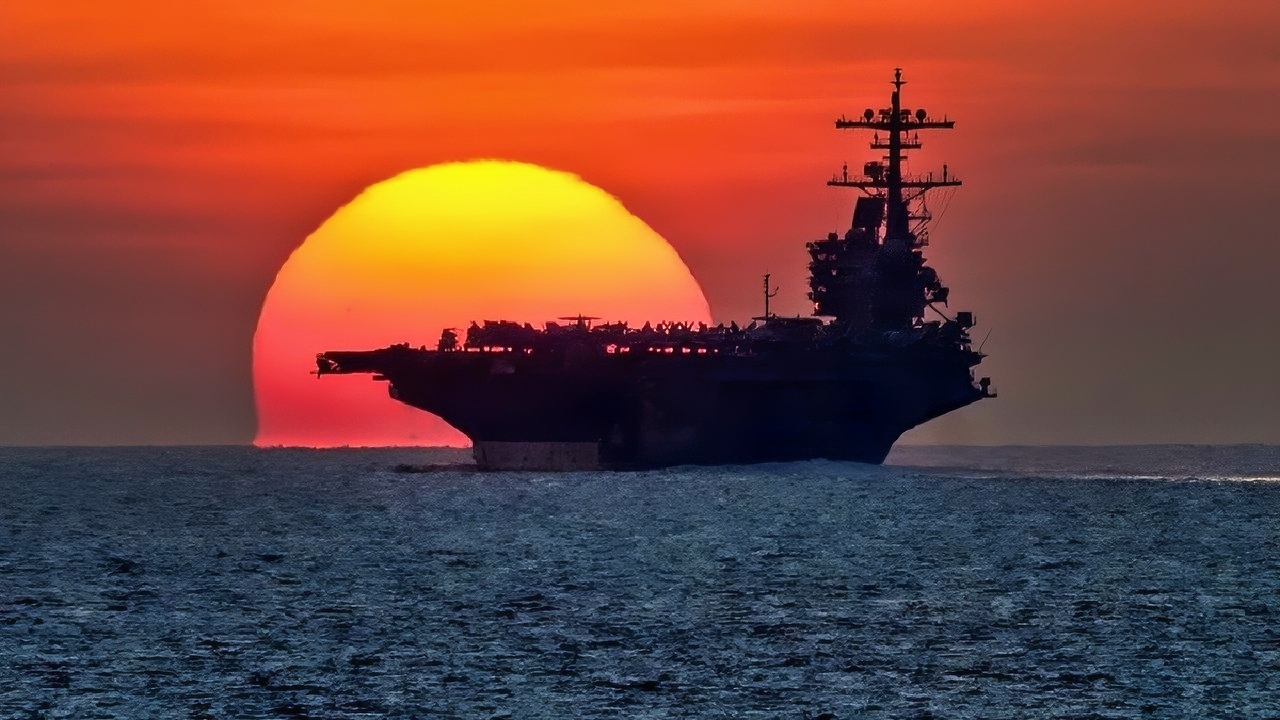
Now that the dust has settled following the midterm elections, US President Donald Trump may be considering renewed action in Iran.
Although official White House messaging about the prospects of the ongoing war remains vague, both Tehran and Washington have taken action against each other in the last week alone.
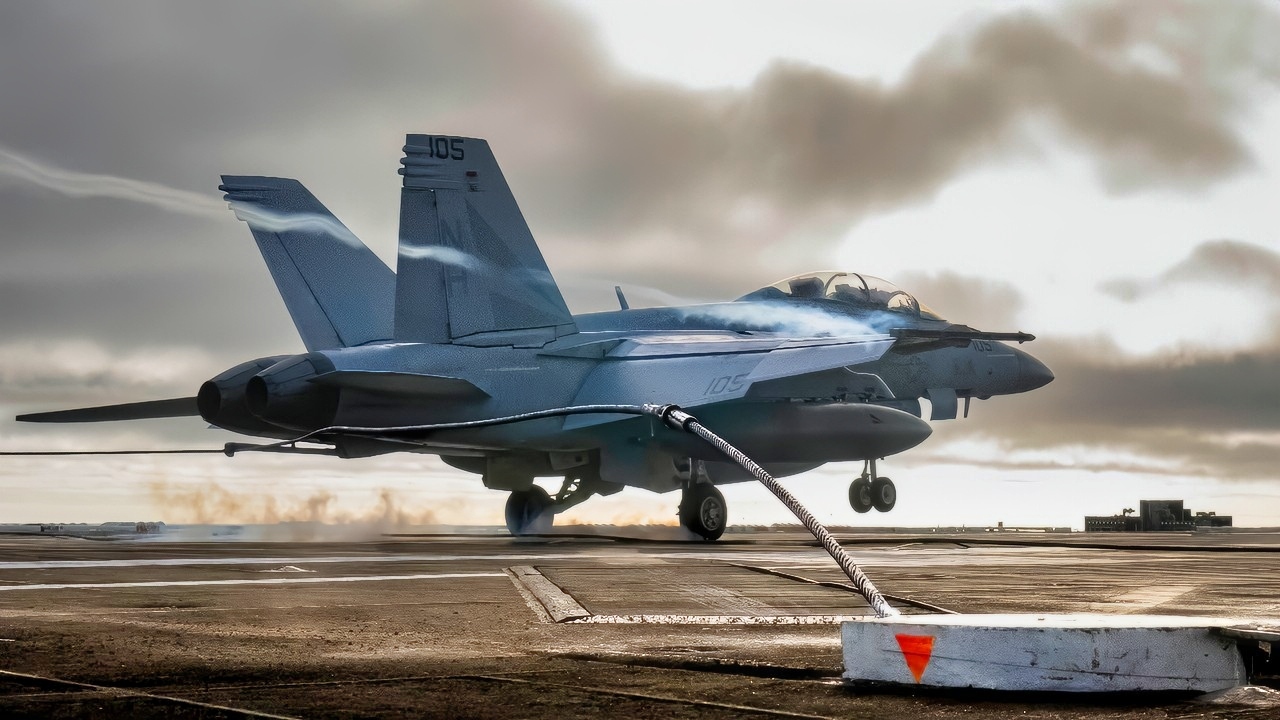
A U.S. Navy F/A-18F Super Hornet, assigned to the “Black Knights” of Strike Fighter Squadron (VFA) 154, lands on the flight deck of Nimitz-class aircraft carrier USS Theodore Roosevelt (CVN 71), July 24, 2025. Theodore Roosevelt, flagship of Carrier Strike Group (CSG) 9, is underway conducting exercises to bolster strike group readiness and capability in the U.S. 3rd Fleet area of operations. (U.S. Navy photo by Mass Communication Specialist 3rd Class Aaron Haro Gonzalez)
American fighter jets struck a missile launch site located in Iran’s Qeshm Island on November 17.
The barrage was reportedly a response to Tehran’s continued assault on US personnel and assets in the region.
This tit-for-tat escalation is certainly not new, considering the trajectory of the conflict that began nearly nine months ago.
A brief overview of the conflict and its precursors
The official start date of the Iran War is February 28, 2026; however, direct US military action first culminated months earlier, in June of the previous year, as part of Operation Midnight Hammer.
As part of the military campaign, a fleet of American B-2 Spirit bombers flew nonstop from the continental US to Iran in the longest mission of its kind since the War on Terror in the early 2000s.
In another first for the Spirit platform, these bombers deployed their massive, 15-ton GBU-57 bunker buster bombs as part of the long-range strike campaign.
Notably, 14 of these bombs were used to “totally obliterate” the nuclear sites, as President Donald Trump initially declared during his live address to the nation in the direct aftermath of the operation.
Other than some lackluster retaliatory missile strikes directed at the Al Udeid Air Base in Qatar, the Iranian response to Operation Midnight Hammer was limited.
However, the Islamic Republic’s regime quickly faced domestic turmoil in the months following the strikes.
Nationwide protests swept the country right before the New Year, largely directed at the corruption and distrust associated with then-Supreme Leader Ayatollah Ali Khamenei.

The world’s largest aircraft carrier, USS Gerald R. Ford (CVN 78), conducts flight operations in the North Sea, Aug. 23, 2025. Gerald R. Ford, a first-in-class aircraft carrier and deployed flagship of Carrier Strike Group Twelve, is on a scheduled deployment in the U.S. 6th Fleet area of operations to support the warfighting effectiveness, lethality, and readiness of U.S. Naval Forces Europe-Africa, and defend U.S., Allied and partner interests in the region. (U.S. Navy photo by Mass Communication Specialist 2nd Class Maxwell Orlosky)
Iranian leadership responded to the nationwide demonstrations with a particularly brutal crackdown and a near-total internet blackout.
Some analysts estimate the death toll to be as high as 30-40,000.
Enter Operation Epic Fury
Perhaps notoriously, Trump assured the Iranian people at the time that help was “on its way.”
The onset of Operation Epic Fury turned the president’s rhetoric into action.
While asymmetric proxy warfare and limited strikes between American and Iranian forces have unfolded over the last quarter century and longer, Operation Epic Fury represents the official start of the “all-out-war between the adversarial nations.
Experts largely view the existing ceasefire as a formality only.
Exchanges of fire and continued military operations, although on a quieter scale than this summer, continue to mar the potential ending to this conflict.
“Quiet” flare-ups of violence persist
Last week saw the latest surge in the Iran-US War, following the strike on Tehran’s Qeshm Island.
According to officials, the air campaign was carried out in “self-defense” as a response to the Islamic Revolutionary Guard Corps (IRGC) ongoing “aggression targeting American personnel and assets.” Qeshm Island notably sits in the critical Strait of Hormuz waterway, which remains a flashpoint in the war.
Serving as a connector between the Persian Gulf, the Gulf of Oman, and the Arabian Sea, this strategic waterway sees nearly one-fifth of the global oil economy pass through it annually.
Since disrupting operations in the Strait continues to represent Tehran’s favored operandi, this US-led strike was unsurprisingly met with further Iranian aggression.
As mentioned previously, Tehran carried out a drone barrage targeting Kuwait and Bahrain, which the IRGC claimed to be in retaliation for “hostile US movements in the region.”
US Central Command (CENTCOM) said all the Iranian UAVs were intercepted. “Multiple Iranian one-way attack drones launched by the IRGC today towards Bahrain were intercepted without any damage to U.S. equipment or injury to American personnel,” the command shared on X.
In between these exchanges of violence, moves to ensure a permanent cessation of war are ongoing.
What Happens Now in the Iran War?
President Trump told an Israeli media outlet last week that his ultimate decision regarding the next phase of the Iran War, if any, may not be immediate.
He also remarked that a “permanent” deal with the regime was desirable in a Fox News interview on November 21.
“What I’m doing is I’m going to make it so that if we have an incompetent president in four years or 15 years or 20 years, I’m going to make a deal that is going to be permanent,” Mr. Trump said in the interview. “I’m not going to let somebody allow them to have a nuclear weapon.”
Based on the last nine-ish months of mixed messaging from the administration concerning the war and a lasting ceasefire, a permanent solution may not be as imminent.
About the Author: Maya Carlin
Maya Carlin is an analyst with the Center for Security Policy and a former Anna Sobol Levy Fellow at IDC Herzliya in Israel. She has over 1,000 articles published over the last several years on various defense issues. Carlin has bylines in many publications, including The National Interest, Jerusalem Post, and Times of Israel. You can follow her on Twitter: @MayaCarlin.