

In mid-June, the United States and Iran agreed to a “Memorandum of Understanding,” also known as the Islamabad Memorandum, a ceasefire agreement that would take a step toward ending the war between the countries.
The agreement’s 14 points included a ceasefire, a commitment to respect each other’s sovereignty, and several other points meant to push various considerations, including opening the Strait of Hormuz and questions related to Iran’s nuclear ambitions, into future negotiations.

U.S. Air Force Maj. Melanie “Mach” Kluesner, the pilot for the F-35A Demonstration Team, performs aerial maneuvers in a USAF F-35A Lightning II during the first day of the airshow at Jacksonville Naval Air Station, Florida, on 18 October, 2024. The Demo Team performs at various airshows across the globe to display the power, agility, and lethality of America’s 5th generation fighter jet. (U.S. Air Force photo by Senior Airman Nicholas Rupiper)

A U.S. Air Force F-35A Lightning II assigned to the F-35A Lightning II Demonstration Team performs an aerial demonstration at Laughlin Air Force Base, Texas, March 8, 2023. The F-35 Demo Team performs flights regularly to maintain flying certifications and to uphold and maintain their mission and Air Force recruiting standards. Image Credit: U.S. Air Force.
It also set a 60-day clock for reaching a “final deal.”
That 60-day period expires on Monday. But in reality, the MOU has been dead for quite some time, with the “interim” deal collapsing weeks after it was reached.
That’s because the wording on some points was vague, and the two sides disagree even on what they agreed to back in June.
This led to a return to strikes in early July, and to Trump’s threats of more.
And as reported by NBC News, the U.S. and Iran are now even further apart than they were 60 days ago.
Still Far Apart
According to a New York Times analysis published Monday, the Memorandum of Understanding seems to have failed at all of its objectives, at least from a U.S. standpoint: It has not ended the war, or reopened the Strait of Hormuz, or offered any regional stability, or delivered any certainty about the status of Iran’s nuclear ambitions.
Esmail Baghaei, the Iranian foreign ministry spokesman, told the press that talks on the nuclear question “never began.”
The expiration of the 60 days, the Times notes, is essentially symbolic, as both “Trump and Iran’s leaders have said in recent weeks that the deal is basically dead.” And while the June deal left open the possibility that the 60-day period could be extended to make way for more negotiations, that is not happening, either.
As an Iranian source told Reuters last week, since the original agreement is no longer in force, “there is nothing to extend.” Turkey’s Anadolu news agency reported last week that the U.S. and Iran had agreed to extend the ceasefire, but that does not appear accurate.
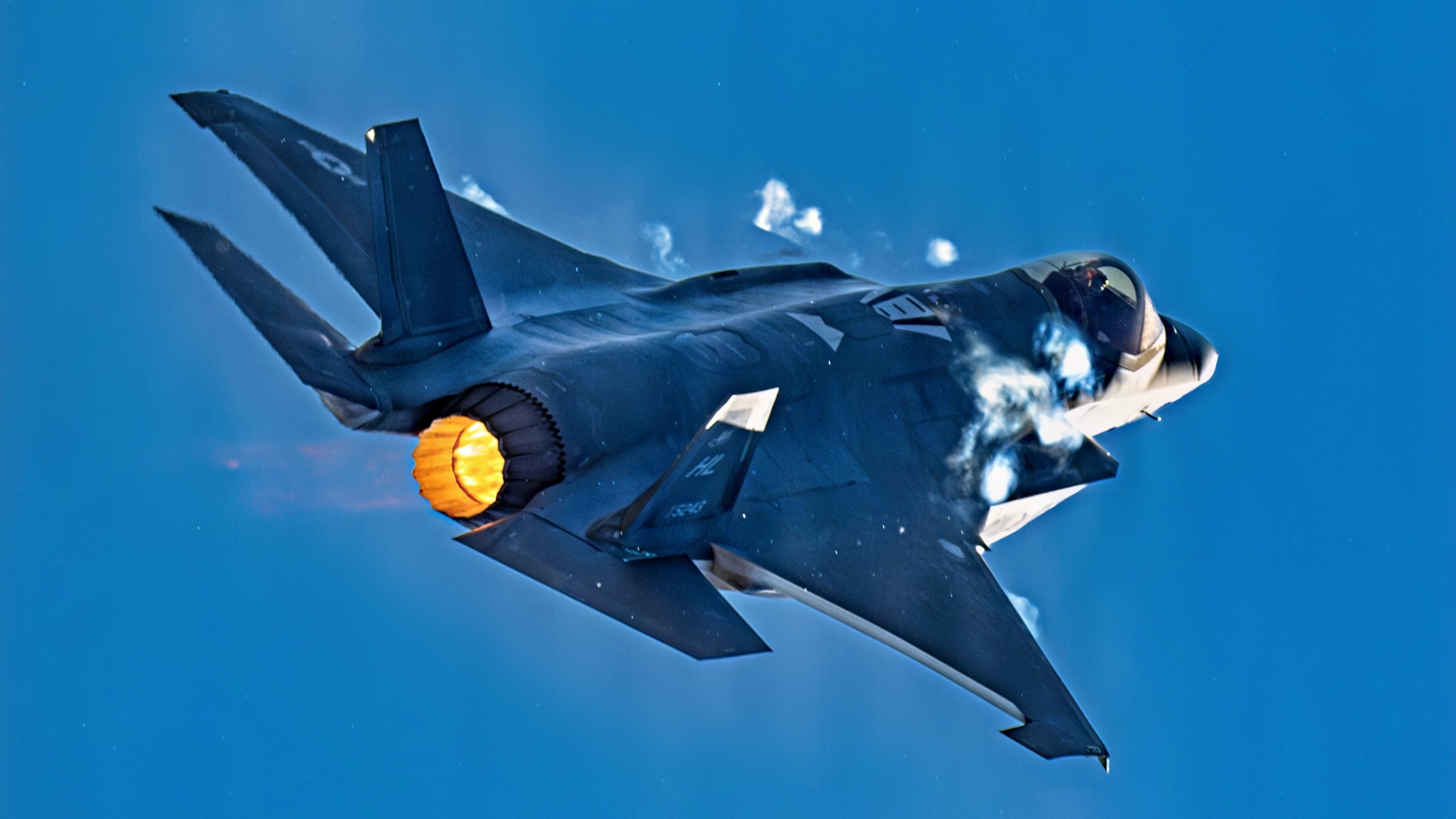
U.S. Air Force Maj. Sean “Rambo” Loughlin, pilot of the F-35A Demonstration Team, conducts aerial maneuvers during a practice demonstration at Hill Air Force Base, Utah, May 4, 2026. These practice demonstrations maintain the skills required to execute precise maneuvers at airshows worldwide. (U.S. Air Force photo by Staff Sgt. Nicholas Rupiper)
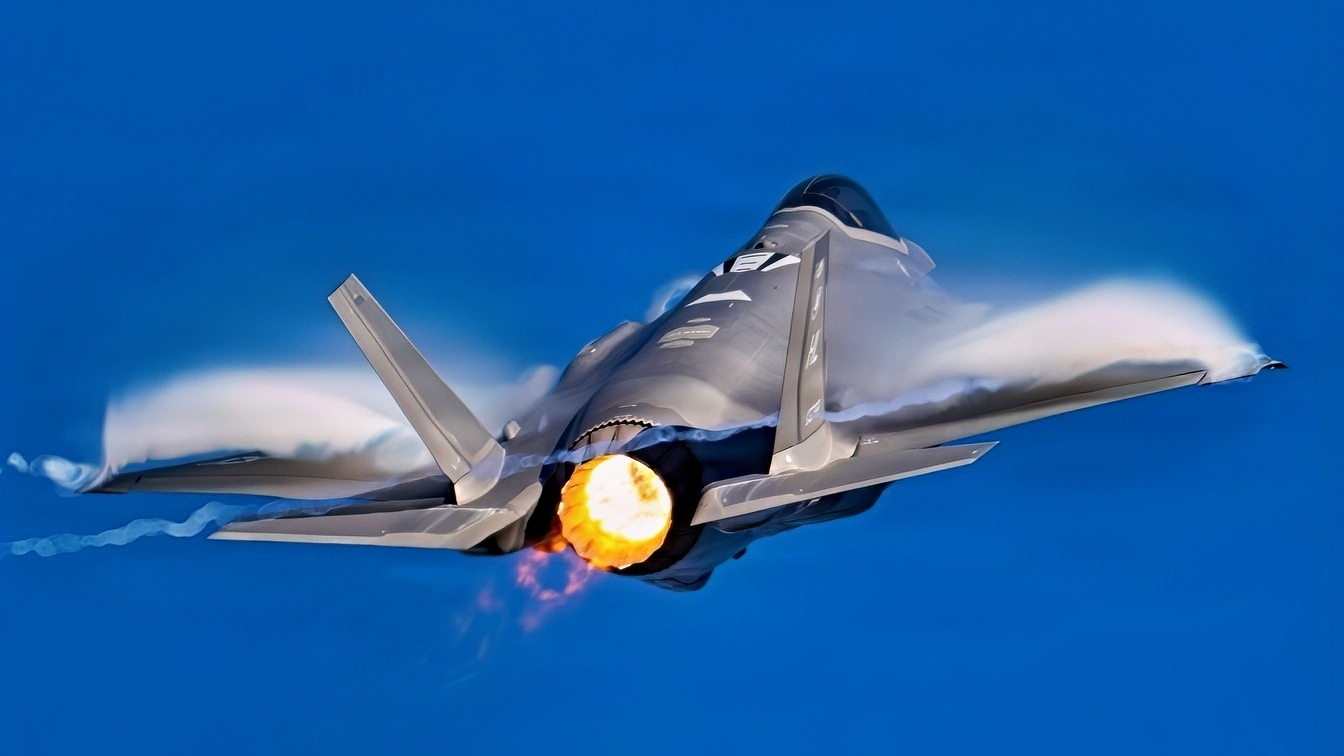
A U.S. Air Force F-35A Lightning II assigned to the F-35A Lightning II Demonstration Team performs a maneuver during the Feria Internacional del Aire y del Espacio (FIDAE) over Santiago, Chile, April 8, 2026. The F-35A Demonstration Team showcases the aircraft’s advanced performance and versatility through dynamic aerial maneuvers. (U.S. Air Force photo by Staff Sgt. Zachary Rufus)
“The United States violated the interim agreement 48 hours after it was reached and withdrew from it a few days later,” an Iranian source told Reuters last week.
The Regime Survives
The war began in February, with the U.S. and Israel launching a strike that took out Iran’s longtime Supreme Leader Ayatollah Ali Khamenei and other top Iranian leaders.
At the time, it appeared that a major objective was to overthrow the Iranian regime. But that did not happen: Khamenei’s son succeeded him, and the Islamic Republic currently shows no signs of collapse.
As The Times noted, the regime not only remains in place but also appears emboldened at the moment.
Trump, the Times said, “has struggled to achieve his war aims — like forcing Iran to curtail its nuclear ambitions — and how emboldened the Iranian government feels, with the two countries at risk of further military conflict.”
The analysis added that while the U.S. has not yet attacked Iran since July, the two sides are engaged in campaigns of “economic attrition,” and seeking to pressure each other into a deal.
But experts say a return to full-on military conflict remains possible.
“The Islamic Republic is trying to put the economic crunch on America, and America is trying to put the economic crunch on the Islamic Republic,” Behnam Ben Taleblu, an Iran expert at the Foundation for Defense of Democracies, told the Times.
Indeed, one Iranian official was talking tough on Monday.
“Iranian entities must be prepared to escalate tensions in the Strait of Hormuz and the wider region, as Iran will be ready to make decisions and take action on difficult decisions,” that official told Reuters.
Trump, for his part, threatened to bomb Oman, a longstanding U.S. ally that is currently negotiating with Iran.
“If Oman gets in the way, we’ll bomb the sh— out of them,” the president told Fox News.
Oil Prices Rise
On Monday, the same day of the MOU’s expiration, crude oil prices rose, with Brent Crude going up 2 percent to $90.31 per barrel, CNBC said.
About the Author: Stephen Silver
Stephen Silver is an award-winning journalist, essayist, and film critic, and contributor to the Philadelphia Inquirer, the Jewish Telegraphic Agency, Broad Street Review, and Splice Today. The co-founder of the Philadelphia Film Critics Circle, Stephen lives in suburban Philadelphia with his wife and two sons. For over a decade, Stephen has authored thousands of articles that focus on politics, national security, technology, and the economy. Follow him on X (formerly Twitter) at @StephenSilver, and subscribe to his Substack newsletter.


