


Key Points and Summary – Kris Osborn warns that China’s new YKJ-1000 hypersonic missile could upend the balance in long-range strike.
-With a range of roughly 1,300 kilometers and a unit price around £74,000, the weapon is vastly cheaper than U.S. hypersonics and appears optimized for mass production and export.
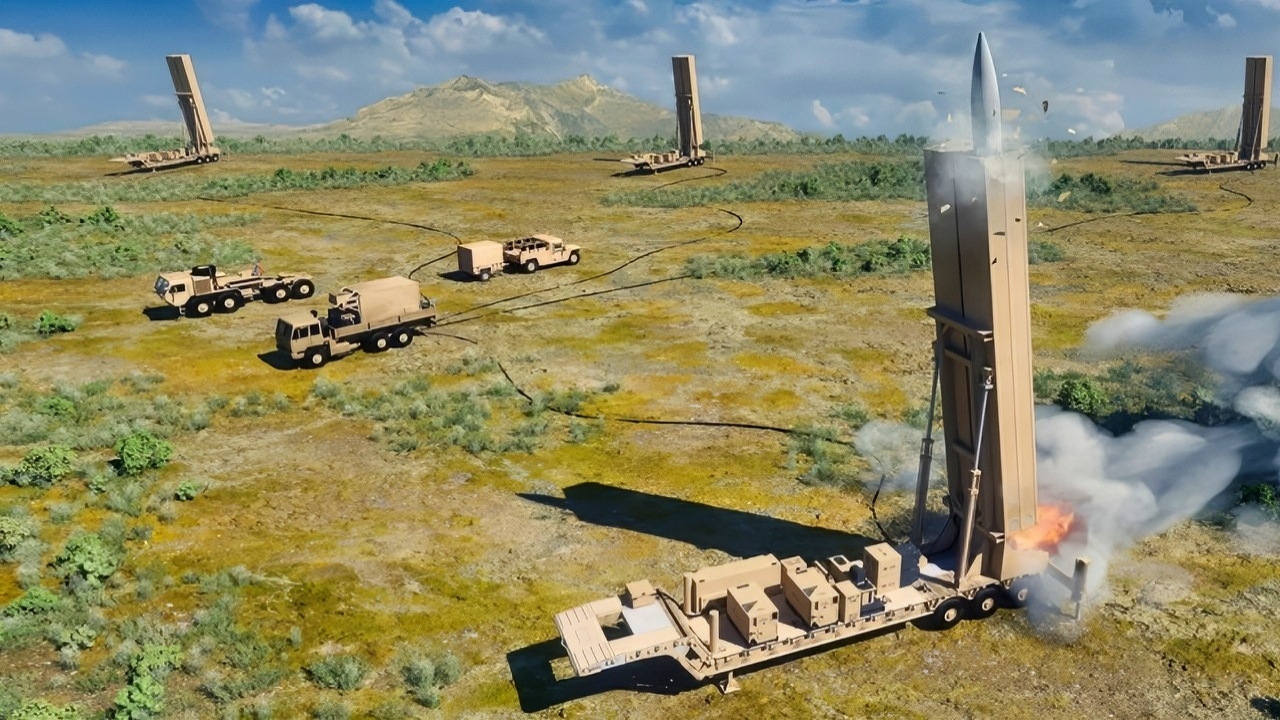
Dark Eagle Hypersonic Missiles. Image Credit: Creative Commons.
-In the hands of states like Iran or North Korea—or proxies such as the Houthis—a large salvo of these missiles could overwhelm still-nascent hypersonic defenses and threaten U.S. forces, allies, and shipping.
-Osborn argues that only credible retaliatory strike options plus affordable defenses—EW, high-power microwaves, and lasers—can offset this emerging “cheap hypersonic” threat.
Can U.S. Missile Defenses Survive a Swarm of China’s Discount Hypersonics?
The tactical advantage great-power countries have in the realm of hypersonics may quickly erode, now that China’s People’s Liberation Army has unveiled an inexpensive yet highly lethal hypersonic weapon for possible sale on the international market.
The weapon, called the YKJ-1000, is described as a cement-coated missile capable of reaching 1,300km and, perhaps of greatest significance, costs only 74,000 pounds—a tiny fraction of the $4 million to $15 million cost-per-missile for US hypersonic weapons.
It’s not clear how capable this inexpensive missile is. Yet, an article in “The Independent” details that the “explosive separation nuts have been replaced by electric ones and structural parts that can be die cast.”
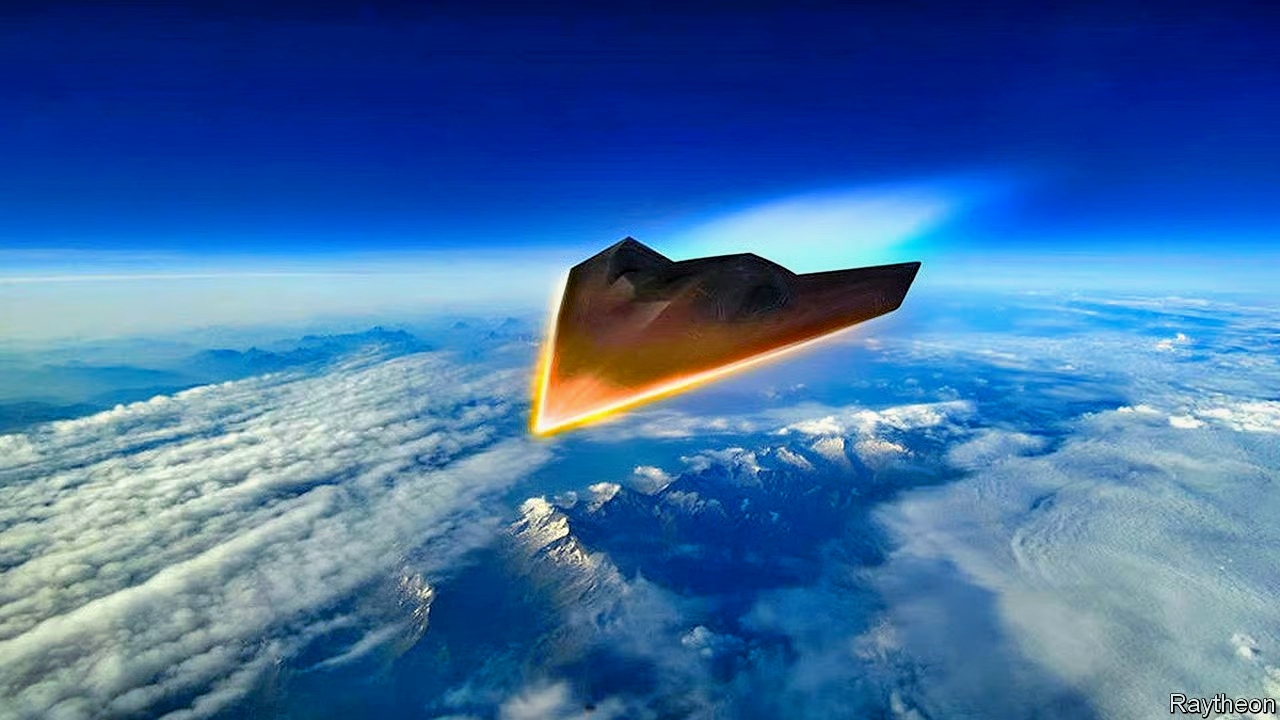
Hypersonic Glide Vehicle. Image Credit: Raytheon.
It would therefore appear that the new low-cost Chinese-built hypersonic weapon could be easily manufactured at scale and exported to nations adversarial to the US and its allies.
The threat, therefore, would seem quite significant, given that many defenses against hypersonic weapons are still in the developmental stage.
It would be reasonable to assume that US and allied targets are, today, vulnerable to hypersonic strikes to a degree.
This inexpensive weapon, in particular, could be acquired quickly in large numbers, raising the prospect of a hypersonic missile salvo or “bolt out of the blue” attack.
A significant salvo of incoming hypersonic missiles would, without question, present new threat dimensions to US missile defenses.
The “cost curve” dynamic in this equation seems particularly significant: Should nations be able to quickly acquire a large arsenal of these weapons for much lower costs?
This makes the threat of a large-scale hypersonic attack much more realistic and achievable for hostile nations inclined to threaten the US.
The primary deterrent against a bolt-out-of-the-blue type of salvo—something that would be especially pressing in the event of a hypersonic attack—is the promise of retaliatory or countervailing offensive strike capability.

Typhon Hypersonic Missile. Image Credit: YouTube Screenshot.
The guarantee of a massive, destructive retaliation is really the only deterrent against an essentially indefensible salvo of attacks.
This is true when it comes to nuclear weapons, ballistic missiles, and hypersonics.
The US is now deploying hypersonic missiles, such as the mobile, ground-launched Long Range Hypersonic Weapon, and expects to fire the Conventional Prompt Strike naval hypersonic weapon from Zumwalt destroyers as soon as 2026.
Threat Equation
Should large numbers of these YKJ-1000s become available to countries such as Iran, North Korea, or even groups such as the Iran-backed Yemeni Houthis, new threats could quickly be presented to US and allied interests.
It may not be clear just how precise the YKJ-1000 is, or what kinds of guidance systems or explosives it might carry, yet a salvo or large volume of incoming hypersonics blanketing an area would, without question, present unprecedented threats to Israel, US ships in the Red Sea, and key US allies in the Pacific such as Japan, Taiwan and the Philippines.
Hypersonic Defenses
The threat of this new weapon naturally raises questions about the maturity and effectiveness of various hypersonic defenses.

Hypersonic Missile. Image Credit: U.S. Military.
The Pentagon is making rapid progress with several key programs, including the promising Glide Phase Interceptor program and a satellite networking and surveillance defense system called Hypersonic Ballistic Missile Tracking Space Sensor (HBTSS).
However, when the Glide Phase Interceptor and HBTSS come to fruition, they may face cost-curve constraints, given that advanced interceptors for hypersonic weapons are likely to be extremely expensive.
Furthermore, it is unclear how effective a series of individual interceptors might be against a salvo of hypersonic projectiles fired to blanket an area with missiles.
Therefore, it would not be surprising if the US were exploring various kinds of less-expensive defenses against hypersonic weapons, including EW, High-Powered Microwave, or laser interceptors.
About the Author: Kris Osborn
Kris Osborn is the President of Warrior Maven – Center for Military Modernization. Osborn previously served at the Pentagon as a highly qualified expert in the Office of the Assistant Secretary of the Army—Acquisition, Logistics & Technology. Osborn has also worked as an anchor and on-air military specialist at national TV networks. He has appeared as a guest military expert on Fox News, MSNBC, The Military Channel, and The History Channel. He also has a Masters Degree in Comparative Literature from Columbia University.


