


Key Points and Summary – Russia and China may currently lead the hypersonic missile race, fielding glide vehicles and scramjet-powered weapons that can fly above Mach 5 and maneuver around defenses.
-But the story is more complicated than raw speed.

Hypersonic Missile. Image Credit: U.S. Military.
-True hypersonic threats combine high velocity, unpredictable flight paths, and low-altitude profiles that defeat ground-based radars until the last moments.
-Moscow touts systems like Avangard and Kinzhal, while Beijing leans on DF-17 and YJ-21 to threaten U.S. carriers and bases.
-Washington is catching up with its own glide vehicles, cruise missiles, and space-based sensors—where hypersonic survivability, not just speed, will ultimately be decided.
Who Has The Fastest Hypersonic Missiles? Does It Matter?
The hypersonic missile race is heating up, with Russia and China considered to be in the lead, while the United States and the West are struggling to keep up.
Hypersonic missiles are very hard to defend against due to their speed, maneuverability, and ability to travel at more than five times the speed of sound.
“This is just one component of the wider picture of the emerging geopolitical contest that we’re seeing between state actors,” says William Freer, a national security fellow at the Council on Geostrategy think tank. “It’s one we haven’t had since the Cold War.”
As to why China and Russia are ahead in the development and fielding of hypersonic weapons, Freer stated, “They decided to put a lot of money into these programs several years ago.”
Which country has the fastest hypersonic missiles? And does it really matter?

Typhon Hypersonic Missile. Image Credit: YouTube Screenshot.
Speed Isn’t The Only Factor In Determining If A Missile Is Hypersonic
Speeds of Mach 5 and above are the principal property of a hypersonic missile. However, to be “hypersonic” in the military sense, a missile must be maneuverable in flight, with the ability to avoid interception.
Most ground-based radars do not detect hypersonic weapons until the final phase of flight.
“Flying below the radar horizon, they can avoid early detection and appear on sensors only in the last stage of their flight, limiting interception opportunities,” says Patrycja Bazylczyk, research associate in the Missile Defense Project at the Center for Strategic and International Studies in Washington.
She believes the answer to defending against adversary hypersonics lies in boosting Western space-based sensors to overcome the limitations of ground radars.
Fastest Speed Doesn’t Matter, Maneuverability Does
“Although HGVs are slower than conventional ballistic reentry vehicles, their higher maneuverability and lower-altitude flight allow them to evade missile defense systems as their flight paths are harder to predict,” according to the Missile Defense Advocacy Alliance. “U.S. officials have stated that the prototypes have been shown to perform ‘extreme maneuvers’ and ‘evasive actions.’
“The DF-17 is a vital weapon in China’s arsenal, as it provides the People’s Liberation Army Rocket Force (PLARF) with a missile that is highly capable against existing missile defenses and sensors. With its range, the DF-17 could reach South Korea and Japan, challenging their missile defense systems.”
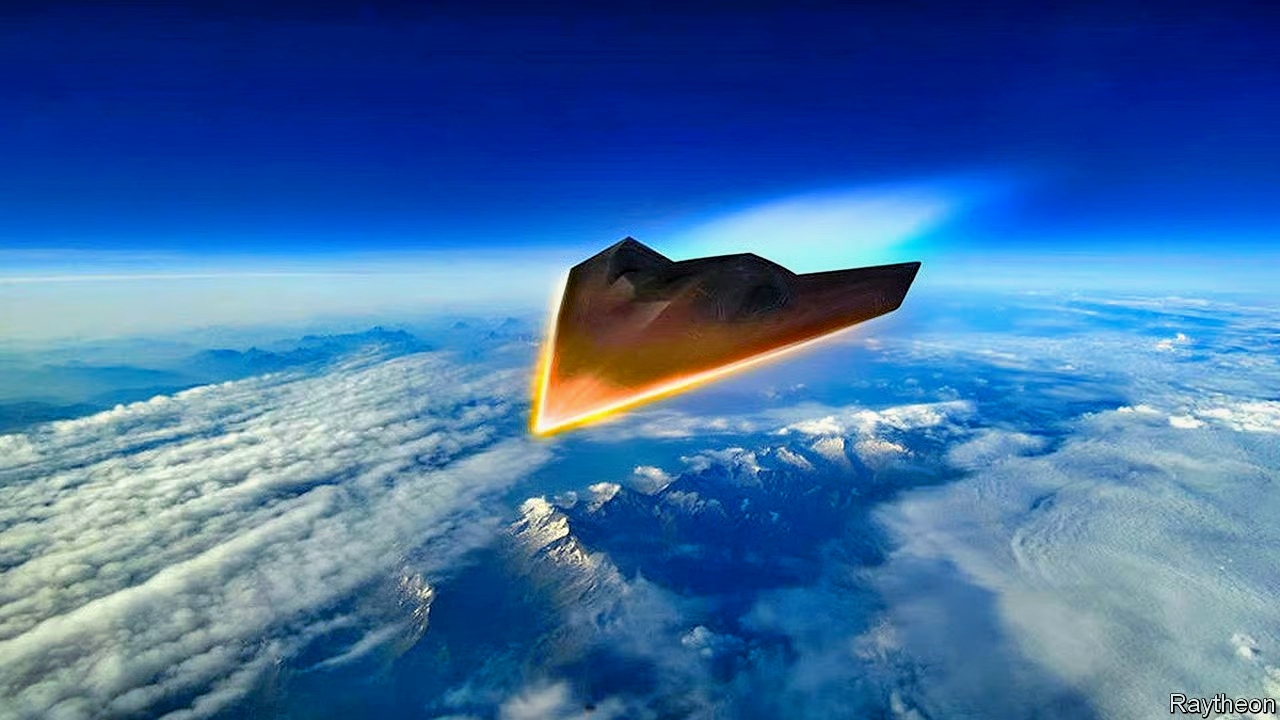
Hypersonic Glide Vehicle. Image Credit: Raytheon.
Hypersonic weapons are capable of maintaining speeds greater than Mach 5, or around 3,800 miles per hour. As Alex Hollings wrote in Sandboxx, “Hypersonic weapons are carrying enough kinetic energy to destroy many targets without the need for an explosive warhead, and worse still, they are all but impossible to defend against using even the latest missile defense systems available in any nation’s military.”
As an example of this kinetic force, a 120-mm SABOT round leaves the muzzle of an M1 Abrams tank traveling faster than 5,500 feet per second, or approximately 3,750 miles per hour. While not a hypersonic weapon, traveling at roughly a mile per second, the tank round generates tremendous kinetic energy that can destroy advanced armor.
Types of Hypersonic Weapons
There are two types of hypersonic weapons: hypersonic glide vehicles and hypersonic cruise missiles.
The glide vehicle is nearly the same warhead that a ballistic missile uses. After being launched into the upper atmosphere by a booster rocket, one or more glide vehicles are released and use the rocket’s momentum to accelerate toward their targets.
Hypersonic cruise missiles are pretty different. They are tricky to produce and much more expensive than a traditional cruise missile.
They rely on a propulsion system called a scramjet (supersonic combusting ramjet), which is, according to NASA, a ramjet engine in which the airflow through the engine remains supersonic, or greater than the speed of sound. Scramjet-powered vehicles are envisioned to operate at speeds of at least Mach 15.
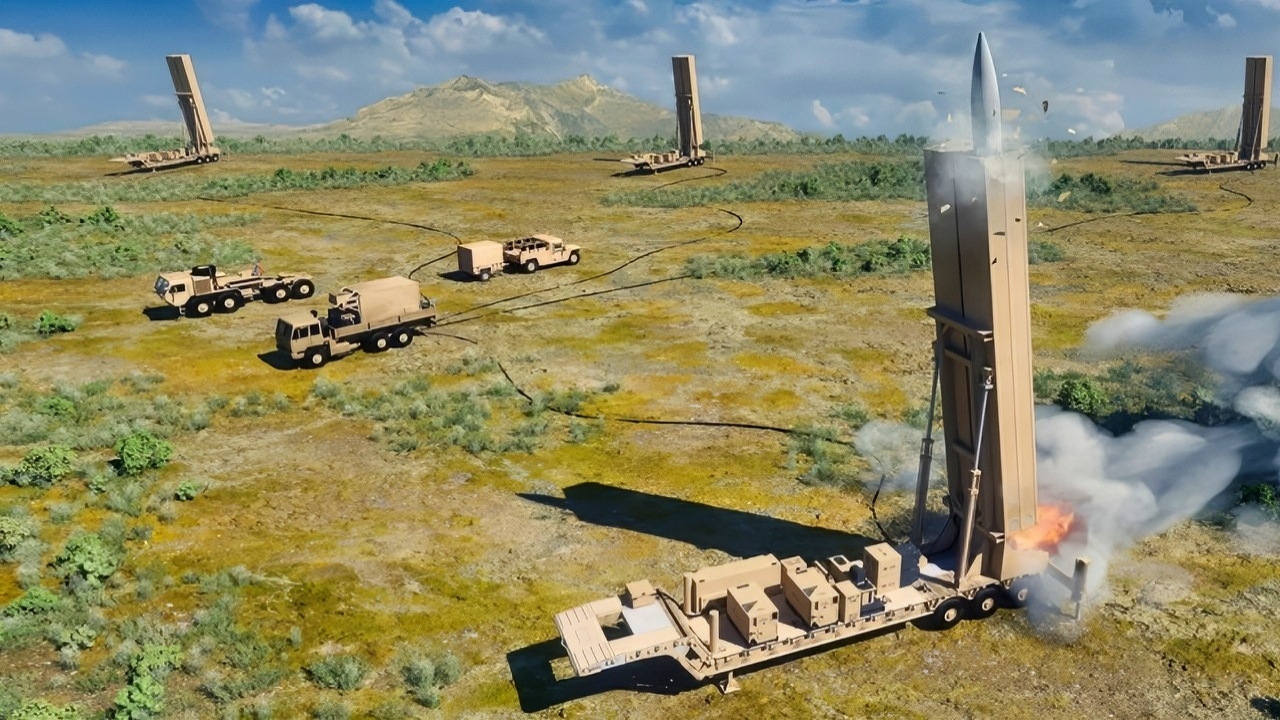
Dark Eagle Hypersonic Missiles. Image Credit: Creative Commons.
Scramjets must be deployed from fast-moving aircraft in order to be effective, or be launched with a booster that will get it to supersonic speeds before the scramjet is activated.
Russia and Putin Tout Its Super Weapons
Russia’s Avangard hypersonic glide vehicle is widely considered the fastest missile. However, the exact speeds of all hypersonic missiles are classified, and some sources cite slightly different figures—between Mach 12 and Mach 20 for the Avangard.
The Avangard is boosted into the upper atmosphere and then glides at high speed through the lower atmosphere, maneuvering unpredictably to evade defenses.
The Oreshnik, a missile tested against Ukraine in 2024, can reach Mach 10–11. In experimental launches, its payload split into multiple warheads, simulating Cold War-era tactics. Russian President Vladimir Putin has said it will enter mass production, capable of “turning any target into ashes.”
Russia also fields the Kinzhal. Initially touted as “unstoppable,” the Kinzhal in practice has often been intercepted in Ukraine.
China’s Hypersonic Missiles
China’s hypersonic missiles include the DF-17 and YJ-21.
The DF-17 uses a hypersonic glide vehicle launched from a ballistic missile, while the YJ-21 is a naval anti-ship missile. These weapons feed into a strategy to counter U.S. military power in the Pacific by threatening Carrier Strike Groups and strategic bases such as Guam.
“While both China and Russia have conducted numerous successful tests of hypersonic weapons and have likely fielded operational systems, China is leading Russia in both supporting infrastructure and numbers of systems,” Paul Freisthler, the Defense Intelligence Agency’s chief scientist for science and technology, told members of Congress.
The United States Is Working On Hypersonic Missiles As Well
The U.S. is also developing various hypersonic missiles, such as the Hypersonic Attack Cruise Missile, and has conducted tests with the Hypersonic Air-breathing Weapon Concept.
According to Sandboxx, U.S. hypersonic efforts “include at least two hypersonic boost-glide vehicles and potentially up to five hypersonic cruise missiles leveraging scramjet propulsion.”

DF-17 Missile from China. Image Credit: PLA.
In the area of reusable hypersonic technology, the U.S. remains well ahead of its competitors. The X-37B has been flying for 12 years, as noted by Sandboxx, while China conducted its first test of a homegrown version of the X-37B in September 2020. Russia announced last year that they were developing “an X-37B-type reusable aircraft.”
While the U.S. hasn’t hit the panic button about rushing a hypersonic weapon into service, it has definitely picked up the pace in developing and fielding a hypersonic weapon.
The hypersonic arms race is far from over, and it seems that after being pretty much dormant for two decades, the U.S. is showing the technology that is possesses is still the preeminent force in the world.
About the Author: Steve Balestrieri
Steve Balestrieri is a National Security Columnist. He served as a US Army Special Forces NCO and Warrant Officer. In addition to writing on defense, he covers the NFL for PatsFans.com and is a member of the Pro Football Writers of America (PFWA). His work was regularly featured in many military publications.
More Military
The Mach 15 X-43D ‘Hypersonic Scramjet’ Has a Message for the U.S. Air Force
Europe’s Future Combat Air System (FCAS) Stealth Fighter Is ‘Circling the Drain’
The Mach 2 B-58 Hustler Bomber Has a Message for the U.S. Air Force


Shitpile
November 20, 2025 at 4:58 am
Da fastest ?
Fastest of fastest. Avangard.
Next fastest would be feitian.
Amerika ??? Oughta look back to the 1960s. Not today !
Today, right at the back of the pack.