

The Black Sea has become a growing battleground in the war between Russia and Ukraine, with Ukraine earlier this week launching an attack on grain export terminals in the Russian port city of Novorossiysk, damaging grain facilities. The attacks, Ukraine proclaimed, utilized a swarm of missiles, aerial drones, and naval drones.
It marked the latest of a series of attacks, in which Ukraine has struck more than 200 ships in the Black Sea and the Sea of Azov in the last two months. Russia, in turn, has been striking Ukraine’s southern Black Sea ports.
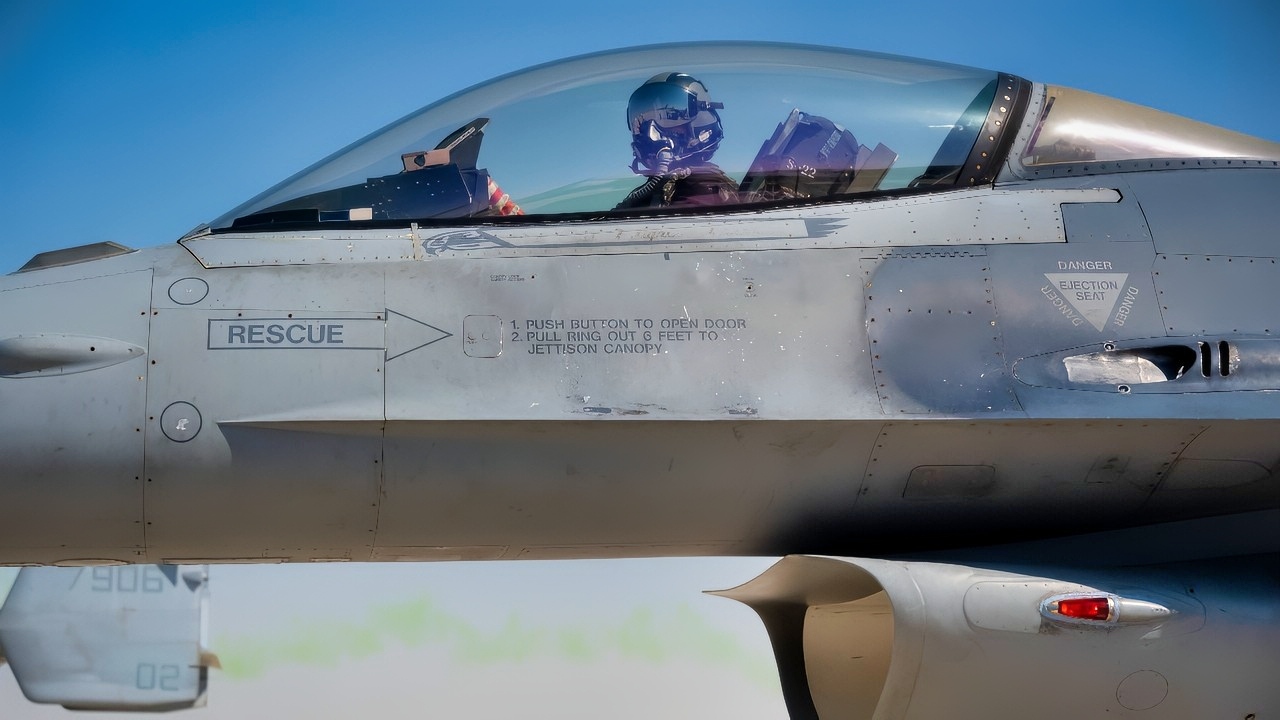
U.S. Air Force Maj. Josiah “Sirius” Gaffney, Pacific Air Forces Demonstration Team commander, prepares to fly a practice sortie before the Dubai Airshow in Dubai, United Arab Emirates, Nov. 11, 2021. In addition to the PACAF F-16 Demonstration Team routine, the air show will highlight a variety of U.S. Air Force, Navy and Marine Corps aircraft showcasing the range of U.S. military airpower capabilities. (U.S. Air Force photo by Staff Sgt. Matthew Kakaris)

Bohdan, a drone pilot from the Unmanned Systems Battalion of Ukraine’s 110th Separate Mechanized Brigade, pilots an FPV drone in Donetsk Oblast during active battle operations. Photo: David Kirichenko
All three grain terminals in Novorossiysk were forced to suspend operations.
“Other Russian facilities that were helping finance the war were also struck. It is entirely fair that Ukraine responds to Russia’s war, and it is Russia that can and must end its war,” Ukrainian President Volodymyr Zelensky said in a social media post.
This raised concerns about grain supplies, as Russia is the world’s largest grain exporter. Russian Foreign Ministry spokesperson Maria Zakharova, per the Tass News Agency and cited by CNBC, had accused Ukraine of trying to “provoke chaos” and taking actions that would worsen “shortages of grain and fertilizers, drive up global food prices and increase the costs for countries in the Global South and East.”
Now, Ukraine has reportedly offered Russia a truce in the Black Sea, and Russia has rejected it.
A Special Offer
According to The Guardian, Ukraine has proposed a truce, in which the two sides will cease their attacks on civilian ships in the Black Sea.
Per Reuters, Ukraine made the proposal through a third party, and Russia has yet to respond.
According to the Kyiv Post, the offer came after Ukrainian exports dropped 76 percent year over year so far in August. But following the attack in Novorossiysk, that outlet said, “The pressure is no longer one-sided.”
Kyiv Post also stated that the recent Novorossiysk strikes were significant because they showed that “Russia cannot attack and blockade Ukrainian ports while assuming its own maritime infrastructure will remain safe.”
A Reuters report on Friday stated that Russia had declined the truce offer,
“We see no signs of improvement in the situation and, consequently, no grounds for half-measures that merely grant the Kyiv regime a temporary breathing space,” Russian Foreign Ministry spokeswoman Maria Zakharova said in a statement Friday.
The report added that Turkey’s Foreign Minister, Hakan Fidan, had said in an interview that Turkey had put forward proposals to both countries for a Black Sea moratorium.
According to an earlier Reuters story, Deputy Russian Foreign Minister Alexander Grushko had said, before the report on the truce offer, that Moscow had not received any such proposal.
“Recently, we have been hearing many calls for various kinds of moratoriums and truces.
These ideas are being put forward through various channels, but we have not received any formal proposals,” Grushko said Wednesday, according to the Russian state news agency TASS.
Earlier in the war, between July 2022 and July 2023, Russia and Ukraine reached and followed an agreement to stop maritime attacks on each other, known as the Black Sea Grain Initiative, which Turkey also brokered.
The agreement expired, per The Guardian, when Russia declined to renew it. Ukraine then reopened the route, launching sea drone attacks and forcing Russia to move the base of its Black Sea fleet from Sevastopol in occupied Crimea to Novorossiysk.
But now, Ukraine has shown that it can pull off a big attack on that port as well.
Zakharova also said in the statement, Reuters said, that it was “not feasible” to return to the Black Sea Grain Initiative.
A Vance Request
The Financial Times reported earlier this week that United States Vice President JD Vance directly asked President Zelensky to pause attacks on tankers carrying Kazakh oil through the Caspian Pipeline Consortium and to avoid vessels not subject to sanctions. The CPC is Kazakhstan’s main oil export route, and Chevron and ExxonMobil own stakes in it.
The report said Vance made the request during a July 31 call with Zelensky. Ukraine has heeded the request and not made any such attacks since then.
About Stephen Silver
Stephen Silver is an award-winning journalist, essayist, and film critic, and contributor to the Philadelphia Inquirer, the Jewish Telegraphic Agency, Broad Street Review, and Splice Today. The co-founder of the Philadelphia Film Critics Circle, Stephen lives in suburban Philadelphia with his wife and two sons. For over a decade, Stephen has authored thousands of articles that focus on politics, national security, technology, and the economy. Follow him on X (formerly Twitter) at @StephenSilver, and subscribe to his Substack newsletter.


