

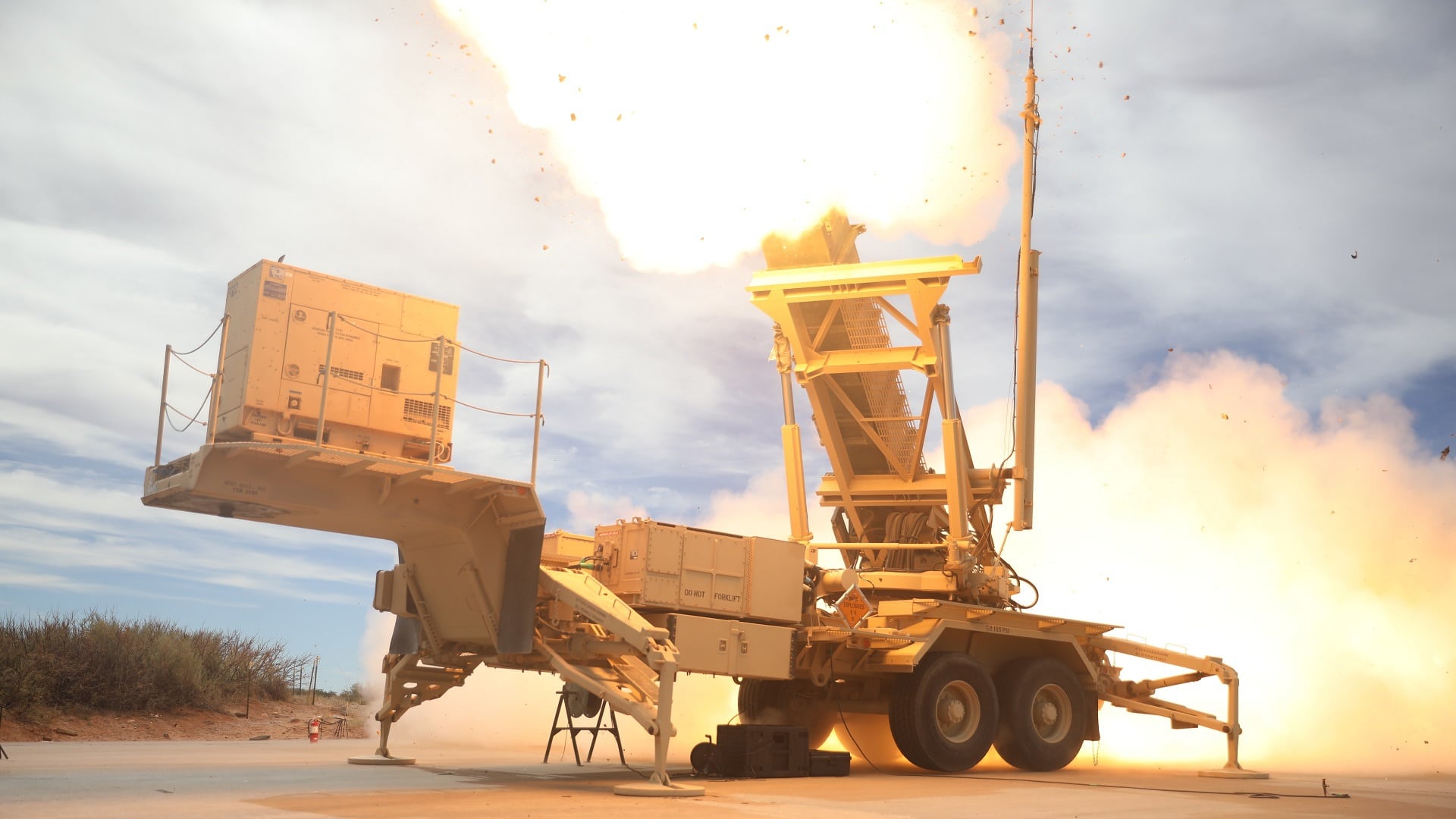
Amid global shortages of interceptor missiles for the Patriot Air and Missile Defense System, Lockheed Martin (LM) has unveiled the Advanced Capability Effector (ACE) missile.
The new missile, dubbed the “baby Patriot”, will, by some estimates, cost less than half as much as the standard PAC-3 MSE missile.
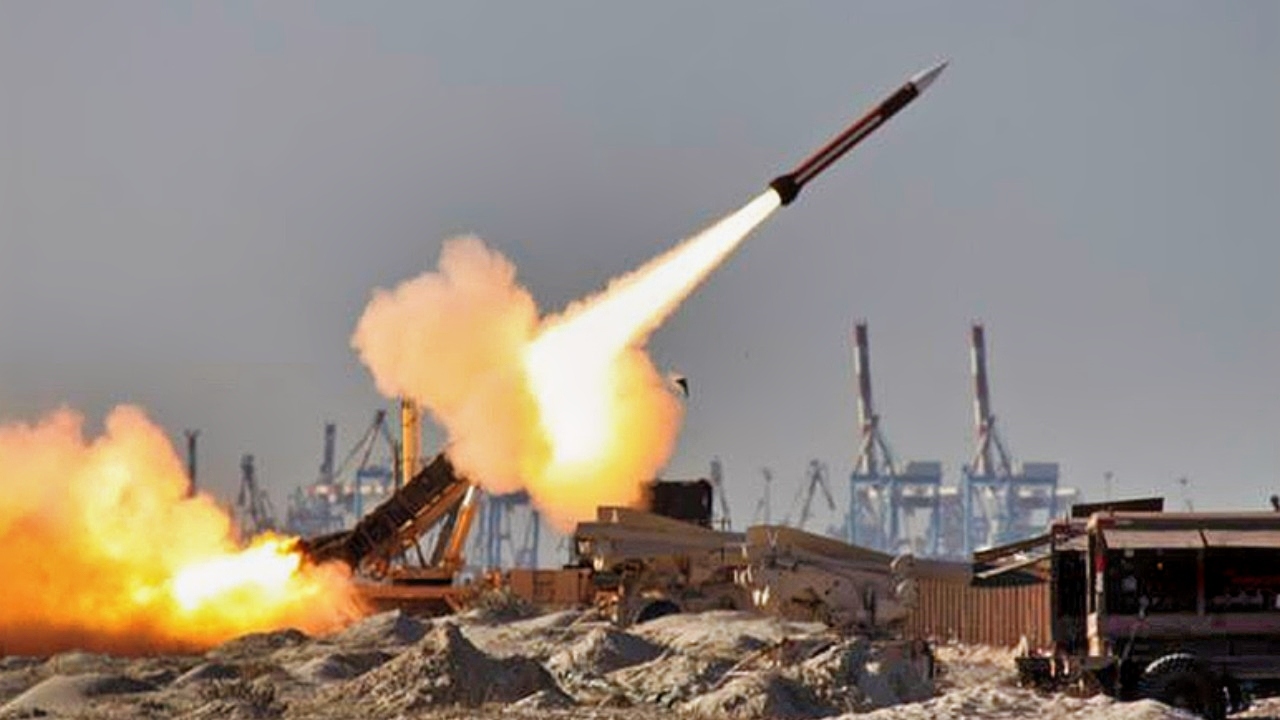
Patriot Missile Interceptor Test. Image Credit: Creative Commons.
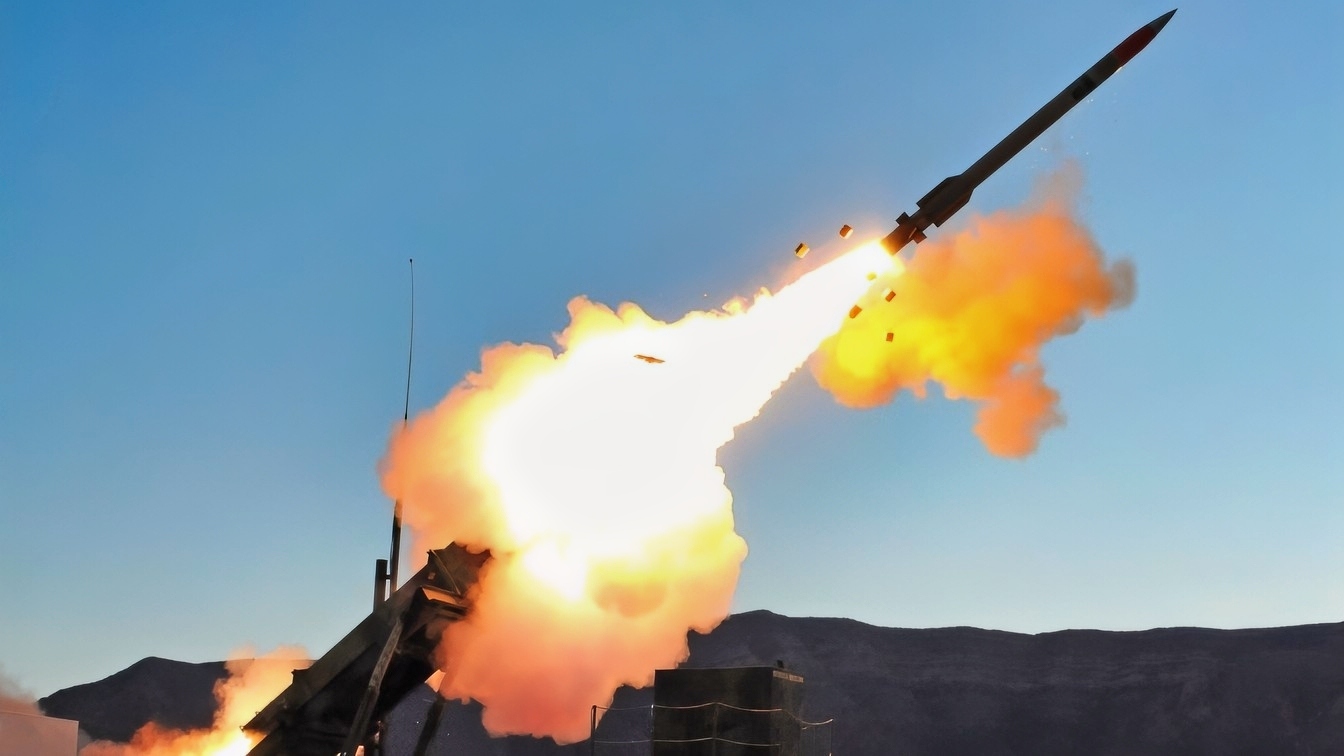
The Army test fires a Patriot missile in a recent test. The Patriot missile system is a ground-based, mobile missile defense interceptor deployed by the United States to detect, track and engage unmanned aerial vehicles, cruise missiles, and short-range and tactical ballistic missiles. Patriot, along with other missile defense systems, are included in the Army Air and Missile Defense 2028, which provides the Army’s overarching vision for the AMD force, describes how the AMD force is postured to support the Army and joint forces, and articulates what must be accomplished to achieve the 2028 desired end state of preventing and defeating adversary air and missile attacks through a combination of deterrence, active and passive defense, and support to attack operations. (U.S. Army photo)
The new ACE missile will use the established PAC-3 fire control system, will remain compatible with the MIM-104 Patriot, and will connect to the Integrated Battle Command System (IBCS).
This will permit it to be fired from units already equipped with current Patriot launchers, radars, and engagement control equipment.
Now being designated simply as the PAC-3 ACE, the new interceptor is based on the proven PAC-3 MSE, and is supposed to be not only significantly cheaper, but also simpler to manufacture.
The company also states it will be ready for deployment on an accelerated timeline.
This makes the missile particularly relevant for Ukraine, which has been pleading for months for MSE missiles from other countries that also have that missile in inventory.
In recent months, Russia has increased its attacks with ballistic missiles on Ukraine’s cities and has also modified them so as to make them capable of evading the MSE, which is the most capable of all the effectors fired by the Patriot system.
This has forced Ukraine to use its dwindling inventory of interceptor missiles sparingly – creating an increasing need occurring in a time when there are no short-term prospects for a production increase of these same missiles.
This week at the Farnborough International Airshow, which opened on Monday, Lockheed Martin (LM) presented the new PAC-3 ACE.
The company emphasizes that, although it is designed for rapid development and fielding, it is still capable of countering both aerodynamic threats and short- to medium-range ballistic missiles with ranges of up to 1,000 km.
Cost Reduction
One of the prime drivers of the missile’s design is a reduction in its projected cost. LM has said the ACE will cost less than half the price of a PAC-3 MSE.
Assuming a baseline unit price of $3.7-5 million for a PAC-3 MSE, this would have the ACE pricing out at roughly $2 million per interceptor.
The design team claims that the price reductions were achieved by “adjusting” the performance requirements for specific components, which usually means reducing the normal highly demanding tolerances.
These adjustments are reportedly specific to rocket motors and the missile’s seeker and guidance module.
By building to a less demanding design, the company aims to reduce the deficit in available missiles generated by the extensive use of Patriot systems in not just the war in Ukraine, but also the current conflict in Iran.
Besides building to a less demanding design specification, LM is also intending to produce the missile in close cooperation with European industrial partners and suppliers.
Today, the only two foreign partners outside of the US building Patriot interceptor missiles are Germany and Japan.
The Four Pillars
LM states that there are “four pillars” that make up the major features of the ACE program. One of those is the transatlantic industrial cooperation. The others are the lower cost, rapid deployment, and multi-mission capability.
Only one image has been released of the new missile, which appears to show some design differences that would distinguish it from the existing MSE and reduce its unit price.
The PAC-3 ACE does not appear to feature the Attitude Control Section (ACS) that is the hallmark of the MSE design.
This is a band of 180 solid-propellant Attitude Control Motors (ACM) aft of the seeker and warhead sections of the missile that is one of the main performance enhancements used in the PAC-3 MSE design.
This is one of the MSE’s most important capabilities subsystems. The “puffer jet” diverters are what permit this missile to adjust its trajectory as it approaches its target intercept missile.
It allows the missile to carry out high-g maneuvers required for hit-to-kill (HTK) interceptions, even if it is intercepting a maneuvering warhead.
The missile’s nose section is another question mark.
The metallic finish in the photo may indicate that the missile as conceived now may not be equipped with an active Ka-band radar seeker.
If LM were to remove this type of seeker from the missile’s design, it could solve the production backlog problems, as Boeing makes the seeker for the MSE and has only recently pledged to surge production.
However, dropping the active seeker from the ACE may not be necessary, according to sources in Ukraine who spoke with National Security Journal.
One of the country’s leading defense firms has already completed the design of a seeker that they say is a functional analog of the MSE’s guidance system.
“Since we in Ukraine are the nation with the greatest need and demand to see Patriot missile production expanded, we are ready to do our part to assuage the problems associated with the timelines and backlogs of seeker production,” they told this publication.
About the Author: Reuben F. Johnson
Reuben F. Johnson has thirty-six years of experience analyzing and reporting on foreign weapons systems, defense technologies, and international arms export policy. Johnson is the Director of Research at the Casimir Pulaski Foundation. He is also a survivor of the Russian invasion of Ukraine in February 2022. He worked for years in the American defense industry as a foreign technology analyst and later as a consultant for the U.S. Department of Defense, the Departments of the Navy and Air Force, and the governments of the United Kingdom and Australia. In 2022-2023, he won two awards in a row for his defense reporting. He holds a bachelor’s degree from DePauw University and a master’s degree from Miami University in Ohio, specializing in Soviet and Russian studies. He lives in Warsaw.


